My Dog Has a Rash: How to Identify Common Skin Problems
Found a rash on your dog? Learn how to identify dermatitis, hot spots, mange, flea allergy, and other common skin infections from appearance and symptoms.
Published 2026-04-14
"My dog has a rash" is one of the most common pet health concerns — and for good reason. Skin problems are the #1 reason dogs visit the vet. The tricky part is that many dog skin conditions look similar at first glance, but they have very different causes and treatments. Here's how to figure out what you're dealing with.
What Does a Dog Skin Infection Look Like?
If you're wondering how to tell if your dog has a skin infection, look for these general signs:
- ✓Redness or pinkness on the skin
- ✓Raised bumps, pimples, or blisters
- ✓Flaky, scaly, or crusty patches
- ✓Hair loss in the affected area
- ✓Excessive scratching, licking, or chewing
- ✓Oozing, wet, or sticky skin
- ✓Bad smell from the skin
- ✓Thickened or darkened skin (in chronic cases)
These symptoms can point to several different conditions. Let's go through the most common ones so you can narrow it down.
Dermatitis (The Most Common Rash)
What does dog dermatitis look like? Red, inflamed, itchy skin that may be flaky or scaly. It's the most common dog skin disease and the usual answer to "my dog has a rash." Dermatitis can be caused by allergies (food, pollen, dust mites), contact irritants (cleaning products, certain fabrics), or flea bites. Your dog will scratch the area constantly, and you may notice hair thinning. Dog allergy symptoms like itchy skin, ear infections, and paw licking often go hand in hand with dermatitis.
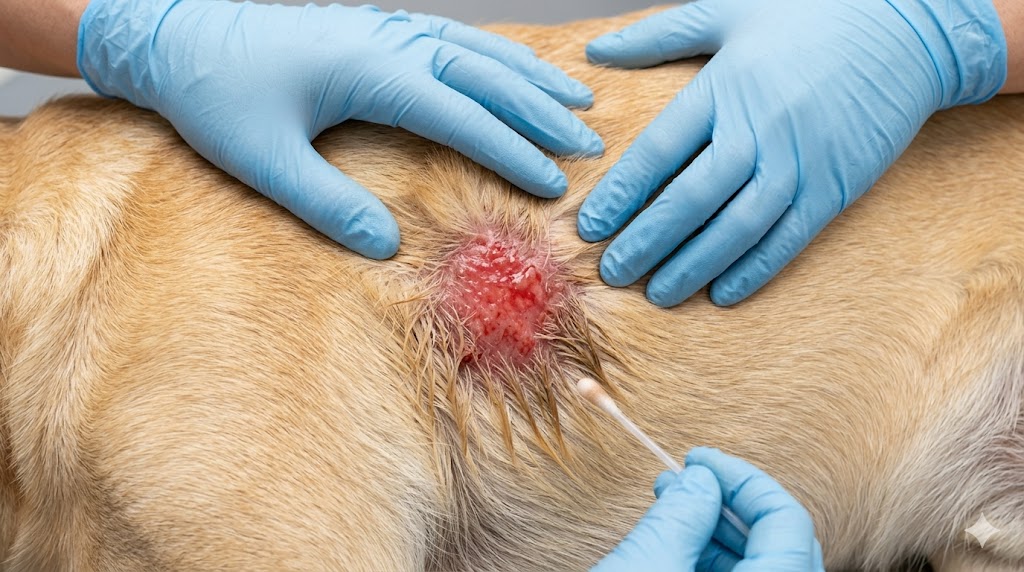
Hot Spots
If the rash appeared suddenly and looks red, moist, and oozing, it's probably a hot spot. Hot spots spread incredibly fast — they can double in size within hours. Your dog will lick or scratch the area obsessively. Golden Retrievers, Labradors, and German Shepherds are especially prone, particularly in warm, humid weather.
Ringworm
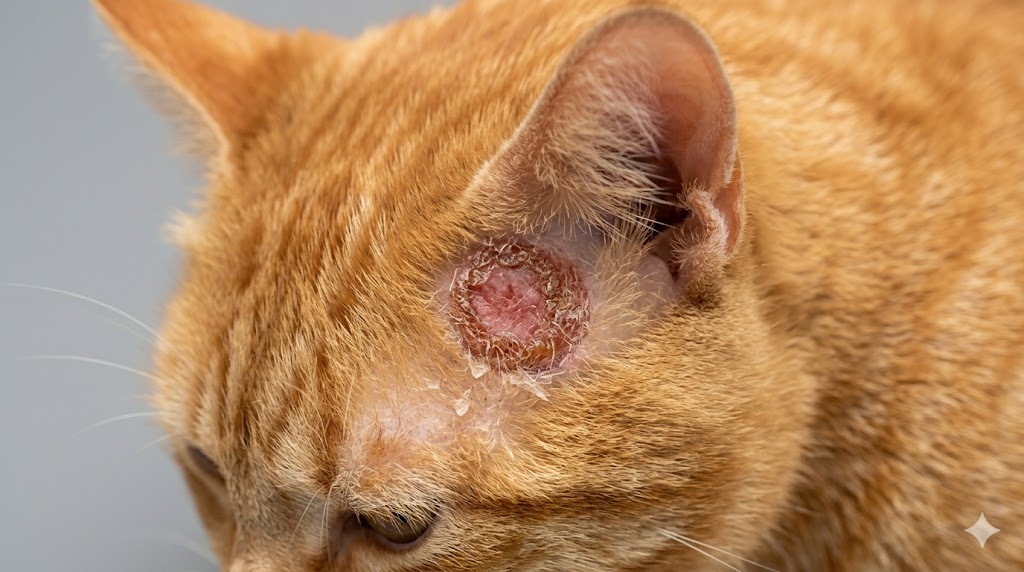
Don't let the name fool you — ringworm is a fungal infection, not a worm. It creates distinctive circular patches of hair loss with crusty, raised edges. It's highly contagious to other pets and to humans. If you see round bald patches on your dog (or cat), get it checked quickly. Kittens and puppies are most susceptible.
Mange
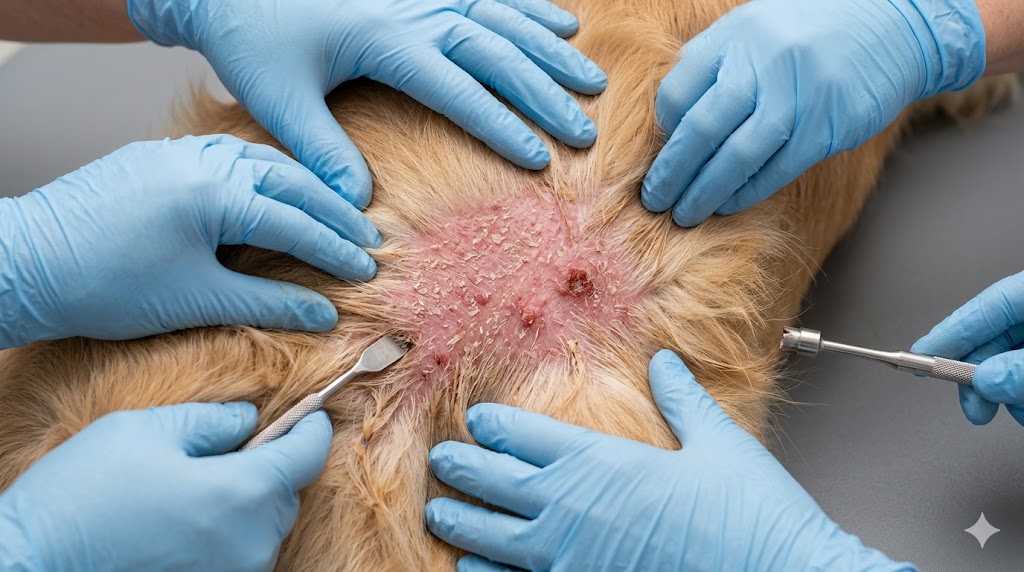
Mange is caused by mites burrowing into the skin. There are two types: sarcoptic mange causes intense, relentless itching and crusty skin, while demodectic mange causes patchy hair loss (usually starting on the face) with less itching. Sarcoptic mange is contagious to other animals and humans, while demodectic mange is not. If your dog is losing fur in patches and scratching non-stop, mange is a strong possibility.
Flea Allergy Dermatitis
Even if you can't find a single flea on your dog, flea allergy dermatitis could be the cause of the rash. Some dogs are so allergic to flea saliva that a single bite triggers an intense reaction — itching, redness, and hair loss, especially around the tail base, belly, and inner thighs. It's one of the top dog allergy symptoms and a very common reason for "my dog has a rash" vet visits.
Pyoderma (Bacterial Skin Infection)
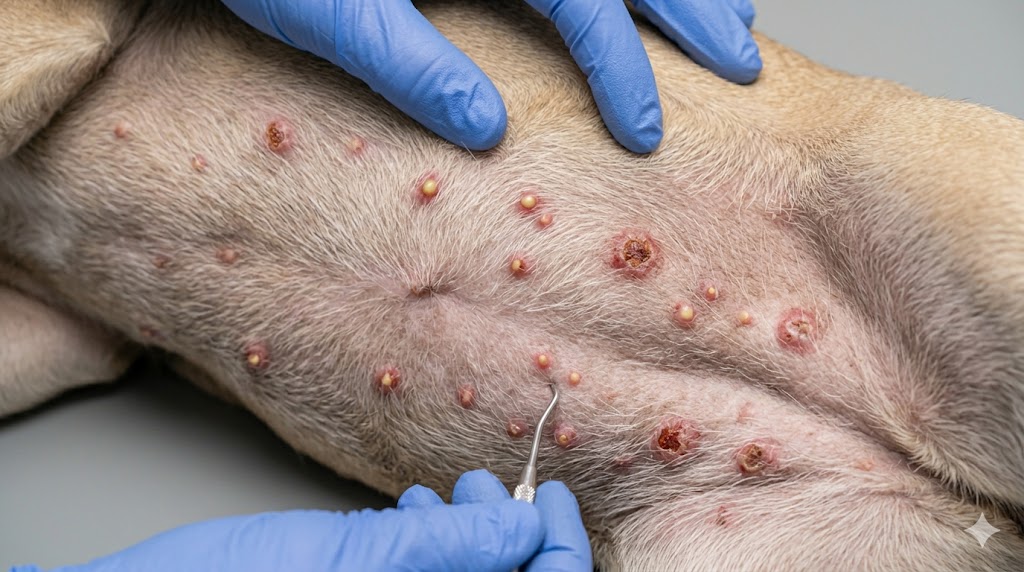
Pyoderma is a bacterial dog skin infection that shows up as small red bumps, pus-filled pimples, or circular crusts. It usually develops as a secondary infection — meaning something else (allergies, a wound, mange) weakened the skin's defenses first. The area may smell bad. Pyoderma is treatable with antibiotics, but identifying the underlying cause is key to preventing it from coming back.
How to Identify the Rash at Home
While only a vet can give a definitive diagnosis, here are some clues:
- ✓Circular bald patches with crusty edges → likely ringworm
- ✓Red, moist, oozing patch that appeared overnight → likely hot spot
- ✓Red, itchy, flaky skin all over → likely dermatitis or allergies
- ✓Intense scratching + hair loss on face → likely demodectic mange
- ✓Itching focused on tail base and belly → likely flea allergy
- ✓Small pus-filled bumps with bad smell → likely pyoderma
- ✓Patchy hair loss + crusty skin + won't stop scratching → likely sarcoptic mange
Still not sure? Upload a photo to our AI skin disease checker. It can analyze the visual signs and help identify the condition — it works as a dog skin condition identifier that gives you useful information before your vet visit.
When to See a Vet
- ✓The rash is spreading rapidly or getting worse
- ✓Your dog seems to be in pain or is very uncomfortable
- ✓You see signs of infection (pus, bad smell, hot to the touch)
- ✓The rash hasn't improved after a week of home care
- ✓Your dog has recurring skin problems
- ✓You suspect ringworm (because it's contagious to humans)
- ✓Hair loss is significant or widespread
Not Sure What That Rash Is?
Upload a clear photo and get an instant AI analysis. Detect dermatitis, hot spots, ringworm, mange, and more.
Disclaimer: This article is for informational purposes only and is not a substitute for professional veterinary advice. Always consult a licensed veterinarian for diagnosis and treatment of your pet's health conditions.