Cat Skin Allergies & Flea Dermatitis: Signs, Causes & What to Do
How to identify cat skin allergies, flea allergy dermatitis in cats, food allergy rashes, and environmental allergies. Learn what your cat's skin is telling you.
Published 2026-04-15
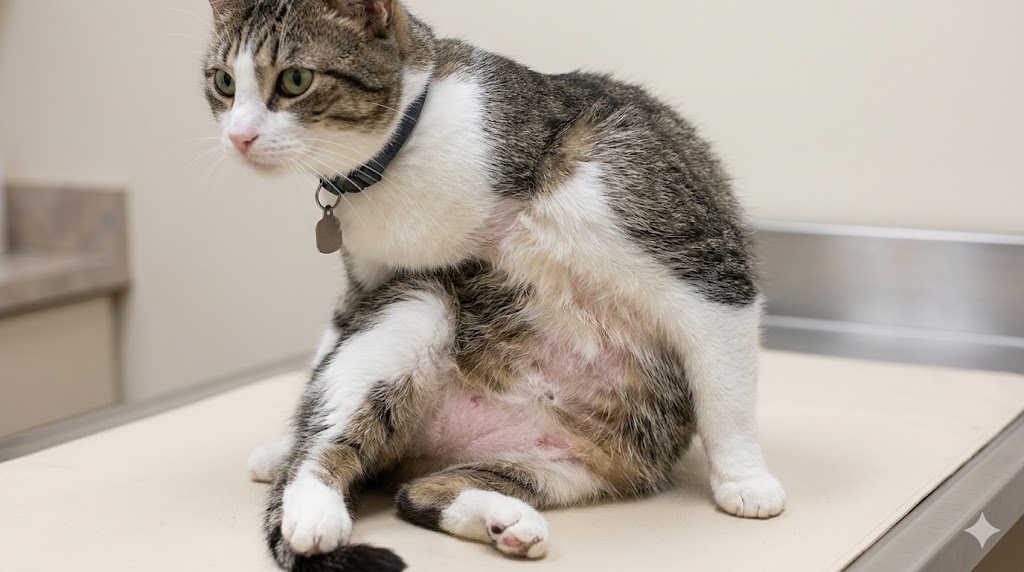
Cats are masters at hiding discomfort — so when you notice your cat excessively grooming, losing fur, or developing a rash, it's usually been going on longer than you think. Cat skin allergies are surprisingly common and can range from mild itching to severe hair loss and open sores. The challenge is figuring out what's causing the reaction.
Signs of Skin Allergies in Cats
Unlike dogs who scratch visibly, cats often show allergy symptoms through excessive grooming. Here's what to look for:
- ✓Over-grooming — your cat licking one area obsessively until the fur thins or disappears
- ✓Hair loss (alopecia) — especially on the belly, inner legs, and lower back
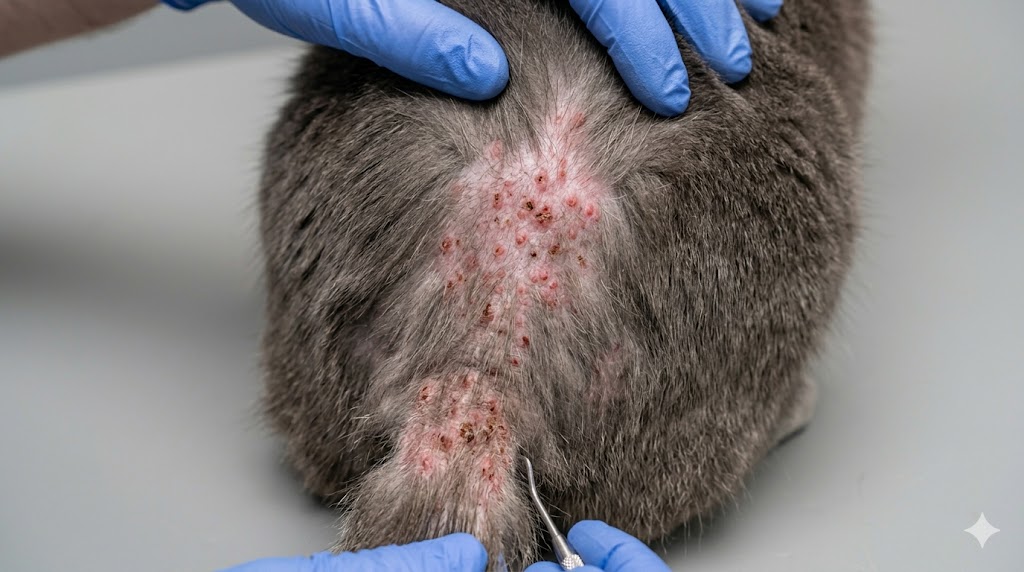
- ✓Small scabs or crusty bumps around the neck and head (miliary dermatitis)
- ✓Red, inflamed skin or rash — cat allergy rash often appears on the belly and inner thighs
- ✓Scratching at ears and face more than normal
- ✓Skin that looks thickened, darkened, or leathery in chronic cases
- ✓Sores or wounds from excessive scratching or grooming
If you notice any of these signs, uploading a photo to our <a href="/skin" class="text-blue-600 hover:text-blue-700 underline">AI skin checker</a> can help identify whether it's an allergy, infection, or other condition.
Flea Allergy Dermatitis in Cats — The Most Common Cause
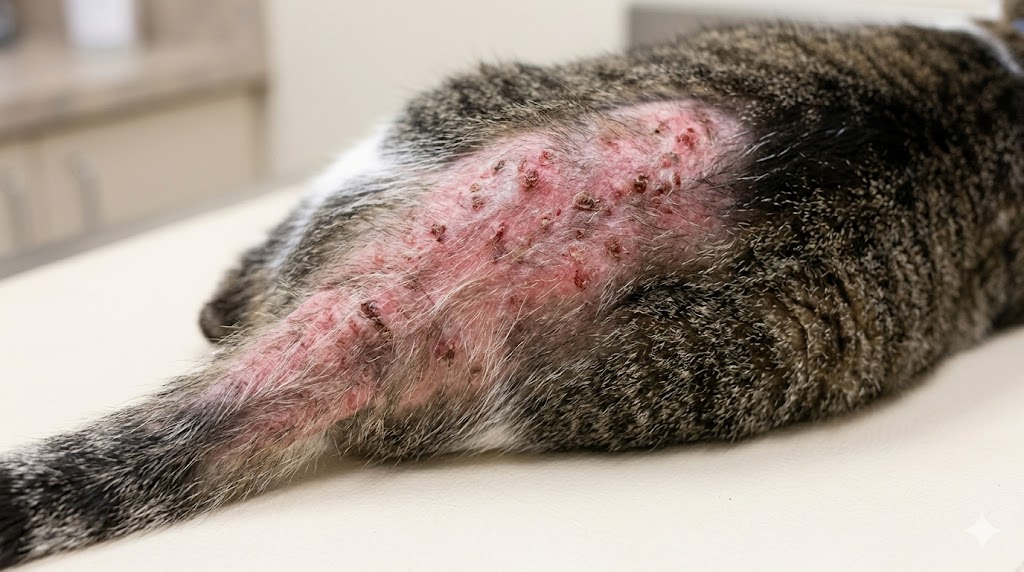
Flea allergy dermatitis (FAD) is the #1 skin allergy in cats — and it only takes one flea bite to trigger it. The allergy is to proteins in flea saliva, so even a single flea that bites and jumps off can cause days of intense itching.
What it looks like: Intense itching and hair loss around the lower back, tail base, and back of the thighs. You'll see small scabs (miliary dermatitis) scattered across the back and neck. Your cat may groom the area raw, creating bald patches. Indoor cats can get FAD too — fleas can hitch a ride on your clothes or other pets.
The fix: Year-round flea prevention is essential — not just during summer. If your cat has FAD, even one missed month of prevention can trigger a flare. Talk to your vet about prescription flea prevention (over-the-counter products are often less effective for cats and some are even dangerous).
Environmental Allergies in Cats (Atopic Dermatitis)
Cats can be allergic to pollen, dust mites, mold, and other airborne allergens — just like dogs and humans. Cat atopic dermatitis causes itching on the face, ears, and neck primarily. Cats with environmental allergies often develop recurring ear infections, which you can check with our <a href="/cat-ear" class="text-blue-600 hover:text-blue-700 underline">cat ear checker</a>.
If the itching is seasonal (worse in spring and fall), environmental allergies are the most likely cause. Year-round symptoms may indicate dust mite allergy or an indoor allergen.
Cat Food Allergy — Skin Symptoms vs. Stomach Symptoms
Food allergies in cats most commonly show up as skin problems — not vomiting (though some cats do vomit). Cat food allergy skin symptoms include itching around the head, face, and neck, often with small scabs. The most common food allergens for cats are chicken, fish, beef, and dairy.
Like dogs, the only reliable way to diagnose a food allergy is an elimination diet — 8-12 weeks of a novel protein food with absolutely no other food, treats, or flavored medications. Blood tests and saliva tests for food allergies are not reliable.
If your cat is also vomiting alongside skin symptoms, try our <a href="/cat-vomiting" class="text-blue-600 hover:text-blue-700 underline">cat vomit checker</a> to analyze what the vomit might indicate.
Cat Allergic Reactions — When It's Urgent
Most cat skin allergies are chronic and manageable, but acute allergic reactions can be serious:
- ✓Sudden facial swelling (especially around the eyes and muzzle) — vet immediately
- ✓Hives or widespread bumps appearing within hours — likely insect sting or new medication
- ✓Difficulty breathing or wheezing — emergency, go to the vet now
- ✓Allergic reaction to flea treatment — some cats react to topical products, especially dog-specific ones (which can be fatal for cats)
Never use dog flea products on cats. Permethrin, commonly found in dog flea treatments, is toxic to cats and can be fatal.
Managing Cat Skin Allergies at Home
- ✓Year-round flea prevention — the single most impactful thing you can do
- ✓Keep your home clean — vacuum regularly, wash bedding weekly
- ✓Use unscented cat litter — fragrances can irritate sensitive skin
- ✓Don't bathe your cat unless your vet recommends it — cats usually don't need baths, and it can strip protective oils
- ✓Consider an air purifier if environmental allergies are suspected
- ✓Work with your vet before changing food — random food switches can make diagnosis harder
- ✓Monitor and photograph symptoms over time — tracking changes helps your vet enormously
Cat skin allergies require patience to diagnose and manage. Start by identifying what's on the surface — upload a photo of the affected area to our <a href="/skin" class="text-blue-600 hover:text-blue-700 underline">skin checker</a> to get an instant AI assessment of whether you're dealing with an allergy, infection, parasite, or something else.
Worried About Your Cat's Skin?
Upload a photo of the affected area and get an instant AI health assessment. Detect allergic reactions, rashes, flea dermatitis, and more.
Disclaimer: This article is for informational purposes only and is not a substitute for professional veterinary advice. Always consult a licensed veterinarian for diagnosis and treatment of your pet's health conditions.