Lump on Cat? Skin Tag, Cyst & Bump Checker — AI Photo Analysis
Found a lump on your cat? Upload a photo and get an instant AI health report. Identify skin tags, cysts, lipomas, warts, and other bumps to know if you need to see a vet.
Drop your pet's photo here
or
✅JPG, PNG, WEBP
📏Max 8MB
This tool provides AI-generated preliminary analysis only. Not a substitute for professional veterinary diagnosis.
📸 Photo Guide
Good photos
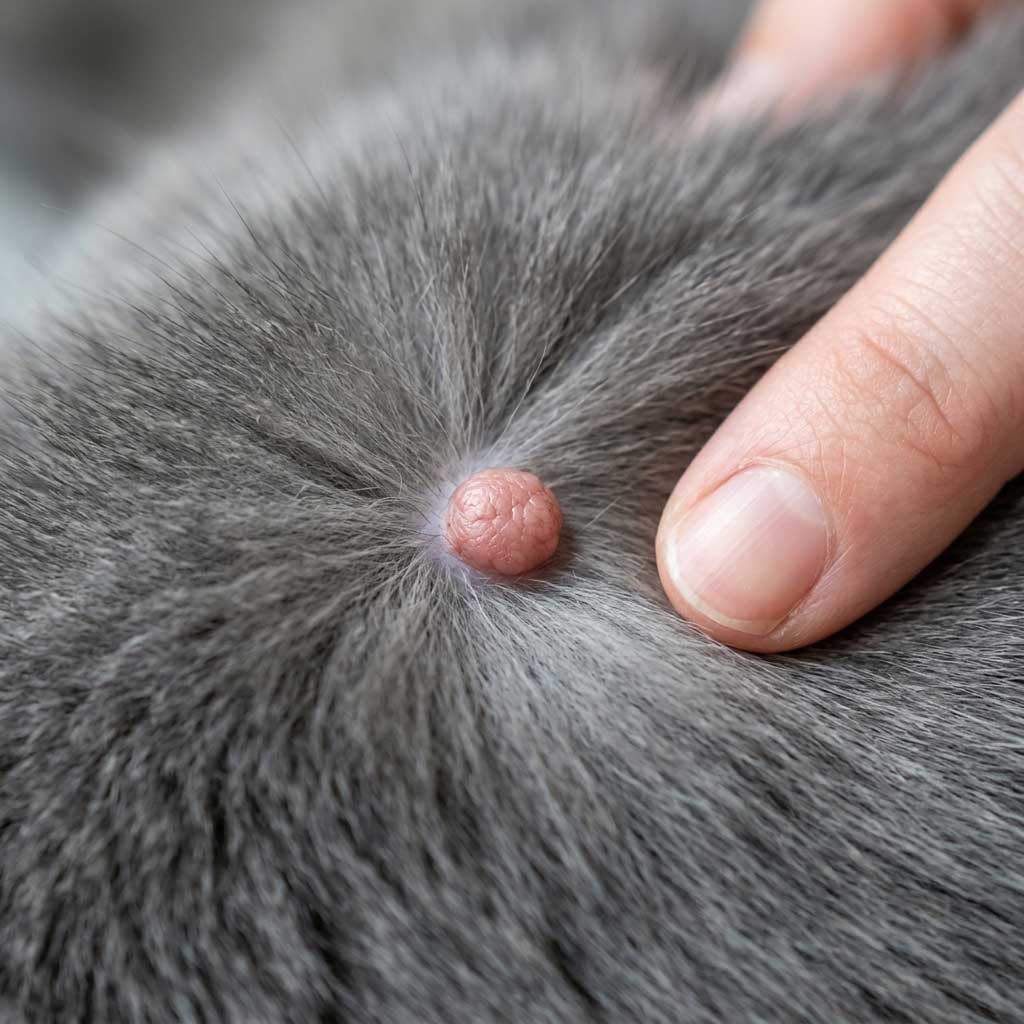
Close-up, fur parted
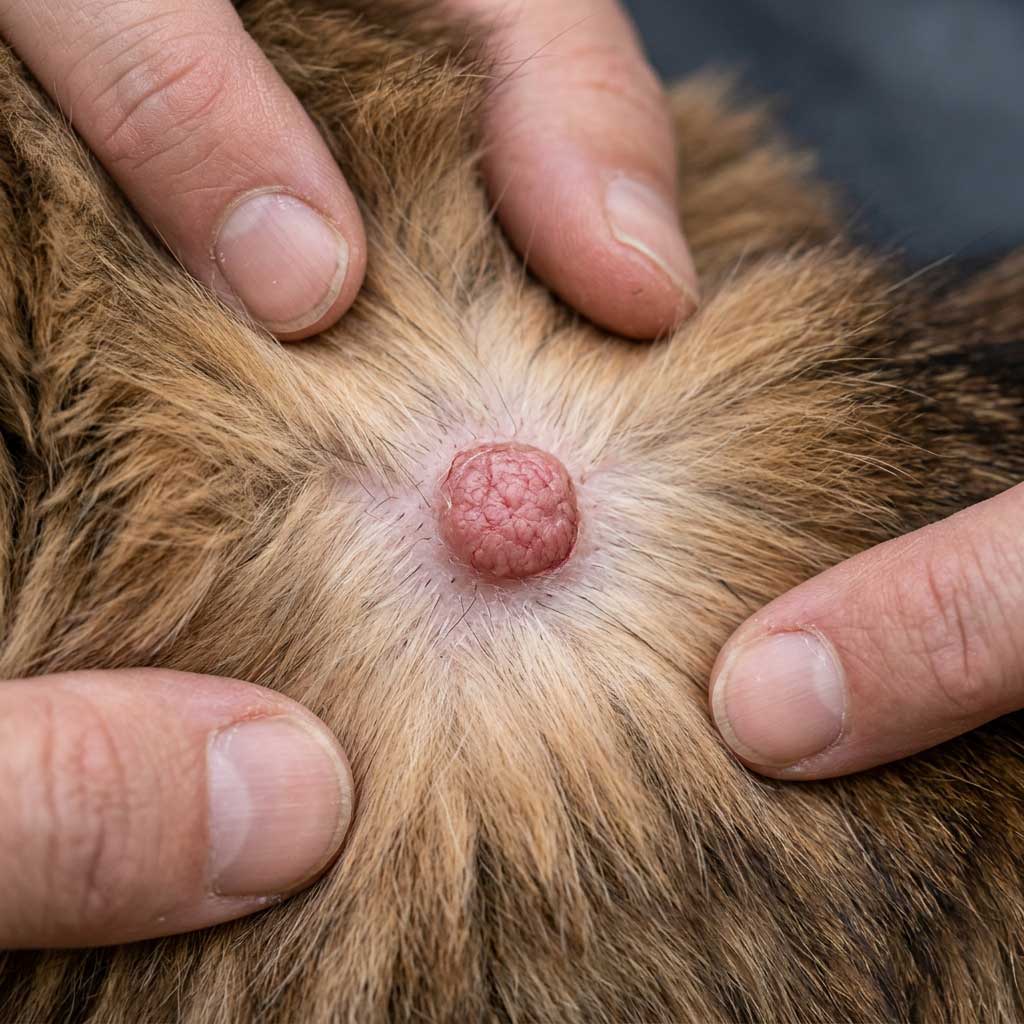
Shows shape & color
Avoid
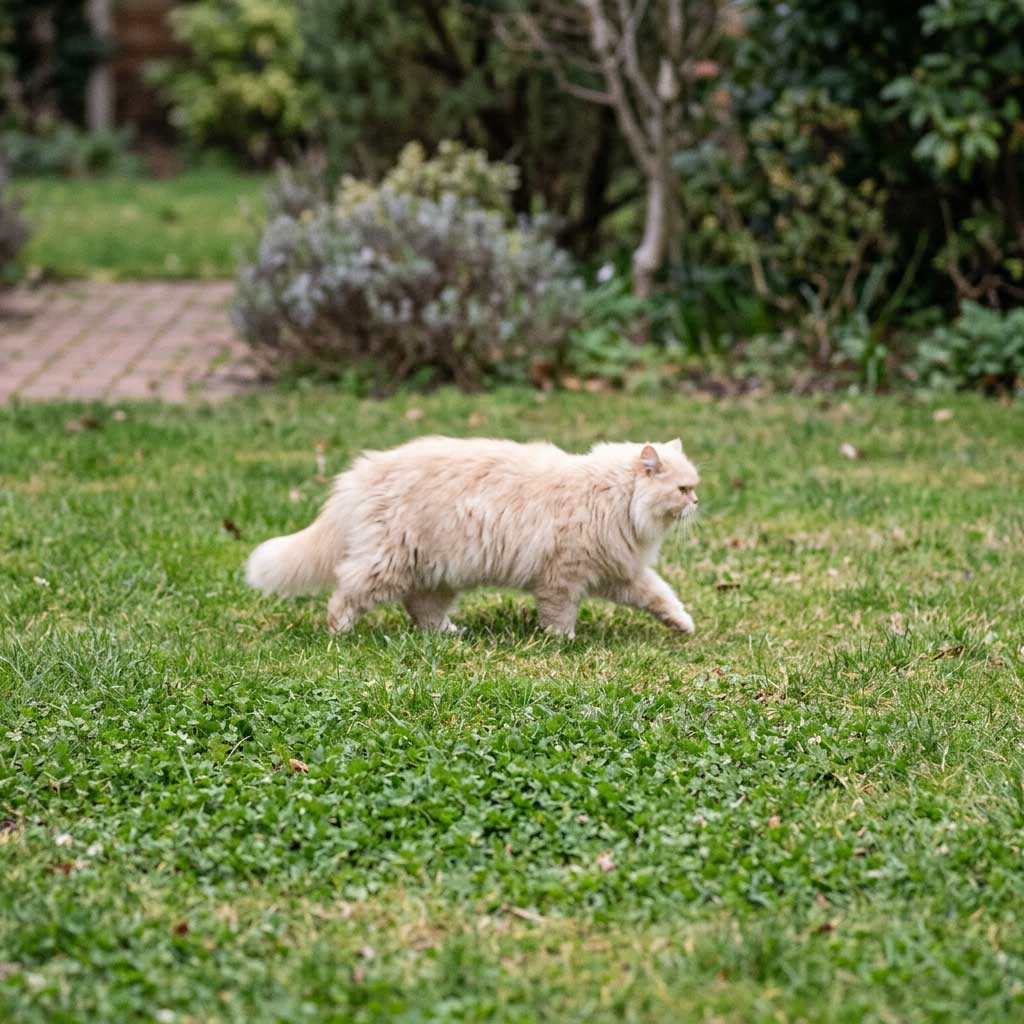
Too far away
Blurry
Tips for best results
- ✓Part the fur to fully expose the lump before photographing
- ✓Take the photo in good lighting — natural daylight is best
- ✓Get close enough to see the texture, color, and borders of the lump
- ✓Include a coin or finger next to the lump for size reference
- ✓If the lump is at a previous vaccination site, mention this in your notes
How It Works — AI Cat Lump & Bump Checker

Step 1
Upload a Photo
Take a clear, close-up photo of the lump or bump on your cat. Part the fur to expose it fully and include surrounding skin for size comparison.

Step 2
AI Analyzes
Our AI examines the lump's shape, color, texture, border, and surrounding skin to identify potential conditions.

Step 3
Get Your Report
Receive a detailed health report with the likely condition, whether it may be benign or needs vet attention, and recommended next steps.
Common Lumps & Bumps on Cats
Found a lump on your cat? Don't panic — many lumps on cats are benign. But some, especially at vaccination sites, need prompt attention. Here are the most common types our AI can help identify. Also try our dog lump checker or cat skin checker or cat dental checker.
Lipoma (Fatty Lump)
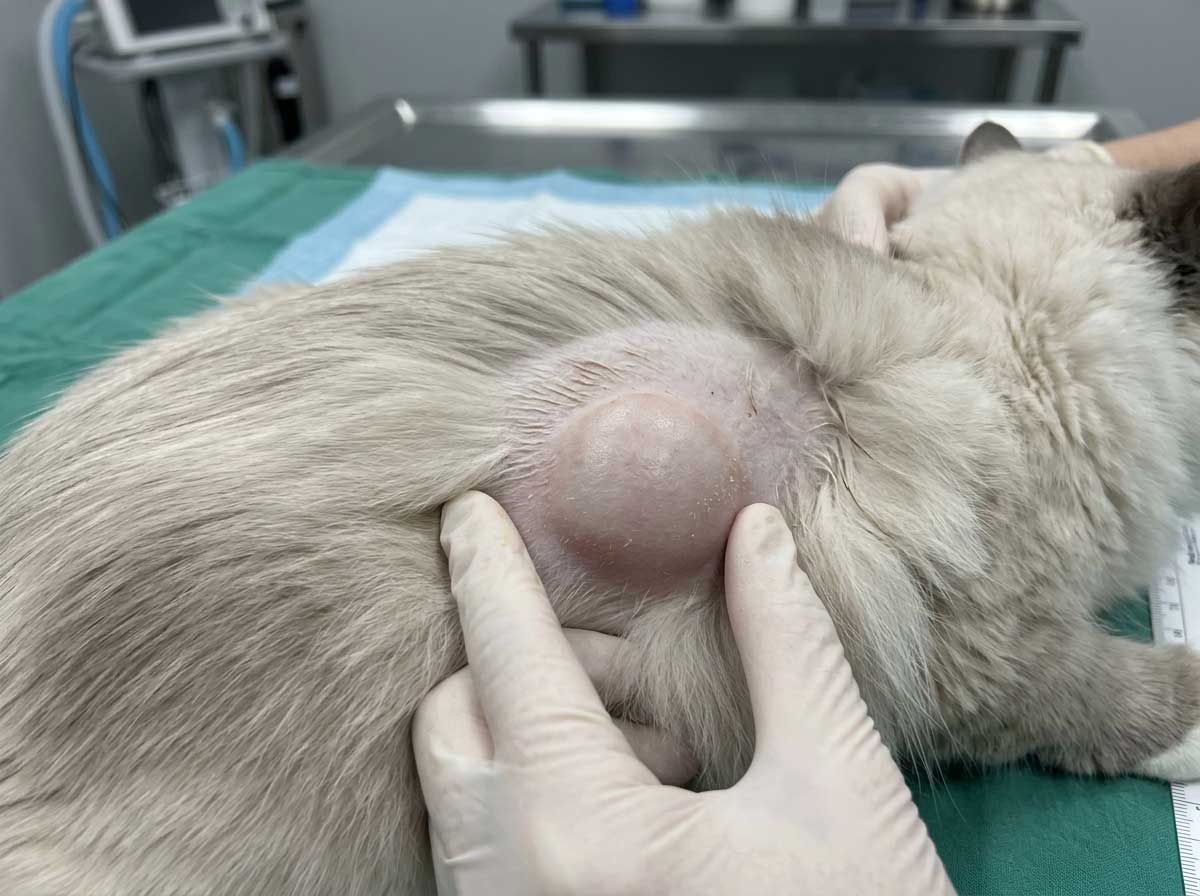
Lipomas are soft, round, fatty lumps that sit just under the skin. They feel squishy and move freely when you push them — often described as a ball like lump on cat. Cat lipomas are benign and grow slowly over months or years. They're more common in older and overweight cats. A cat lump under skin that moves is very likely a lipoma. Cat lipoma vs cancer? Lipomas are soft, movable, and slow-growing; cancerous lumps tend to be firmer, faster-growing, and attached to deeper tissue. Lipomas typically don't need removal unless they're in an awkward location affecting your cat's movement. Your vet can confirm with a quick fine needle aspirate.
Skin Tag (Acrochordon)
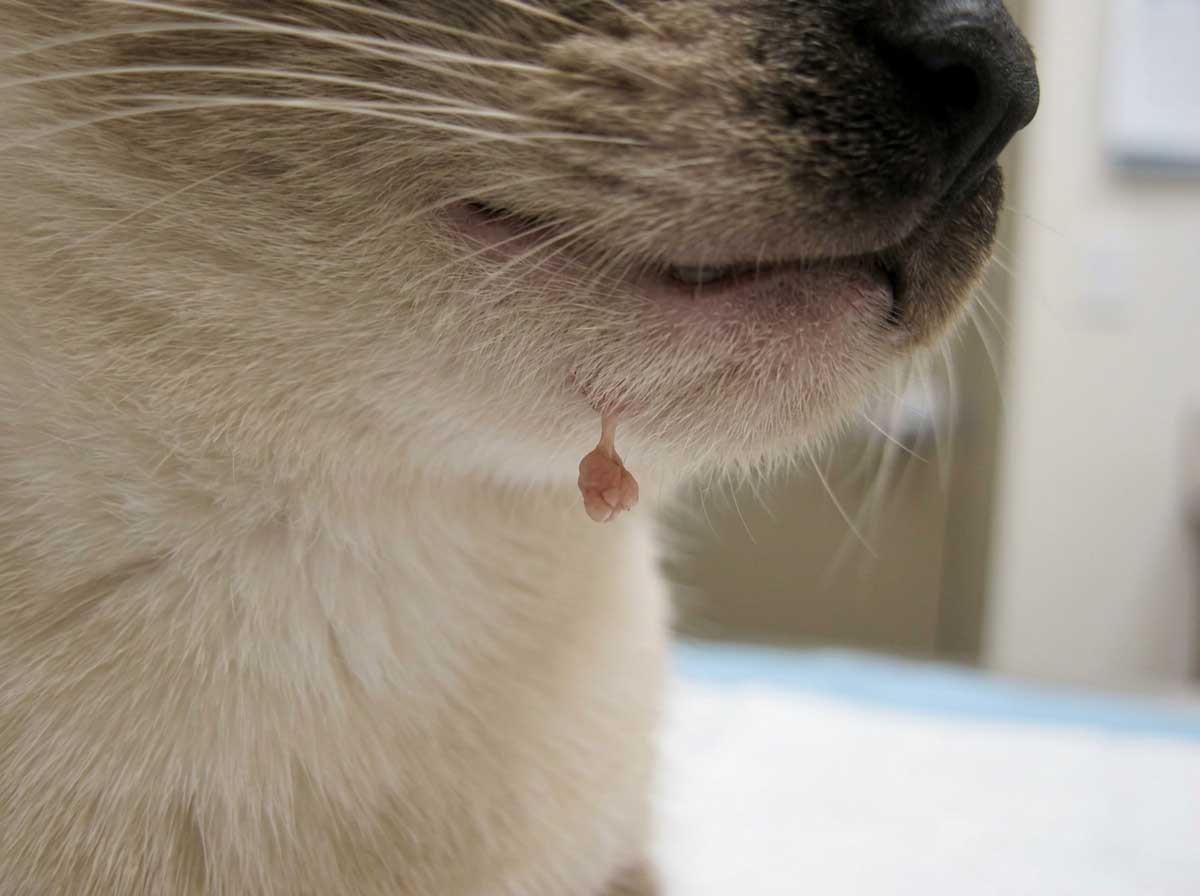
Cat skin tags are small, soft, flesh-colored or darker growths that hang from the skin on a thin stalk. They're benign and common in older cats. Skin tag on my cat chin is one of the most frequent locations, along with the ears, neck, and belly. Cat skin tag or tick? This is a very common confusion — ticks look similar when engorged. Check for tiny legs near the base to rule out a tick. Cat skin tag or tumor? Skin tags are pedunculated (thin stalk), soft, and don't grow; tumors are broader-based and may change. Cat skin tag bleeding usually happens when it gets snagged on something — keep it clean but see your vet if a skin tag starts growing or changing color.
Warts (Papilloma)
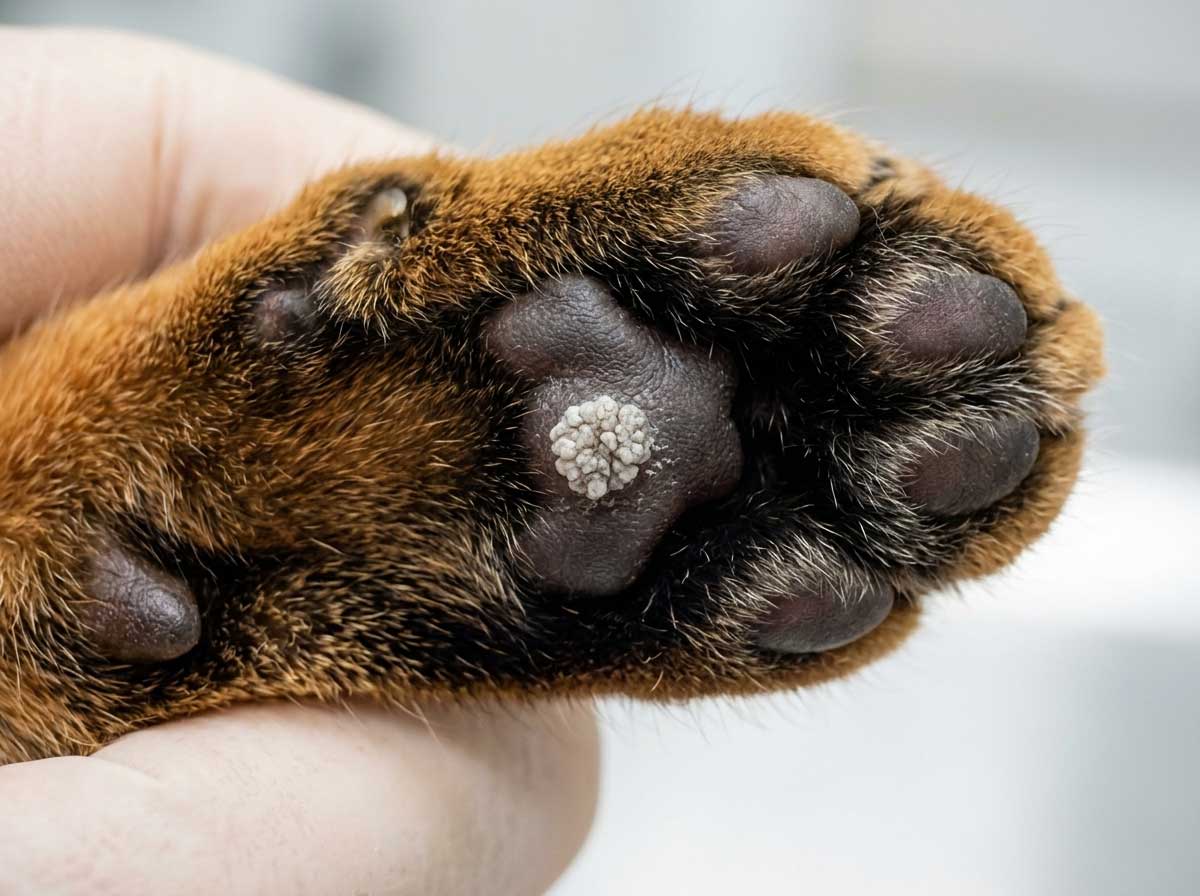
Cat warts (papillomas) are less common in cats than dogs but do occur. They appear as small, rough, cauliflower-textured bumps, usually flesh-colored, gray, or darkened. Warts on cats are caused by the feline papillomavirus and are more common in immunocompromised cats (FIV-positive, elderly, or on immunosuppressive medications). Unlike dog warts which often resolve on their own, cat warts may persist longer. Wart on cat paw is a common location, as are the face and ears. Cauliflower wart on cat is the classic appearance. Most cat warts are benign, but any wart-like growth in an older cat that changes or grows should be biopsied, as squamous cell carcinomas can mimic warts.
Sebaceous Cyst
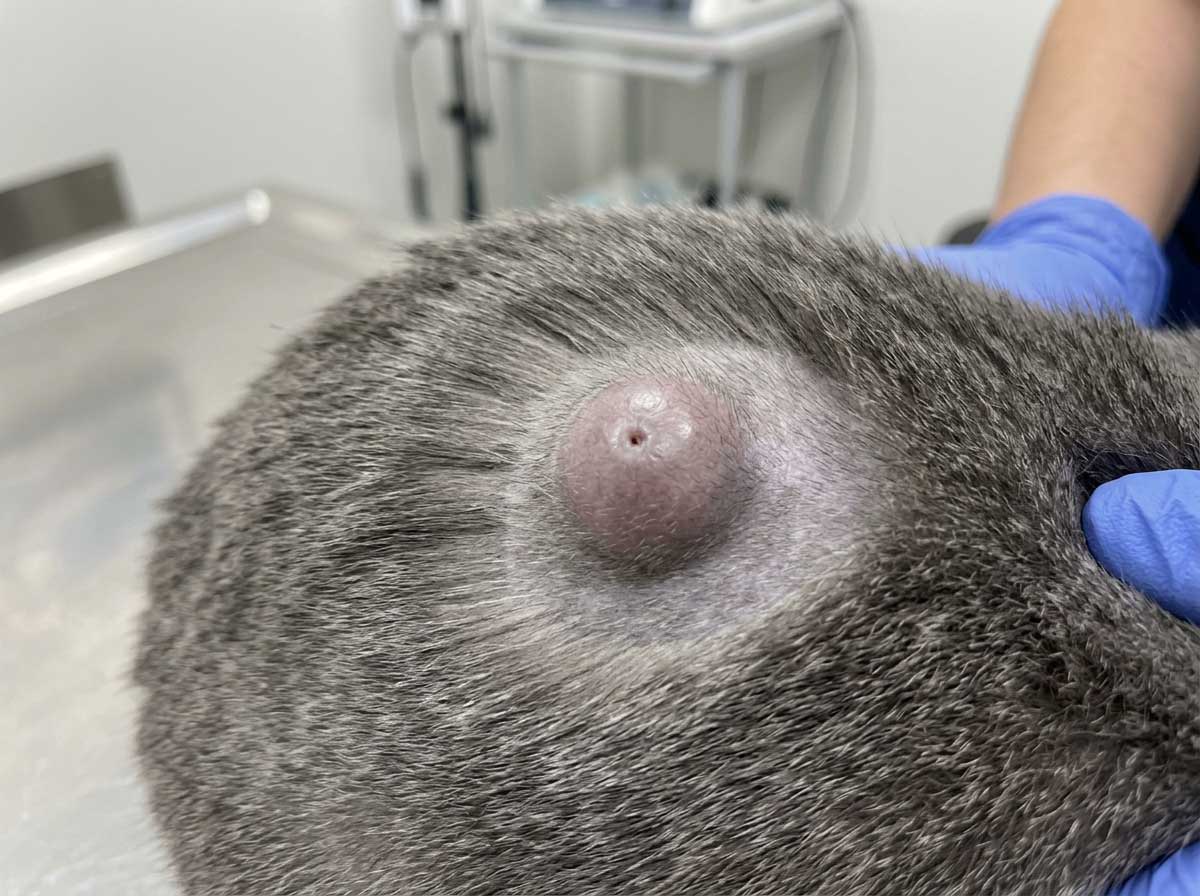
A sebaceous cyst on a cat forms when a sebaceous (oil) gland becomes blocked, creating a round, smooth, raised lump filled with thick, white or yellowish material. Sebaceous cyst cat feels firm but slightly compressible — like a small marble under the skin. Cat cyst burst is a common scenario — the cyst ruptures, draining thick, cheesy, foul-smelling material. Don't squeeze cysts yourself as this risks infection. Ceruminous cysts in cats (in the ear canal) are a related but different type. Cat cyst vs tumor? Cysts are round, well-defined, and may have a visible pore; tumors are typically more irregular. Will a cat cyst heal on its own? Some do, but many recur until surgically removed. Removal is simple and usually curative.
Fibrosarcoma (Injection-Site Sarcoma)
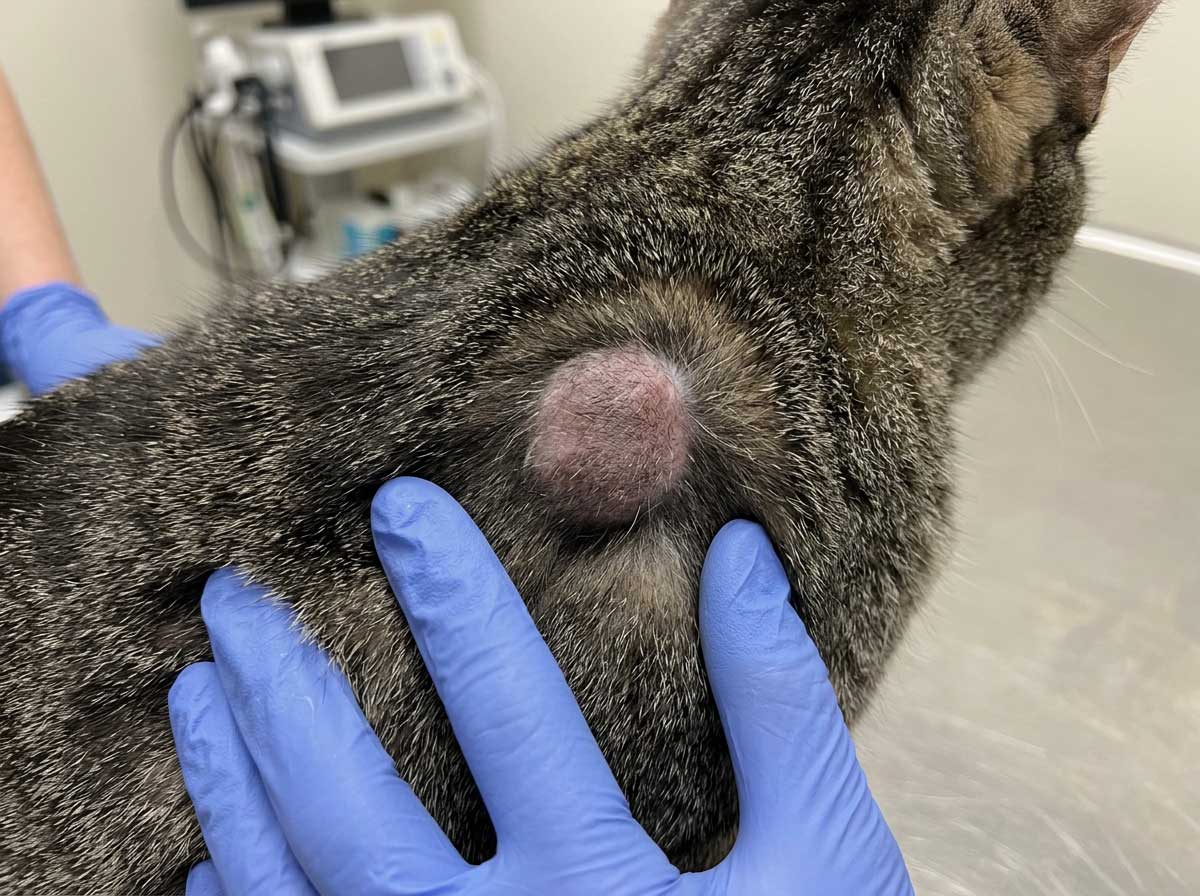
Injection-site sarcoma (fibrosarcoma) is a cat-specific concern that every cat owner should know about. These aggressive tumors can develop at sites where cats have received injections — most commonly vaccines, but also any injection. They typically appear as a firm, hard lump that develops weeks, months, or even years after an injection, usually between the shoulder blades, on the hind leg, or on the flank. The "3-2-1 rule" is important: see your vet if a lump at an injection site is still present 3 months after injection, is larger than 2 cm, or is growing 1 month after it first appeared. Early detection and wide surgical removal are critical — these tumors require aggressive treatment but have better outcomes when caught early.
Mast Cell Tumor
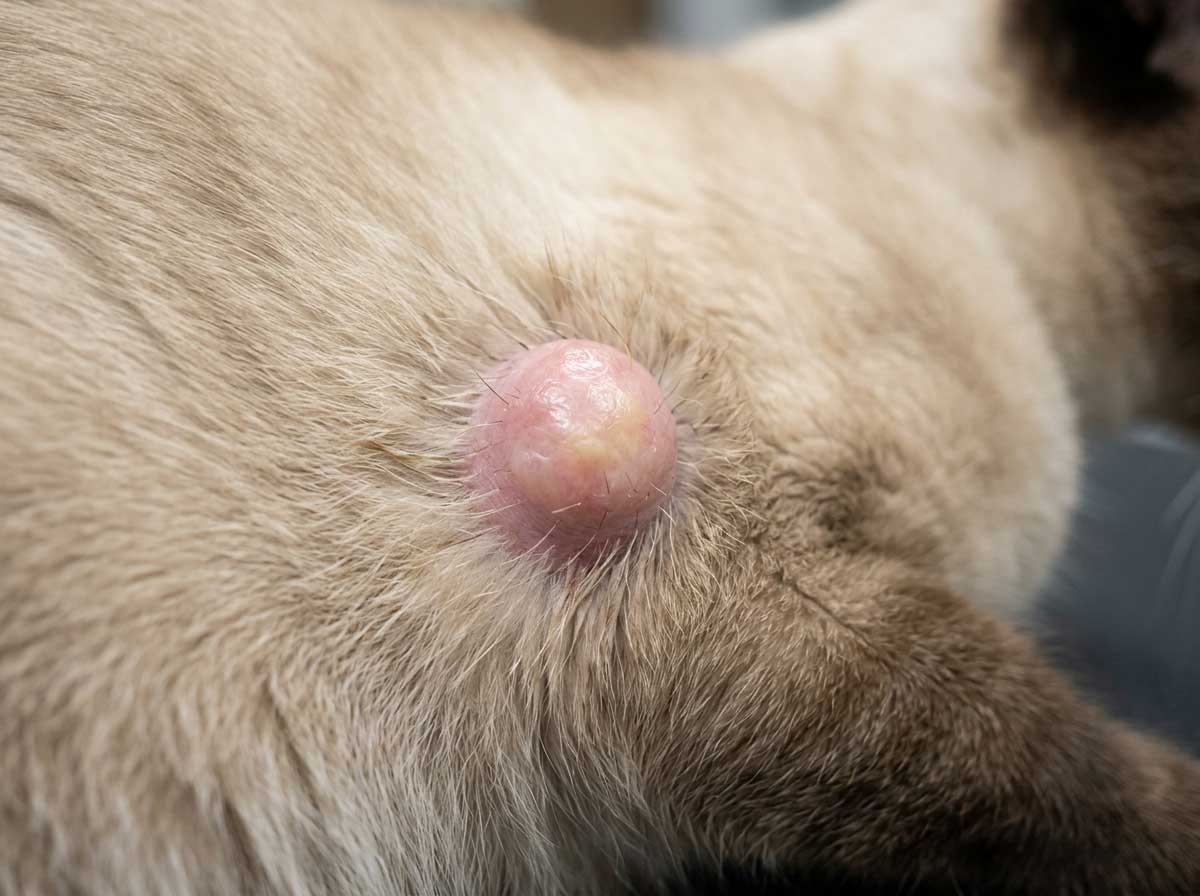
Mast cell tumors in cats are different from dogs — and that's good news. Cutaneous (skin) mast cell tumors in cats are usually benign, appearing as small, firm, hairless, raised pink or white bumps. Siamese cats are especially predisposed. Is a mast cell tumor in a cat cancerous? Most skin mast cell tumors in cats are benign and can be cured with simple surgical removal alone. This is a major difference from dogs, where mast cell tumors are often malignant. However, visceral (internal organ) mast cell tumors in cats are more serious. For skin mast cell tumors, complete surgical removal typically leads to an excellent prognosis with low recurrence rates. Any lump that your vet identifies as a possible mast cell tumor should be removed and submitted for biopsy to confirm the type.
Found a lump on your cat?
Upload a close-up photo of the lump or bump now. Get an AI-powered analysis to help you understand what it might be and whether to see a vet.
Check Cat Lump Now →Medical Disclaimer
PawCheck provides AI-generated preliminary health analysis for informational and educational purposes only. This service is not intended to replace professional veterinary advice, diagnosis, or treatment. The AI analysis has inherent limitations and may not always be accurate. Always seek the advice of a qualified, licensed veterinarian with any questions regarding your pet's health. Never disregard professional veterinary advice or delay in seeking it because of information provided by this tool. If your pet is experiencing a medical emergency, contact your veterinarian or emergency animal hospital immediately. By using this service, you acknowledge and agree to these terms.
Frequently Asked Questions
When should I be worried about a lump on my cat?
+
Most lumps on cats deserve at least a vet check, but urgent signs include: the lump is growing rapidly (noticeable change within weeks), it feels hard and firmly attached to deeper tissue, it's irregular in shape with uneven borders, it's ulcerated or bleeding, your cat seems painful when you touch it, it appeared at a previous vaccination site (possible injection-site sarcoma), or your cat has other symptoms like weight loss or lethargy. Cats are especially prone to injection-site sarcomas, so any firm lump developing at a vaccination site — even months or years later — should be checked promptly. A fine needle aspirate (FNA) is quick and can determine if it's benign or needs treatment.
What is a ball like lump on a cat?
+
A round, ball-like lump under your cat's skin is most commonly a lipoma (fatty tumor), sebaceous cyst, or abscess. Lipomas feel soft, squishy, and move freely when you push them — they're benign fatty deposits common in older or overweight cats. Sebaceous cysts feel smooth and round, like a marble under the skin, and may have a small pore on the surface. Abscesses (from bite wounds or scratches) are more common in outdoor cats, feel warm, may be tender, and can burst on their own. Less commonly, a ball-like lump could be a benign mast cell tumor (more often benign in cats than dogs). A vet visit with a needle aspirate is the only way to know for sure.
Will a cyst go away on its own on a cat?
+
Some cat cysts may resolve on their own, but many don't. Sebaceous cysts can persist for months or years, sometimes rupturing and refilling in a cycle. A cat cyst that has burst will drain thick, white or yellowish cheesy material — keep the area clean but don't squeeze it, as this can cause infection. Ceruminous cysts (in the ear canal) and follicular cysts typically don't resolve without treatment. If a cyst is small, not growing, and not bothering your cat, your vet may recommend monitoring. However, surgical removal is recommended if the cyst keeps rupturing, gets infected, is growing, or is in a location that bothers your cat. Removal is usually simple and curative.
Are cancerous lumps on cats hard or soft?
+
Cancerous lumps in cats can be either hard or soft, which is what makes visual or touch diagnosis unreliable. Injection-site sarcomas (fibrosarcomas) are typically very firm and hard, attached to deeper tissue. Squamous cell carcinomas can feel hard and ulcerated. However, some mast cell tumors feel soft, and some lymphomas under the skin can feel squishy. The general warning signs are: firm and fixed (doesn't move), rapid growth, irregular borders, ulceration or bleeding, and location at a previous injection site. Soft, movable lumps are more likely benign (lipomas, cysts), but exceptions exist. Always get any new or changing lump checked by a vet — a needle aspirate is the only reliable way to distinguish benign from cancerous.
How do you get rid of skin tags on cats?
+
Cat skin tags are benign and usually don't need removal unless they're causing problems. If removal is needed (the tag is getting caught, bleeding, or irritating your cat), your vet can remove it by surgical excision, cryotherapy (freezing), or cauterization — all quick procedures, often done under light sedation. Never try to cut, tie off, or remove a skin tag at home — you risk bleeding, infection, and pain, and what you think is a skin tag could actually be a tick (check for legs) or a small tumor. Cat skin tag removal cost typically ranges from $100-$300 depending on location and method. Skin tags on the chin and ear are most common in cats.
What gets mistaken for a skin tag on cats?
+
Several things can look like a skin tag on a cat: Ticks are the most common mimic — an engorged tick looks remarkably like a skin tag. Look for tiny legs near the base to distinguish them. Warts (papillomas) can look similar but are rougher in texture. Small mast cell tumors can appear as a smooth, raised bump similar to a skin tag. Fibropapillomas are virus-caused growths that can mimic skin tags. Basal cell tumors (usually benign in cats) can start as a small raised bump. If you're unsure whether it's a skin tag or tick, don't pull it — a tick improperly removed can leave its mouthparts embedded. Visit your vet for safe identification and removal.
Is a mast cell tumor in a cat cancerous?
+
This is where cats differ significantly from dogs. In dogs, mast cell tumors are often malignant and aggressive. In cats, cutaneous (skin) mast cell tumors are much more likely to be benign — the majority can be cured with simple surgical removal alone. However, there are two types in cats: cutaneous (on the skin, usually benign, good prognosis) and visceral/splenic (internal organs, more serious). Siamese cats are predisposed to developing cutaneous mast cell tumors. The key is proper diagnosis through a fine needle aspirate or biopsy, and complete surgical removal. Most cats with skin mast cell tumors have an excellent prognosis after surgery, with recurrence rates much lower than in dogs.
How long will a cat live with a mast cell tumor?
+
For cutaneous (skin) mast cell tumors — the type you can see and photograph — most cats live a normal lifespan after surgical removal. Skin mast cell tumors in cats are generally benign, and complete surgical excision is often curative with low recurrence rates. Siamese cats may develop multiple skin mast cell tumors but the prognosis remains good. For visceral (internal) mast cell tumors — particularly splenic — the prognosis is more guarded, with median survival times of several months to a year with treatment. The important thing is: any lump on your cat that could be a mast cell tumor should be checked and removed early. Early surgical removal of skin mast cell tumors in cats almost always leads to an excellent outcome.
More AI Pet Health Checks

Eye Infection Checker
Detect dog eye infection, cat eye problems, conjunctivitis, corneal ulcers, and cataracts.

Skin Disease Checker
Detect dog skin infection, cat skin problems, dermatitis, hot spots, and ringworm.

Dog Ear Infection Checker
Detect dog ear infection, ear mites, yeast infections, and ear discharge with AI photo analysis.

Cat Ear Mites Checker
Detect cat ear mites, ear infections, yeast infections, and ear discharge with AI photo analysis.

Cat Vomit Checker
Why is my cat vomiting? Analyze white foam, yellow bile, blood, hairballs, and more with AI.

Dog Vomit Checker
Dog vomiting when to worry? Analyze white foam, yellow bile, blood, and undigested food with AI.

Dog Nose Checker
Dog nose dry or runny? Analyze cracked noses, nasal discharge, and color changes with AI.
Dog Dental Checker
Detect dog tooth infections, gum disease, tartar buildup, and dental problems with AI photo analysis.

Dog Poop Checker
Blood in dog stool? Analyze poop color, detect worms, mucus, and diarrhea with AI photo analysis.
Cat Dental Checker
Detect cat tooth infections, gum disease, stomatitis, tooth resorption, and dental problems with AI photo analysis.

Dog Lump Checker
Found a lump on your dog? Identify skin tags, warts, cysts, lipomas, and bumps with AI photo analysis.

Cat Poop Checker
Blood in cat stool? Analyze poop color, detect worms, mucus, and diarrhea with AI photo analysis.
Dog Wound Checker
Is your dog's wound infected? Check infection signs, healing stages, and bite wounds with AI photo analysis.

Cat Nose Checker
Cat nose dry or runny? Analyze crusty noses, nasal discharge, and sneezing symptoms with AI.
🐾
View All Tools
Explore all AI pet health check tools