Blood in Cat Stool? Cat Poop Color & Diarrhea Checker — AI Photo Analysis
Upload a photo of your cat's poop and get an instant AI health report. Analyze stool color, detect blood, worms, mucus, and other abnormalities to know when to see a vet.
Drop your pet's photo here
or
✅JPG, PNG, WEBP
📏Max 8MB
This tool provides AI-generated preliminary analysis only. Not a substitute for professional veterinary diagnosis.
📸 Photo Guide
Good photos
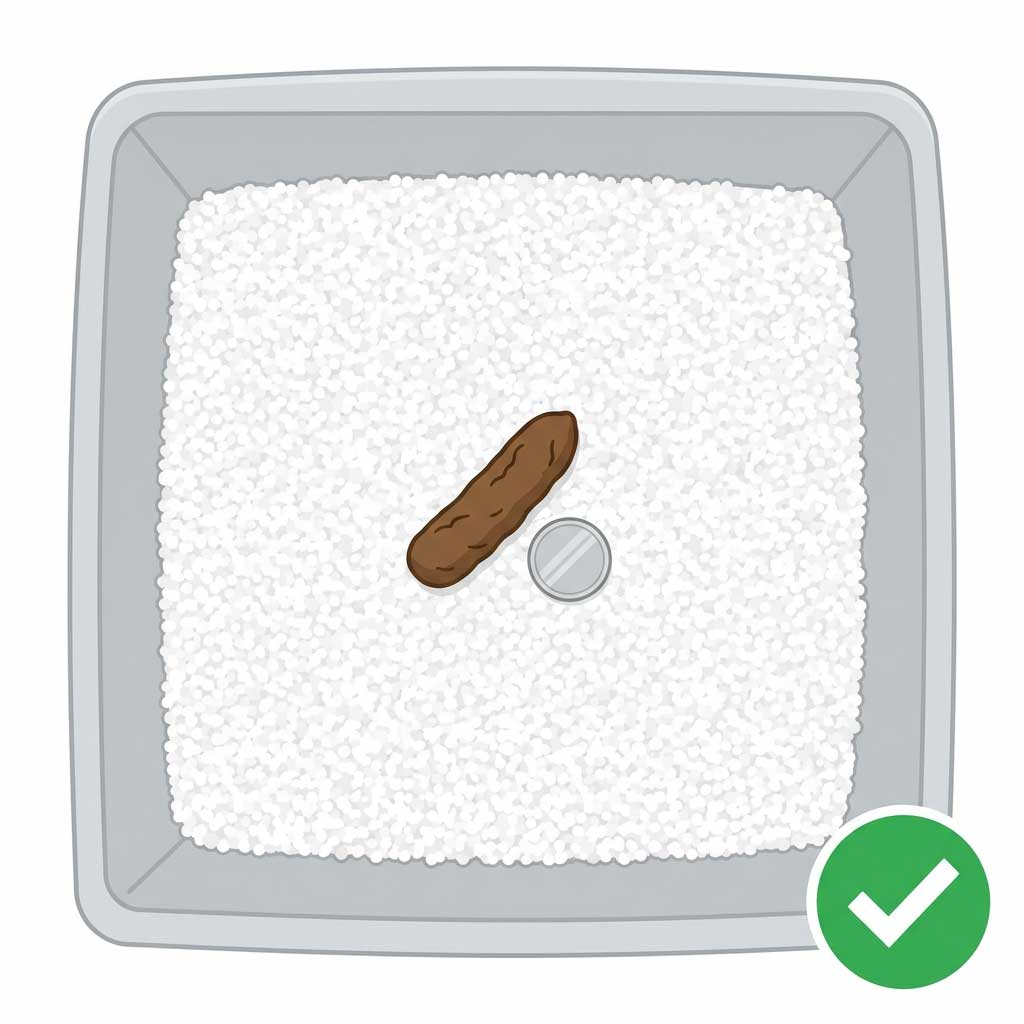
Clear, shows color
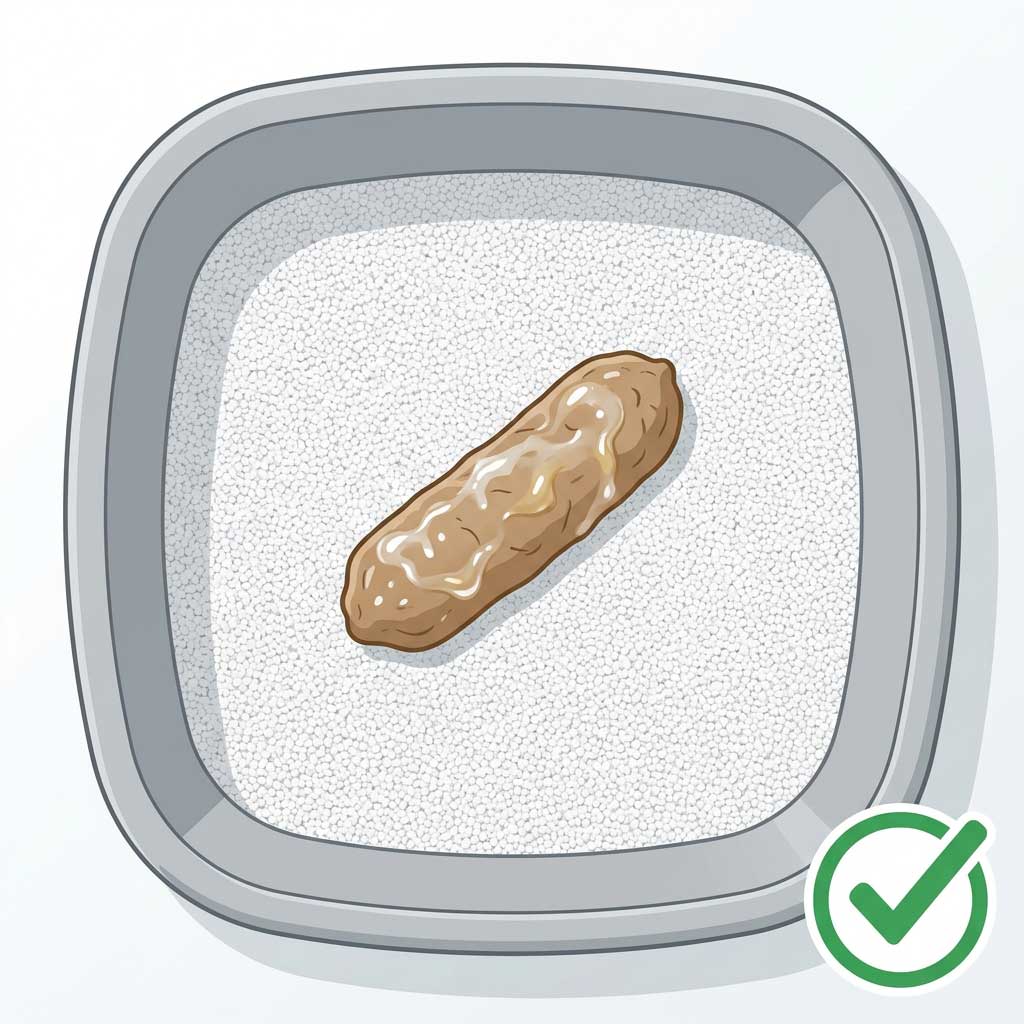
Full stool visible
Avoid

Too far away

Blurry
Tips for best results
- ✓Scoop the stool out of the litter box onto a clean surface for a clearer photo
- ✓Take the photo in good lighting so the true color is visible
- ✓If there's blood or mucus, make sure it's clearly visible in the photo
- ✓If you see worms or white specks, get a close-up
- ✓Try to photograph the stool before litter clumps cover it
How It Works — AI Cat Poop Checker
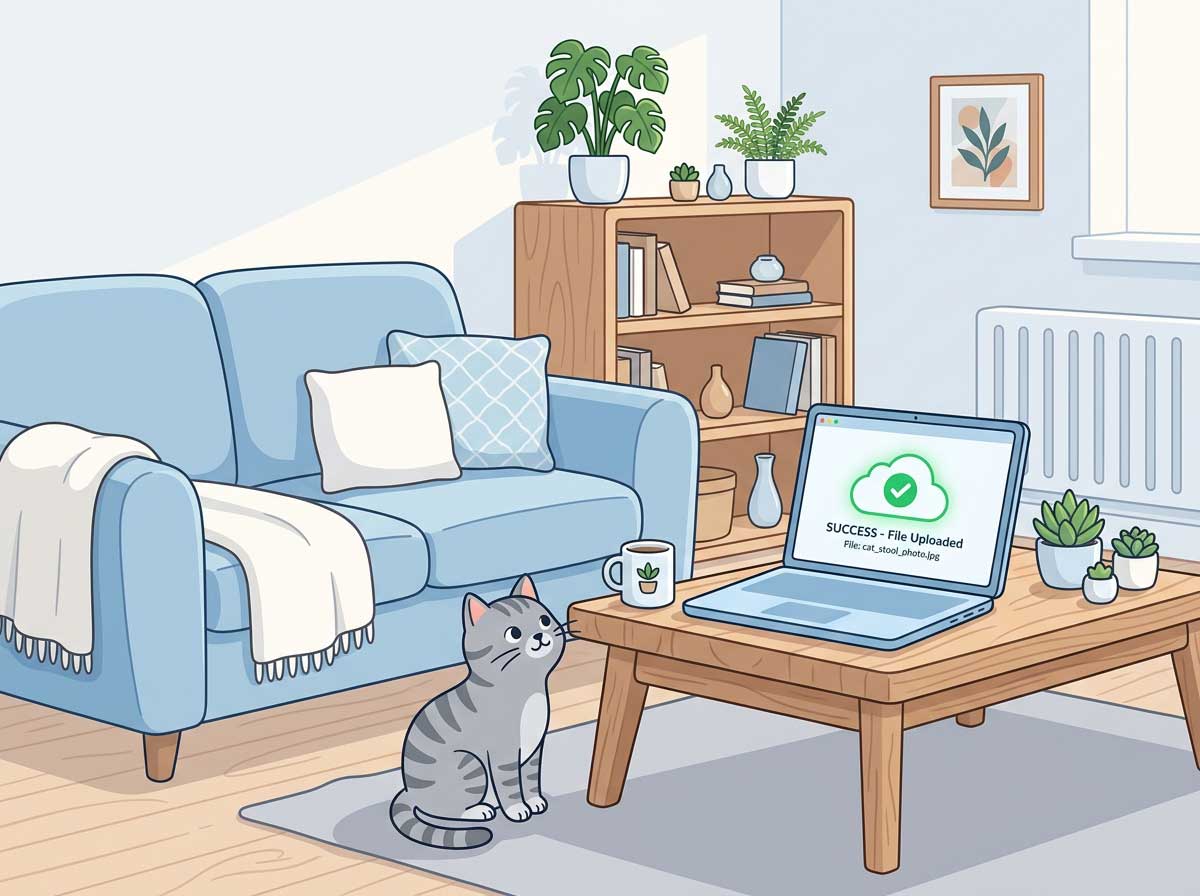
Step 1
Upload a Photo
Take a clear photo of your cat's poop from the litter box. Include the full stool so the AI can analyze color, texture, consistency, and any visible abnormalities.
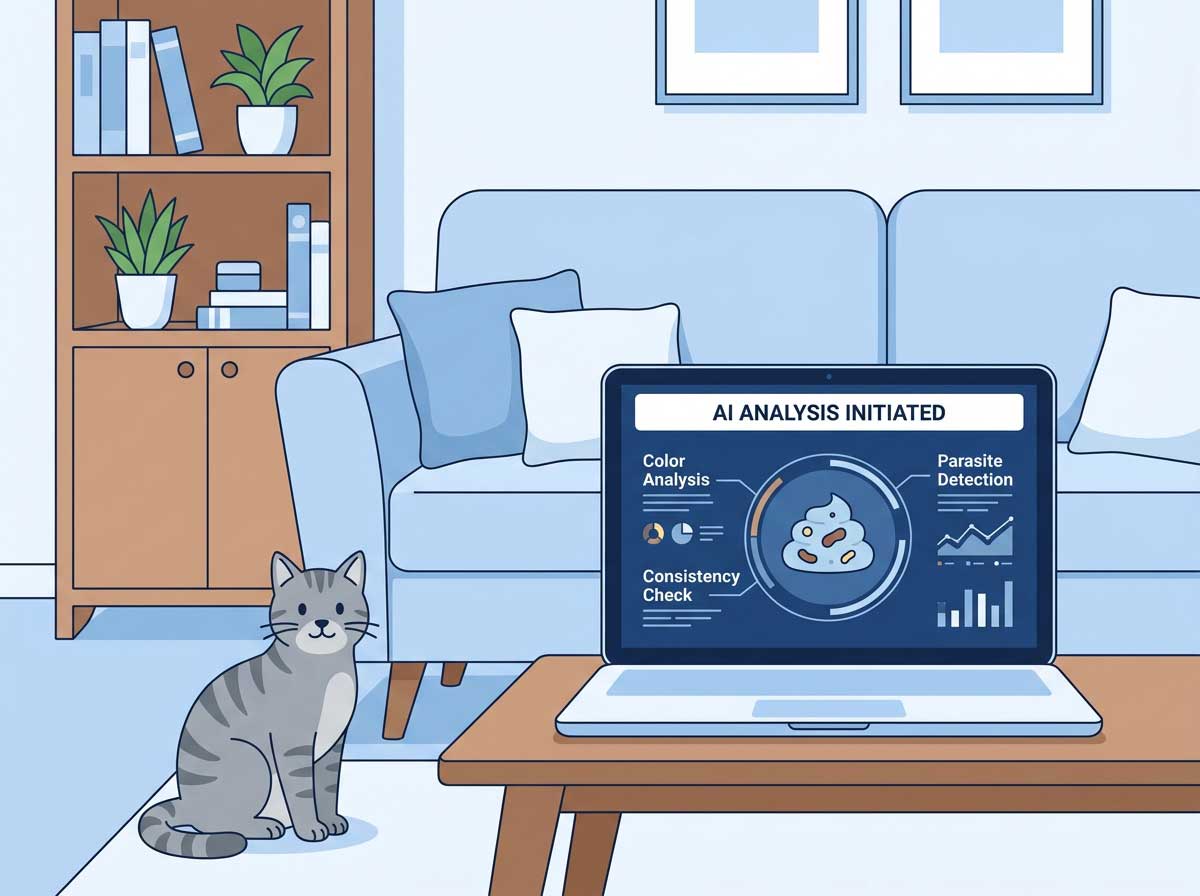
Step 2
AI Analyzes
Our AI examines the stool color, consistency, presence of blood, mucus, worms, or foreign objects to identify potential health issues.
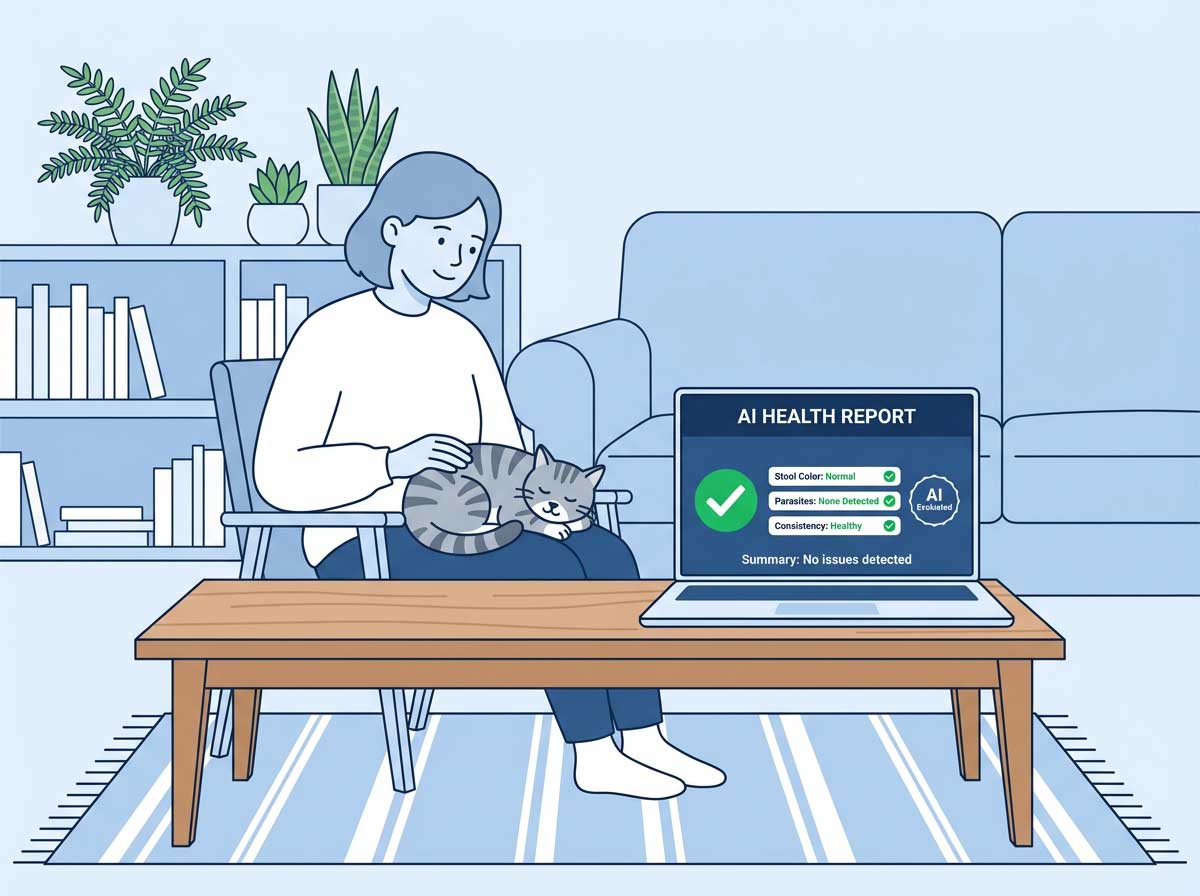
Step 3
Get Your Report
Receive a detailed health report with what the stool color and consistency may indicate, possible causes, severity assessment, and recommended next steps.
What Your Cat's Poop Is Telling You
Cat poop color, consistency, and contents reveal a lot about your cat's health. Blood, mucus, worms, or unusual colors are warning signs you shouldn't ignore. Here are the most common stool abnormalities our AI can help identify. Also try our dog poop checker or cat vomit checker or cat nose checker.
Blood in Cat Stool (Bloody Poop)
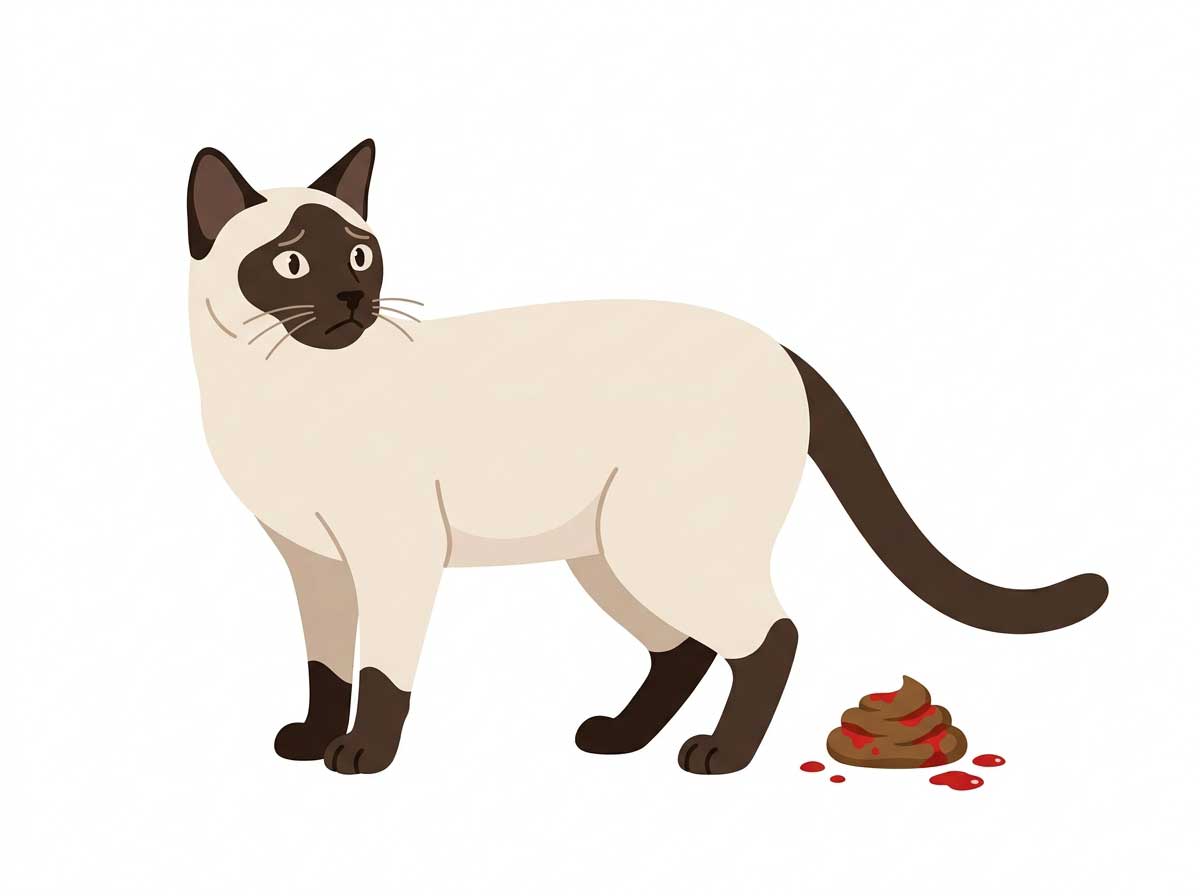
Blood in cat stool is a common concern. Bright red blood (hematochezia) typically comes from the lower digestive tract — colitis, constipation/straining, intestinal parasites, or inflammatory bowel disease. Blood in cat stool but acting normal is often seen with mild colitis or dietary issues. Cat poop that looks like red jelly indicates bloody mucus from the colon, which is more concerning. Blood in cat stool and very smelly may suggest infection or a more serious condition. Dark, tarry black stool (melena) indicates upper GI bleeding and is always urgent. Causes include stomach ulcers, tumors, or ingesting blood. If bleeding is persistent, heavy, or accompanied by vomiting or lethargy, see your vet promptly.
Worms in Cat Poop
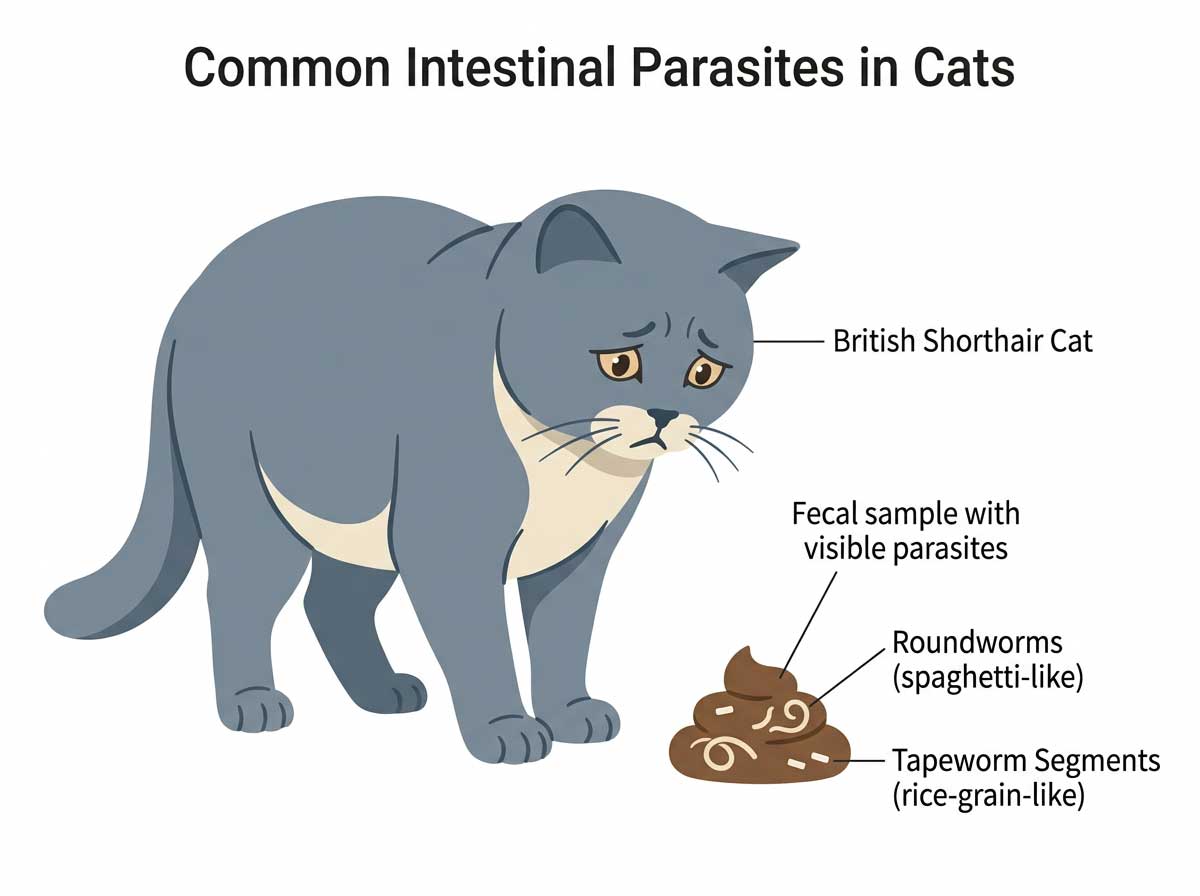
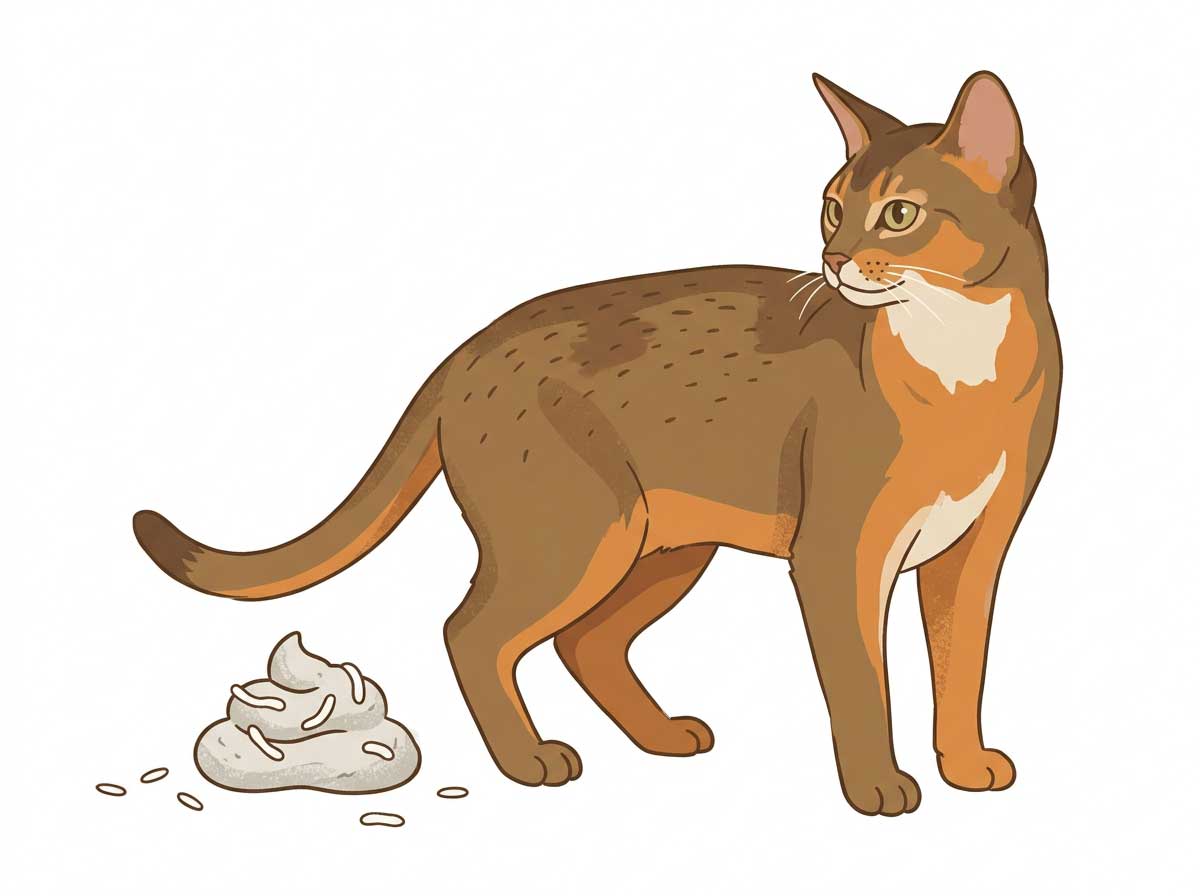
Worms in cat poop are disturbing but treatable. The most common visible types: roundworms appear as long, white, spaghetti-like strands (2-4 inches); tapeworm segments look like small white rice grains or sesame seeds, often seen stuck to fur around the tail; hookworms are tiny and rarely visible to the naked eye. Worms in cat poop that look like rice are almost always tapeworm segments — cats get tapeworms from ingesting fleas during grooming. White worms in cat poop are typically roundworms, which can be transmitted to kittens through their mother's milk. Worms in cat poop are contagious to other pets and some can infect humans. See your vet for proper deworming — different worm types require different medications.
Mucus in Cat Poop (Jelly-Like Stool)
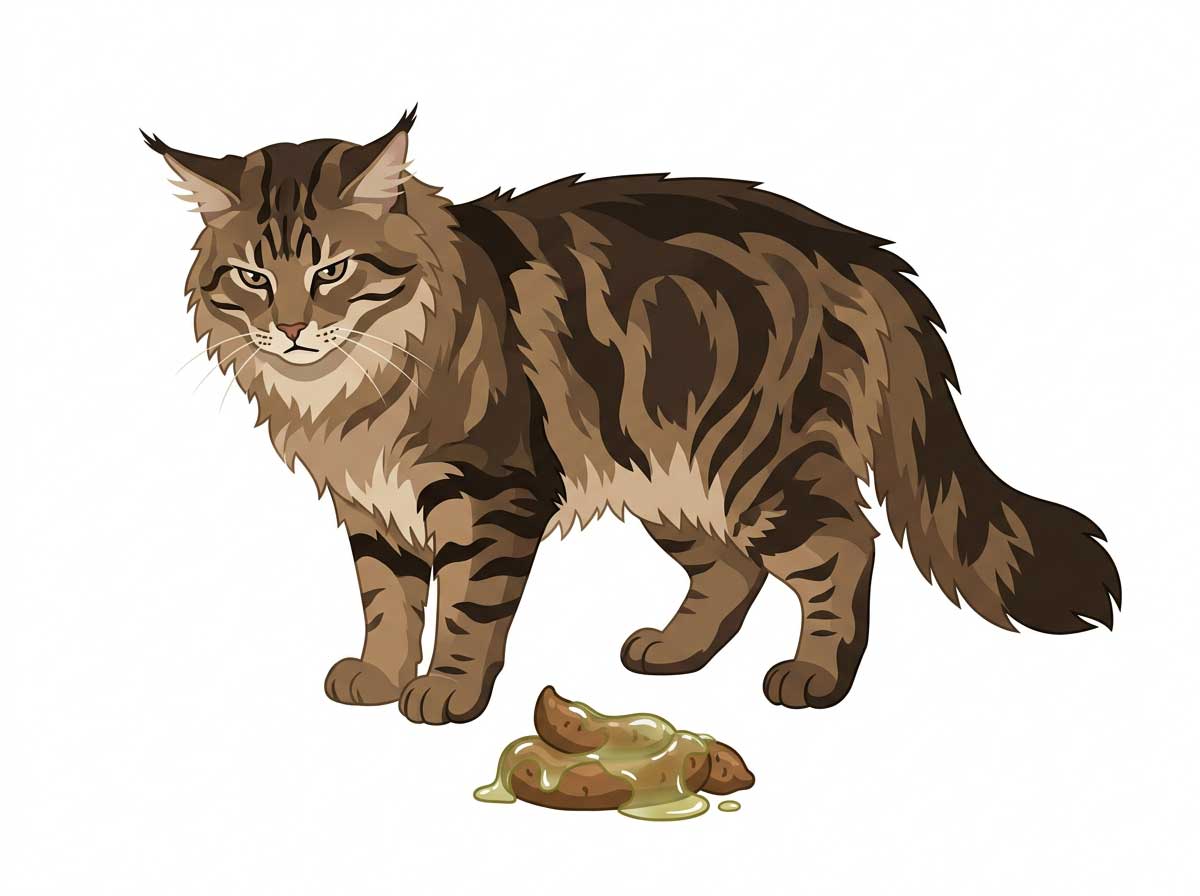
A small amount of mucus in cat poop is normal — the intestines produce it to help stool pass. Excessive mucus — where the stool looks jelly-like or has a thick slimy coating — signals inflammation in the colon (colitis). Cat pooping jelly-like substance with no solid stool is more concerning and may indicate severe colitis or inflammatory bowel disease. Bloody mucus in cat stool suggests colitis, parasites, or infection. Common triggers include dietary changes, food intolerance, stress, parasites, and IBD. Cat poop mucus and blood together should be evaluated by a vet within 24-48 hours. If mucus persists more than 2-3 days, even without blood, schedule a vet visit.
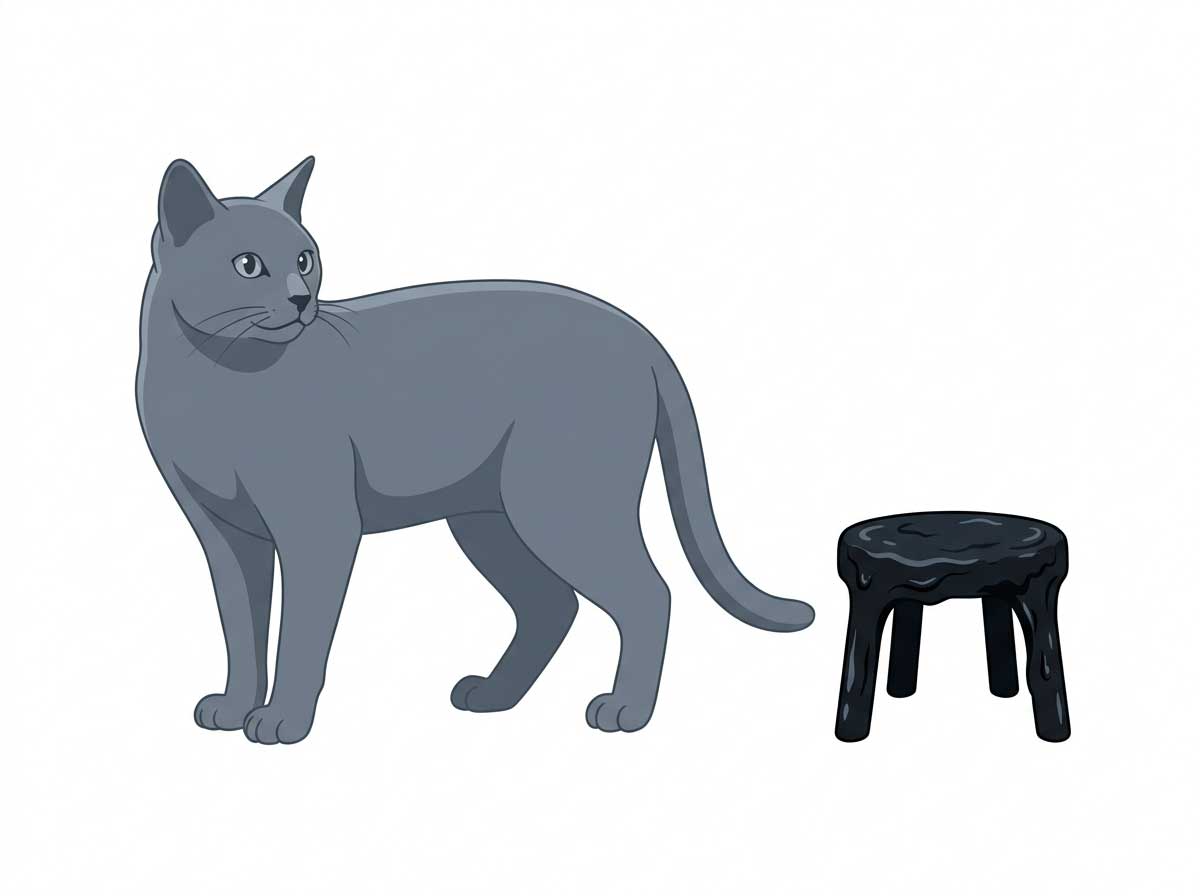
Black Cat Poop (Tarry Stool / Melena)
Black, tarry cat poop (melena) is a serious sign indicating digested blood from the upper gastrointestinal tract — the stomach or small intestine. The blood turns black as it passes through the digestive system. Common causes include stomach ulcers (sometimes from NSAID medications — never give cats human painkillers), intestinal tumors, severe infections, or blood clotting disorders. Black tarry cat poop is always a reason to see your vet promptly. Cat poop black but not tarry — firm and dark brown-black — may simply be from a high-protein diet or certain foods and is less concerning. The key distinction is the tarry, sticky, almost-melted texture of true melena versus simply dark-colored firm stool.
Yellow or Green Cat Poop
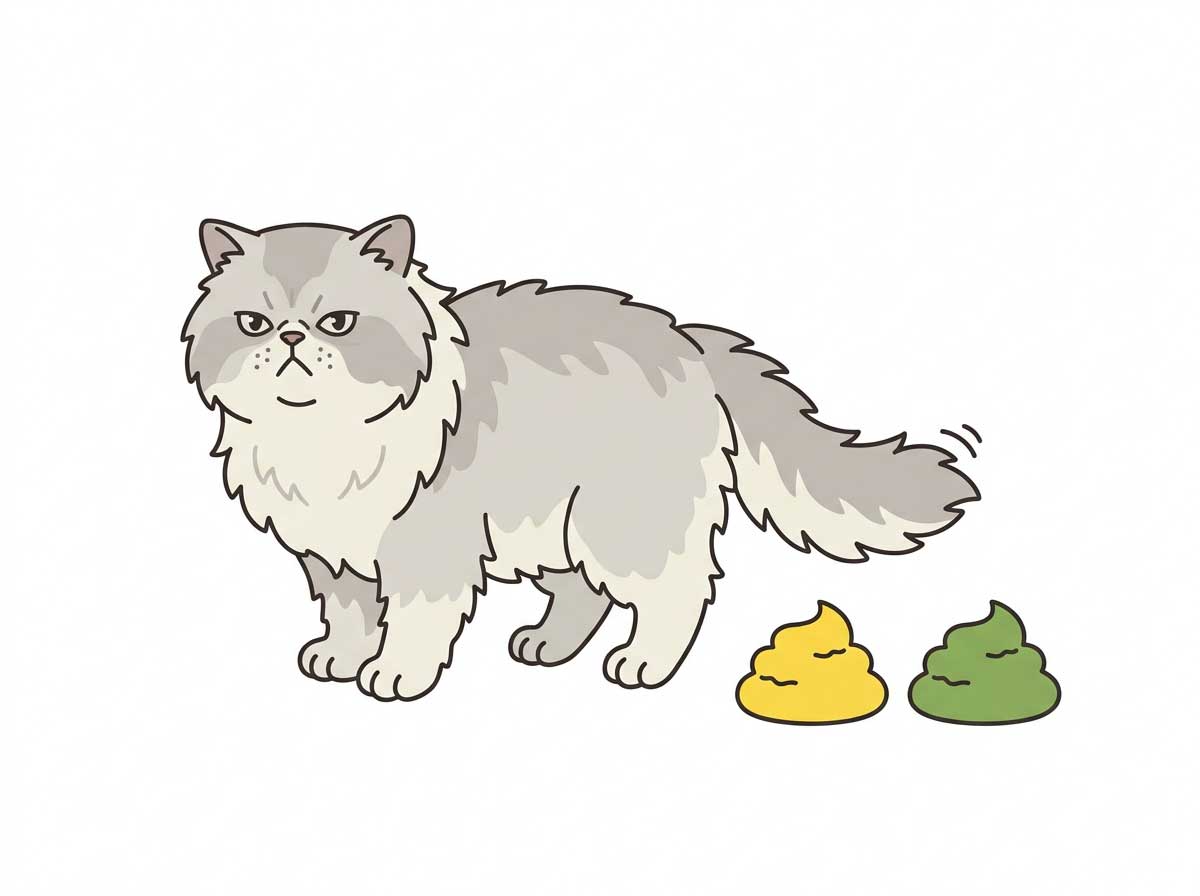
Yellow cat poop can indicate several issues: liver or gallbladder problems (bile isn't being processed properly), bacterial infection, food passing through too quickly (not enough time for bile to turn it brown), coccidia (a common intestinal parasite in kittens), or pancreatitis. Why is my cat's poop yellow and stinky? Foul-smelling yellow stool often points to malabsorption — fat and nutrients aren't being properly absorbed. Green cat poop may indicate a gallbladder issue, eating plants or grass, intestinal parasites (especially Giardia), or rapid transit through the intestines. Cat poop green and smelly can suggest infection. Both persistent yellow and green stool warrant a vet visit to check liver, pancreas, and parasite status.
White or Pale Cat Poop
White or very pale, clay-colored cat poop is uncommon but significant — it typically indicates a problem with the liver, gallbladder, or pancreas. Bile produced by the liver gives stool its normal brown color; when bile can't reach the intestines (due to a blocked bile duct, liver disease, or gallbladder issues), stool turns pale gray or white. White specks or spots in otherwise normal-colored cat poop are different — these are usually tapeworm segments (look like rice grains) or undigested food. White mold on cat poop that's been sitting in the litter box for a while is normal decomposition and not a health concern. But fresh white or gray stool from your cat should prompt an urgent vet visit to check liver and pancreatic function.
Worried about your cat's poop?
Upload a photo of your cat's stool now. Get an AI-powered analysis of color, consistency, and potential health issues in seconds.
Check Cat Poop Now →Medical Disclaimer
PawCheck provides AI-generated preliminary health analysis for informational and educational purposes only. This service is not intended to replace professional veterinary advice, diagnosis, or treatment. The AI analysis has inherent limitations and may not always be accurate. Always seek the advice of a qualified, licensed veterinarian with any questions regarding your pet's health. Never disregard professional veterinary advice or delay in seeking it because of information provided by this tool. If your pet is experiencing a medical emergency, contact your veterinarian or emergency animal hospital immediately. By using this service, you acknowledge and agree to these terms.
Frequently Asked Questions
Should I worry if my cat has blood in stool?
+
It depends on the amount and your cat's overall behavior. A small streak of bright red blood in otherwise normal stool may come from minor irritation in the lower digestive tract — straining, colitis, or a dietary change. Blood in cat stool but acting normal is common with mild issues. However, you should see a vet promptly if: there's a large amount of blood, blood appears repeatedly over multiple days, stool is dark/tarry black (indicating upper GI bleeding), or your cat shows other symptoms like vomiting, lethargy, appetite loss, or weight loss. Kittens with bloody stool should always be seen urgently.
When should I be concerned about my cat's diarrhea?
+
Mild diarrhea that resolves within 24-48 hours is usually not serious — common causes include dietary changes, stress (moving, new pet), or eating something they shouldn't have. Be concerned and see a vet if: diarrhea lasts more than 48 hours, there's blood or mucus in the stool, your cat is vomiting as well (cat vomiting and diarrhea together is more serious), your cat stops eating or drinking, you notice lethargy or weight loss, or your cat is a kitten (they dehydrate very quickly). Chronic diarrhea lasting more than 2 weeks suggests inflammatory bowel disease, food allergies, parasites, or hyperthyroidism.
How do you treat worms in cats poop?
+
Worms in cats require prescription deworming medication from your vet — over-the-counter dewormers are often ineffective or treat the wrong type of worm. Your vet will identify the worm type (roundworm, tapeworm, hookworm) through a fecal test or by examining a sample you bring in. Roundworms and hookworms are treated with broad-spectrum dewormers. Tapeworms require praziquantel specifically. Treatment usually involves 2-3 doses given 2-4 weeks apart to kill newly hatching worms. All cats in the household should be treated simultaneously. Indoor cats can still get worms from fleas, so flea prevention is important too.
What does unhealthy cat poop look like?
+
Healthy cat poop is dark brown, well-formed (like a Tootsie Roll), moist but not wet, and doesn't have an overwhelmingly foul smell. Unhealthy signs include: black or tarry stool (upper GI bleeding), bright red blood (lower GI issue), yellow or orange stool (liver/gallbladder problems), green stool (gallbladder issue or eating something toxic), white or gray stool (pancreatic/bile problems), very hard dry pellets (dehydration/constipation), watery or liquid stool (infection/parasites/IBD), visible worms or white specks (parasites), excessive mucus coating (colitis/inflammation), and extremely foul smell (malabsorption or infection).
What color is liver disease cat poop?
+
Liver disease in cats often produces pale, clay-colored, grayish, or yellowish stool. This happens because the liver produces bile, which gives poop its normal brown color. When the liver isn't functioning properly or bile ducts are blocked, less bile reaches the intestines, resulting in lighter-colored stool. Other signs of liver disease include yellowing of the eyes, gums, or ear flaps (jaundice), dark orange or brown urine, loss of appetite, weight loss, vomiting, and increased thirst. If your cat's poop is consistently pale or gray, see your vet for blood work to check liver function.
Why does my cat have diarrhea but is acting normal?
+
Cats can have diarrhea while acting perfectly normal for several reasons: sudden food change (even switching brands), food intolerance or sensitivity, mild stress, eating something unusual (a bug, a plant, human food), hairballs irritating the digestive tract, or mild bacterial imbalance. Try feeding a bland diet (plain boiled chicken in small amounts) for 1-2 days, ensure fresh water is available, and avoid treats. If diarrhea persists beyond 48 hours despite acting normal, see your vet — cats hide illness well, and chronic diarrhea can indicate parasites, IBD, or hyperthyroidism even when they seem fine.
Will my cat be OK if he has worms?
+
With proper treatment, most cats recover fully from intestinal worms. However, untreated worms can cause serious problems: weight loss despite normal appetite, nutritional deficiencies (worms steal nutrients), anemia (hookworms feed on blood), intestinal blockage (heavy roundworm load, especially in kittens), dull coat, vomiting, diarrhea, and a pot-bellied appearance in kittens. Kittens are at higher risk of serious complications than adult cats. Some cat worms — particularly roundworms and hookworms — can also infect humans, making treatment important for the whole family's health. Regular deworming and fecal checks are the best prevention.
How long does cat diarrhea typically last?
+
Acute diarrhea from dietary indiscretion, stress, or mild infection usually resolves within 24-48 hours. Diarrhea from a food change may take 3-5 days to settle as the digestive system adjusts. If diarrhea persists beyond 48 hours, or is accompanied by blood, vomiting, lethargy, or appetite loss, see your vet. Chronic diarrhea lasting more than 2-3 weeks is a red flag for conditions like inflammatory bowel disease (IBD), food allergies, hyperthyroidism, intestinal lymphoma, or chronic parasitic infection — all of which require veterinary diagnosis and ongoing management.
More AI Pet Health Checks
Eye Infection Checker
Detect dog eye infection, cat eye problems, conjunctivitis, corneal ulcers, and cataracts.
Skin Disease Checker
Detect dog skin infection, cat skin problems, dermatitis, hot spots, and ringworm.

Dog Ear Infection Checker
Detect dog ear infection, ear mites, yeast infections, and ear discharge with AI photo analysis.
Cat Ear Mites Checker
Detect cat ear mites, ear infections, yeast infections, and ear discharge with AI photo analysis.
Cat Vomit Checker
Why is my cat vomiting? Analyze white foam, yellow bile, blood, hairballs, and more with AI.

Dog Vomit Checker
Dog vomiting when to worry? Analyze white foam, yellow bile, blood, and undigested food with AI.
Dog Nose Checker
Dog nose dry or runny? Analyze cracked noses, nasal discharge, and color changes with AI.
Dog Dental Checker
Detect dog tooth infections, gum disease, tartar buildup, and dental problems with AI photo analysis.

Dog Poop Checker
Blood in dog stool? Analyze poop color, detect worms, mucus, and diarrhea with AI photo analysis.
Cat Dental Checker
Detect cat tooth infections, gum disease, stomatitis, tooth resorption, and dental problems with AI photo analysis.

Dog Lump Checker
Found a lump on your dog? Identify skin tags, warts, cysts, lipomas, and bumps with AI photo analysis.
Dog Wound Checker
Is your dog's wound infected? Check infection signs, healing stages, and bite wounds with AI photo analysis.
Cat Lump Checker
Found a lump on your cat? Identify skin tags, cysts, lipomas, warts, and bumps with AI photo analysis.
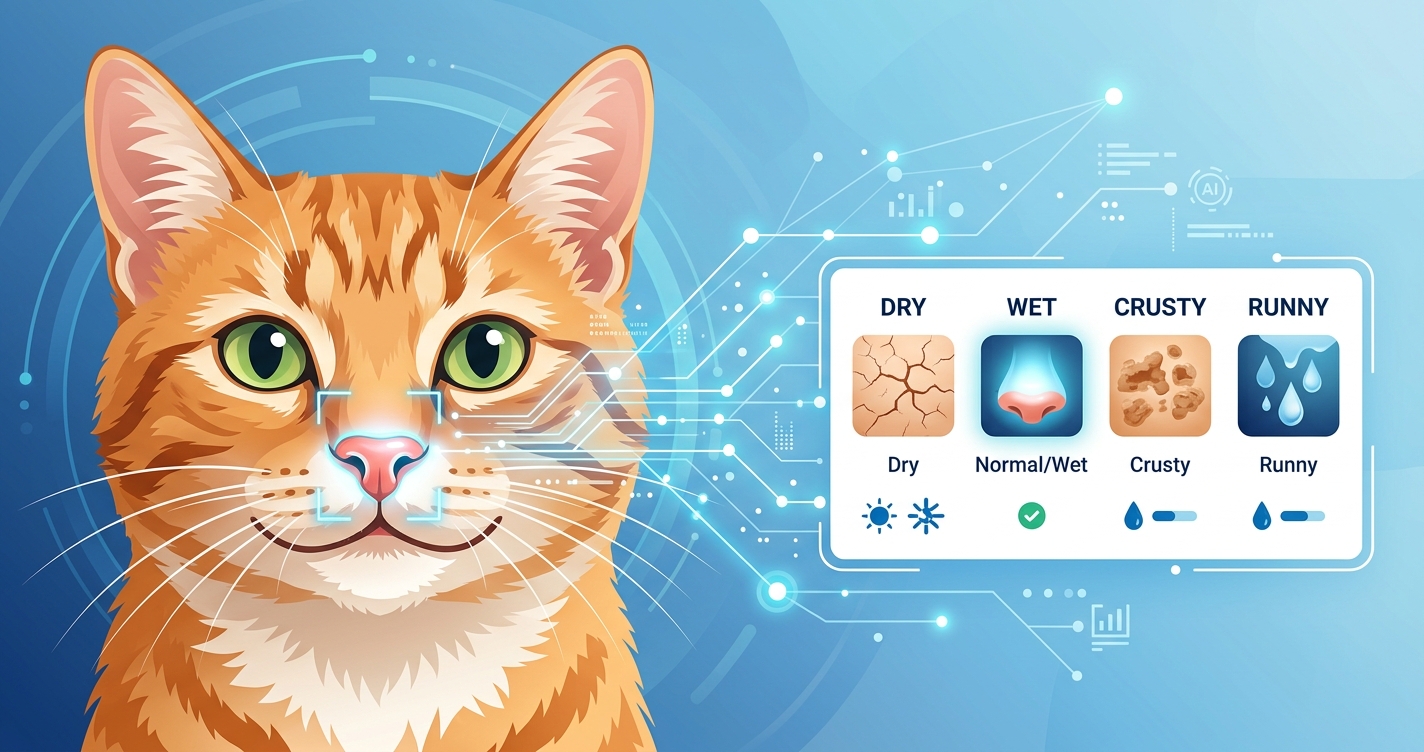
Cat Nose Checker
Cat nose dry or runny? Analyze crusty noses, nasal discharge, and sneezing symptoms with AI.
🐾
View All Tools
Explore all AI pet health check tools