Cat Wound Checker — Is It Serious?
Worried about your cat's wound? Upload a photo and get an instant AI assessment of infection signs, wound type, healing stage, and whether you need to see a vet.
Drop your pet's photo here
or
✅JPG, PNG, WEBP
📏Max 8MB
This tool provides AI-generated preliminary analysis only. Not a substitute for professional veterinary diagnosis.
📸 Photo Guide
Good photos
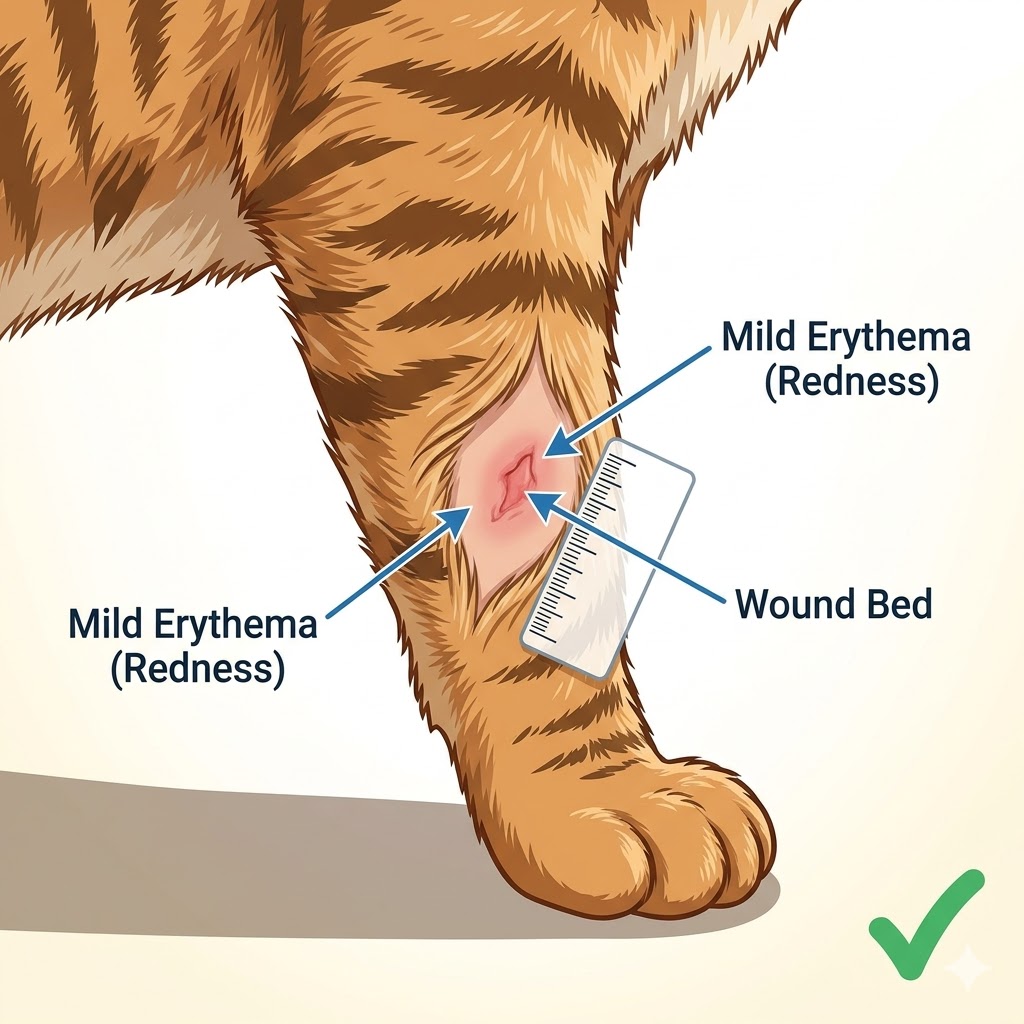
Close-up, clear
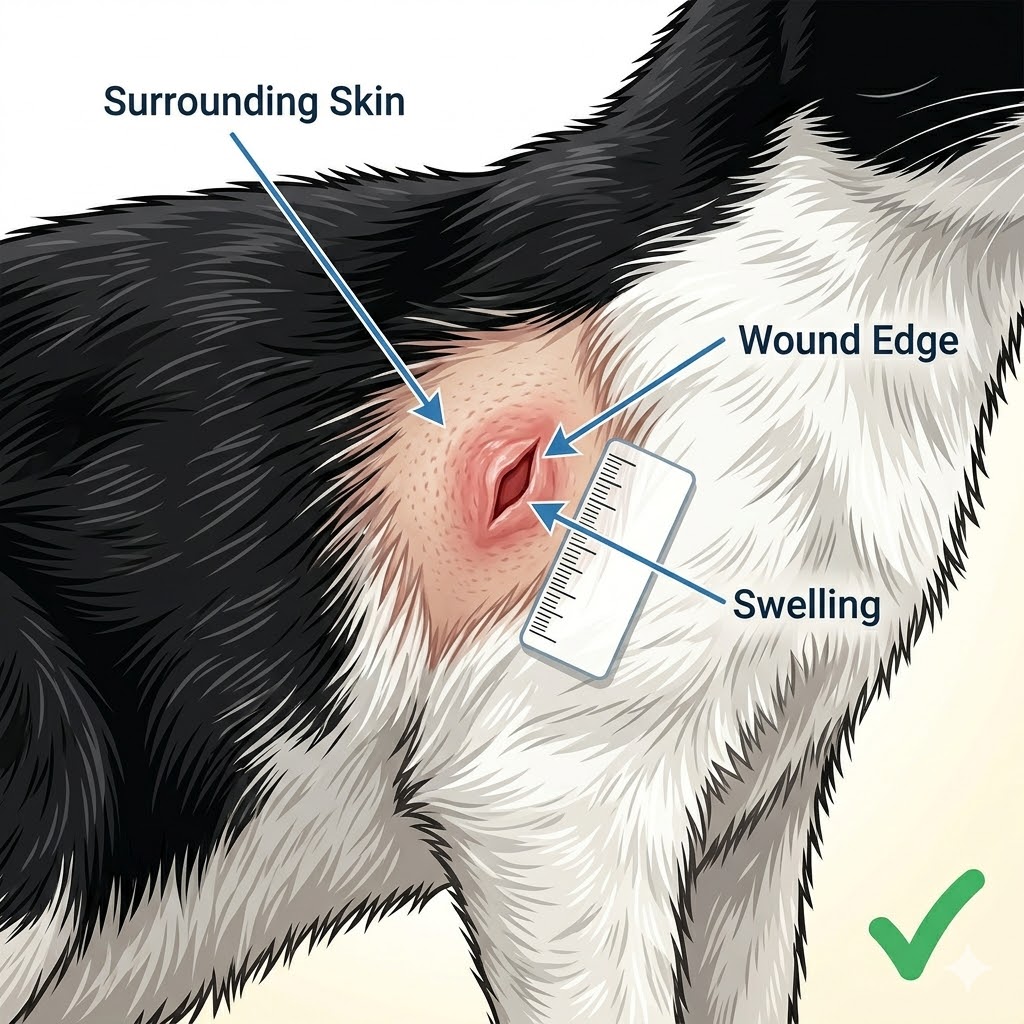
Shows surrounding area
Avoid
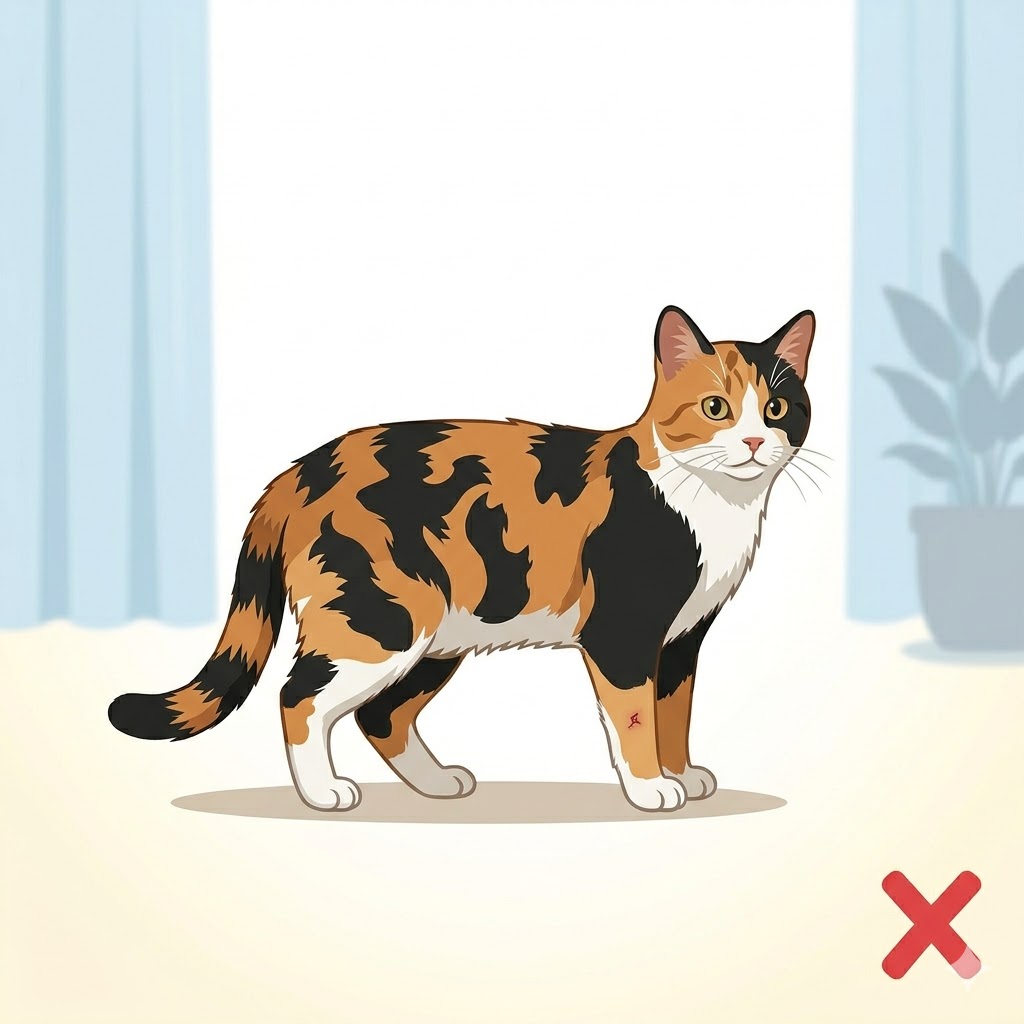
Too far away
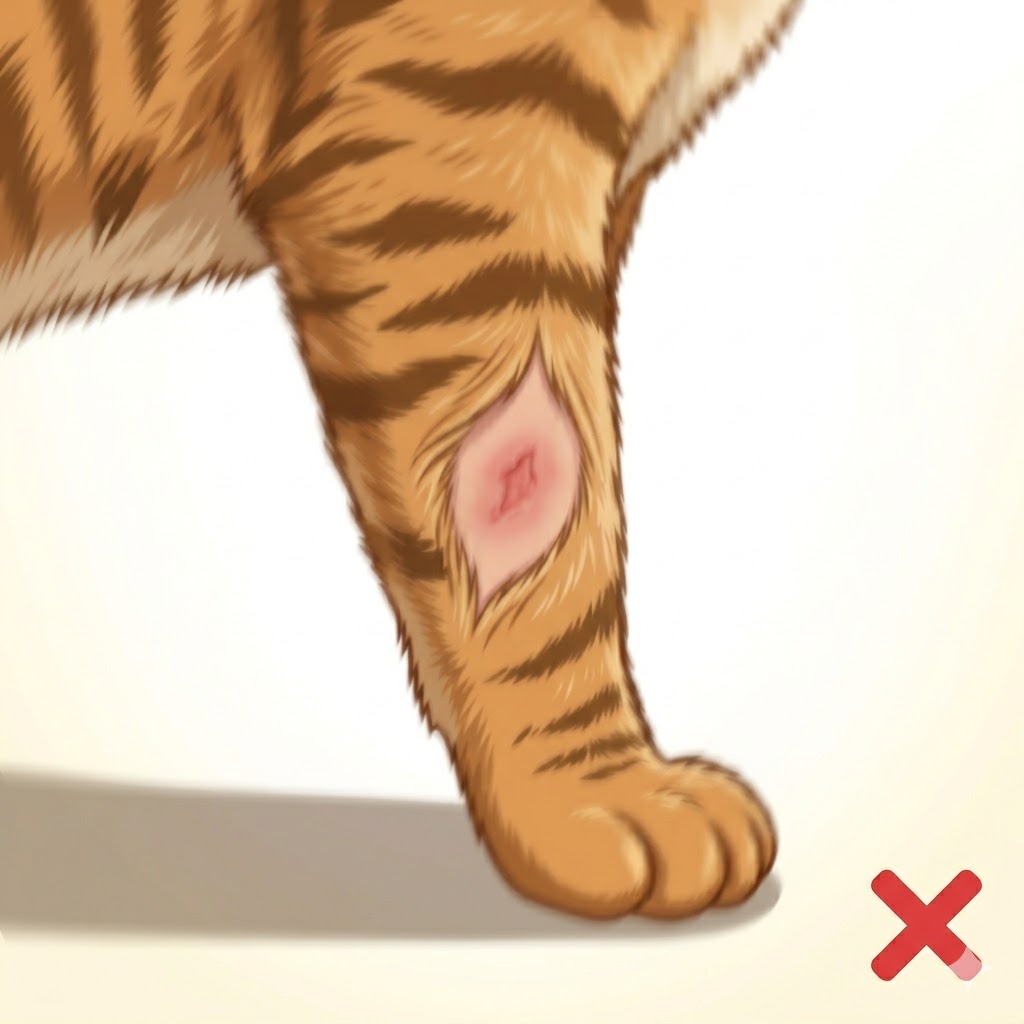
Blurry
Tips for best results
- ✓Part the fur around the wound to expose the full area
- ✓Take the photo in good lighting so wound color is accurate
- ✓Include the surrounding skin — redness and swelling are key infection signs
- ✓If there's discharge, make sure it's visible in the photo
- ✓For abscesses, photograph the swelling from the side to show the raised profile
How It Works — AI Cat Wound Checker

Step 1
Upload a Photo
Take a clear, well-lit photo of your cat's wound. Include the surrounding skin so the AI can assess redness, swelling, and discharge.
Step 2
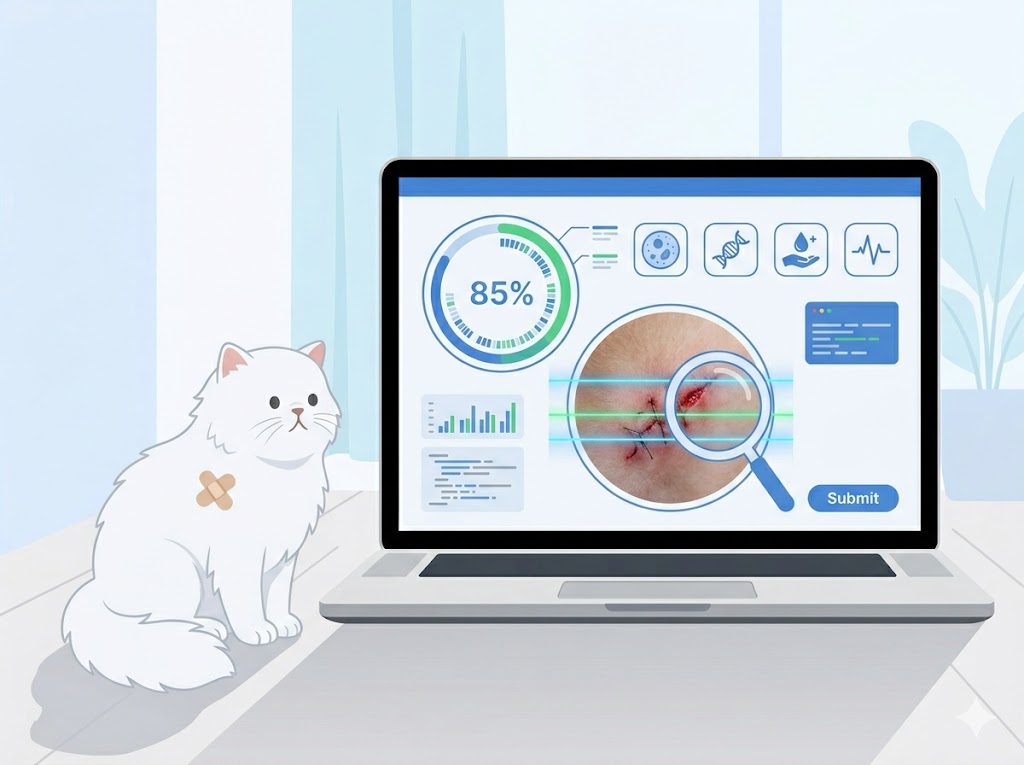
AI Analyzes
Our AI examines the wound for signs of infection, healing stage, wound type, and severity to determine if veterinary care is needed.
Step 3
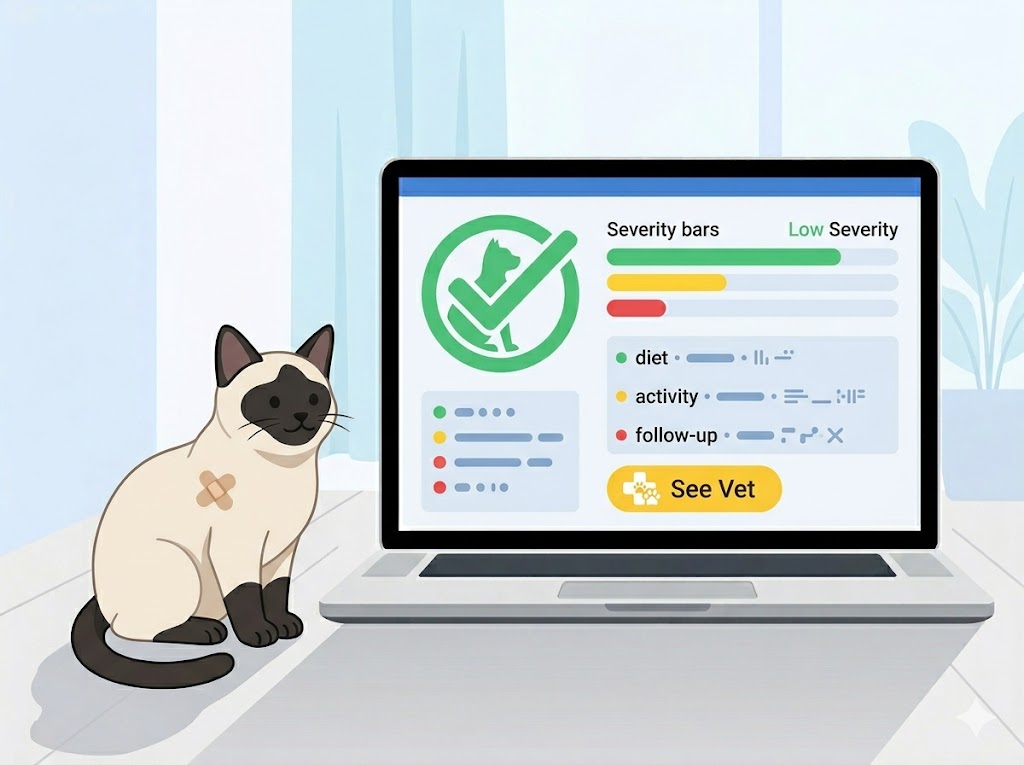
Get Your Report
Receive a detailed report with wound assessment, infection risk level, healing stage, and whether you should see a vet urgently.
Types of Cat Wounds & Infection Signs
Is your cat's wound serious? Cats are masters at hiding pain, so a wound that seems minor can quickly become dangerous. Here are the most common wound types and what our AI can help you assess. Also try our dog wound checker or cat skin checker or cat lump checker.
Infected Wound (Signs of Infection)
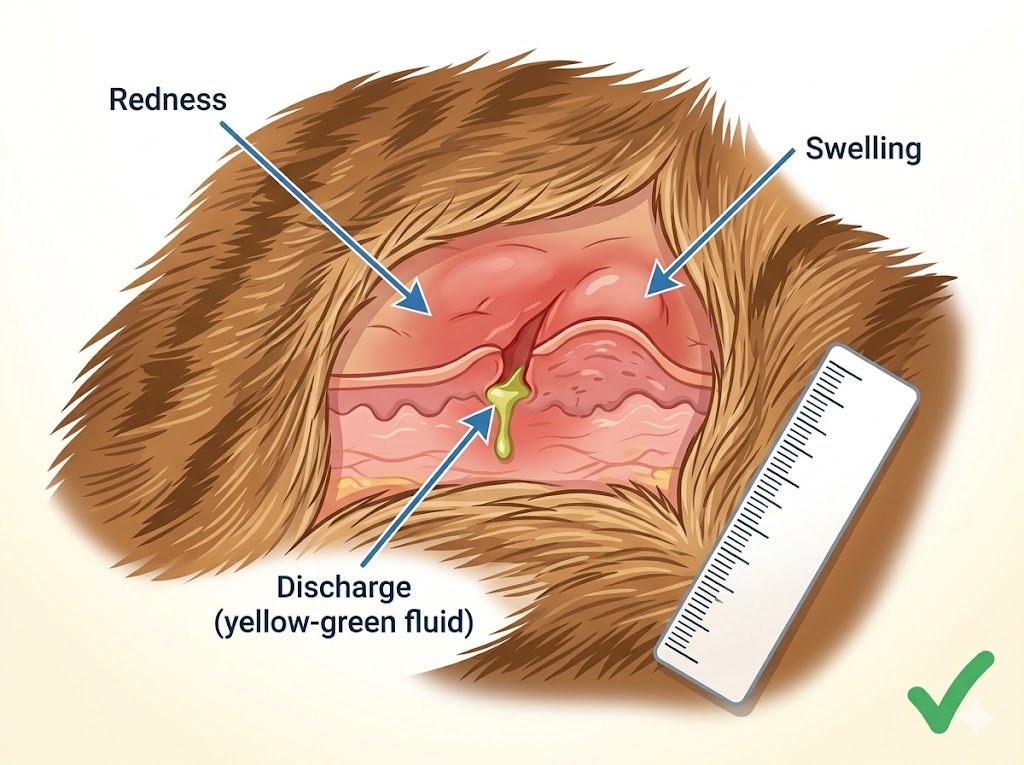
An infected cat wound is the most urgent reason owners look for help. Cat wound infection signs include: increasing redness and swelling around the wound (not improving after 2 days), yellow or green pus-like discharge, a foul smell from the wound, the area feels hot to the touch, and your cat becoming lethargic or hiding. How to tell if a cat wound is infected? A healing wound improves daily — an infected wound gets worse. Cat wounds have a higher infection rate than dog wounds because cat skin seals over quickly, trapping bacteria beneath the surface. This is why even small cat wounds — especially bite wounds — should be watched very closely. If you see infection signs, your cat needs antibiotics from a vet immediately.
Cat Fight Wound / Bite Wound
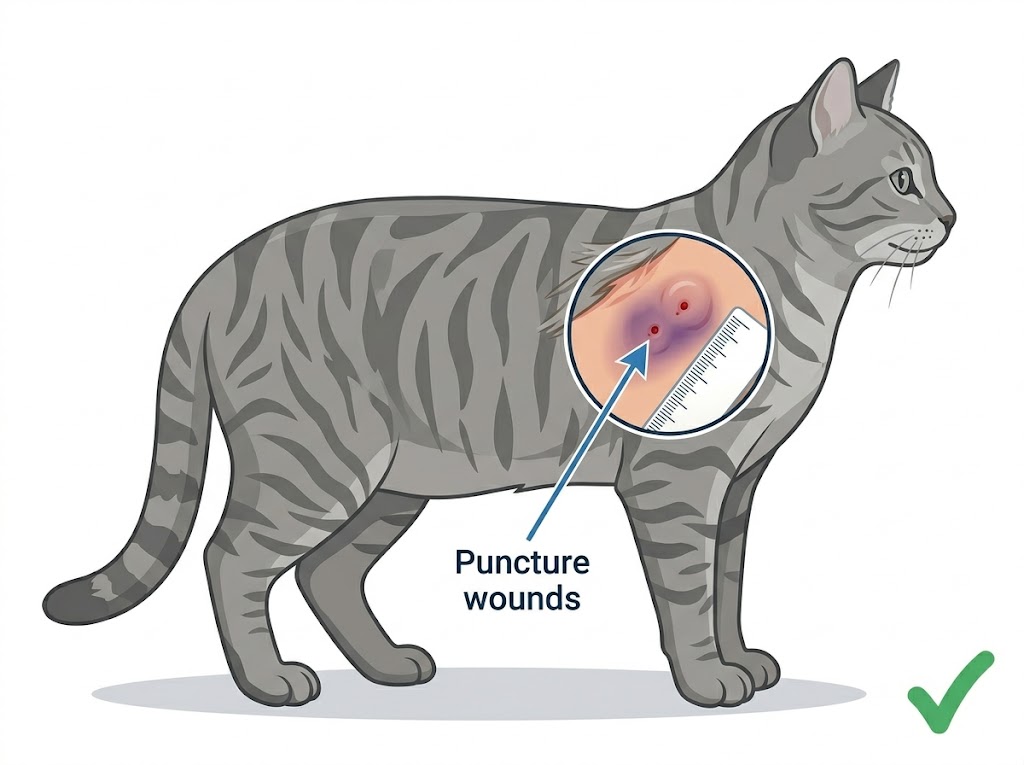
Cat fight wounds are the most common and most dangerous type of cat wound. When cats fight, their sharp teeth create deep puncture wounds that seal over within hours — trapping bacteria deep in the tissue where abscesses form. Cat bite wound infections develop in up to 80% of untreated cases (much higher than dog bites) because cat teeth are thin and needle-like, driving bacteria deep into tissue. A cat fight wound often looks deceptively minor — a tiny hole or scratch on the surface — but can cause a serious abscess within 2-4 days. If your cat has been in a fight, especially if you find small puncture wounds, see your vet within 24 hours. Early antibiotics can prevent abscess formation entirely.
Open Wound (Laceration / Cut)
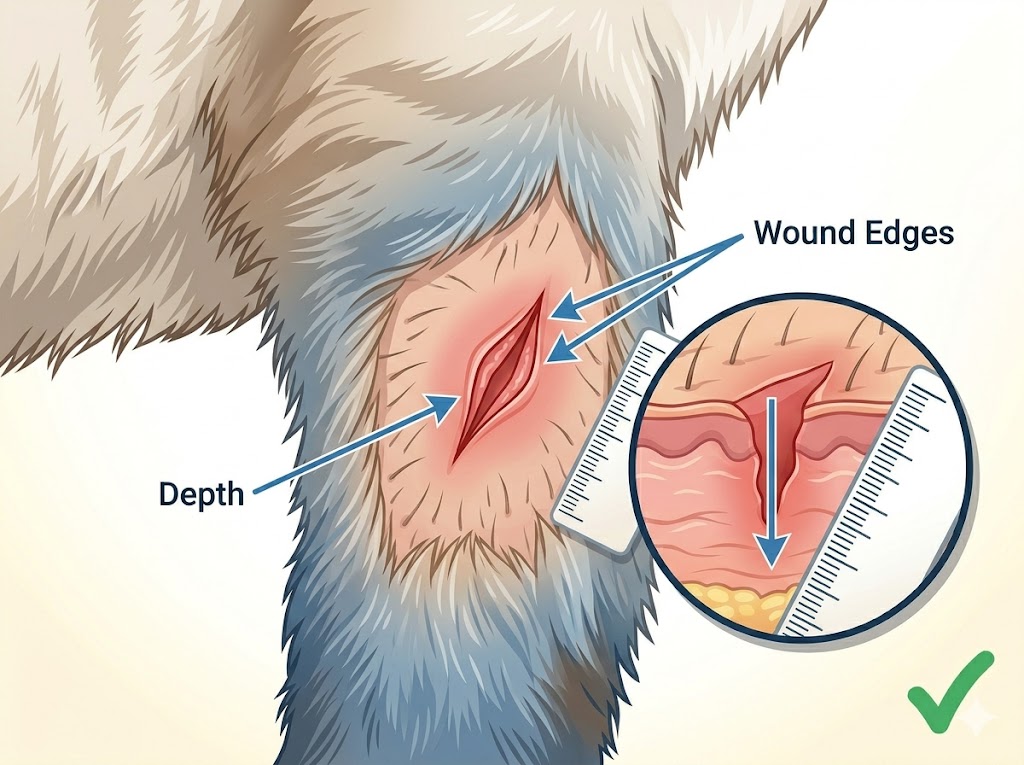
An open wound on a cat can result from sharp objects, fences, car accidents, or other trauma. Open wound on cat belly, neck, leg, side, tail, back, face, and head are all common locations owners worry about. Minor shallow scrapes often heal with basic home care — keep clean, prevent licking with an e-collar, and monitor for infection. However, deep or gaping wounds, wounds exposing tissue beneath the skin, wounds that won't stop bleeding, and wounds longer than half an inch typically need vet attention and possibly stitches. Can a cat's open wound heal by itself? Minor surface wounds can, but deeper wounds need professional care. How to heal an open wound on a cat fast? Keep it clean, prevent licking, and follow your vet's treatment plan — there are no safe shortcuts.
Cat Wound Healing Stages
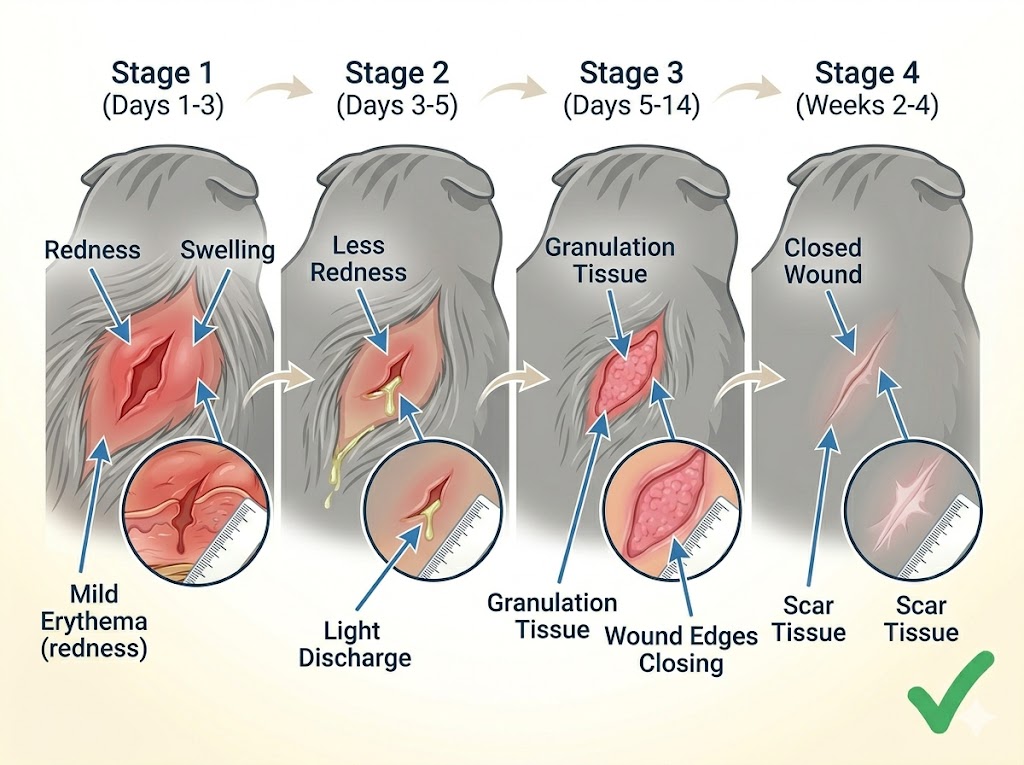
Understanding cat wound healing stages helps you know if your cat's wound is progressing normally or needs attention. Stage 1 — Inflammation (days 1-3): redness, mild swelling, warmth, and light clear discharge — this is normal. Stage 2 — Debridement (days 3-5): the body cleans the wound, slight discharge may continue. Stage 3 — Repair (days 5-14): pink granulation tissue forms, wound edges start closing, scab develops. Stage 4 — Maturation (weeks 2-4+): wound closes, scar forms and strengthens. How do you know if a cat wound is healing? Normal healing shows steady daily improvement — less redness, less swelling, less pain. How do you tell if a wound is getting better or worse? Take photos daily to compare. If the wound stalls at Stage 1-2, gets worse, or develops smell/pus — it's likely infected.
Abscess (Burst or Intact)
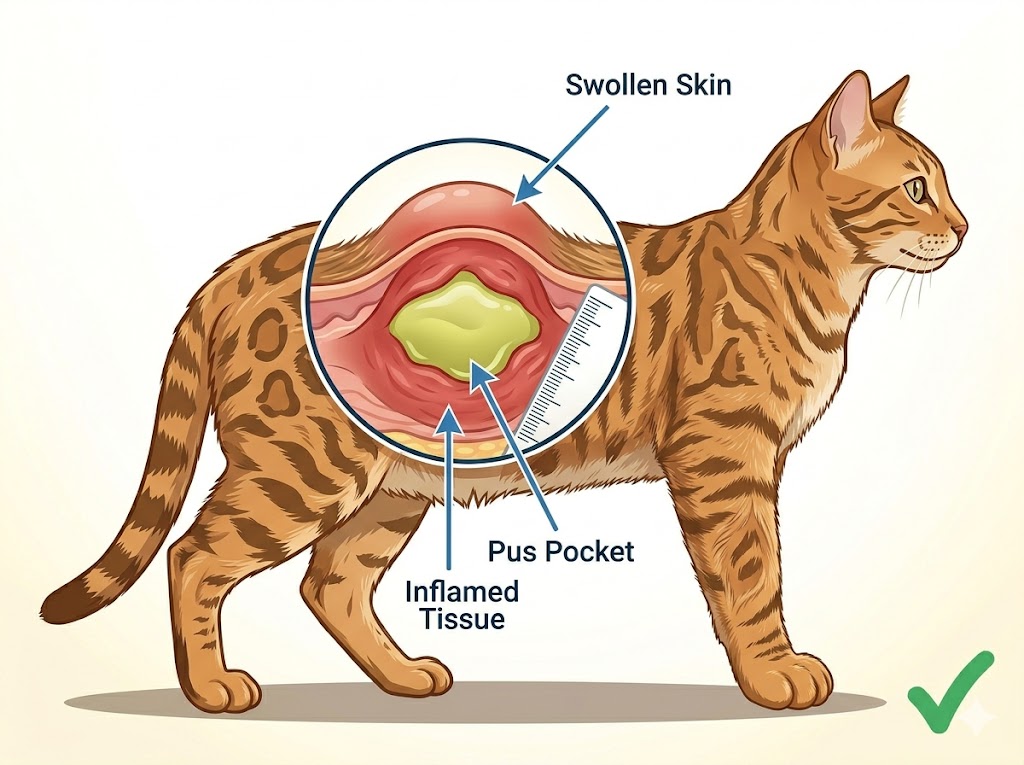
Cat abscesses are extremely common — they're the #1 reason outdoor cats visit the vet. An abscess forms when bacteria (usually from a bite wound) get trapped under the sealed skin and multiply, creating a pocket of pus. It appears as a firm, painful, warm swelling that grows over 2-4 days. A cat abscess burst releases thick, foul-smelling pus — often brown, yellow, or bloody. What does a burst abscess on a cat look like? A hole or crater with draining fluid and matted surrounding fur. Will a burst abscess heal on its own? Sometimes a small one will if kept clean, but veterinary care (drainage, flushing, antibiotics) is strongly recommended to prevent recurrence and complications. How long does a ruptured abscess take to heal? With treatment, typically 1-2 weeks.
Puncture Wound
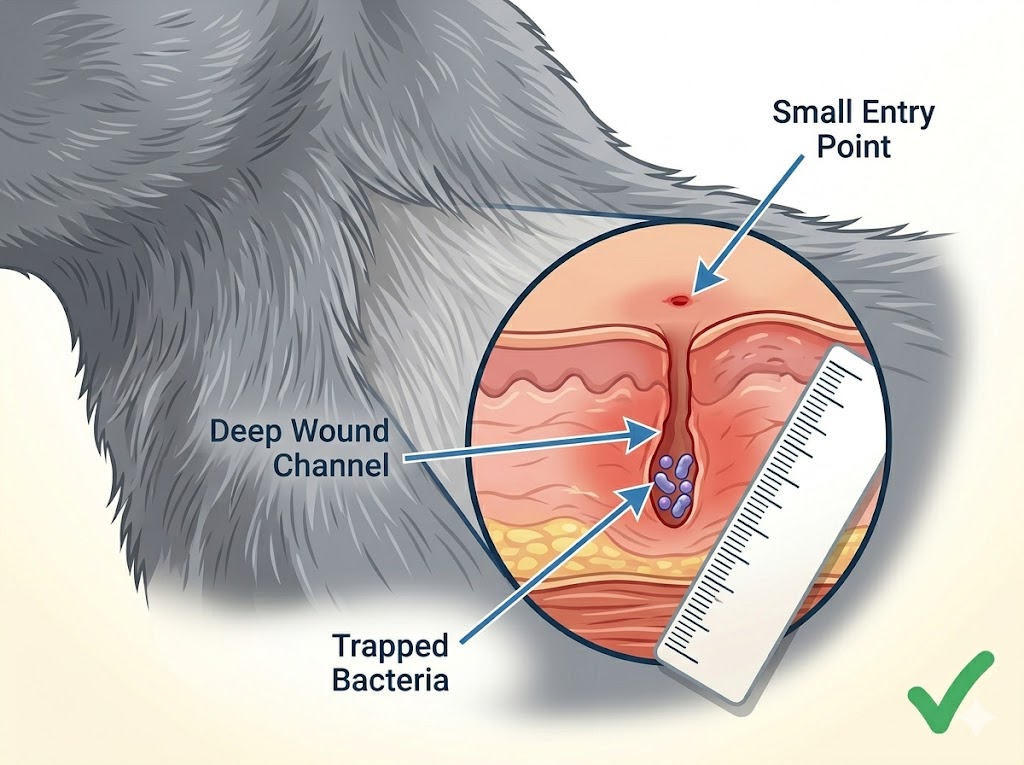
Cat puncture wounds are deceptively dangerous because they look small but go deep. Sources include cat bites (most common), sharp objects, thorns, and animal attacks. Cat puncture wounds seal over quickly — often within hours — trapping bacteria deep in the tissue. This is why puncture wounds have the highest infection rate of any wound type in cats. Cat puncture wound care: do NOT let the wound close over — gently clean and flush with saline, and see your vet within 24 hours. Your vet may keep the wound open to drain and prescribe antibiotics. Signs a puncture wound is infected: increasing swelling 1-3 days after the injury, warmth, pain when touched, discharge, and your cat developing a fever or acting lethargic. Even tiny puncture wounds can lead to large abscesses or systemic infection if untreated.
Worried about your cat's wound?
Upload a photo of your cat's wound now. Get an AI-powered assessment of infection signs, healing stage, and whether you need to see a vet.
Check Cat Wound Now →Medical Disclaimer
PawCheck provides AI-generated preliminary health analysis for informational and educational purposes only. This service is not intended to replace professional veterinary advice, diagnosis, or treatment. The AI analysis has inherent limitations and may not always be accurate. Always seek the advice of a qualified, licensed veterinarian with any questions regarding your pet's health. Never disregard professional veterinary advice or delay in seeking it because of information provided by this tool. If your pet is experiencing a medical emergency, contact your veterinarian or emergency animal hospital immediately. By using this service, you acknowledge and agree to these terms.
Frequently Asked Questions
How to tell if a cat wound is infected?
+
An infected cat wound typically shows: increasing redness and swelling around the wound that isn't improving after 2-3 days, yellow or green discharge (pus), a foul smell coming from the wound, the area feels warm or hot to the touch, swelling that's getting bigger instead of smaller, and your cat being lethargic, hiding, or refusing food. Cat wound infection signs also include red streaks spreading outward from the wound and your cat excessively licking or guarding the area. A healing wound improves daily with decreasing redness — an infected wound gets worse. Upload a photo to get an AI assessment of whether the wound shows infection signs.
Can a cat's open wound heal by itself?
+
Minor surface wounds — small scrapes, shallow scratches, and minor abrasions — can often heal on their own with basic care: keep it clean and prevent your cat from licking it (use an e-collar). However, these wounds need veterinary care: bite wounds or fight wounds (very high infection risk in cats), puncture wounds, deep cuts exposing fat or muscle, wounds that won't stop bleeding, wounds larger than half an inch, any wound showing signs of infection, and wounds on the face, paws, or joints. Cat fight wounds are especially dangerous — they often look minor but seal over bacteria that cause abscesses within 2-4 days.
What does an infected wound look like on a cat?
+
An infected wound on a cat looks noticeably worse than when it first occurred. You'll see: the skin around the wound is increasingly red, puffy, and swollen, thick yellow or greenish discharge (not clear or light pink), the wound edges may look ragged or the wound may be opening wider, the surrounding fur may be matted with discharge, swelling under the skin that feels firm or fluctuant (which may indicate an abscess forming), and the area may feel warm. If the wound has progressed to an abscess, you may see a dome-shaped swelling that can eventually burst, releasing foul-smelling pus. Compare your cat's wound to these signs — or upload a photo for instant AI analysis.
When should I worry about my cat's wound?
+
You should see a vet promptly if: the wound is from a cat fight or animal bite (infection rate is extremely high), there's heavy bleeding that won't stop with gentle pressure, you can see deep tissue, fat, or bone, the wound is on the chest or abdomen (risk of penetrating injury), the wound shows any signs of infection (redness increasing, discharge, smell), there's a growing swelling near the wound (possible abscess), your cat has a fever, is lethargic, or refusing to eat, the wound isn't improving after 24-48 hours, or the wound is near the eyes, throat, or genitals. Cat wounds — especially fight wounds — are notorious for developing serious infections quickly. When in doubt, always get it checked.
What can I put on my cat's wound at home?
+
For minor cat wounds, you can: gently clean with lukewarm water or saline solution (1 teaspoon salt per 2 cups boiled then cooled water), pat dry with clean gauze, and apply a thin layer of plain antibiotic ointment (like Neosporin without pain relief — the "-caine" ingredients are toxic to cats). Important: do NOT use hydrogen peroxide (damages healing tissue), alcohol (causes pain and tissue damage), tea tree oil (toxic to cats), or any product containing lidocaine, benzocaine, or other "-caine" ingredients. Use an e-collar to prevent licking. However, if the wound is from a bite, is deep, shows infection signs, or your cat seems unwell, skip home treatment and go to the vet — cats are very prone to wound infections.
How long does a burst abscess take to heal on a cat?
+
With proper veterinary treatment (drainage, flushing, and antibiotics), a burst cat abscess typically takes 1-2 weeks to fully heal. The timeline: days 1-3 the wound drains and swelling decreases significantly, days 3-7 discharge decreases and healthy tissue starts forming, days 7-14 the wound closes and heals. Without veterinary treatment, a burst abscess may not heal properly — it can reform, spread, or develop into a more serious systemic infection. Factors that affect healing time include: abscess size and location, whether the wound is kept clean and open to drain, your cat's overall health, and whether they're wearing an e-collar to prevent licking. If the abscess isn't improving within 3-4 days of treatment, contact your vet.
How to speed up wound healing in cats?
+
To help your cat's wound heal faster: keep the wound clean — gently flush with saline 1-2 times daily, prevent licking — use an e-collar consistently (licking is the #1 cause of delayed healing and infection), follow your vet's instructions exactly — complete the full course of antibiotics, keep your cat indoors during healing to prevent re-injury and contamination, ensure good nutrition — a well-nourished cat heals faster, keep the wound dry — avoid bathing, and monitor daily for signs of infection or worsening. Do NOT pick at scabs (they protect the healing tissue), apply random home remedies, let your cat go outside before fully healed, or skip e-collar time because your cat seems annoyed by it.
How do you know if a cat wound is healing?
+
A healing cat wound shows steady improvement through these stages: Stage 1 — Inflammation (days 1-3): some redness, mild swelling, and light clear or pink discharge are normal. Stage 2 — Cleaning (days 3-5): the body is cleaning the wound, slight discharge may continue. Stage 3 — Repair (days 5-14): pink granulation tissue forms, wound edges start closing, a scab develops. Stage 4 — Maturation (2-4 weeks): the wound closes, scar tissue forms and strengthens. The key sign of healing is daily improvement — less redness, less swelling, less discharge, and your cat bothering it less. If the wound stalls, gets worse, develops smell, or your cat becomes lethargic, it may be infected. Upload a photo each day and compare to track healing progress.
More AI Pet Health Checks
Eye Infection Checker
Detect dog eye infection, cat eye problems, conjunctivitis, corneal ulcers, and cataracts.

Skin Disease Checker
Detect dog skin infection, cat skin problems, dermatitis, hot spots, and ringworm.

Dog Ear Infection Checker
Detect dog ear infection, ear mites, yeast infections, and ear discharge with AI photo analysis.
Cat Ear Mites Checker
Detect cat ear mites, ear infections, yeast infections, and ear discharge with AI photo analysis.
Cat Vomit Checker
Why is my cat vomiting? Analyze white foam, yellow bile, blood, hairballs, and more with AI.

Dog Vomit Checker
Dog vomiting when to worry? Analyze white foam, yellow bile, blood, and undigested food with AI.
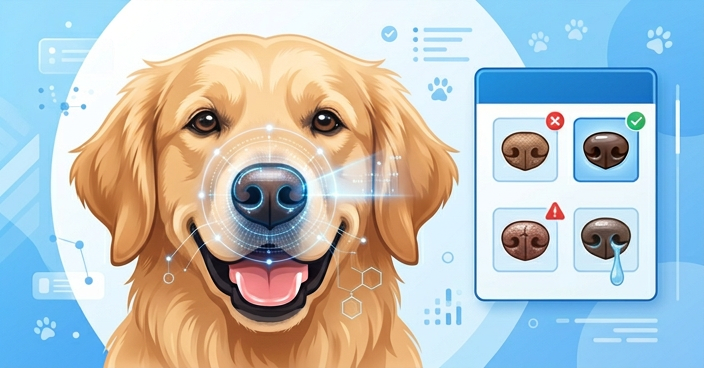
Dog Nose Checker
Dog nose dry or runny? Analyze cracked noses, nasal discharge, and color changes with AI.
Dog Dental Checker
Detect dog tooth infections, gum disease, tartar buildup, and dental problems with AI photo analysis.

Dog Poop Checker
Blood in dog stool? Analyze poop color, detect worms, mucus, and diarrhea with AI photo analysis.
Cat Dental Checker
Detect cat tooth infections, gum disease, stomatitis, tooth resorption, and dental problems with AI photo analysis.

Dog Lump Checker
Found a lump on your dog? Identify skin tags, warts, cysts, lipomas, and bumps with AI photo analysis.
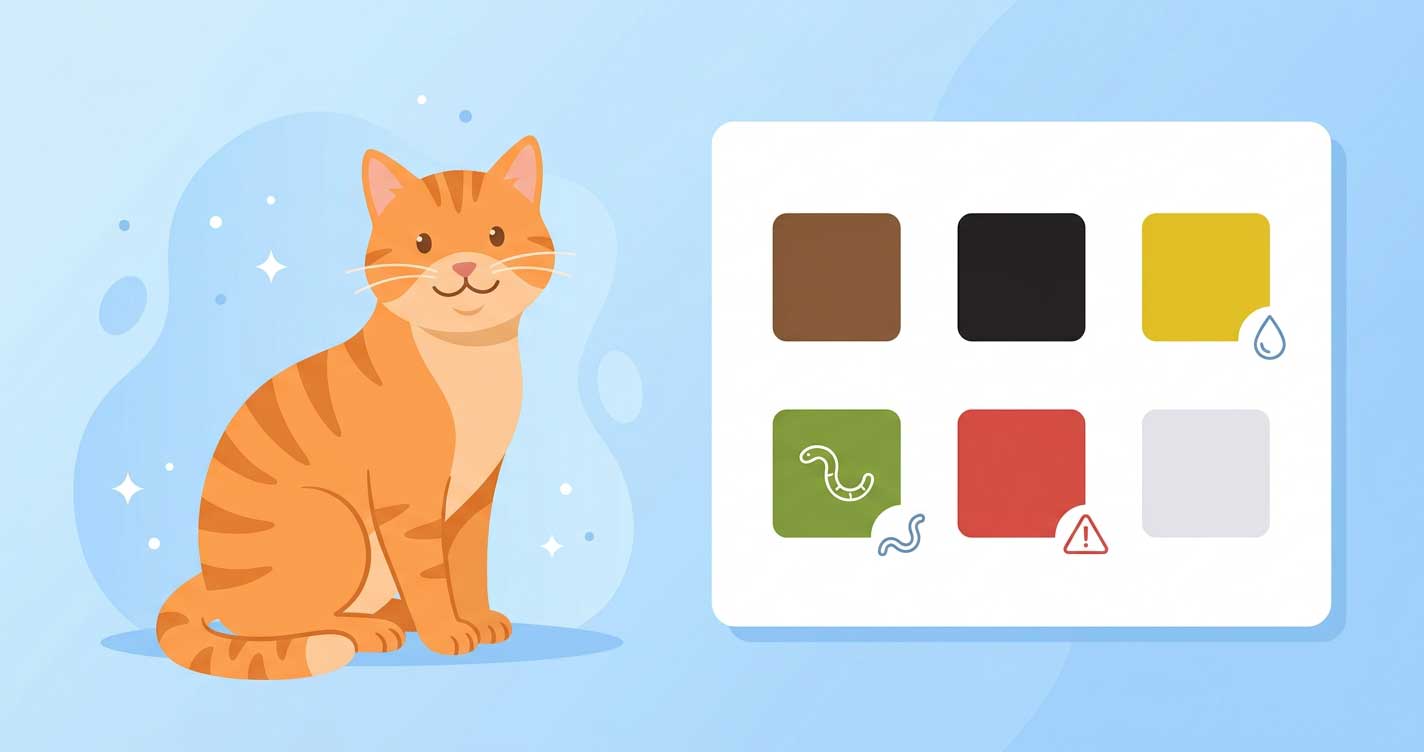
Cat Poop Checker
Blood in cat stool? Analyze poop color, detect worms, mucus, and diarrhea with AI photo analysis.
Dog Wound Checker
Is your dog's wound infected? Check infection signs, healing stages, and bite wounds with AI photo analysis.
Cat Lump Checker
Found a lump on your cat? Identify skin tags, cysts, lipomas, warts, and bumps with AI photo analysis.
Cat Nose Checker
Cat nose dry or runny? Analyze crusty noses, nasal discharge, and sneezing symptoms with AI.
🐾
View All Tools
Explore all AI pet health check tools