What's This Bug on My Dog? AI Parasite Identifier
Found a bug on your dog? Upload a photo and get instant AI identification. Identify fleas, ticks, mites, lice, and other parasites — plus what to do next.
Drop your pet's photo here
or
✅JPG, PNG, WEBP
📏Max 8MB
This tool provides AI-generated preliminary analysis only. Not a substitute for professional veterinary diagnosis.
📸 Photo Guide
Good photos
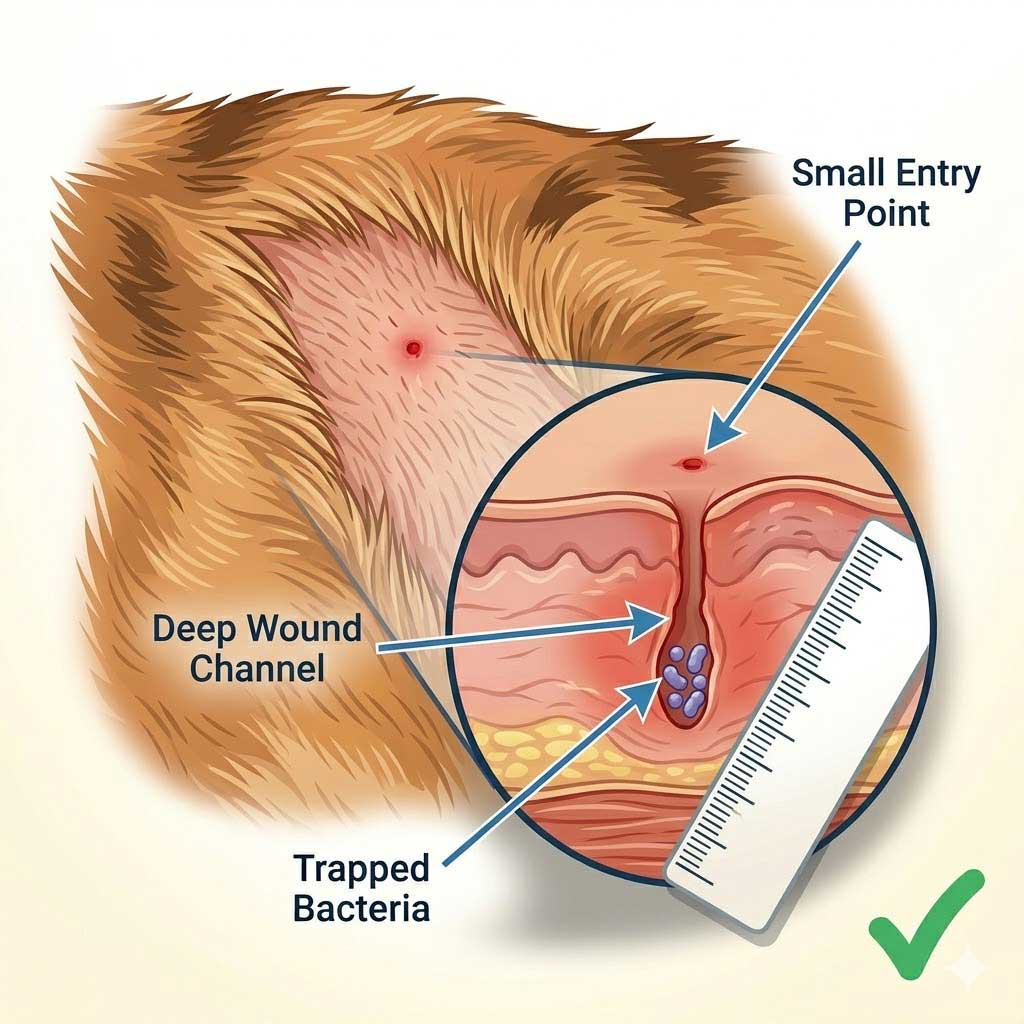
Close-up, clear
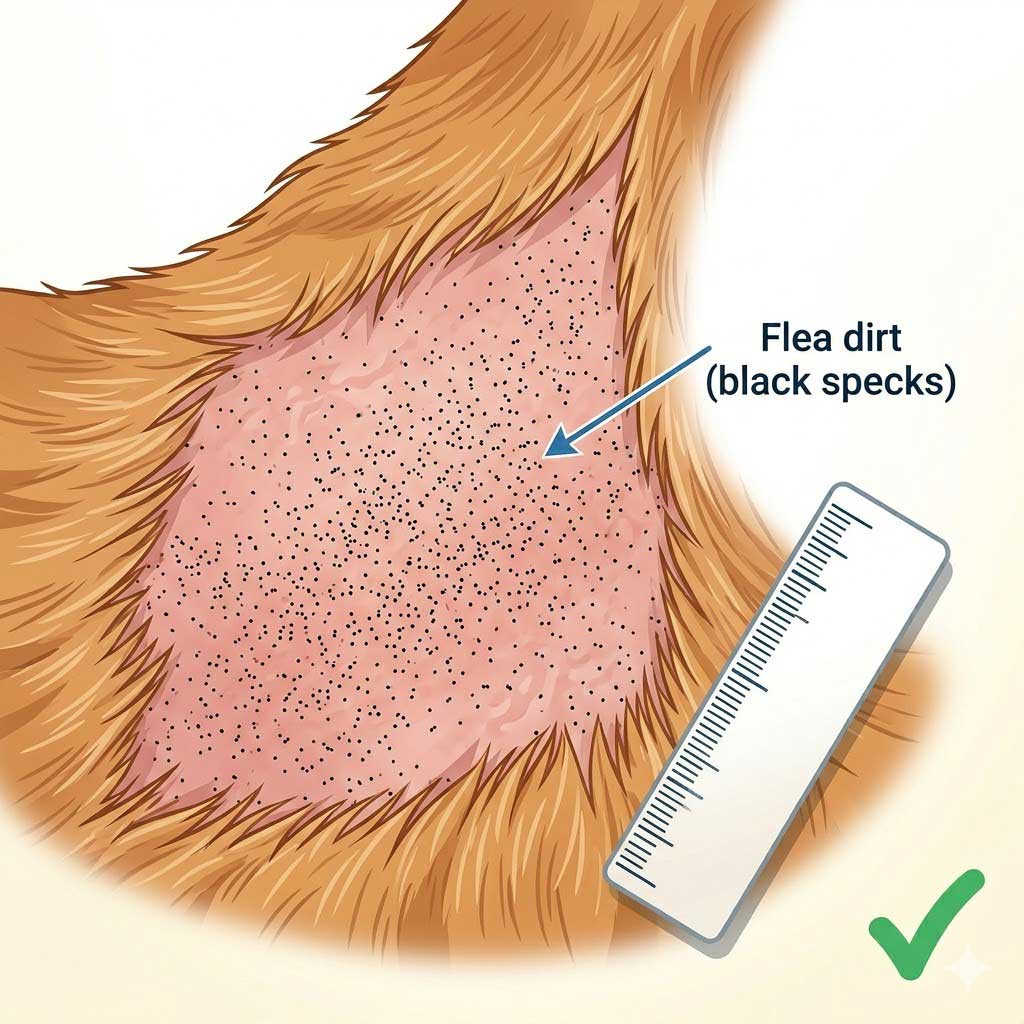
Shows detail clearly
Avoid

Too far away

Blurry
Tips for best results
- ✓Get as close as possible — bugs are small and details matter for identification
- ✓Use good lighting so the bug's color and shape are clearly visible
- ✓If the bug is on fur, part the hair to expose it against the skin
- ✓For ticks, photograph where it attaches to the skin — the head position helps ID the species
- ✓If you see black specks (possible flea dirt) or white dots (possible eggs), photograph those too
How It Works — AI Dog Bug Identifier

Step 1
Upload a Photo
Take a clear, close-up photo of the bug on your dog's skin or fur. If you see tiny specks or eggs, photograph those too — they're important clues.

Step 2
AI Identifies
Our AI examines the photo to identify the exact type of bug or parasite — fleas, ticks, mites, lice, or other insects — and assesses the risk to your dog.

Step 3
Get Your Report
Receive a detailed report with the parasite identification, health risks, diseases it may carry, treatment steps, and whether you need to see a vet.
Common Bugs & Parasites Found on Dogs
Found a bug on your dog and don't know what it is? You're not alone. Here are the most common parasites our AI can identify, what they look like, and why identification matters. Also try our dog skin checker or dog wound checker or dog ear checker.
Fleas (Ctenocephalides)
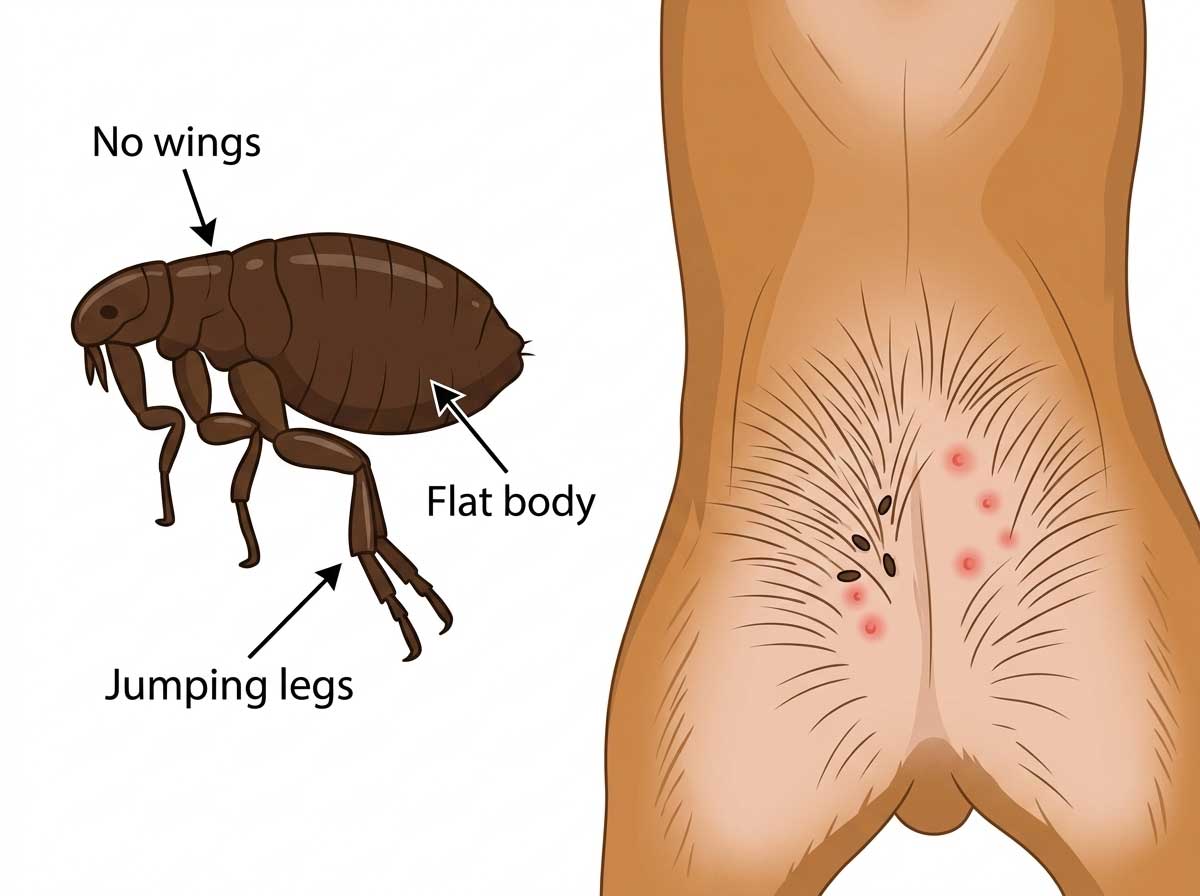
Fleas are the most common external parasite on dogs. What do fleas look like on a dog? They're tiny (1-3mm), dark brown to black, wingless insects that move fast through fur and can jump up to 150 times their body length. You may not see the fleas themselves but spot the evidence: flea dirt (tiny black specks that turn reddish on a wet paper towel), flea eggs (tiny white ovals in fur and bedding), and excessive scratching especially at the base of the tail and belly. Signs of fleas on dogs include: intense itching and scratching, red irritated skin, hair loss from scratching, flea allergy dermatitis (bumpy red rash), and tapeworms (fleas carry tapeworm larvae). Even a few fleas mean many more in your home — 95% of the flea population lives in carpets and bedding as eggs, larvae, and pupae.
Ticks (Ixodidae)
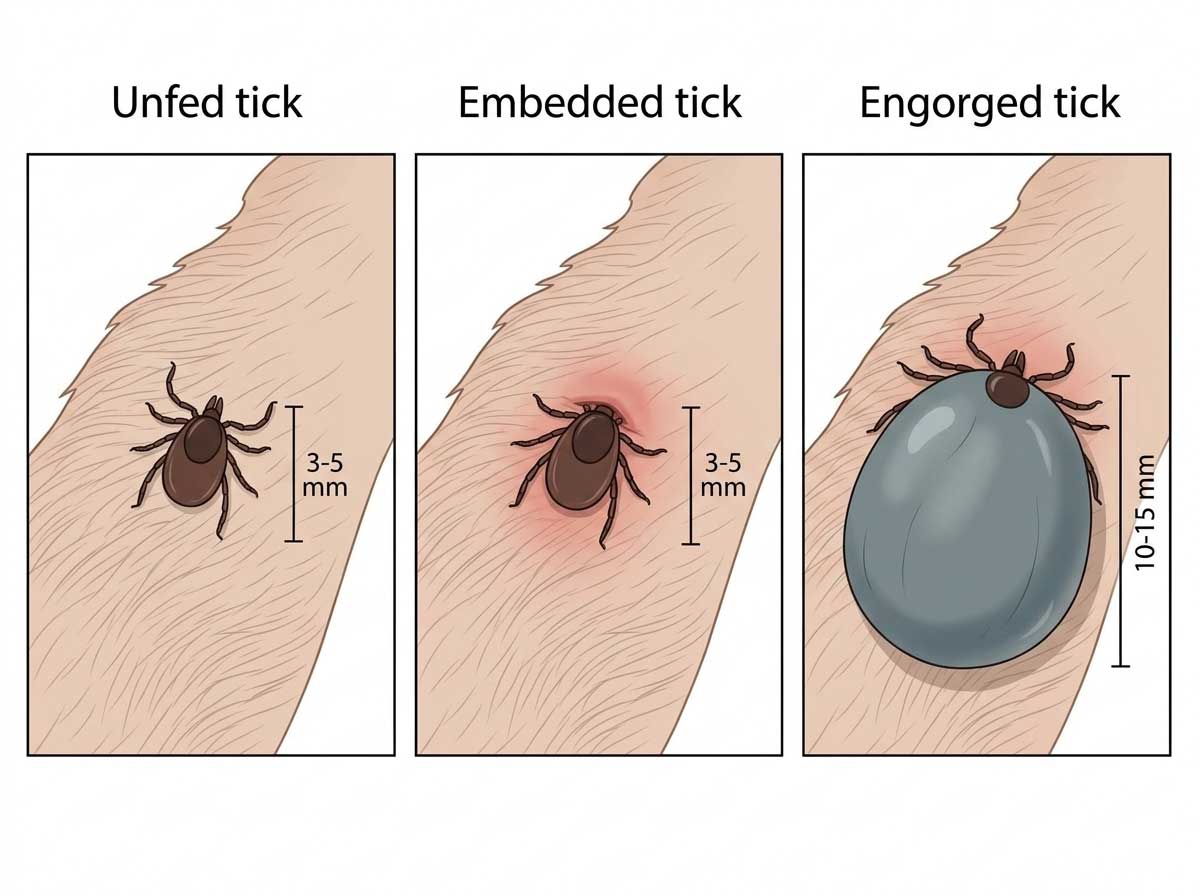
Ticks are blood-sucking parasites that attach to your dog's skin and feed for days. What does a tick look like on a dog? An unfed tick is flat, dark brown or black, and 3-5mm — often mistaken for a skin tag or mole. An engorged tick swells to 10-15mm and turns grayish-blue. Types of ticks on dogs include: deer ticks (Ixodes — carry Lyme disease, tiny, black-legged), American dog ticks (Dermacentor — larger, brown with white markings), brown dog ticks (can live indoors), and lone star ticks (white spot on back). Ticks are dangerous because they transmit diseases: Lyme disease, Rocky Mountain spotted fever, ehrlichiosis, anaplasmosis, and babesiosis. Deer tick vs dog tick matters because different species carry different diseases. Common tick locations on dogs: ears, between toes, armpits, groin, eyelids, and under the collar.
Mites (Demodex, Sarcoptes, & Ear Mites)
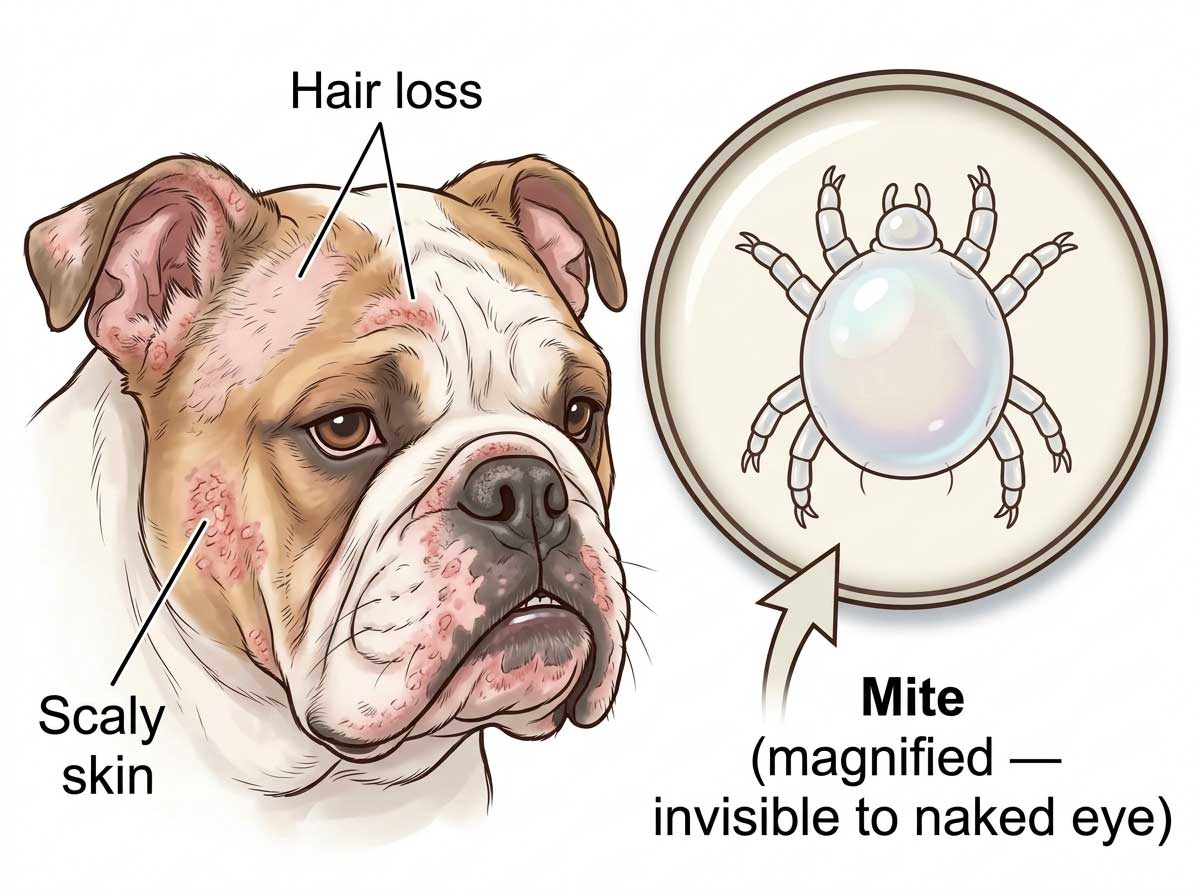
Mites are microscopic parasites that cause mange and ear infections in dogs. There are several types: Demodex mites (demodectic mange) — live in hair follicles, cause patchy hair loss starting on the face and legs, usually mild itching. Common in puppies and dogs with weakened immune systems. Sarcoptic mange mites (scabies) — burrow into skin, cause intense itching, crusty skin, and hair loss starting at ear edges, elbows, and belly. Highly contagious to other dogs and temporarily to humans. Ear mites (Otodectes cynotis) — live in the ear canal, cause dark brown coffee-ground discharge, intense ear scratching, and head shaking. What do dog mites look like? Most are too small to see with the naked eye, but ear mites may appear as tiny white moving dots. Diagnosis usually requires a vet skin scraping or ear swab.
Lice (Trichodectes & Linognathus)
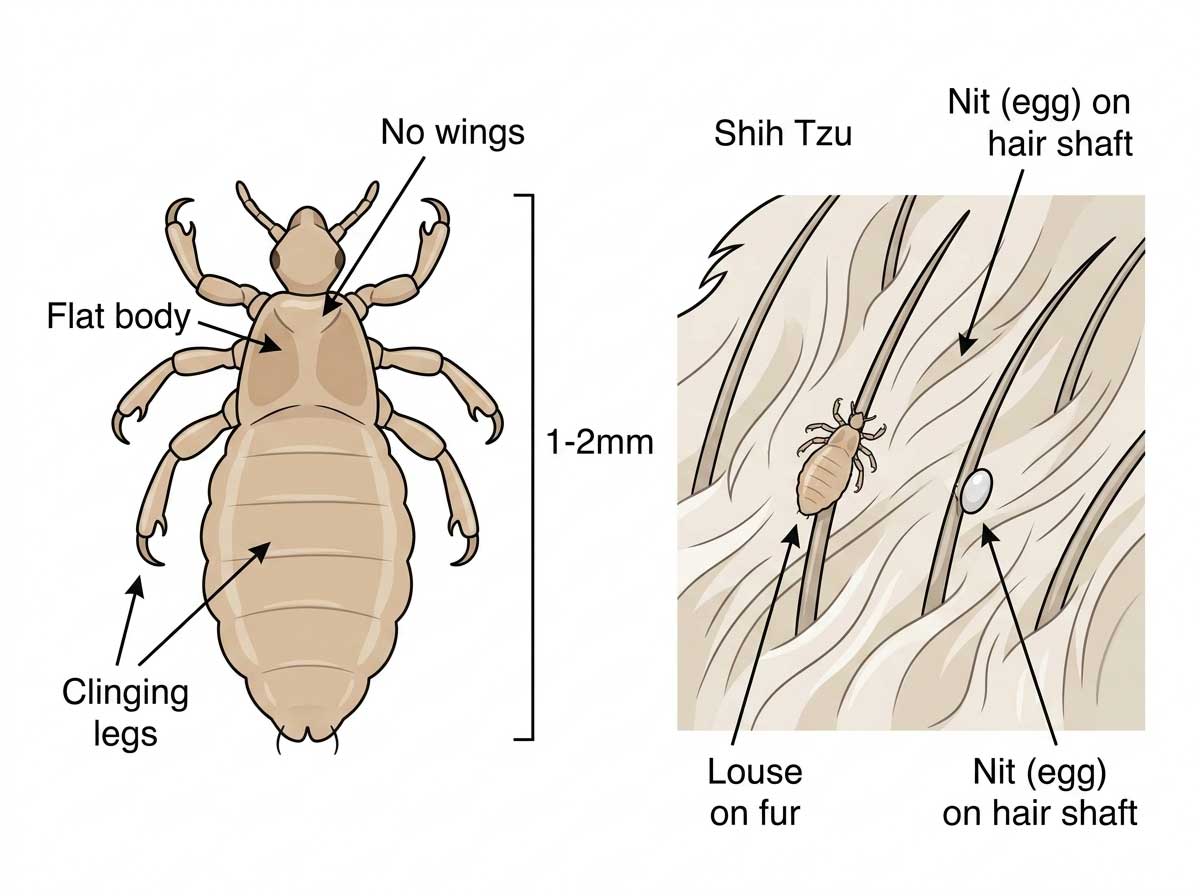
Dog lice are less common than fleas but still an important parasite to identify. Can dogs get lice? Yes — dogs get their own species-specific lice that cannot infest humans (and human lice cannot infest dogs). There are two types: chewing lice (Trichodectes canis — feed on skin debris and secretions) and sucking lice (Linognathus setosus — feed on blood). What does dog lice look like? They're small (1-2mm), flat, wingless, tan to brown insects that move slowly and stay close to the skin — unlike fleas, they don't jump. You may also see nits (eggs) cemented to individual hair shafts, appearing as tiny white or translucent ovals. Signs include: excessive scratching, rough dry coat, hair loss, restlessness, and sometimes anemia in severe infestations. Lice spread through direct contact or shared grooming tools and bedding.
Flea Dirt & Flea Eggs (Evidence Without Seeing Fleas)
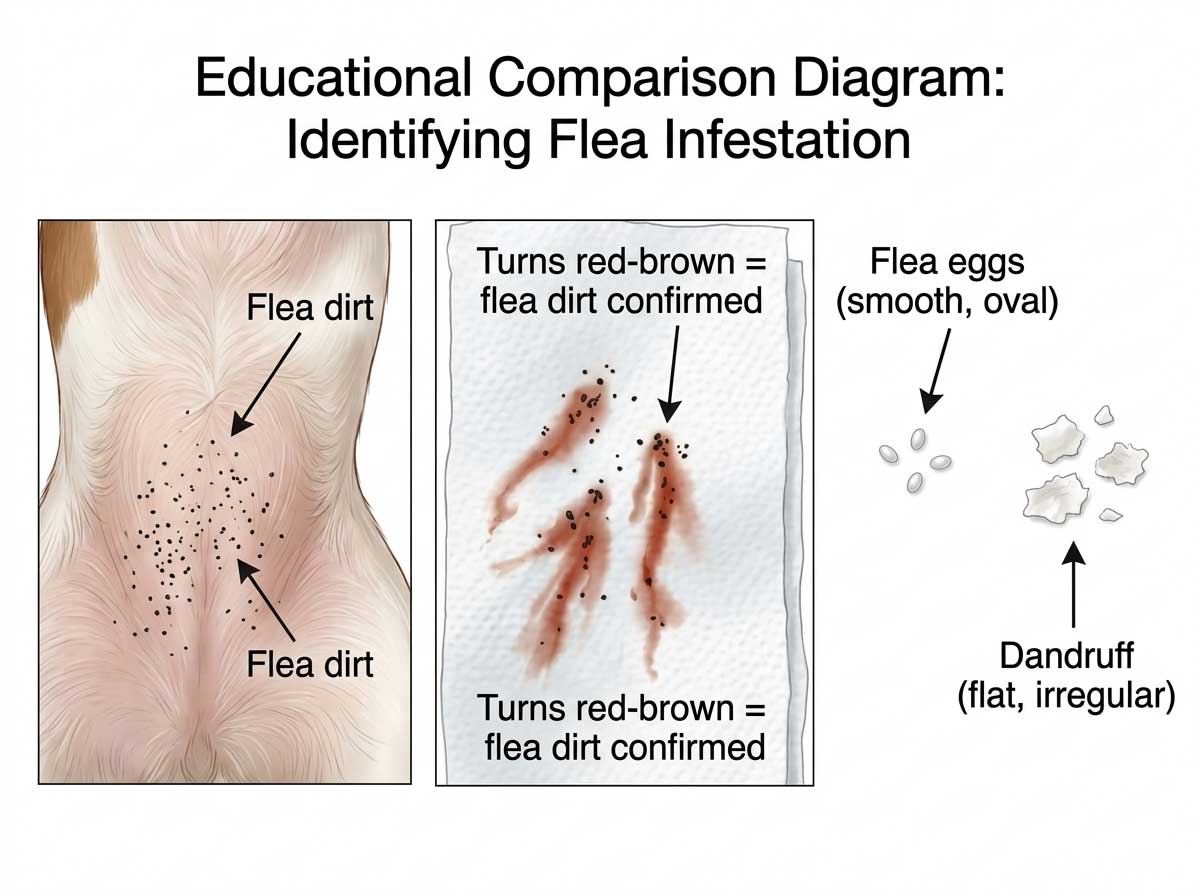
You may not see live fleas but find their evidence. Flea dirt looks like tiny black pepper-like specks on your dog's skin and in their fur — it's actually flea feces (digested blood). The "wet paper towel test" confirms flea dirt: place specks on a damp white paper towel — if they dissolve into reddish-brown streaks, it's flea dirt. Common flea dirt locations: base of the tail, belly, groin, inner thighs, and along the back. Flea eggs are tiny (0.5mm), white, oval, and smooth — they fall off your dog into carpets, bedding, and furniture, where they hatch in 1-10 days. What does flea eggs look like on a dog? Tiny white grains, often confused with dandruff. The difference: dandruff is flat and irregular; flea eggs are smooth and oval. If you find flea dirt, your dog definitely has fleas even if you can't see them — and your home likely has thousands of eggs and larvae.
Other Parasites (Chiggers, Flies, Bed Bugs)
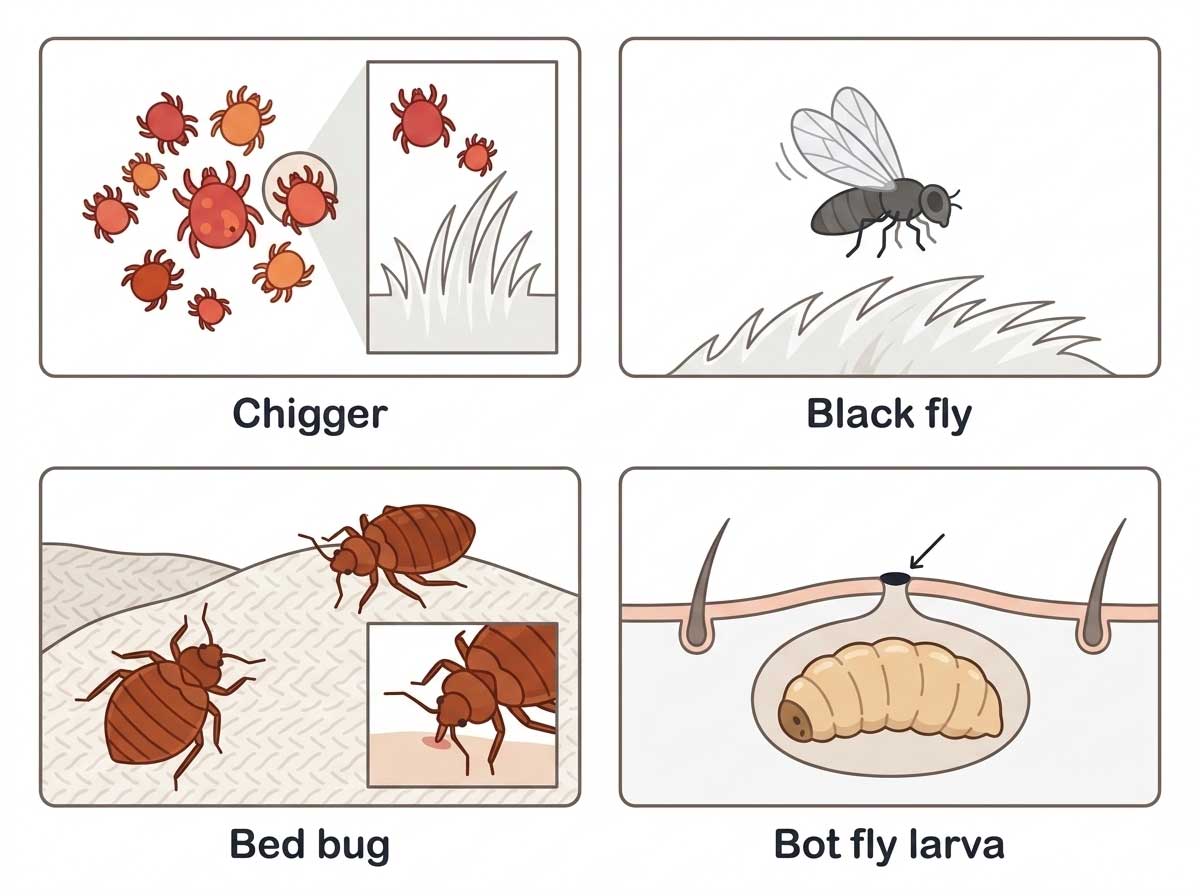
Several other bugs can be found on dogs. Chiggers (harvest mites) — tiny red or orange mites found on dogs in late summer/fall, causing intense itching on the belly, paws, and ears. They don't burrow — they feed on skin cells and drop off. Black flies and gnats — small flying insects that bite, causing painful welts, often on the ears and belly. Bed bugs — while they prefer humans, bed bugs can bite dogs, leaving small red welts. They hide in bedding and furniture, not on the dog. Bot flies — large flies that lay eggs on dogs; larvae burrow under skin creating a lump with a breathing hole. Dog scratching but no fleas? Consider mites (need skin scraping to diagnose), allergies (environmental or food), dry skin, or anxiety. If you find a bug on your dog that doesn't match the common parasites above, upload a photo for AI identification.
Found a bug on your dog?
Upload a photo now. Get instant AI identification of the bug or parasite, learn what risks it poses, and know exactly what to do next.
Identify Dog Bug Now →Medical Disclaimer
PawCheck provides AI-generated preliminary health analysis for informational and educational purposes only. This service is not intended to replace professional veterinary advice, diagnosis, or treatment. The AI analysis has inherent limitations and may not always be accurate. Always seek the advice of a qualified, licensed veterinarian with any questions regarding your pet's health. Never disregard professional veterinary advice or delay in seeking it because of information provided by this tool. If your pet is experiencing a medical emergency, contact your veterinarian or emergency animal hospital immediately. By using this service, you acknowledge and agree to these terms.
Frequently Asked Questions
What are the tiny black bugs on my dog?
+
Tiny black bugs on your dog are most commonly fleas — small (1-3mm), dark brown to black, wingless insects that move fast and jump. However, not all tiny black bugs on dogs are fleas. They could also be: lice (slower-moving, don't jump, stay close to the skin), mites (very tiny, sometimes barely visible to the naked eye), or even harmless insects that landed on your dog. The fastest way to tell: if they jump, they're fleas. If they're crawling slowly through the fur and attached to hair shafts, they may be lice. If you see tiny black specks that aren't moving, it could be flea dirt (flea feces). To test: place the specks on a wet white paper towel — if they turn reddish-brown, it's flea dirt, confirming your dog has fleas. Upload a close-up photo for AI identification.
Should I be worried about one tick on my dog?
+
Yes, even a single tick is worth taking seriously. While one tick doesn't mean an infestation, the concern is disease transmission. Ticks can transmit Lyme disease (deer ticks), Rocky Mountain spotted fever, ehrlichiosis, anaplasmosis, and other serious diseases — sometimes within 24-48 hours of attachment. What to do: remove the tick promptly with fine-tipped tweezers (grasp close to the skin, pull straight out with steady pressure), save the tick in a sealed bag (your vet may want to identify the species), clean the bite area, monitor for symptoms over the next 2-4 weeks (lethargy, fever, joint pain, loss of appetite, bullseye rash around the bite). If the tick was engorged (swollen with blood), it had been feeding for a while, increasing disease risk — see your vet.
Does flea dirt mean my dog has fleas?
+
Yes — flea dirt is flea feces (digested blood), and it is definitive proof that fleas are or were recently on your dog. Even if you can't see a single live flea, flea dirt means fleas are present. Adult fleas spend most of their time on your dog but are fast and good at hiding in thick fur. The "wet paper towel test" confirms flea dirt: place the black specks on a damp white paper towel — if they dissolve into reddish-brown streaks, it's flea dirt (because it's dried blood). Common locations for flea dirt: base of the tail, belly, groin, and along the back. If you find flea dirt, your dog needs flea treatment, and you need to treat your home too — 95% of the flea population (eggs, larvae, pupae) lives in your carpets, bedding, and furniture, not on your dog.
Are dog mites contagious to humans?
+
It depends on the type of mite. Sarcoptic mange mites (Sarcoptes scabiei) — YES, highly contagious to humans. They cause intense itching and a red, bumpy rash on human skin (usually arms, waist, and areas that contacted the dog). The human variety is different, so mites from dogs can't complete their life cycle on humans and the infestation is self-limiting, but it's very uncomfortable. Demodex mites — generally NO. Demodex canis is species-specific and doesn't transfer to humans. Ear mites (Otodectes) — very rarely transfer to humans but can cause temporary itching. Cheyletiella mites ("walking dandruff") — YES, can temporarily infest humans causing itchy bumps. If your dog has mites (especially sarcoptic mange), limit close contact until treated, wash bedding in hot water, and see your doctor if you develop itching or a rash.
How to tell if my dog has fleas or ticks?
+
Fleas and ticks are different parasites with different signs. Flea signs: excessive scratching especially at the base of the tail and belly, tiny fast-moving dark brown insects in the fur, flea dirt (black specks) on skin — test with wet white paper, hair loss and red irritated skin from scratching, "flea allergy dermatitis" (red bumpy rash), and seeing fleas jump. Tick signs: a round, dark, bump-like object attached to the skin that doesn't move, often found around the ears, between toes, in armpits, and around the collar area, the tick may look flat (unfed) or swollen/engorged (fed), a small red bump or irritation at the bite site after removal. Key difference: fleas are tiny, fast, and jump; ticks are larger, don't move once attached, and embed their mouthparts into the skin. Your dog can have both at the same time.
What does an embedded tick look like on a dog?
+
An embedded tick on a dog looks like a small, dark, round bump on the skin — often mistaken for a skin tag, wart, or mole. Key identifying features: it's firmly attached and doesn't move when touched, it has tiny legs visible at the base (use a magnifying glass), the skin around it may be slightly red or swollen, an unfed embedded tick is flat and dark (3-5mm), an engorged tick is round, swollen, and grayish-blue (can swell to 10-15mm), and you can see the head buried in the skin. Common locations: ears, between toes, armpits, groin, eyelids, under the collar, and along the head and neck. How to tell tick vs skin tag: a skin tag is the same color as surrounding skin and has a thin stalk; a tick has legs, a dark body, and is directly flush against the skin. If unsure, upload a photo for AI identification.
Tiny black bugs on my dog but not fleas — what are they?
+
If you've confirmed they're not fleas (they don't jump, different appearance), the tiny black bugs on your dog could be: lice — slow-moving, found close to the skin, attached to hair shafts, about the same size as fleas but don't jump; black flies or gnats — small flying insects that bite and can cause irritation; mites — extremely tiny, may need a magnifying glass to see, can cause mange or scabies; springtails — tiny jumping insects from soil that are harmless; carpet beetles — small, round, black beetles that may have wandered onto your dog from furniture. Chewing lice are the most common non-flea tiny dark bug found on dogs. They stay close to the skin, move slowly, and you may see their eggs (nits) cemented to hair shafts. Unlike fleas, lice are species-specific (dog lice can't infest humans). Upload a close-up photo and our AI will identify exactly what type of bug it is.
What are the first signs of mites on a dog?
+
The first signs depend on the type of mite. Sarcoptic mange (scabies): intense itching that seems out of proportion, starting at ear edges, elbows, and belly, progressing to crusty skin, hair loss, and thickened skin. Demodex mange: patchy hair loss usually starting on the face, around the eyes, and on the front legs, with mild or no itching initially, progressing to red, scaly skin. Ear mites: excessive head shaking, ear scratching, dark brown/black crumbly ear discharge that looks like coffee grounds, and strong ear odor. Cheyletiella ("walking dandruff"): large flakes of dandruff along the back, mild itching, and sometimes you can see the mites moving (tiny white dots). All mite types require veterinary diagnosis (skin scraping or ear swab) and treatment. Over-the-counter remedies are often ineffective and delay proper treatment.
More AI Pet Health Checks

Eye Infection Checker
Detect dog eye infection, cat eye problems, conjunctivitis, corneal ulcers, and cataracts.

Skin Disease Checker
Detect dog skin infection, cat skin problems, dermatitis, hot spots, and ringworm.

Dog Ear Infection Checker
Detect dog ear infection, ear mites, yeast infections, and ear discharge with AI photo analysis.

Cat Ear Mites Checker
Detect cat ear mites, ear infections, yeast infections, and ear discharge with AI photo analysis.

Cat Vomit Checker
Why is my cat vomiting? Analyze white foam, yellow bile, blood, hairballs, and more with AI.

Dog Vomit Checker
Dog vomiting when to worry? Analyze white foam, yellow bile, blood, and undigested food with AI.

Dog Nose Checker
Dog nose dry or runny? Analyze cracked noses, nasal discharge, and color changes with AI.

Dog Dental Checker
Detect dog tooth infections, gum disease, tartar buildup, and dental problems with AI photo analysis.

Dog Poop Checker
Blood in dog stool? Analyze poop color, detect worms, mucus, and diarrhea with AI photo analysis.

Cat Dental Checker
Detect cat tooth infections, gum disease, stomatitis, tooth resorption, and dental problems with AI photo analysis.

Dog Lump Checker
Found a lump on your dog? Identify skin tags, warts, cysts, lipomas, and bumps with AI photo analysis.

Cat Poop Checker
Blood in cat stool? Analyze poop color, detect worms, mucus, and diarrhea with AI photo analysis.

Dog Wound Checker
Is your dog's wound infected? Check infection signs, healing stages, and bite wounds with AI photo analysis.

Cat Lump Checker
Found a lump on your cat? Identify skin tags, cysts, lipomas, warts, and bumps with AI photo analysis.

Cat Nose Checker
Cat nose dry or runny? Analyze crusty noses, nasal discharge, and sneezing symptoms with AI.
🐾
View All Tools
Explore all AI pet health check tools