What's This Bug on My Cat? AI Parasite Identifier
Found a bug on your cat? Upload a photo and get instant AI identification. Identify fleas, ticks, ear mites, lice, and other parasites — plus what to do next.
Drop your pet's photo here
or
✅JPG, PNG, WEBP
📏Max 8MB
This tool provides AI-generated preliminary analysis only. Not a substitute for professional veterinary diagnosis.
📸 Photo Guide
Good photos
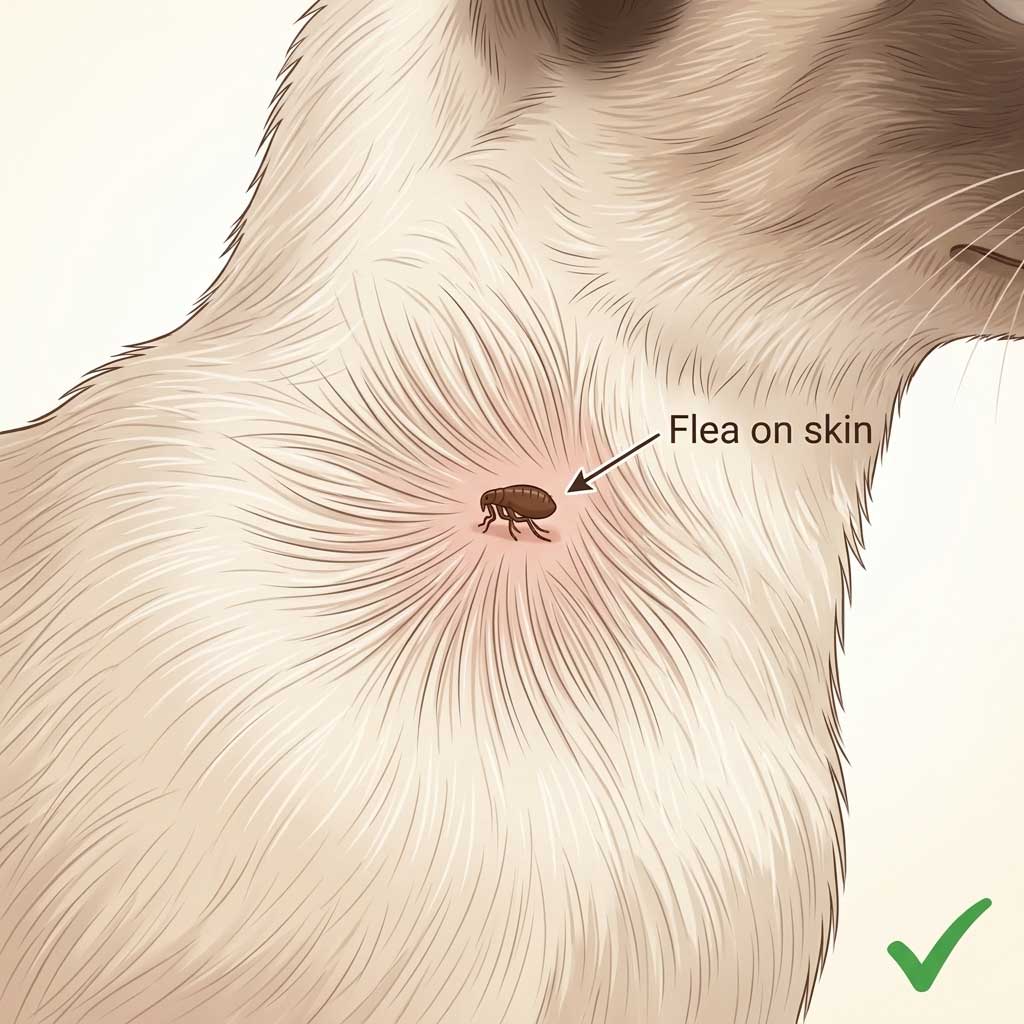
Close-up, clear
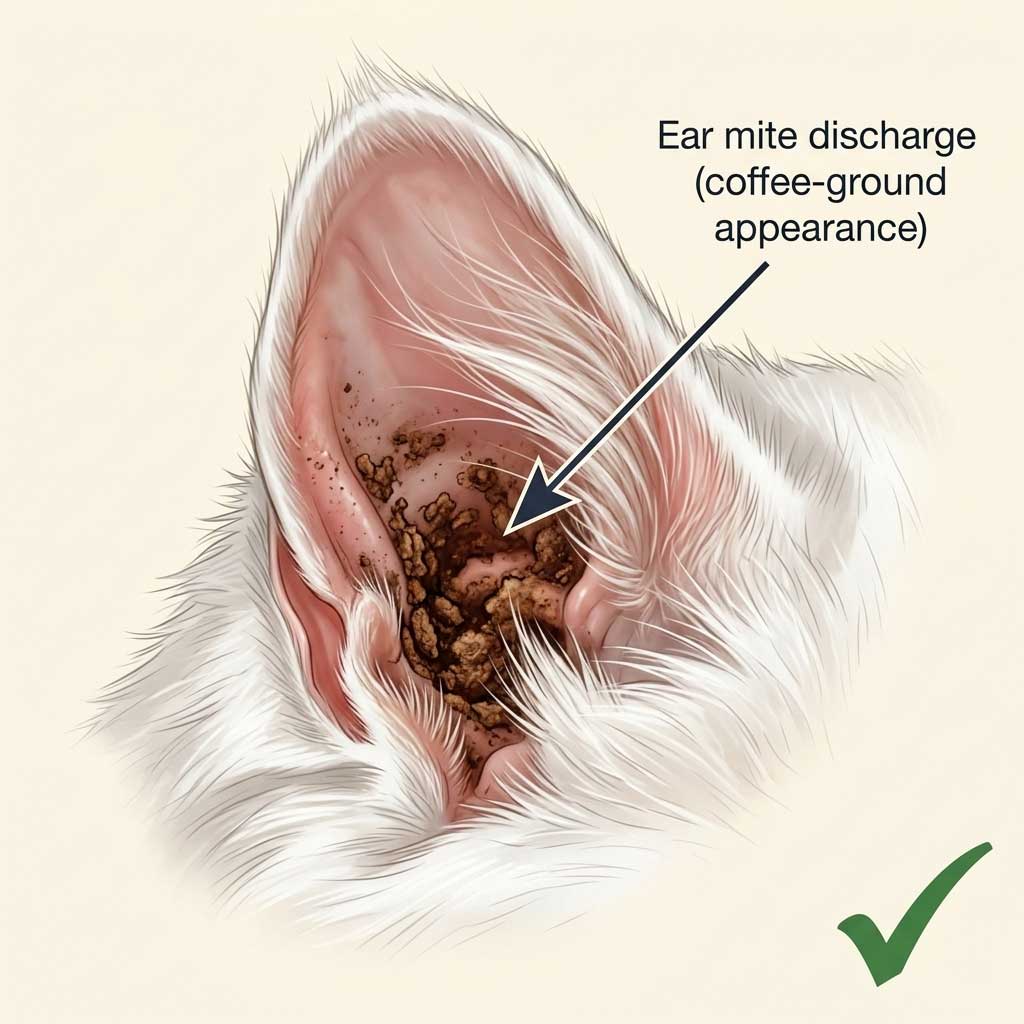
Shows detail clearly
Avoid

Too far away
Blurry
Tips for best results
- ✓Get as close as possible — bugs are small and details matter for identification
- ✓Use good lighting so the bug's color and shape are clearly visible
- ✓Part the fur to expose the bug against the skin
- ✓For ear mites, photograph the ear discharge (dark brown/black crumbly material)
- ✓If you see black specks (possible flea dirt) or white dots (possible eggs/nits), photograph those too
How It Works — AI Cat Bug Identifier

Step 1
Upload a Photo
Take a clear, close-up photo of the bug on your cat's skin or fur. If you see tiny specks, eggs, or ear discharge, photograph those too — they're important clues.

Step 2
AI Identifies
Our AI examines the photo to identify the exact type of bug or parasite — fleas, ticks, ear mites, lice, or other parasites — and assesses the risk to your cat.
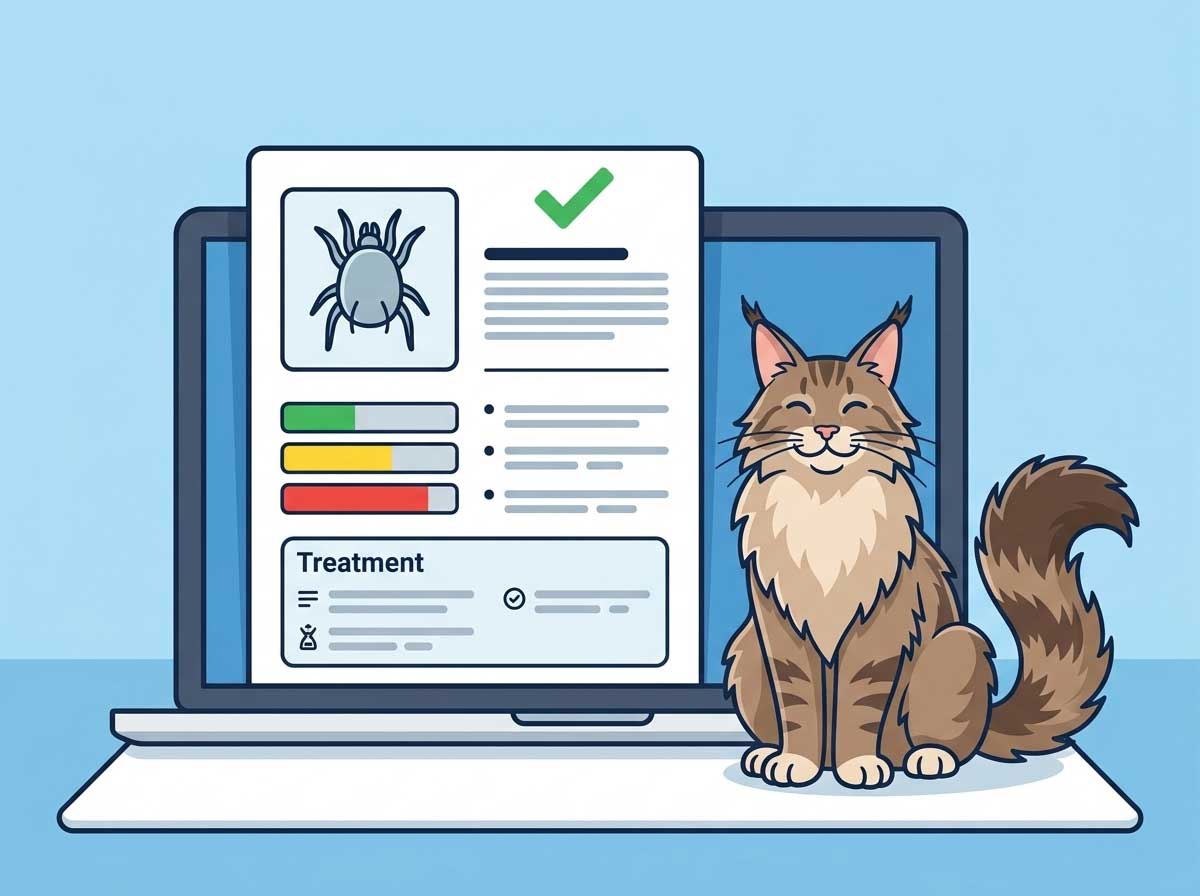
Step 3
Get Your Report
Receive a detailed report with the parasite identification, health risks, diseases it may carry, treatment steps, and whether you need to see a vet.
Common Bugs & Parasites Found on Cats
Found a bug on your cat and don't know what it is? Cats are expert groomers, so you may see evidence of parasites before you see the bugs themselves. Here are the most common parasites our AI can identify. Also try our dog bug identifier or cat skin checker or cat ear checker.
Fleas (Ctenocephalides felis)
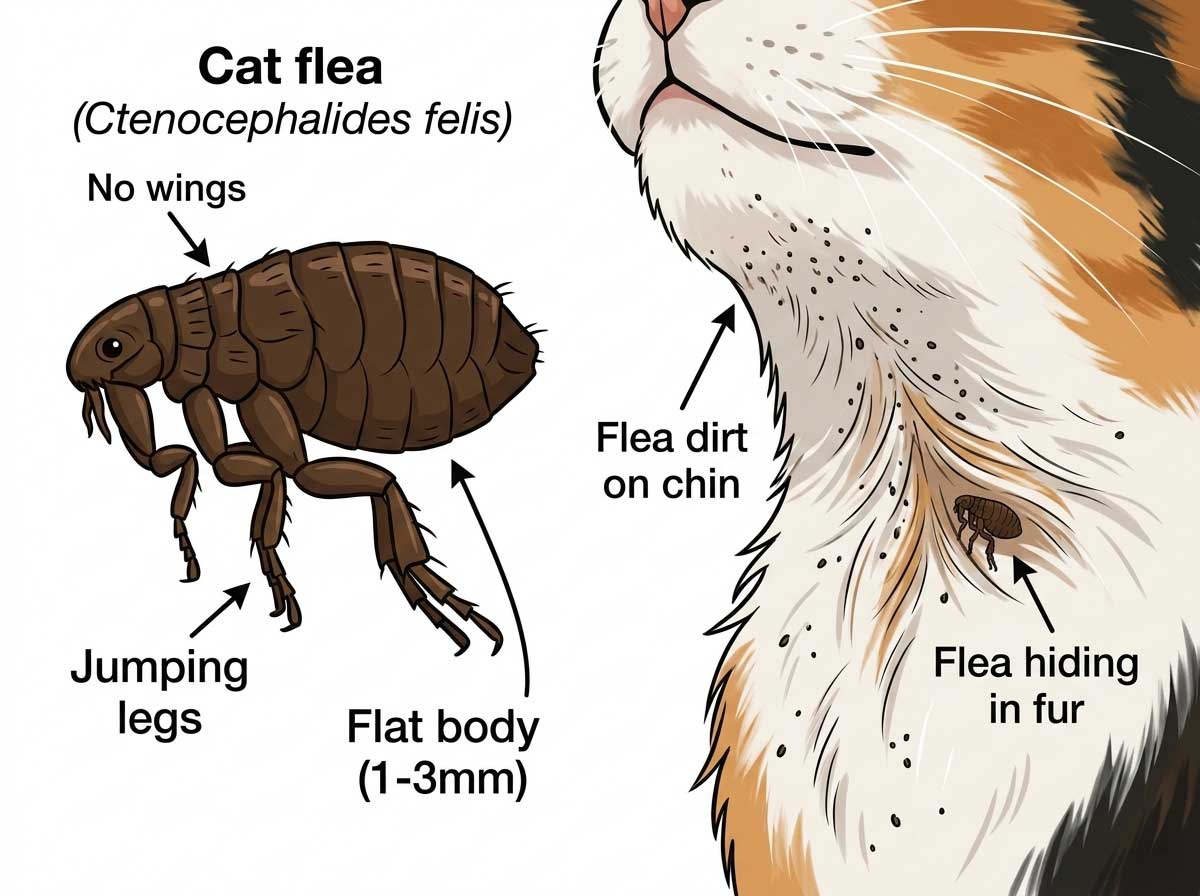
The cat flea is the most common external parasite on cats — and ironically also the most common flea found on dogs. What do fleas look like on a cat? Tiny (1-3mm), dark brown to black, wingless insects that move fast and jump. Cats are such efficient groomers that you may never see a live flea — instead look for flea dirt (tiny black specks that turn reddish on a wet paper towel), flea eggs (tiny white ovals), and excessive scratching or over-grooming. Signs of fleas on cats include: hair loss from over-grooming, red bumpy skin (flea allergy dermatitis), restlessness, flea dirt on the chin, neck, and base of tail, and tapeworms (cats ingest fleas while grooming, and fleas carry tapeworm larvae). Can indoor cats get fleas? Absolutely — fleas hitchhike on shoes, clothing, and other pets.
Ear Mites (Otodectes cynotis)
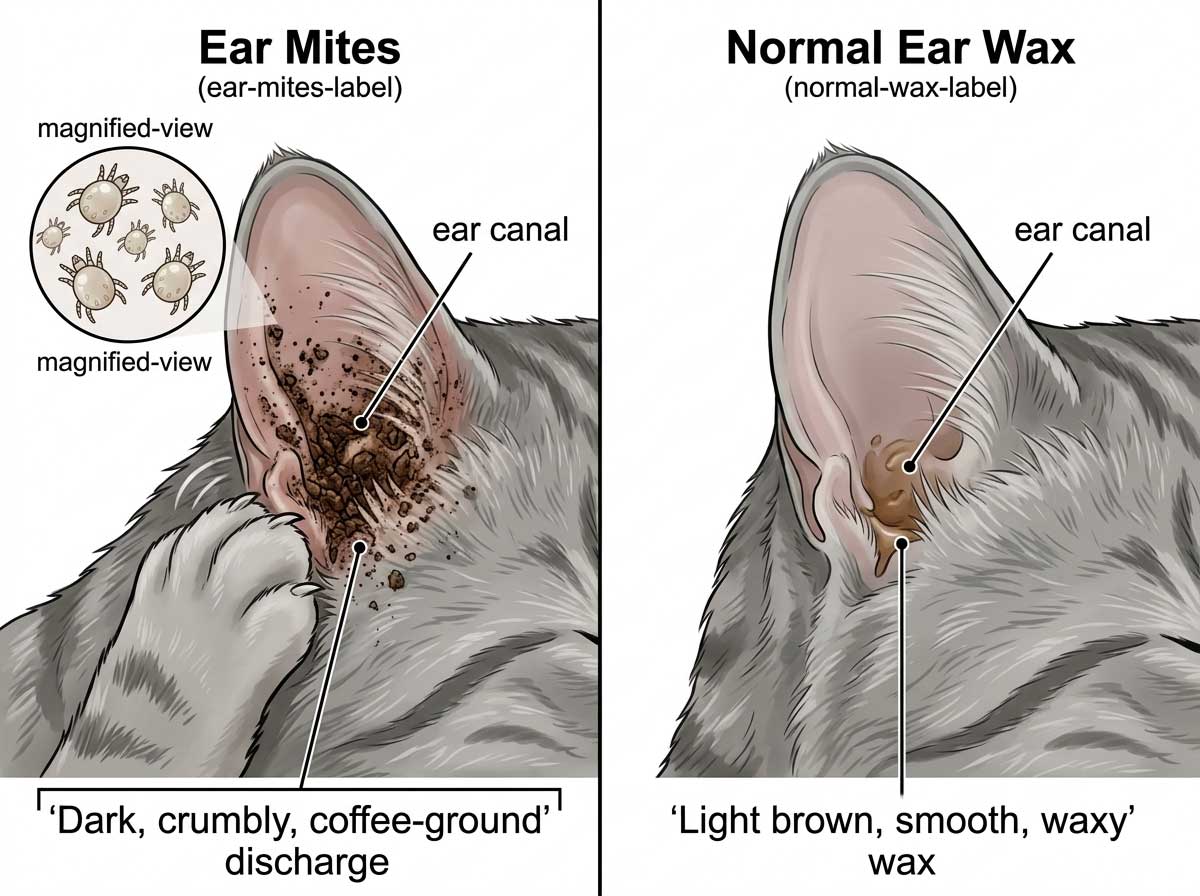
Ear mites are the most common mite in cats and a leading cause of ear problems, especially in kittens. How did my indoor cat get ear mites? They're extremely contagious — a brief encounter with an infected cat, a new pet joining the household, or even mites carried on your hands or clothing is enough. What do ear mites look like in cats? Individual mites are barely visible — tiny white dots. But the signs are unmistakable: dark brown or black crumbly discharge resembling coffee grounds, intense ear scratching and head shaking, redness and inflammation, a strong odor, and crusty skin around the ear edges. Ear mites vs wax — how to tell the difference? Normal ear wax is light brown or yellowish and smooth; ear mite discharge is dark brown to black, crumbly, and gritty like coffee grounds. Ear mites vs dirty ears? Dirty ears clean easily and don't come back quickly; ear mite discharge returns within days and is accompanied by scratching and head shaking. If one cat has ear mites, ALL pets in the household need treatment. Can cat ear mites get on humans? Very rarely and only temporarily. Left untreated, ear mites can cause secondary infections and ear hematomas.
Ticks (Ixodidae)
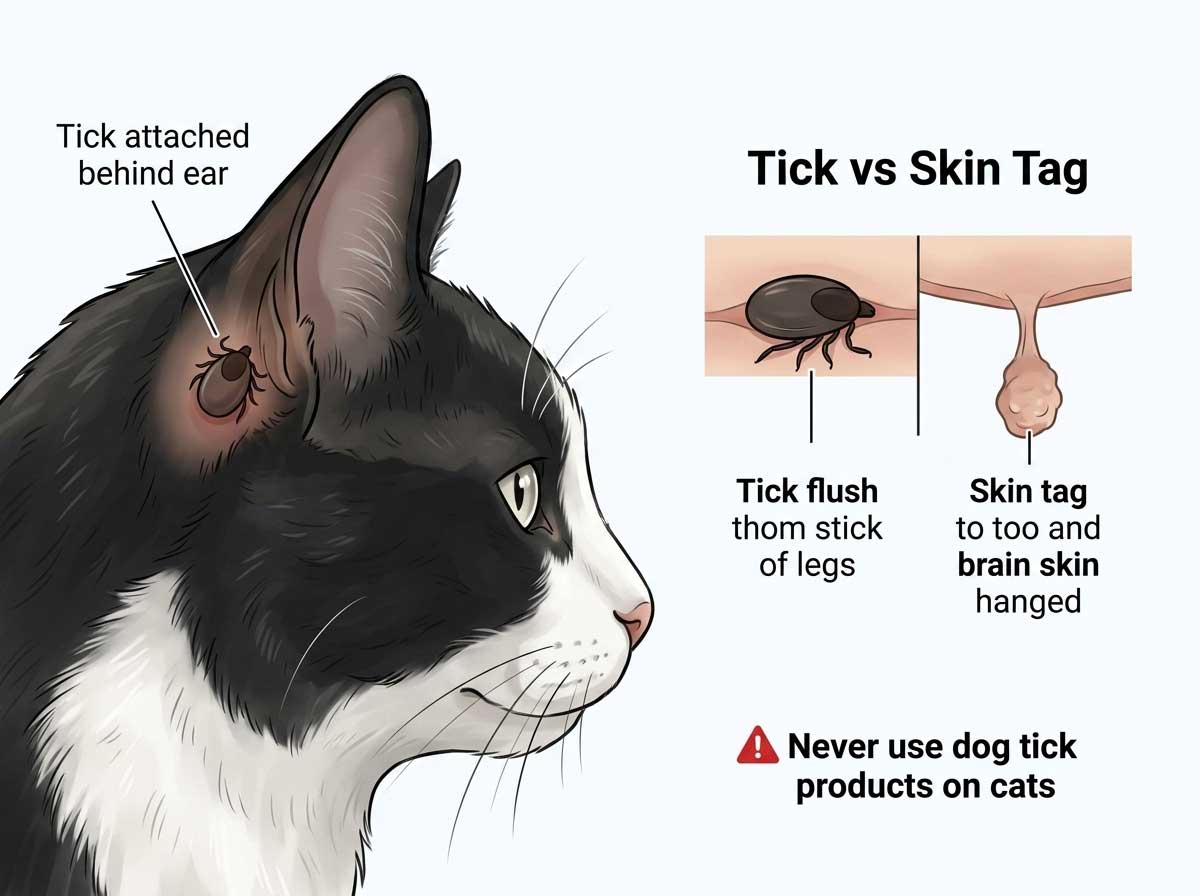
While less common on cats than dogs (cats are better at grooming them off), ticks can and do attach to cats, especially outdoor cats. What does a tick look like on a cat? A small, dark, round bump firmly attached to the skin — often found around the head, ears, neck, and between the toes. An unfed tick is flat and dark (3-5mm); an engorged tick swells to 10-15mm and turns grayish. Ticks on cats can transmit diseases including cytauxzoonosis (bobcat fever — potentially fatal in cats), tularemia, and Lyme disease. Skin tag or tick on cat? A skin tag is the same color as skin with a thin stalk; a tick has legs, is darker, and is flush against the skin. Important: many tick prevention products made for dogs are TOXIC to cats (especially permethrin) — never use dog tick products on cats.
Skin Mites (Demodex, Sarcoptes, Cheyletiella)
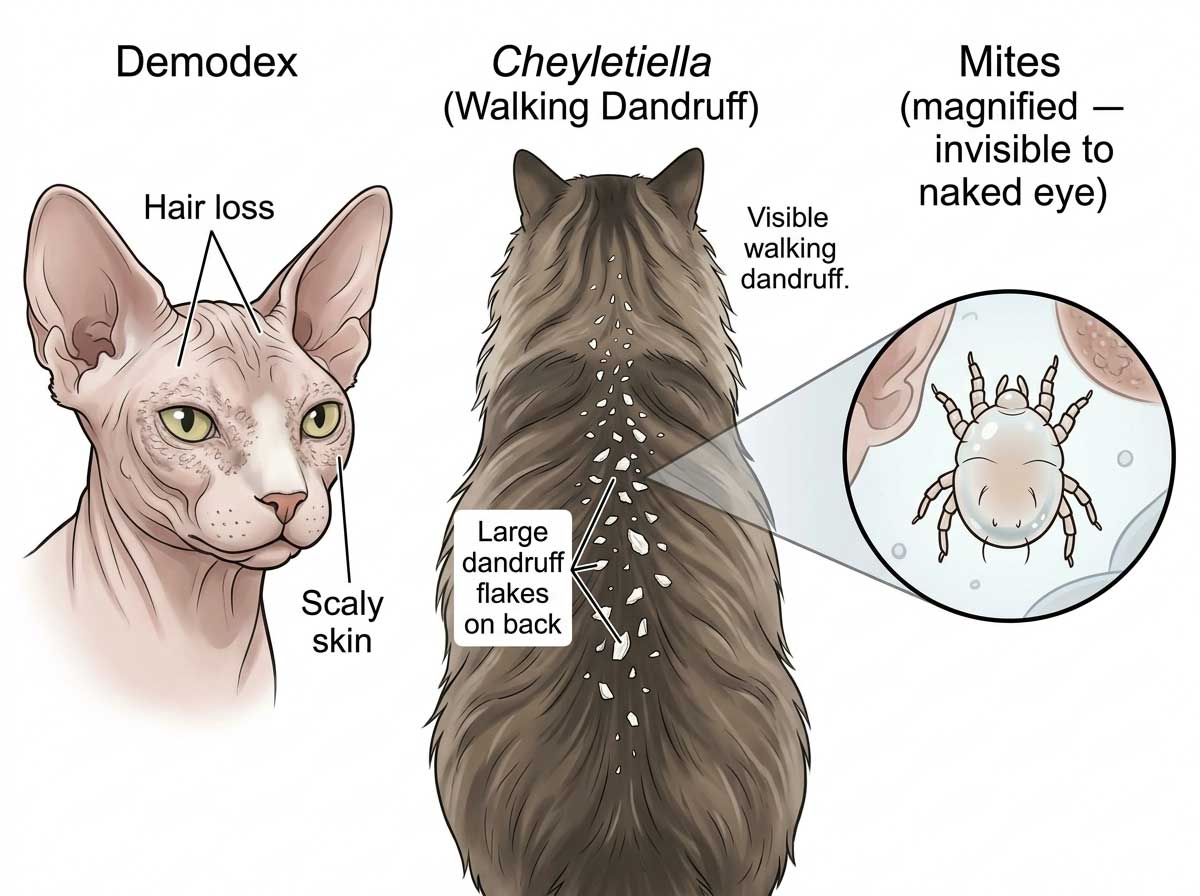
Several types of skin mites affect cats. Demodex mites (demodectic mange) — relatively uncommon in cats, causes hair loss and scaly skin, usually in cats with compromised immune systems. Sarcoptic mange (scabies) — rare in cats but causes intense itching, crusty skin, and hair loss, mainly on the ears and face. Cheyletiella mites ("walking dandruff") — causes large flakes of dandruff on the back, mild to moderate itching, and sometimes you can see tiny white mites moving on the skin surface. Cat chin mites can cause symptoms that look like cat acne. What do skin mites look like on a cat? Most are invisible to the naked eye — diagnosis requires a vet skin scraping. Signs include: patchy hair loss, excessive itching, scaly or crusty skin, dandruff, and skin thickening. Can humans get mites from a cat? Sarcoptic mites (scabies) — YES, they can temporarily transfer to humans causing itchy red bumps, though they can't complete their life cycle on human skin. Cheyletiella — YES, can cause temporary itchy bumps. Demodex — generally NO, they're species-specific. Do cat mites go away on their own? No — mites require veterinary treatment. Without treatment, infestations worsen and can spread to other pets and temporarily to humans.
Lice (Felicola subrostratus)
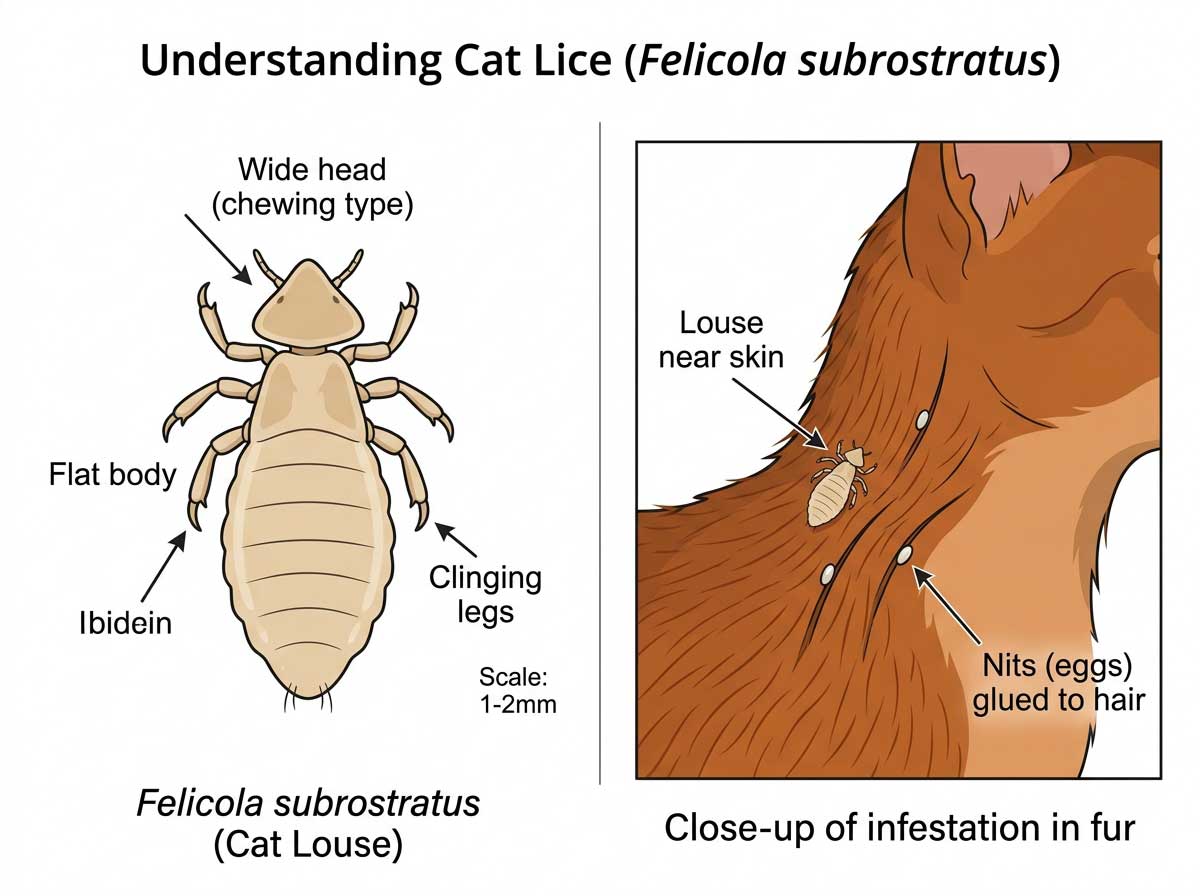
Cat lice are uncommon but can affect young, old, sick, or neglected cats. Can cats get lice? Yes, but only cat-specific lice — they cannot spread to humans or dogs, and human lice cannot spread to cats. Cats get only one species: Felicola subrostratus, a chewing louse that feeds on skin debris (not blood). What do cat lice look like? Small (1-2mm), flat, wingless, pale tan insects that move slowly close to the skin — unlike fleas, they don't jump. You may also see nits (eggs) — tiny white or translucent ovals cemented to individual hair shafts, especially around the ears, neck, and shoulders. Signs include: excessive scratching, rough dry coat, restlessness, hair loss, and sometimes a moth-eaten appearance to the fur. Treatment is straightforward — most flea treatments also kill lice.
Flea Dirt & Flea Eggs (Evidence Without Seeing Fleas)
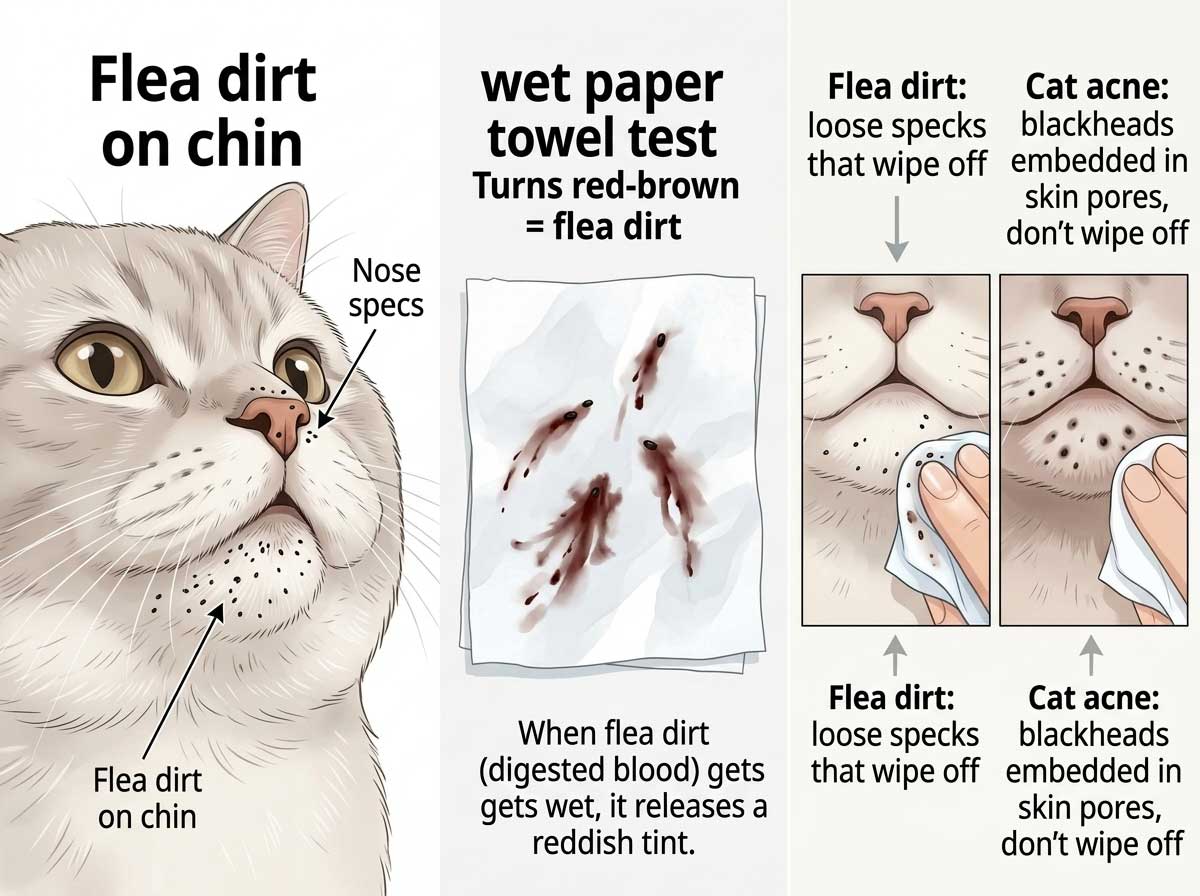
Cats are such efficient groomers that they often eat the fleas — so you may find evidence of fleas without seeing a single live one. Flea dirt looks like tiny black pepper-like specks on your cat's skin. The "wet paper towel test" confirms it: place specks on a damp white paper towel — if they dissolve into reddish-brown streaks, it's flea dirt (digested blood). Common flea dirt locations on cats: chin, neck, base of tail, belly, nose, back, and inner thighs. Black specks on cat chin is one of the most-searched concerns — how to tell flea dirt vs cat acne? Flea dirt dissolves reddish-brown on a wet paper towel; cat acne (feline chin acne) looks like blackheads embedded in the skin that don't dissolve. Flea dirt can appear anywhere on the body; cat acne is only on the chin and lip area. Black specks on cat not flea dirt? Could also be dirt, dried blood from scratching, or skin debris. Can my cat have flea dirt but no fleas? Yes — cats groom off and eat fleas, so flea dirt is often the only visible evidence. Flea eggs are tiny (0.5mm), white, oval, and smooth. Flea eggs vs dandruff on cats: dandruff is flat and irregular; flea eggs are smooth and oval. Why is my cat leaving little black specks? If you find black specks on bedding or furniture, it's likely flea dirt falling off — treat your cat AND your home.
Found a bug on your cat?
Upload a photo now. Get instant AI identification of the bug or parasite, learn what risks it poses, and know exactly what to do next.
Identify Cat Bug Now →Medical Disclaimer
PawCheck provides AI-generated preliminary health analysis for informational and educational purposes only. This service is not intended to replace professional veterinary advice, diagnosis, or treatment. The AI analysis has inherent limitations and may not always be accurate. Always seek the advice of a qualified, licensed veterinarian with any questions regarding your pet's health. Never disregard professional veterinary advice or delay in seeking it because of information provided by this tool. If your pet is experiencing a medical emergency, contact your veterinarian or emergency animal hospital immediately. By using this service, you acknowledge and agree to these terms.
Frequently Asked Questions
How to tell if my cat has fleas?
+
The most reliable signs that your cat has fleas: excessive scratching, grooming, or biting at fur (especially around the neck, base of tail, and belly), tiny dark brown fast-moving insects in the fur (part the fur and look at the skin), flea dirt — tiny black specks on the skin that turn reddish-brown when placed on a wet white paper towel (this is digested blood), hair loss or bald patches from over-grooming, red irritated skin or small bumps (flea allergy dermatitis), and restlessness or agitation. Indoor cats can get fleas too — fleas hitchhike on humans, other pets, or come through windows. Even one flea can cause severe scratching in cats with flea allergies. If you see flea dirt, your cat definitely has fleas even if you can't spot a live one — cats are very efficient groomers and often ingest the fleas.
What are the tiny black bugs on my cat?
+
Tiny black bugs on your cat are most likely fleas — small (1-3mm), dark brown to black, wingless insects that move quickly through fur. However, they could also be: lice (move slowly, don't jump, attached close to the skin or on hair shafts), mites (extremely tiny, may need magnification to see), or harmless insects. Quick identification: if they jump → fleas. If they move slowly and cling to hair → likely lice. If you see tiny black specks that don't move → probably flea dirt (flea feces). Tiny black bugs on cat not fleas? Check if they're lice by looking for nits (eggs) cemented to hair shafts. Cat lice are species-specific — they can't spread to humans or dogs. Upload a close-up photo for instant AI identification.
Can indoor cats get fleas?
+
Yes — indoor cats can absolutely get fleas. Common ways: fleas or flea eggs hitchhike into your home on your shoes, clothing, or bags, other pets (dogs especially) bring fleas inside, fleas enter through open windows, screen doors, or balconies, visitors or their pets bring fleas, moving into a home where previous pets had fleas (flea pupae can lie dormant for months), and flea-infested wild animals near your home (raccoons, squirrels, feral cats). One female flea can lay up to 50 eggs per day, so even a single flea entering your home can quickly become an infestation. This is why vets often recommend year-round flea prevention even for indoor-only cats.
What do ear mites look like in cats? How to tell ear mites vs dirty ears?
+
You usually can't see individual ear mites — they're tiny white dots barely 0.5mm. What you CAN see are the signs: dark brown or black crumbly discharge resembling coffee grounds, intense ear scratching and head shaking, redness, a strong odor, and crusty skin around the ear edges. Ear mites vs wax — normal ear wax is light brown or yellowish and smooth; ear mite discharge is dark brown to black, crumbly, and gritty. Ear mites vs dirty ears — dirty ears clean easily and stay clean; ear mite discharge comes back within days and is accompanied by constant scratching. How did my indoor cat get ear mites? They're extremely contagious — a brief encounter with an infected cat, a new pet, boarding, or even a vet visit can be enough. If you see dark crumbly ear discharge plus scratching, it's ear mites until proven otherwise. Do I need to clean my house if my cat has ear mites? Ear mites live on the animal, not in the environment, but wash bedding in hot water and treat ALL pets in the household simultaneously.
Can cats get lice?
+
Yes, cats can get lice, but only cat-specific lice (Felicola subrostratus) — a chewing louse that feeds on skin debris. Important facts: cat lice CANNOT spread to humans, and human lice CANNOT spread to cats — lice are species-specific. Cat lice are uncommon compared to fleas but can affect cats that are very young, very old, sick, malnourished, or in unsanitary conditions. Signs include: excessive itching and scratching, rough dry coat, restlessness, hair loss (especially around ears, neck, and shoulders), and visible nits (tiny white eggs) glued to hair shafts. Unlike fleas, lice move slowly and don't jump. Treatment is straightforward — most standard flea treatments also kill lice.
Does flea dirt on my cat mean fleas? Black specks on cat chin — flea dirt or cat acne?
+
If it's confirmed flea dirt, then yes — your cat has or recently had fleas. To confirm: place the black specks on a damp white paper towel. If they dissolve into reddish-brown streaks, it's flea dirt (digested blood). If they don't dissolve, it may be something else. Black specks on cat chin specifically — this is one of the most common concerns, and it's usually either flea dirt or feline chin acne (comedones). How to tell them apart: flea dirt dissolves reddish-brown on a wet paper towel; cat acne looks like blackheads embedded in the skin that don't dissolve. Flea dirt appears anywhere on the body; cat acne is only on the chin and lower lip. Can my cat have flea dirt but no fleas? Yes — cats groom off and eat live fleas, so flea dirt is often the only visible sign. If you find flea dirt, treat your cat AND your home — for every flea on your cat, there are dozens of eggs and larvae in carpets and bedding. Is flea dirt harmful to cats? The dirt itself isn't, but it confirms an active flea infestation that needs treatment.
Can cat parasites spread to humans?
+
It depends on the parasite type. Fleas — cat fleas CAN bite humans, causing itchy red bumps (usually on ankles and lower legs), but they can't live on humans long-term. If your cat has fleas, you may get bitten. Ear mites — very rarely affect humans, only temporary skin irritation in rare cases. Cat lice — NO, cat lice (Felicola subrostratus) are species-specific and CANNOT infest humans. Human lice cannot infest cats either. Sarcoptic mites (scabies) — YES, can temporarily transfer to humans causing itchy red bumps, though they can't complete their life cycle on human skin and the infestation is self-limiting. Cheyletiella mites — YES, can cause temporary itchy bumps on humans. Demodex mites — NO, species-specific. Ticks — ticks on your cat can detach and attach to humans, and they carry the same diseases (Lyme, etc.). Bottom line: treat your cat's parasites promptly to protect both your cat and your family.
Cat scratching but no fleas — what else could it be?
+
If your cat is scratching but you can't find fleas, consider: mites — sarcoptic mange or cheyletiella ("walking dandruff") cause intense itching but mites are invisible to the naked eye, requiring a vet skin scraping to diagnose. Ear mites — if scratching is focused on ears and head. Allergies — food allergies or environmental allergies (pollen, dust mites) can cause itching. Dry skin — low humidity or poor nutrition. Ringworm — a fungal infection (not actually a worm) causing itchy circular patches. Stress/anxiety — cats may over-groom when stressed. Flea allergy — even if you can't find fleas, a single flea bite can cause days of itching in allergic cats. Hidden fleas — cats groom off and eat fleas, so check for flea dirt instead of live fleas. If scratching persists, see your vet — they can do skin scrapings, allergy testing, and a thorough examination.
More AI Pet Health Checks

Eye Infection Checker
Detect dog eye infection, cat eye problems, conjunctivitis, corneal ulcers, and cataracts.

Skin Disease Checker
Detect dog skin infection, cat skin problems, dermatitis, hot spots, and ringworm.

Dog Ear Infection Checker
Detect dog ear infection, ear mites, yeast infections, and ear discharge with AI photo analysis.

Cat Ear Mites Checker
Detect cat ear mites, ear infections, yeast infections, and ear discharge with AI photo analysis.

Cat Vomit Checker
Why is my cat vomiting? Analyze white foam, yellow bile, blood, hairballs, and more with AI.

Dog Vomit Checker
Dog vomiting when to worry? Analyze white foam, yellow bile, blood, and undigested food with AI.

Dog Nose Checker
Dog nose dry or runny? Analyze cracked noses, nasal discharge, and color changes with AI.

Dog Dental Checker
Detect dog tooth infections, gum disease, tartar buildup, and dental problems with AI photo analysis.

Dog Poop Checker
Blood in dog stool? Analyze poop color, detect worms, mucus, and diarrhea with AI photo analysis.

Cat Dental Checker
Detect cat tooth infections, gum disease, stomatitis, tooth resorption, and dental problems with AI photo analysis.

Dog Lump Checker
Found a lump on your dog? Identify skin tags, warts, cysts, lipomas, and bumps with AI photo analysis.

Cat Poop Checker
Blood in cat stool? Analyze poop color, detect worms, mucus, and diarrhea with AI photo analysis.

Dog Wound Checker
Is your dog's wound infected? Check infection signs, healing stages, and bite wounds with AI photo analysis.

Cat Lump Checker
Found a lump on your cat? Identify skin tags, cysts, lipomas, warts, and bumps with AI photo analysis.

Cat Nose Checker
Cat nose dry or runny? Analyze crusty noses, nasal discharge, and sneezing symptoms with AI.
🐾
View All Tools
Explore all AI pet health check tools