Dog Paw Checker — Paw Infection, Injury & Swelling
Is your dog's paw injured, infected, or swollen? Upload a photo and get an instant AI assessment of cuts, yeast infections, peeling pads, cracked pads, redness between toes, and whether you need to see a vet.
Drop your pet's photo here
or
✅JPG, PNG, WEBP
📏Max 8MB
This tool provides AI-generated preliminary analysis only. Not a substitute for professional veterinary diagnosis.
📸 Photo Guide
Good photos
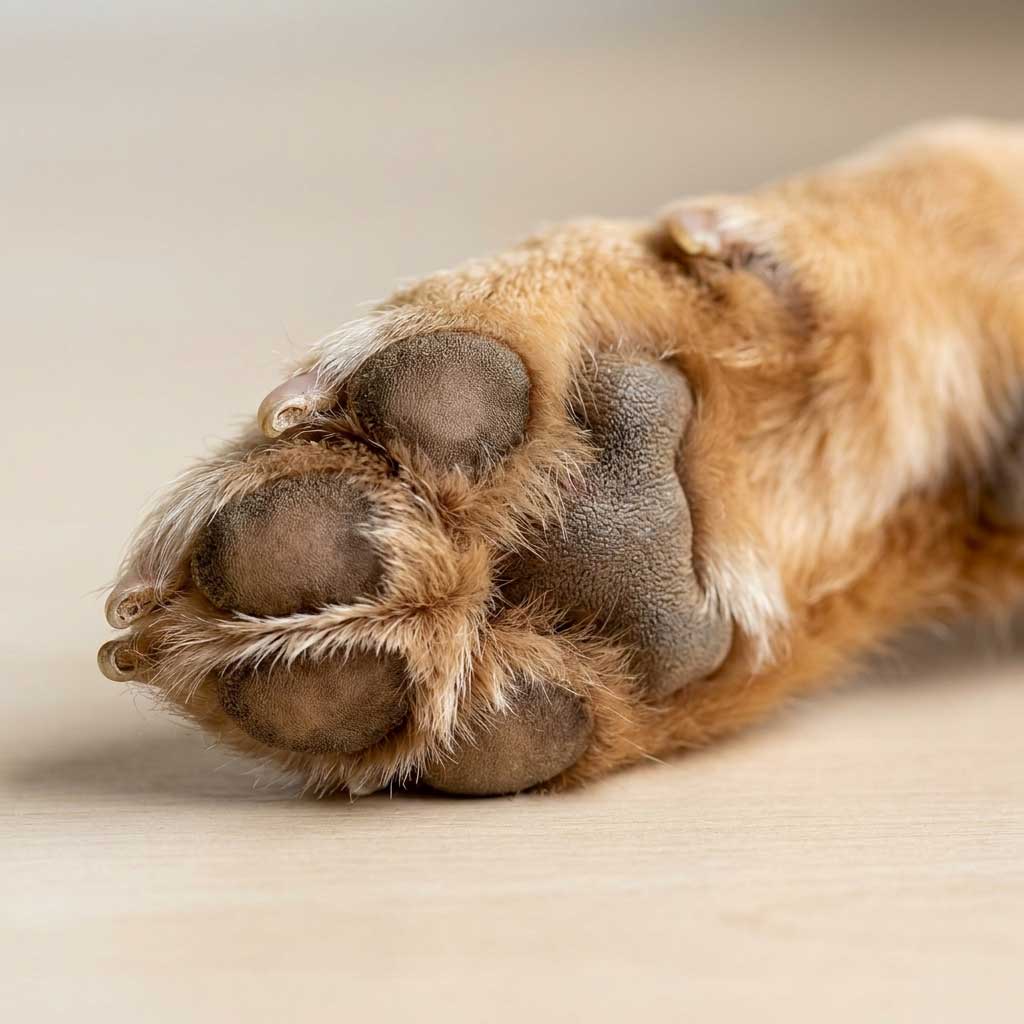
Close-up, clear
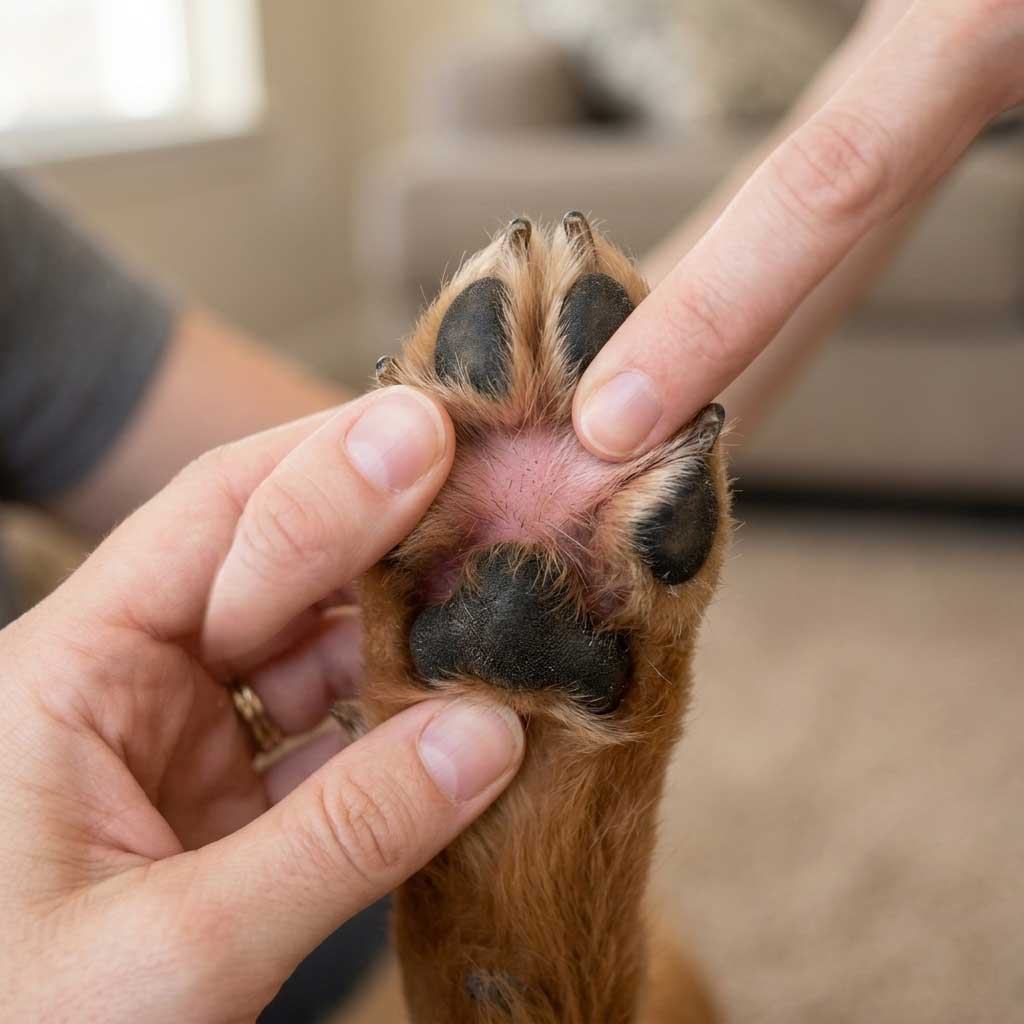
Shows between toes
Avoid
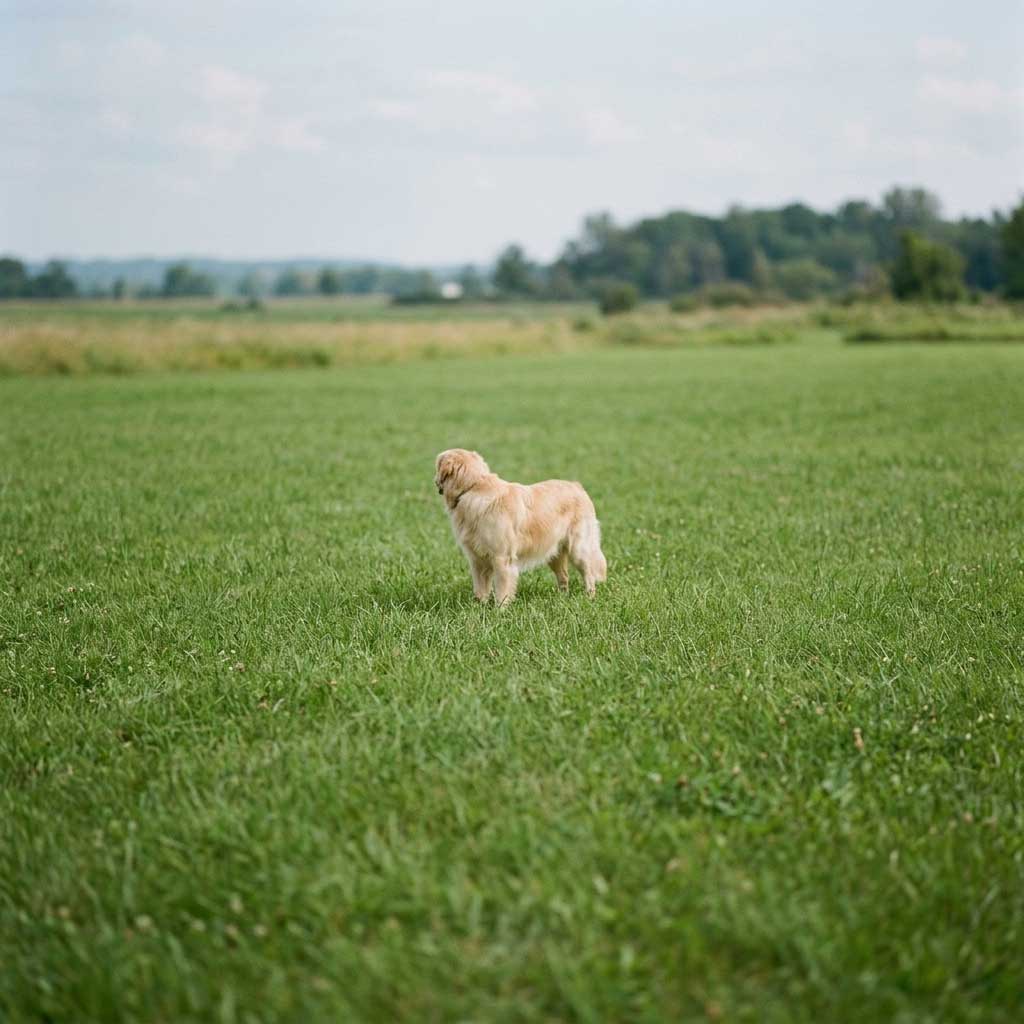
Too far away
Blurry
Tips for best results
- ✓Gently spread the toes apart so the skin between them is visible
- ✓Take the photo in natural daylight if possible — color accuracy matters
- ✓Include both the paw pads and the top of the paw if the issue spans both
- ✓Wipe away mud or debris before photographing so the AI can see the skin
- ✓If the paw is swollen, take a comparison photo of the healthy paw too
How It Works — AI Dog Paw Checker
Step 1
Upload a Paw Photo
Take a clear, well-lit photo of your dog's paw — include the paw pads and between the toes. The AI needs to see redness, swelling, discharge, or pad damage clearly.

Step 2
AI Analyzes
Our AI examines the paw for signs of injury, infection (bacterial or yeast), swelling, peeling, cracking, redness between toes, and other common paw problems.
Step 3
Get Your Report
Receive a detailed report with the likely condition, severity, suggested home care steps, and whether you should see a vet urgently.
Common Dog Paw Problems
From small cuts to yeast infections, dog paws develop a wide range of issues. Here are the most common dog paw problems our AI can help assess from a photo — each with visual signs to watch for. Also try our dog wound checker or dog skin checker or dog bug identifier.
Paw Pad Cuts & Injuries
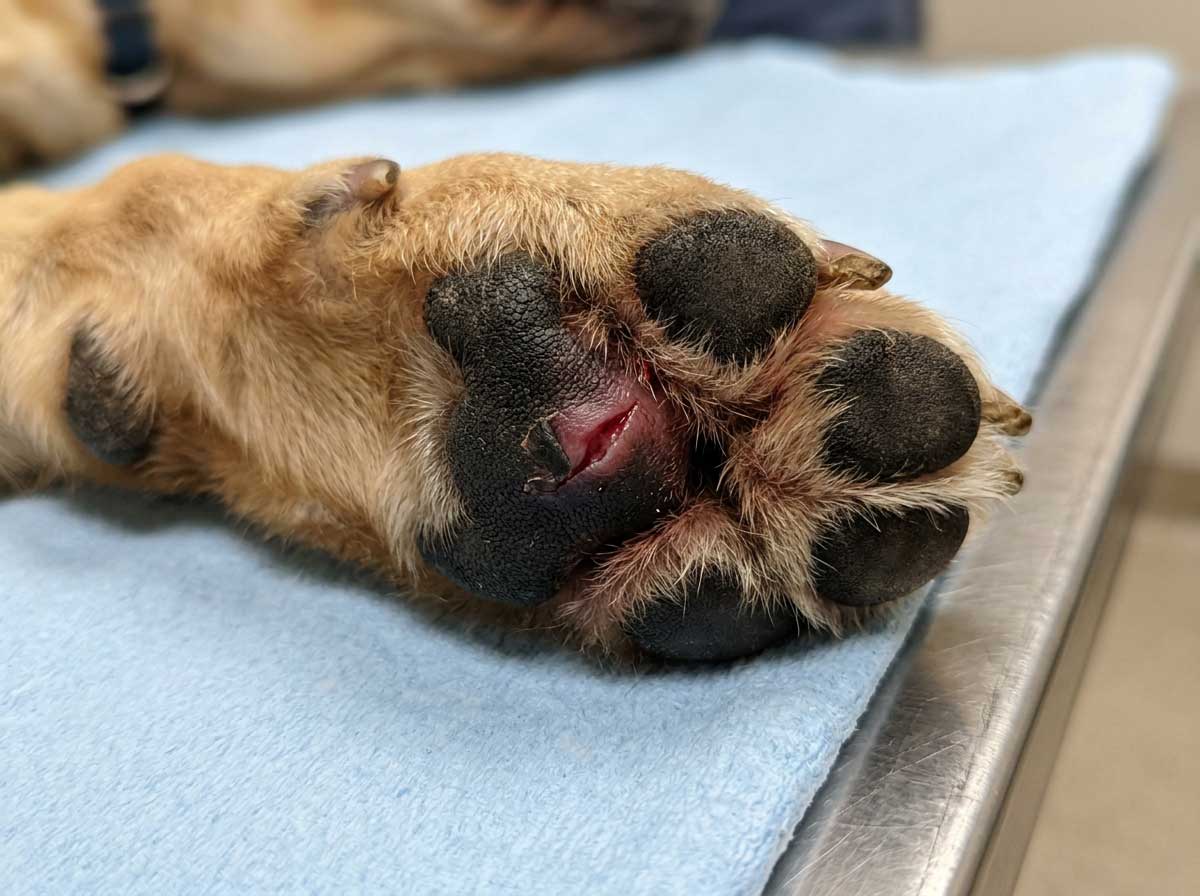
Dog paw pad injuries are one of the most common paw problems — cuts from glass, torn pads from rough surfaces, and paw pad injury flaps that hang loose. Look for: a visible cut on the pad, a flap of pad tissue peeling away, exposed pink tissue beneath, bleeding or raw-looking areas, and your dog limping. Minor surface cuts often heal with cleaning and a bandage in 1-2 weeks. Serious signs needing a vet: a flap that won't lie flat, a cut longer than half an inch, deep wounds exposing tissue beneath the pad, dog paw pad ripped off not bleeding but still deep, or the cut isn't improving after 3-4 days. How to treat a dog paw pad injury: rinse with clean water, apply pressure to stop bleeding, clean with diluted chlorhexidine (not hydrogen peroxide), and bandage loosely. See a vet if it's deep or infection signs appear.
Swollen Paw & Toes
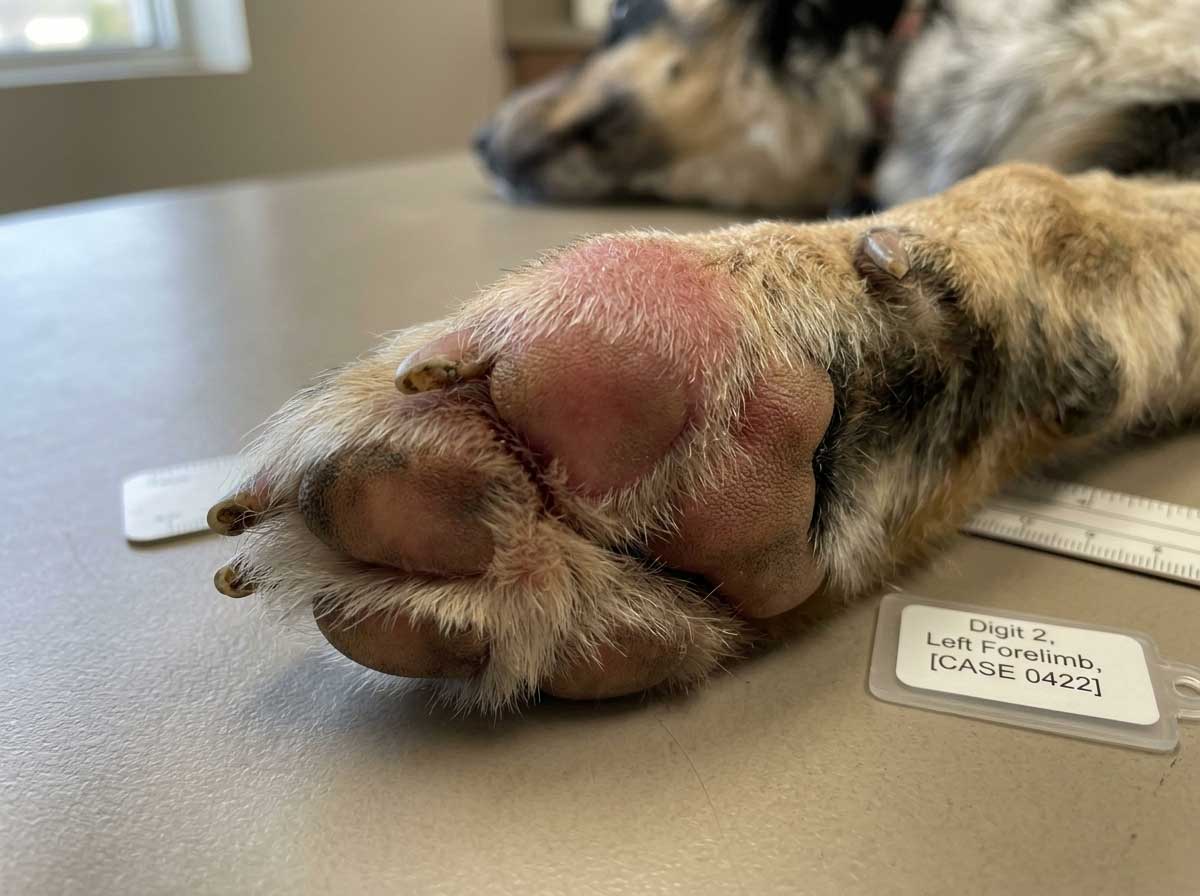
A swollen dog paw can indicate an insect sting, allergic reaction, infection, broken toenail, foreign object between the toes, sprain, or deeper injury. Dog paw swollen between toes often means an embedded grass seed, splinter, or an interdigital cyst. Dog paw swollen around nail points to a broken nail or nail bed infection. Dog swollen paw limping no pain can still be serious — infections and tick-borne diseases can cause painless swelling. Watch for: visible enlargement compared to the other paws, heat when touched, redness, discharge, and reluctance to walk. Mild swelling from a minor sprain may go down with rest in 24-48 hours. Swelling that increases, doesn't improve, or comes with smell/discharge needs veterinary care — infections and foreign bodies won't resolve on their own.
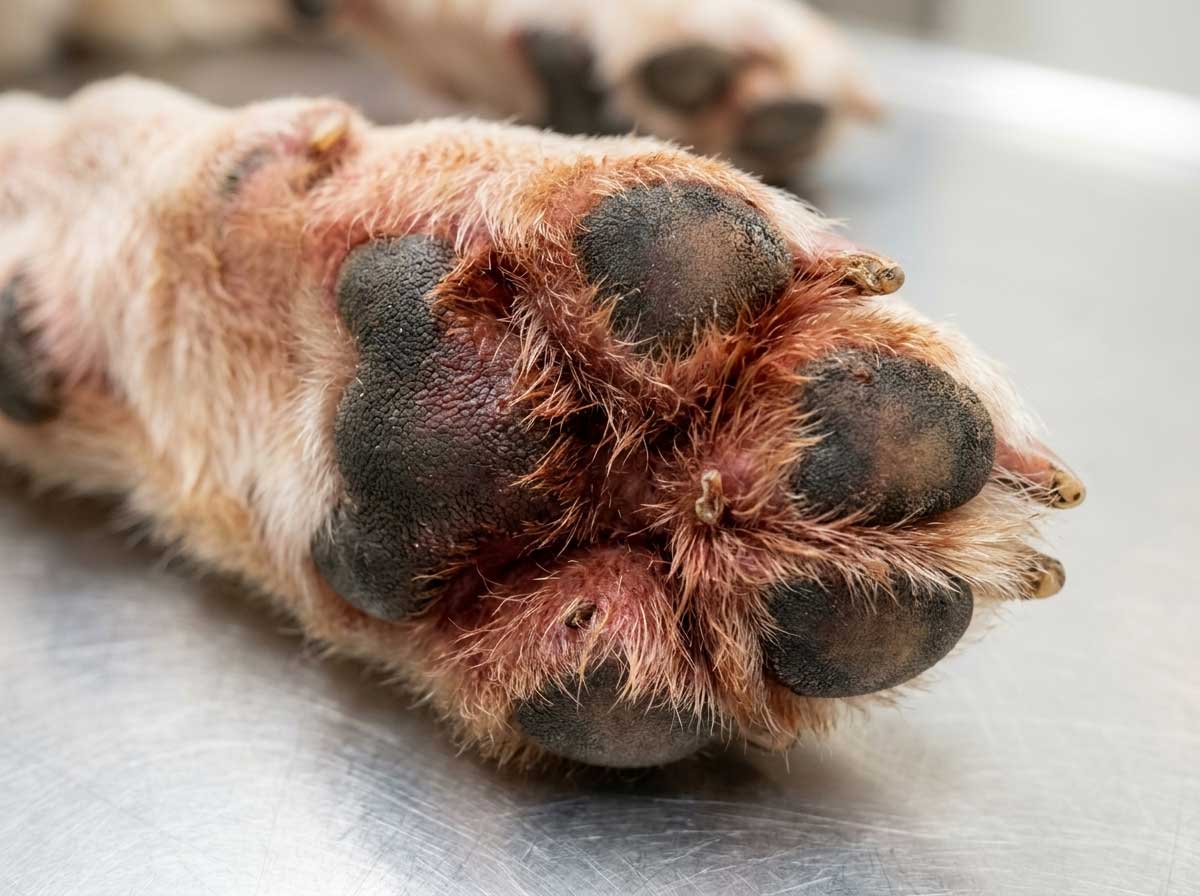
Paw Infection (Bacterial or Yeast)
Dog paw infections come in two main types. Bacterial infections look red, weepy, sometimes with yellow pus, and may smell foul. Yeast infections (Malassezia) show red-brown fur staining between the toes, greasy residue, a distinctive musty "corn chip" smell, and thickened darkened skin over time. Both types cause intense itching, constant licking, and limping. Early stage dog paw infection pictures typically show just mild redness between the toes before progressing to discharge and swelling. Dog paw yeast infection treatment uses medicated shampoos, antifungal wipes, and keeping paws dry; bacterial infections often need oral antibiotics. The best antibiotic for dog paw infection must be chosen by a vet based on a skin culture. Home treatment alone rarely clears established infections — see a vet if symptoms persist beyond a few days.
Peeling Paw Pads
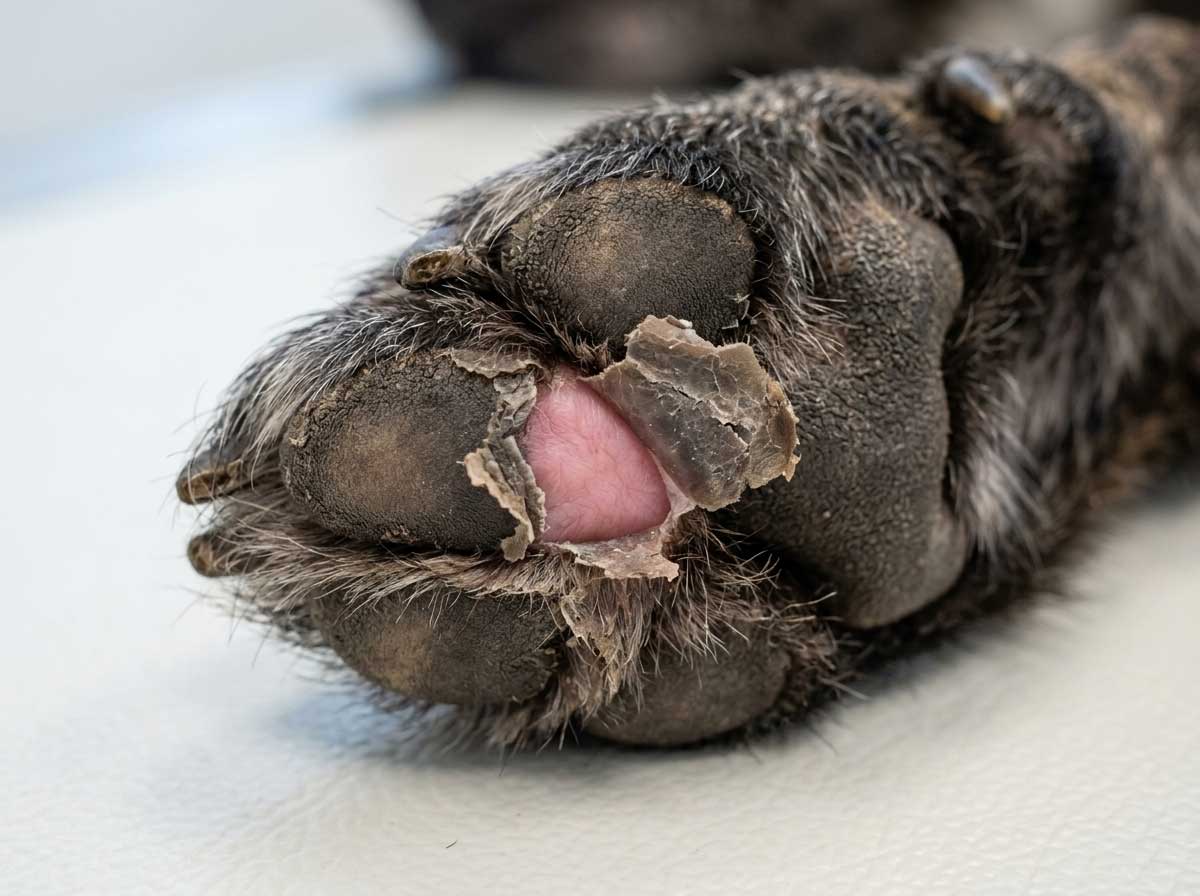
Dog paw pad peeling is often mistaken for a serious problem but frequently has simple causes: walking on hot pavement (burns), chemical exposure (ice melt, cleaners), excessive licking from allergies, dry weather, or contact dermatitis. Look for: the outer pad surface lifting or flaking, a layer of pad coming off to reveal pink skin beneath, peeling that's symmetrical across paws (suggests environmental cause), or peeling on just one paw (suggests injury or burn). My dog's paw pad is peeling off — should I worry? If the exposed tissue is pink and intact, it usually heals in 1-2 weeks with paw balm and avoiding rough surfaces. If the exposed area is raw, bleeding, or deep, see a vet. Dog paw pad skin peeling that spreads, recurs, or causes limping warrants veterinary evaluation — autoimmune diseases and systemic conditions can present this way.
Cracked & Dry Paw Pads
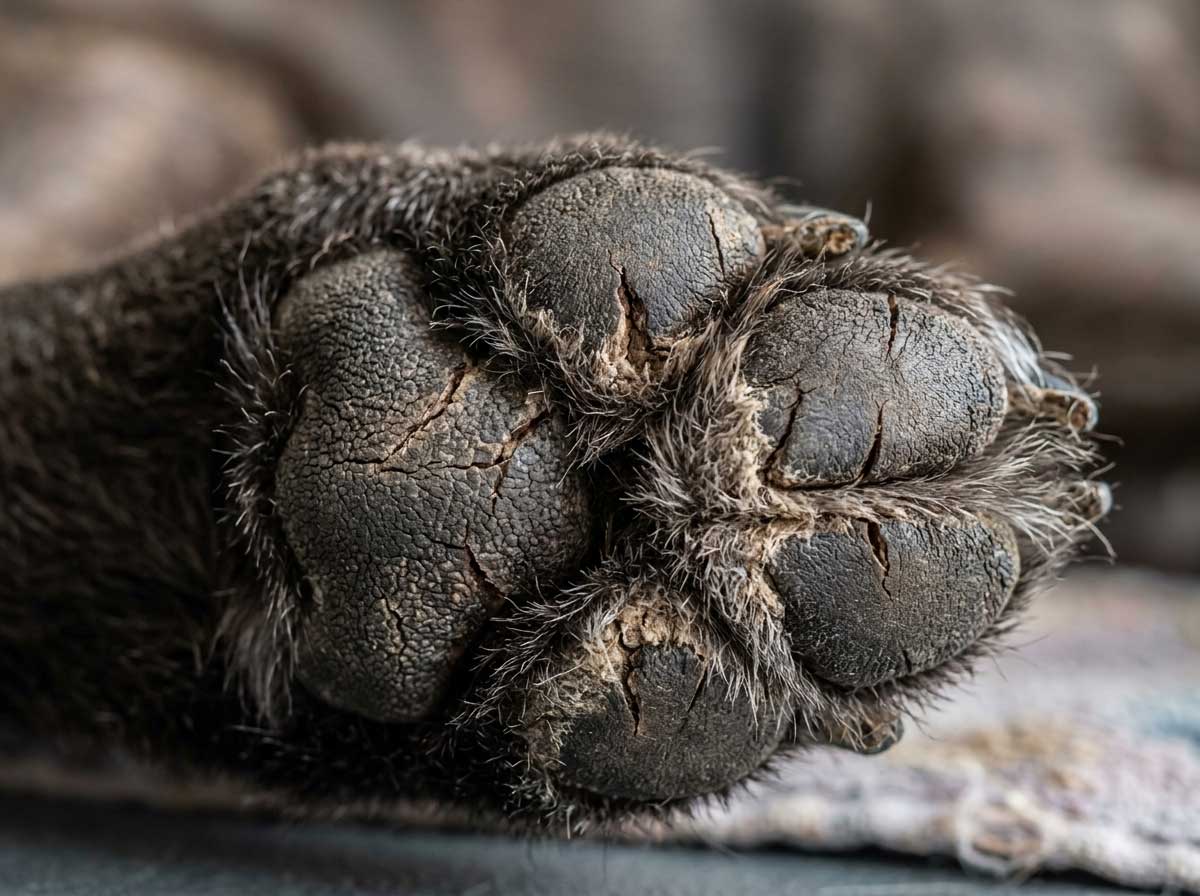
Cracked dog paws and dry paw pads are common, especially in winter or after walking on rough terrain. Mild dryness appears as rough, flaky pad surface; progression leads to visible cracks or fissures, which can become painful and infected. Causes include: dry cold weather, low humidity, walking on salt or chemical ice-melters, allergies, hyperkeratosis (a condition causing excess keratin buildup), and zinc or vitamin deficiencies. Dry cracked dog paws usually improve with a paw balm (beeswax, shea butter, coconut oil-based), avoiding hot or salt-treated surfaces, and booties in harsh conditions. Deep cracks that bleed or reach the pink tissue underneath can get infected and need veterinary care. Avoid human lotions (dogs lick them off), and don't use petroleum jelly long-term — it traps bacteria.
Redness Between the Toes
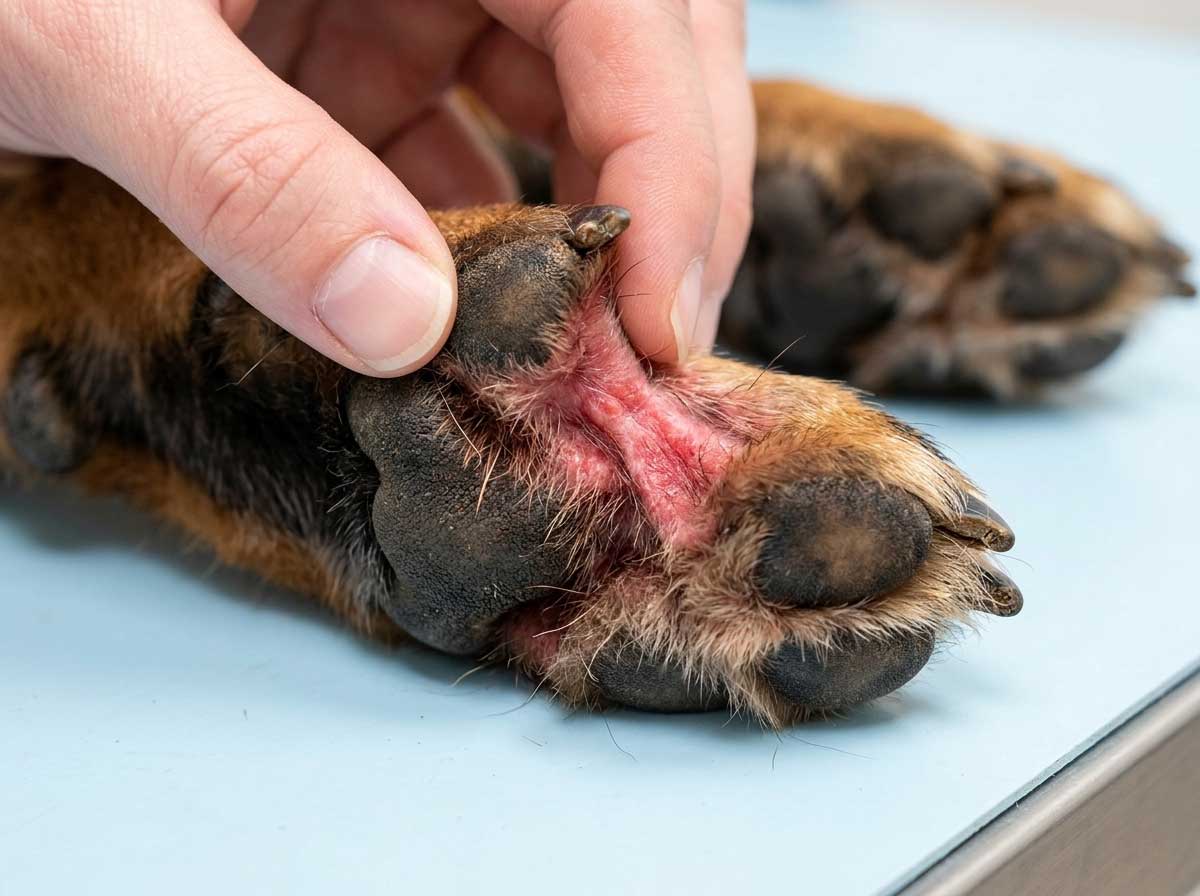
Red between dogs toes is one of the most common reasons owners seek help. Dog paws red between toes causes include: allergies (environmental, food, or contact) — the top cause of chronic paw redness, yeast infection with red-brown staining and musty smell, bacterial infection (often from excessive licking), pododermatitis, foreign objects like grass seeds, interdigital cysts or furuncles, and contact irritants (lawn chemicals, cleaners). Dog paw swollen red between toes typically means infection is already established. Home care for mild cases: daily paw wipes, chlorhexidine or povidone-iodine foot soaks, keeping paws dry after walks, and e-collars to prevent licking. See a vet if: redness persists beyond a few days, a lump forms between toes, discharge appears, or your dog is severely limping. Chronic redness almost always has an underlying cause that needs targeted treatment.
Worried about your dog's paws?
Upload a photo of your dog's paw now. Get an AI-powered assessment of the likely cause, severity, and whether you need to see a vet.
Check Dog Paw Now →Medical Disclaimer
PawCheck provides AI-generated preliminary health analysis for informational and educational purposes only. This service is not intended to replace professional veterinary advice, diagnosis, or treatment. The AI analysis has inherent limitations and may not always be accurate. Always seek the advice of a qualified, licensed veterinarian with any questions regarding your pet's health. Never disregard professional veterinary advice or delay in seeking it because of information provided by this tool. If your pet is experiencing a medical emergency, contact your veterinarian or emergency animal hospital immediately. By using this service, you acknowledge and agree to these terms.
Frequently Asked Questions
How can you tell if a dog's paw is infected?
+
An infected dog paw typically shows: redness between the toes or around the paw pads, swelling that's warm to the touch, foul smell (yeast infections smell musty or like corn chips), discharge or crust between the toes, your dog licking or chewing paws excessively, limping or reluctance to walk, and darkened, thickened paw pad skin. Early stage dog paw infection pictures often show just mild redness between the toes and subtle swelling before discharge appears. Bacterial infections usually look more red and weepy, while yeast infections cause brown-red staining and a distinctive smell. Upload a photo for an AI assessment of infection signs.
What does a fungal infection look like on a dog's paw?
+
A fungal (yeast) paw infection — commonly Malassezia overgrowth — shows these signs: red-brown or rust-colored staining of the fur between the toes and on the paw pads (from saliva + yeast), greasy or waxy residue on the skin, a distinctive musty, "corn chip" or "Frito foot" smell, thickened, darkened (hyperpigmented) paw pad skin over time, intense itching causing constant licking, and redness between the toes. Yeast thrives in warm moist areas, which is why paws and toe webs are common sites. Dog paw yeast infection treatment typically involves medicated shampoos, antifungal wipes or sprays, and keeping paws dry. Severe or chronic cases need vet-prescribed oral antifungals.
Will my dog's swollen paw go down on its own?
+
It depends on the cause. A mildly swollen paw from a minor sprain, insect sting, or short-term irritation may reduce within 24-48 hours with rest and monitoring. However, a swollen dog paw will NOT improve on its own if caused by: an infection (bacterial or yeast), a broken toenail, a foreign object stuck between the toes (grass seed, splinter), a bone fracture, a tick-borne disease, or an abscess. Warning signs that need a vet: swelling that keeps increasing, limping with obvious pain, hot skin, discharge, foul smell, or your dog being lethargic. If swelling hasn't improved after 48 hours or is getting worse, see a vet. Dog swollen paw limping no pain can still indicate infection or a foreign body — don't ignore it.
What does a dog paw pad injury look like and how do I treat it?
+
A dog paw pad injury may appear as: a visible cut or laceration, a flap of pad tissue hanging (paw pad injury flap), a missing piece of pad, peeling or torn pad surface, or a pad that looks raw and pink. For minor cuts: rinse with clean water, apply gentle pressure with gauze to stop bleeding, clean with diluted chlorhexidine (not hydrogen peroxide — it damages healing tissue), apply a thin layer of pet-safe antibiotic ointment, and cover with a lightly-wrapped bandage. See a vet if: the cut is deeper than surface-level, bleeding doesn't stop after 10 minutes, there's a flap of pad that won't lie flat, you see fat or deeper tissue, the cut is longer than half an inch, or signs of infection develop. Dog paw pad injury healing time is typically 1-3 weeks depending on severity.
Why are my dog's paw pads peeling or cracked?
+
Peeling and cracked paw pads have several common causes: dry weather or low humidity, walking on hot pavement (burns), chemical irritants (ice melt, cleaning products, lawn chemicals), excessive licking from allergies, autoimmune diseases (rare), zinc or vitamin deficiencies, hyperkeratosis (abnormal keratin buildup), and contact dermatitis. Mild peeling often resolves with a paw balm containing beeswax, shea butter, or coconut oil. Deep cracks or painful fissures can get infected and need veterinary care. Avoid: human lotion (dogs lick it off), petroleum jelly as a long-term solution, and walks on hot pavement (the "5-second rule" — if the ground is too hot for your hand, it's too hot for paws). If peeling spreads or your dog is limping, see a vet.
Why is my dog's paw red between the toes?
+
Red between dogs toes is one of the most common paw problems. Causes include: allergies (environmental, food, or contact) — the #1 cause of chronic redness and licking, yeast infection (Malassezia) — shown by red-brown staining and a musty smell, bacterial infection (often secondary to licking), pododermatitis (inflammation of the paw skin), interdigital cysts or furuncles, ingrown hair or foreign body (grass seeds get trapped between toes), and contact irritants. Dog paws red between toes home remedies include soaking paws in diluted povidone-iodine or chlorhexidine, epsom salt soaks for swelling, keeping paws dry after walks, and addressing underlying allergies. If redness is severe, spreading, or accompanied by discharge or a lump, see a vet — chronic interdigital inflammation often needs prescription treatment.
Can I put hydrogen peroxide on my dog's infected paw?
+
No — hydrogen peroxide should not be used on dog paw wounds or infections. While it was once commonly recommended, modern veterinary medicine advises against it because: it damages healthy tissue and delays wound healing, it kills beneficial cells needed for recovery, it can push bacteria deeper into the wound, and repeated use worsens skin irritation. Better alternatives for cleaning an infected paw: diluted chlorhexidine solution (the vet-recommended antiseptic), diluted povidone-iodine (betadine) solution, and saline (salt water). For an infected paw, cleaning alone is not enough — you need a vet to prescribe appropriate antibiotics (oral or topical) and identify whether the infection is bacterial, fungal, or both. Home remedies delay proper treatment and can let the infection spread.
When should I take my dog to the vet for a paw problem?
+
See a vet within 24-48 hours if your dog has: a paw pad cut deeper than a surface abrasion, a paw pad injury flap that won't stay flat, swelling that keeps increasing, foul-smelling discharge or pus, a wound that's not improving after 2-3 days, severe limping or refusing to bear weight, signs of infection (redness, heat, swelling, discharge, smell), a broken or bleeding toenail, suspected foreign object between toes, repeated licking despite home care, paw pads that are cracked deeply or bleeding, and any burn injury (hot pavement, chemicals). Emergency (same day) if: heavy bleeding that won't stop, major trauma, suspected fracture, or your dog is in severe pain. Chronic paw licking that's gone on for weeks always needs a vet visit — it's almost always allergies, yeast, or both, and won't resolve without targeted treatment.
More AI Pet Health Checks
Eye Infection Checker
Detect dog eye infection, cat eye problems, conjunctivitis, corneal ulcers, and cataracts.

Skin Disease Checker
Detect dog skin infection, cat skin problems, dermatitis, hot spots, and ringworm.

Dog Ear Infection Checker
Detect dog ear infection, ear mites, yeast infections, and ear discharge with AI photo analysis.
Cat Ear Mites Checker
Detect cat ear mites, ear infections, yeast infections, and ear discharge with AI photo analysis.
Cat Vomit Checker
Why is my cat vomiting? Analyze white foam, yellow bile, blood, hairballs, and more with AI.

Dog Vomit Checker
Dog vomiting when to worry? Analyze white foam, yellow bile, blood, and undigested food with AI.
Dog Nose Checker
Dog nose dry or runny? Analyze cracked noses, nasal discharge, and color changes with AI.
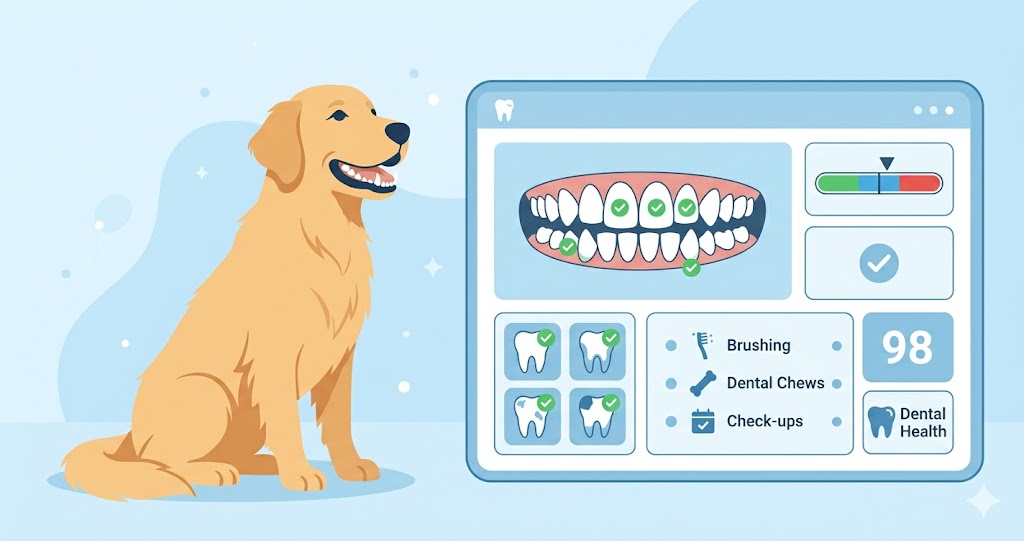
Dog Dental Checker
Detect dog tooth infections, gum disease, tartar buildup, and dental problems with AI photo analysis.
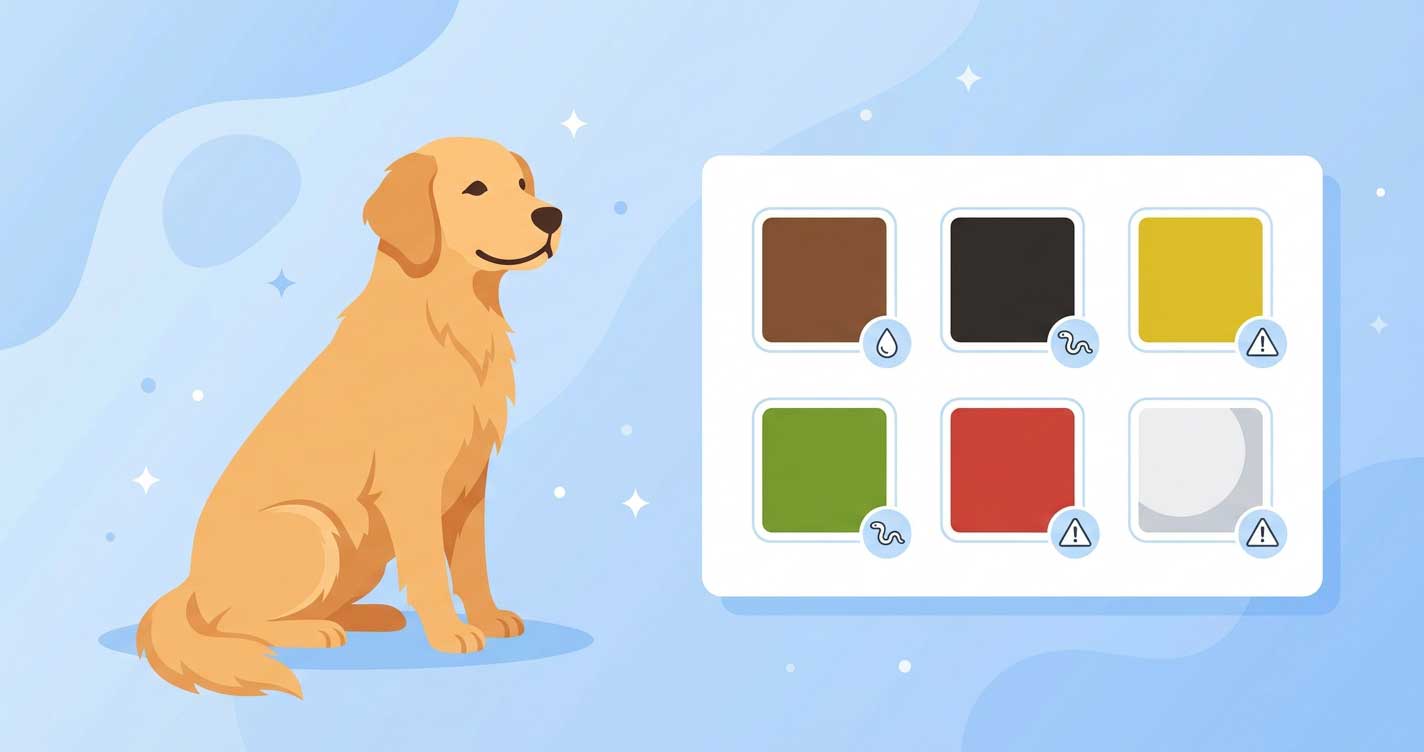
Dog Poop Checker
Blood in dog stool? Analyze poop color, detect worms, mucus, and diarrhea with AI photo analysis.
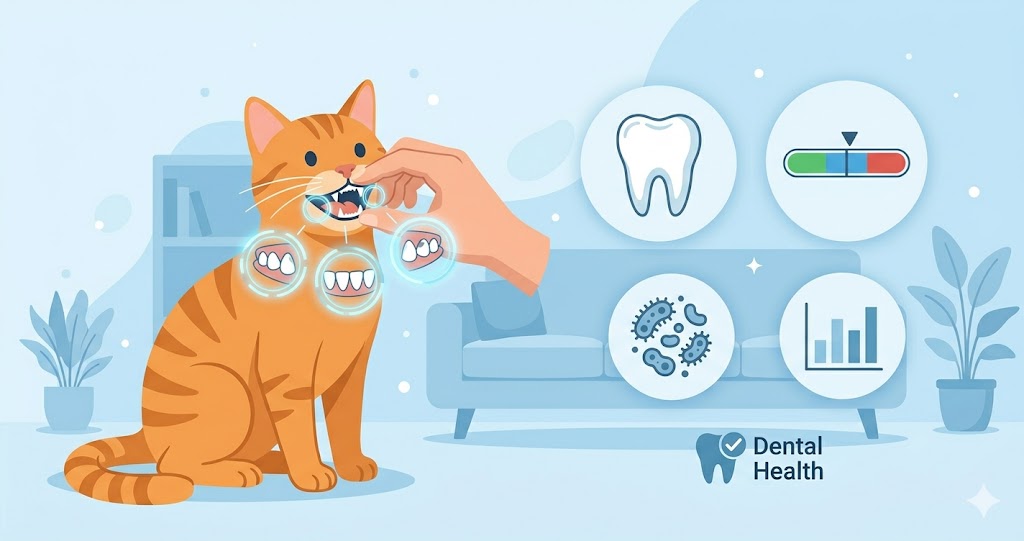
Cat Dental Checker
Detect cat tooth infections, gum disease, stomatitis, tooth resorption, and dental problems with AI photo analysis.

Dog Lump Checker
Found a lump on your dog? Identify skin tags, warts, cysts, lipomas, and bumps with AI photo analysis.
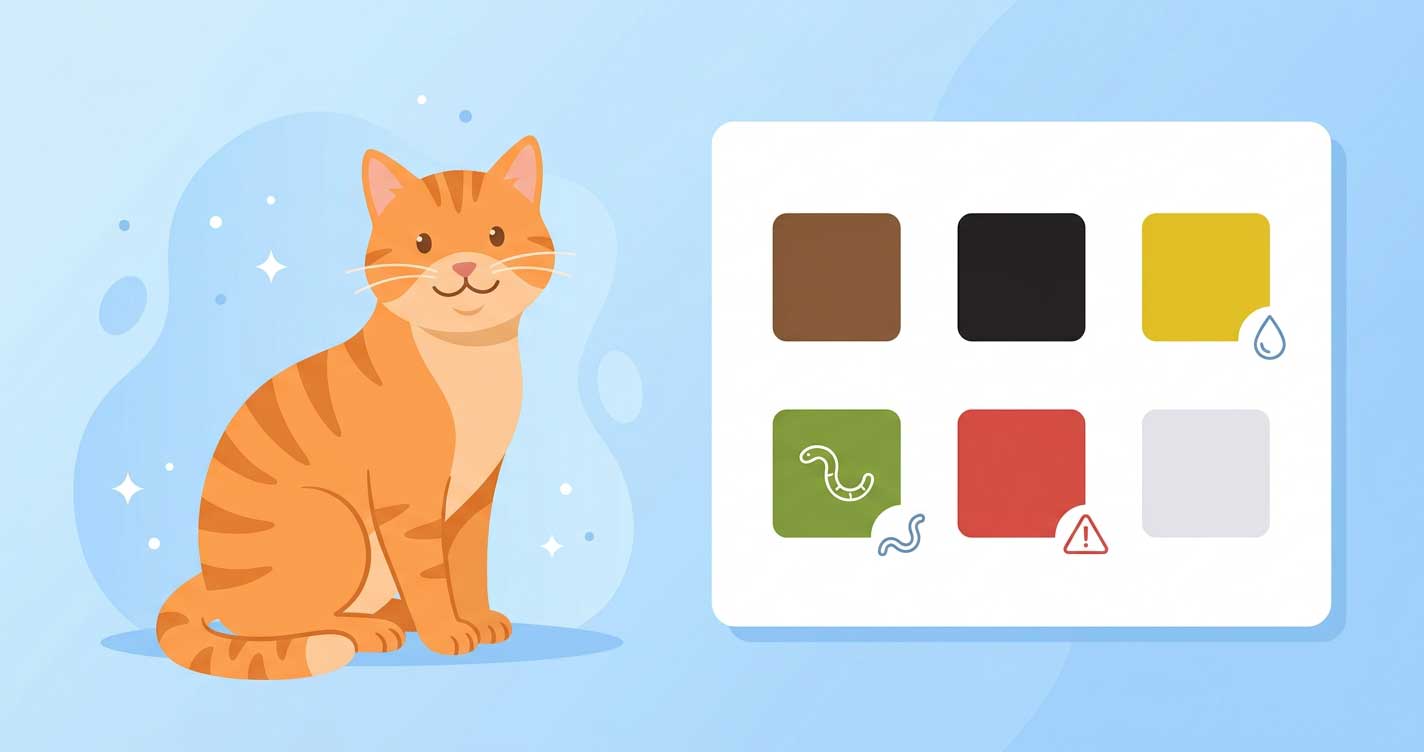
Cat Poop Checker
Blood in cat stool? Analyze poop color, detect worms, mucus, and diarrhea with AI photo analysis.
Dog Wound Checker
Is your dog's wound infected? Check infection signs, healing stages, and bite wounds with AI photo analysis.
Cat Lump Checker
Found a lump on your cat? Identify skin tags, cysts, lipomas, warts, and bumps with AI photo analysis.
Cat Nose Checker
Cat nose dry or runny? Analyze crusty noses, nasal discharge, and sneezing symptoms with AI.
Cat Paw Checker
Cat paw swollen, puffy, or injured? Check pillow foot, infections, abscesses, ingrown nails, and pad problems with AI.
🐾
View All Tools
Explore all AI pet health check tools