Dog Urine Checker — Blood in Urine, Color Chart & Photo AI
Blood in your dog's urine, dark yellow, or unusual color? Upload a photo and get an instant AI analysis — identify UTI, dehydration, liver issues, or emergency signs in seconds.
Drop your pet's photo here
or
✅JPG, PNG, WEBP
📏Max 8MB
This tool provides AI-generated preliminary analysis only. Not a substitute for professional veterinary diagnosis.
📸 Photo Guide
Good photos

White surface, clear light
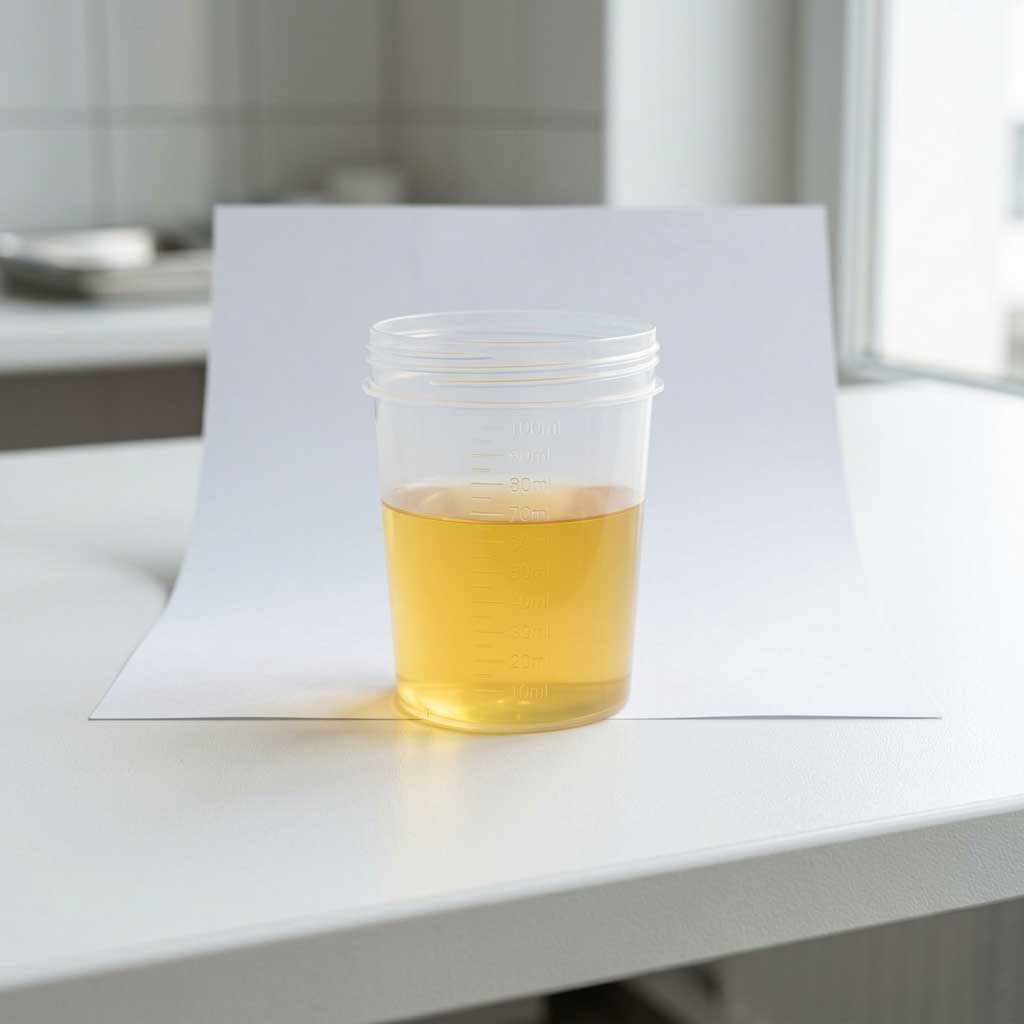
Clear container
Avoid
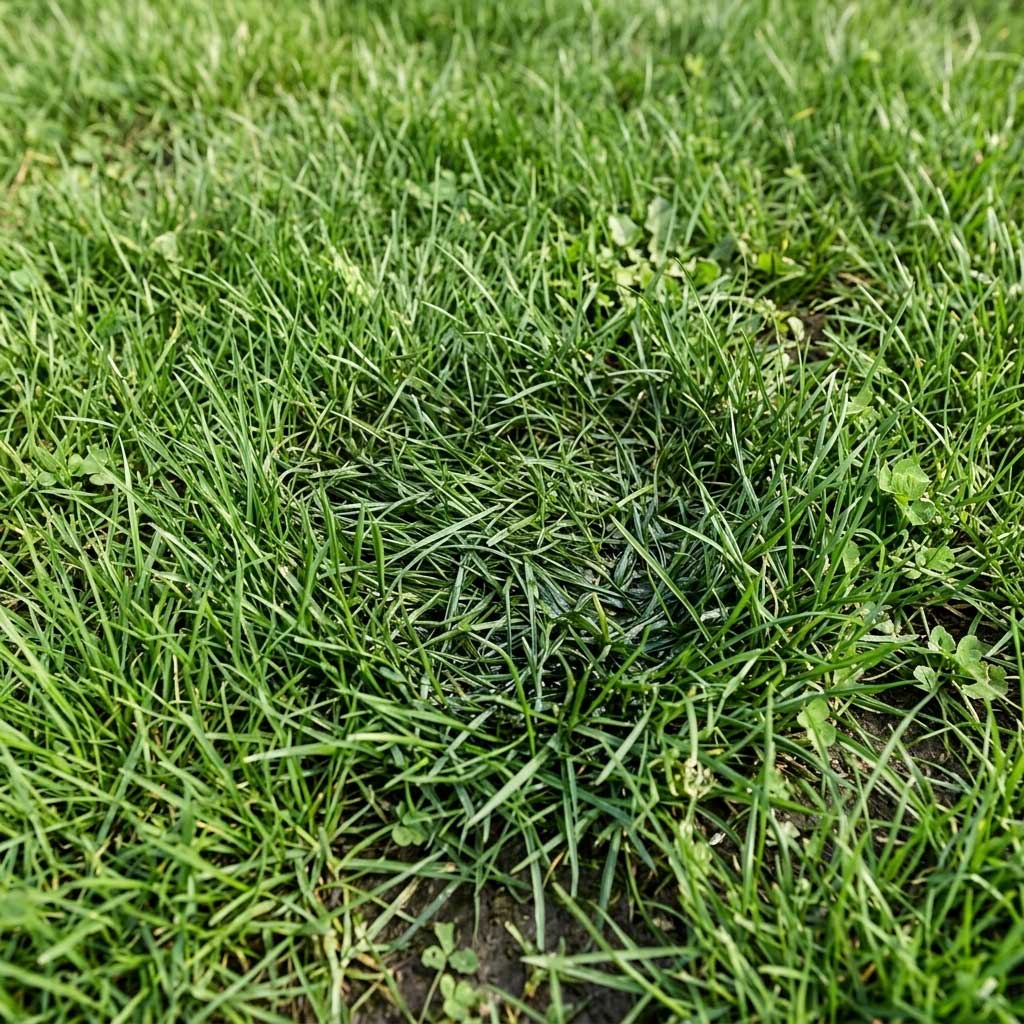
Wrong surface

Too dim/blurry
Tips for best results
- ✓Photograph on a WHITE absorbent surface — paper towel, pee pad, or white tile work best
- ✓Avoid grass, dirt, snow, or dark floors — these distort the color
- ✓Use natural daylight if possible — indoor yellow lighting makes urine look darker than it is
- ✓If collected in a cup, use a clear glass or white container — not plastic with tint
- ✓Include a piece of plain white paper in the frame as a color reference
- ✓Do NOT photograph urine in toilet water — it dilutes the color and obscures blood
- ✓Take the photo within 30 minutes of urination — older urine changes color as it oxidizes
How It Works — AI Dog Urine Color Checker
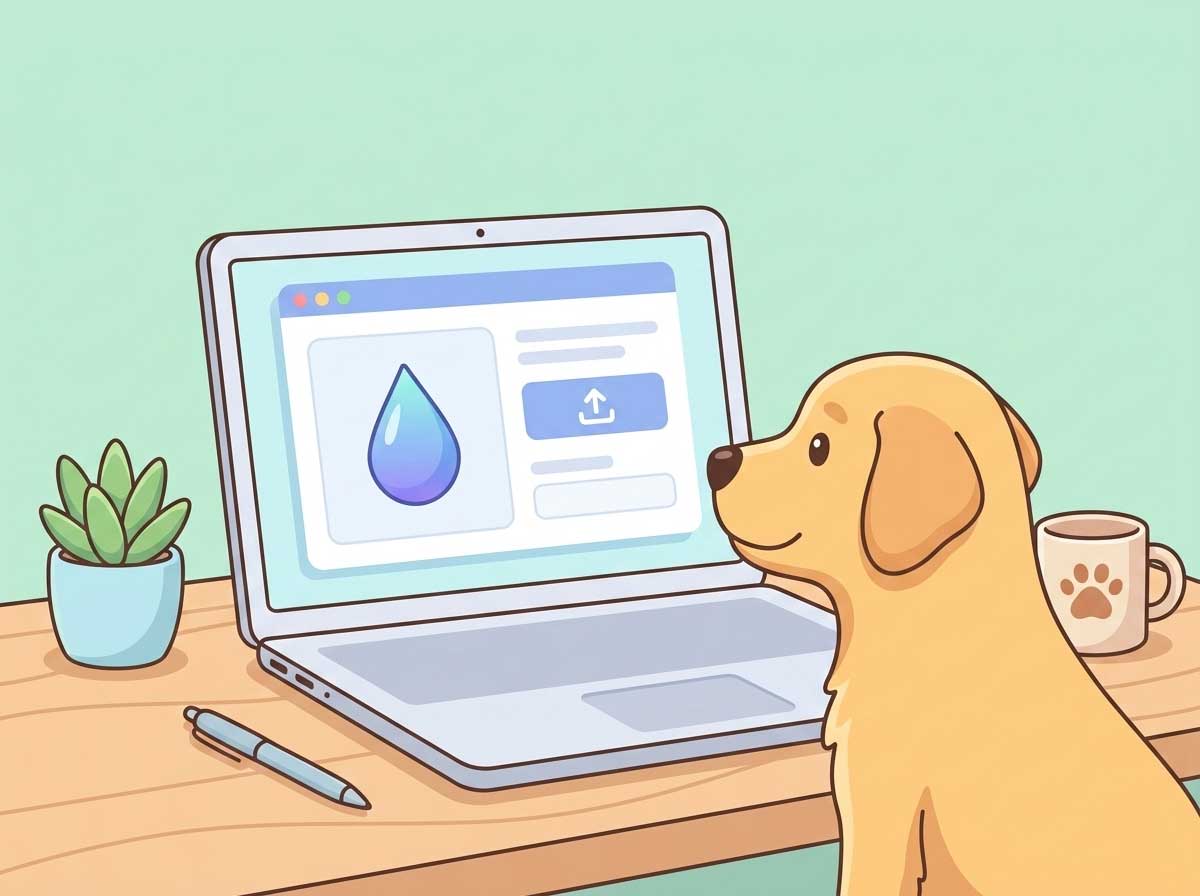
Step 1
Upload a Urine Photo
Take a clear, well-lit photo of the urine on a white surface (paper towel, tile, or pee pad). The AI needs a neutral background to assess color accurately.

Step 2
AI Analyzes
Our AI examines the urine color, clarity, and any abnormal tints — identifying signs of blood, dehydration, liver issues, UTI, or crystals.

Step 3
Get Your Report
Receive a detailed report with the likely cause, severity, recommended next steps, and whether you need an emergency vet visit.
Common Dog Urine Color & Clarity Problems
Dog urine color tells you a lot about your dog's health. Here are the most common abnormal findings our AI can help identify — from blood in urine to dehydration to liver issues. Also try our dog poop checker or dog skin checker or dog wound checker.
Bright Red, Pink or Rust-Colored Urine (Blood / Hematuria)
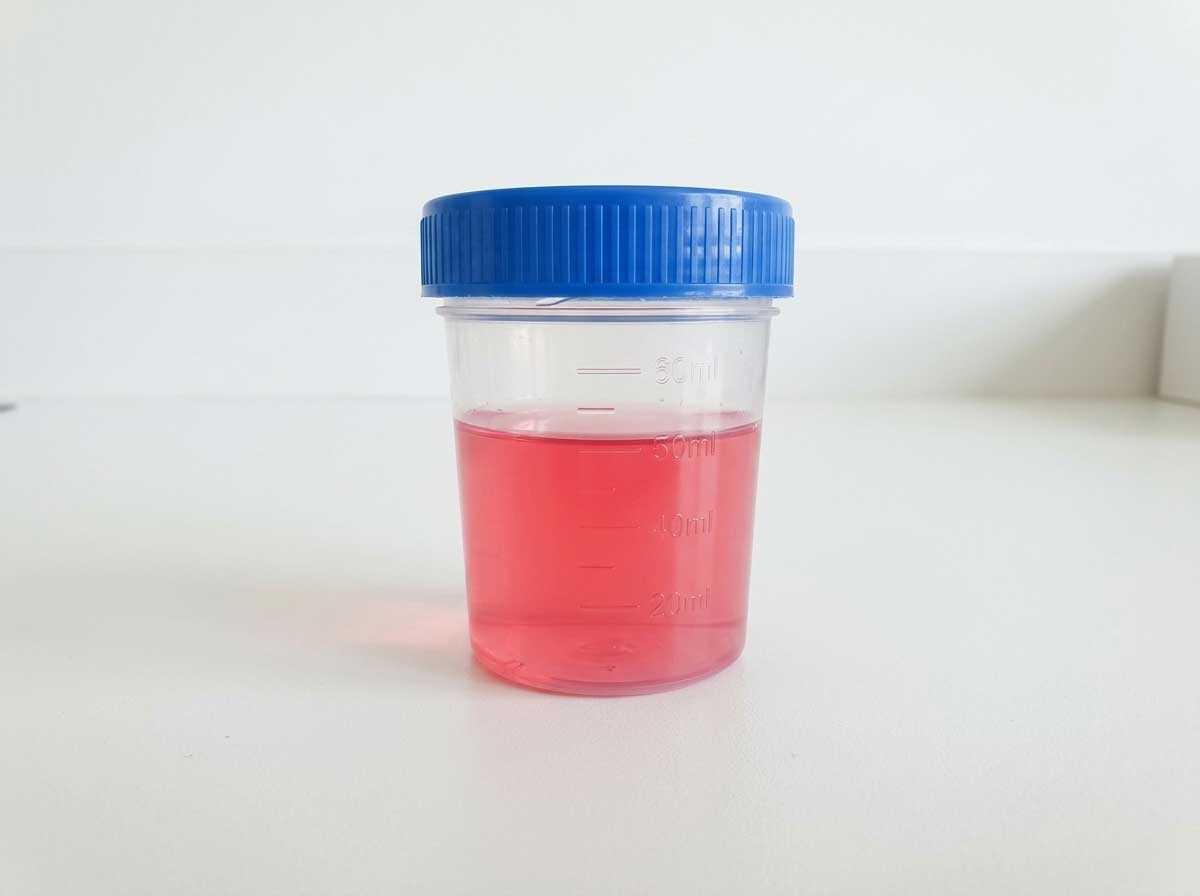
Blood in dog urine — whether bright red, pink, rust-brown, or tea-colored — is the #1 reason owners seek urgent help. Causes include: urinary tract infection (UTI), bladder stones or crystals, bladder inflammation (cystitis), prostate issues in intact male dogs, kidney disease, bladder cancer (older dogs, certain breeds), pyometra in intact female dogs (life-threatening), trauma from rough play or accidents, and tick-borne diseases. Is blood in dog urine an emergency? It depends on severity. See a vet within 24 hours for: any visible blood even if your dog is acting normal, persistent pink/red tint after one full day, clots or stringy blood. Go to ER immediately for: heavy bleeding, your dog straining to pee but not producing urine (possible blockage — deadly in 24-48h), lethargy, vomiting, or collapse alongside bloody urine. "But acting normal" doesn't mean it's not serious — dogs hide pain well, and many causes progress quickly if untreated.
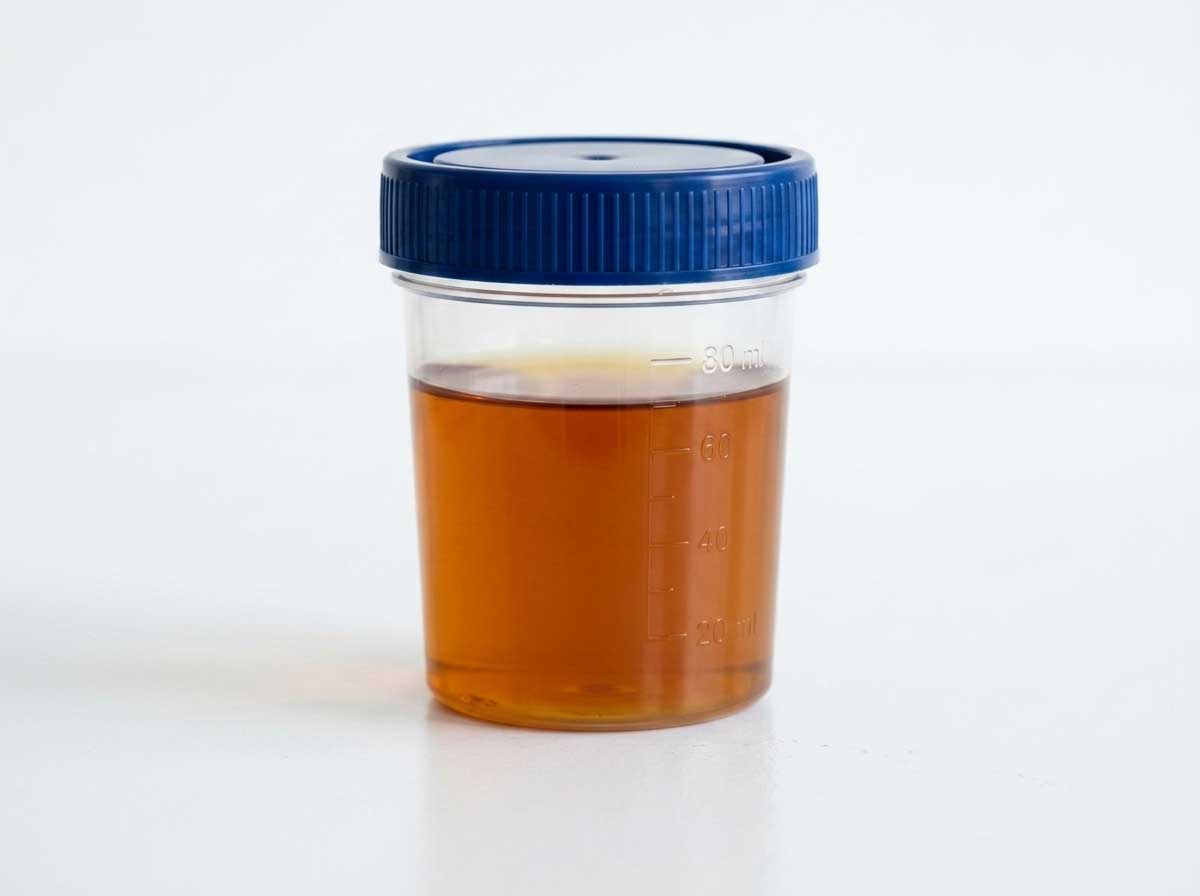
Dark Yellow or Amber Urine (Dehydration)
Dark yellow or amber-colored urine in dogs usually indicates dehydration. The darker and more concentrated the color, the more dehydrated your dog likely is. Common causes: inadequate water intake, hot weather or heavy exercise, vomiting or diarrhea causing fluid loss, some medications (certain antibiotics, anti-inflammatories), older dogs with declining kidney function concentrating urine. Simple at-home test: offer fresh water and recheck urine color in 2-3 hours. If it lightens to pale/medium yellow, dehydration was the cause. Persistent dark urine (stays dark despite good water intake) warrants vet evaluation — it can indicate early kidney disease, liver issues, or urinary obstruction. Very dark ("tea-colored" or brownish-yellow) urine combined with lethargy is an emergency — can indicate severe dehydration, heatstroke, or red blood cell destruction.
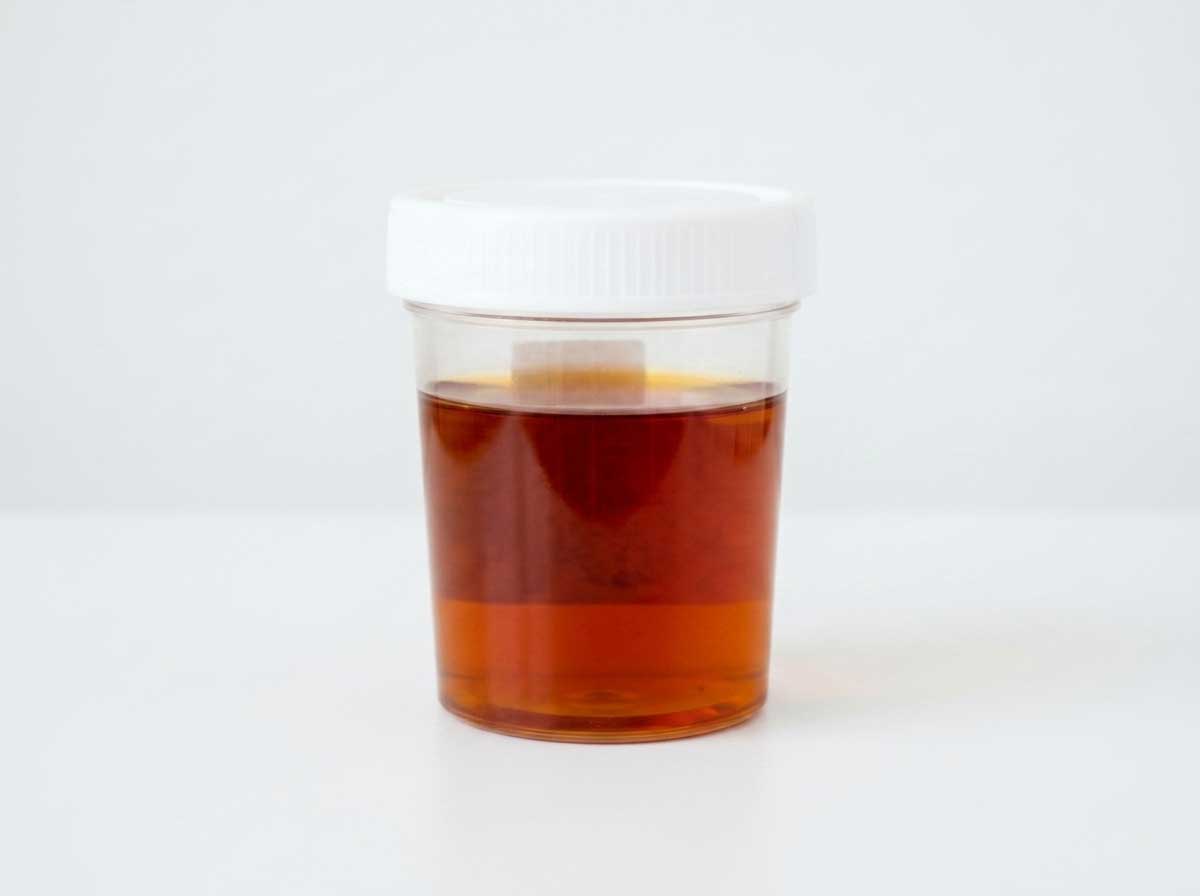
Orange or Brown Urine (Liver, Bile, Stones or Muscle Issues)
Orange, brown, or tea-colored dog urine is NOT normal and usually indicates a serious underlying condition. Causes of orange urine: liver disease or failure (bile pigments leaking into urine), bile duct obstruction (gallbladder issues), rhabdomyolysis (muscle breakdown releasing myoglobin — dark brown urine), hemolysis (red blood cells destruction — tea-colored urine), severe dehydration concentrating bilirubin, certain medications and toxin exposure (onions, grapes, some rat poisons). Causes of brown urine: similar to orange but more severe, sometimes including advanced kidney disease, severe muscle damage, or severe heat stroke. Dog brown urine plus yellow eyes or yellow gums = jaundice = urgent vet visit (liver failure). Orange or brown urine should ALWAYS prompt a vet visit within 24 hours, even if your dog seems fine. Liver and kidney problems are much more treatable in early stages.

Cloudy Urine (UTI, Crystals or Infection)
Cloudy, milky, or opaque dog urine usually indicates an infection or crystal formation. Common causes: urinary tract infection (UTI) — white blood cells, bacteria, and proteins make urine cloudy, crystals or early-stage bladder stones (struvite, calcium oxalate), kidney infection (pyelonephritis), prostate infection in intact male dogs, pyuria (pus in urine from severe infection), and concentrated urine from dehydration (rarely truly "cloudy"). A strong, fishy, or ammonia-like smell often accompanies cloudy urine from a UTI. Cloudy urine with pink/red tint = UTI with hematuria, very common in female dogs. Cloudy urine combined with straining, frequent small urinations, or licking the genital area is almost always a UTI. Take a fresh urine sample to a vet within a few days — a simple urinalysis confirms the diagnosis within minutes and guides antibiotic selection.
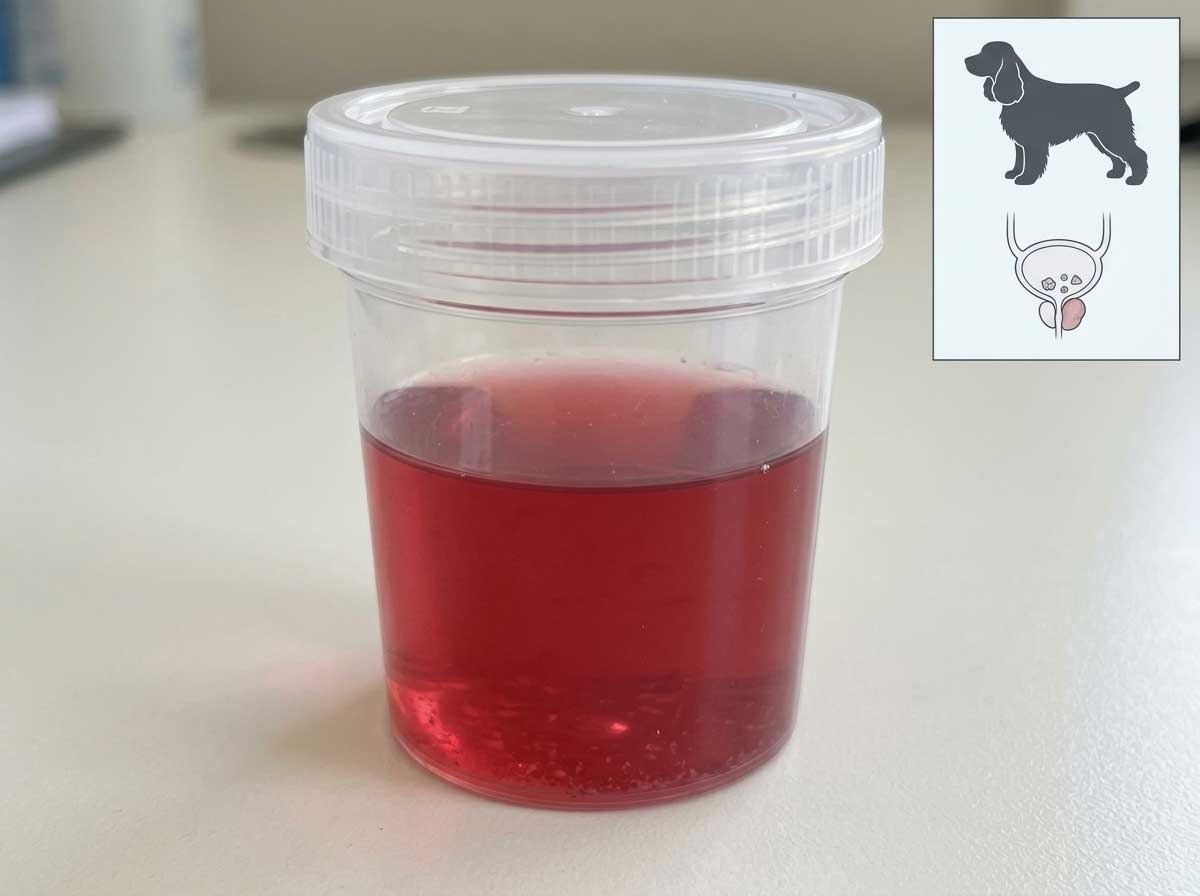
Blood in Male Dog Urine (Stones, Prostate Issues)
Male dogs peeing blood often have different underlying causes than females. Most common causes in male dogs: bladder stones — much more dangerous in males due to narrow urethra (can block completely), prostate issues (especially intact males over 5 years) — infection, benign enlargement, or rarely cancer, bladder cancer (transitional cell carcinoma) in older males, and UTI (less common than in females but still occurs). Critical emergency sign: if your male dog is STRAINING TO PEE and producing little or no urine, this is a urinary blockage — life-threatening within 24-48 hours. Male dogs can die from complete urinary obstruction because they can't void urine, backpressure damages kidneys, and eventually heart stops. Go to an ER immediately if straining + minimal urine production. Neutered males rarely have prostate issues but can still develop stones and UTIs. Any blood in male dog urine warrants a vet visit within a few days.
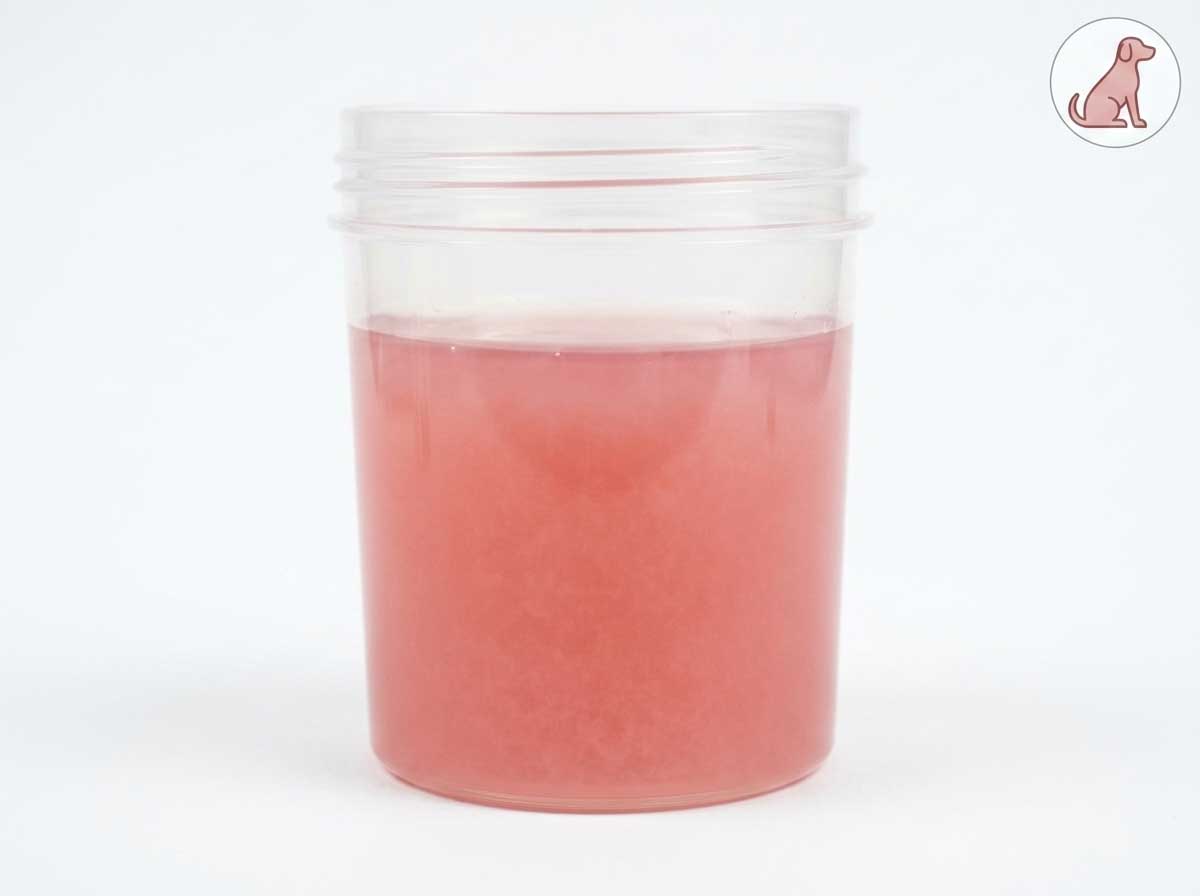
Blood in Female Dog Urine (UTI, Pyometra, Post-Spay)
Female dogs are much more prone to blood in urine than males, primarily due to shorter urethras making UTIs easier. Most common causes in female dogs: urinary tract infection (UTI) — by far the most common, bladder stones or crystals (often secondary to UTI), heat cycle blood (in intact females — comes from vulva, often confused with urine blood), pyometra (infected uterus) in intact females — LIFE-THREATENING EMERGENCY, uterine stump infection in spayed females (rare complication), bladder cancer in older females (Scottish Terriers and Shelties are predisposed), and trauma. Pyometra red flags in INTACT females: blood in urine combined with lethargy, off food, increased thirst, vomiting, or swollen belly — emergency vet trip. Signs pointing to UTI: pink/red urine + frequent small urinations + licking vulva + strong urine smell. Signs pointing to heat cycle: blood more visible during urination, swollen vulva, behavioral changes, every 6-12 months. Bring a urine sample to the vet for accurate diagnosis.
Worried about your dog's urine color?
Upload a photo now. Our AI will assess color, clarity, and potential causes — from blood and UTI signs to dehydration and liver issues — plus whether you need a vet urgently.
Check Dog Urine Now →Medical Disclaimer
PawCheck provides AI-generated preliminary health analysis for informational and educational purposes only. This service is not intended to replace professional veterinary advice, diagnosis, or treatment. The AI analysis has inherent limitations and may not always be accurate. Always seek the advice of a qualified, licensed veterinarian with any questions regarding your pet's health. Never disregard professional veterinary advice or delay in seeking it because of information provided by this tool. If your pet is experiencing a medical emergency, contact your veterinarian or emergency animal hospital immediately. By using this service, you acknowledge and agree to these terms.
Frequently Asked Questions
Is blood in my dog's urine an emergency?
+
Yes, blood in a dog's urine should always be evaluated promptly — see a vet within 24-48 hours even if your dog seems fine. It IS a true emergency (go same-day or to an ER) if: your dog is straining to pee but not producing urine (possible blockage — life-threatening within hours), there's heavy active bleeding or large clots, your dog is vomiting, not eating, or lethargic, or your dog has a swollen, painful belly. Even "mild" blood in urine with an otherwise normal dog is worth a same-week vet visit because common causes (UTI, bladder stones, prostate issues) progress if untreated. Home remedies alone almost never resolve true hematuria — diagnosis needs a urine test.
Why is my dog peeing blood but acting normal?
+
A dog that's peeing blood but otherwise behaving normally usually has an early-stage condition — the body hasn't reached the pain or illness threshold yet. Common causes in this scenario: early urinary tract infection (UTI), small bladder stones or crystals not yet causing blockage, bladder inflammation (cystitis), minor bladder trauma from rough play, or very early-stage prostate issues in intact males. The "acting normal" does NOT mean it's not serious — dogs are stoic and often don't show discomfort until conditions are advanced. Female dogs in particular hide UTI symptoms until significant infection is present. Get a urine sample checked within a few days — early treatment is vastly easier than advanced treatment.
What color is healthy dog urine?
+
Healthy dog urine should be a pale to medium yellow — roughly the color of light apple juice or pale straw. The exact shade depends on hydration: a well-hydrated dog has pale yellow urine, an adequately hydrated dog has medium yellow, and a slightly dehydrated dog has dark yellow or amber. Clear (nearly water) urine can suggest overhydration, diabetes, or kidney issues. Dark yellow to amber suggests dehydration — offer more water. Any color outside this yellow range (red, pink, orange, brown, dark tea-colored, cloudy white) is abnormal and should be evaluated by a vet.
What color is dog urine with a UTI?
+
Dog urine with a UTI usually shows one or more of these changes: a pink, red, or rust-brown tint from blood (hematuria), cloudiness or opacity (from white blood cells and bacteria), a strong or foul smell — often described as "fish-like" or "ammonia-like", and sometimes visible sediment or cloudy strands. Early UTIs may only show subtle cloudiness or faint pink tint; advanced UTIs can show obvious red-brown discoloration. UTIs are more common in female dogs than males (anatomy: shorter urethra). If you suspect a UTI based on urine appearance, collect a fresh urine sample and take it to a vet — a simple urinalysis confirms the diagnosis within minutes.
Can a dog UTI go away on its own?
+
Rarely, and even then only partly. Mild bladder inflammation without bacteria can sometimes resolve with increased water intake. But true bacterial UTIs almost never clear without antibiotics — the bacteria multiply, the infection ascends toward the kidneys (pyelonephritis), and complications develop. What looks like "UTI went away" is often just temporary symptom masking while the infection persists. Home care (cranberry supplements, extra water, D-mannose) can support treatment but should NEVER replace a vet diagnosis + antibiotics. Untreated UTIs can cause chronic kidney infection, bladder stone formation, and in some cases urosepsis (life-threatening bloodstream infection).
How do I fix my dog peeing blood? What can I give them at home?
+
You cannot safely "fix" blood in dog urine at home — the cause needs to be identified first. Giving supplements, cranberry pills, or increasing water without a diagnosis can delay proper treatment. What you CAN do safely: encourage water intake (add water to food, offer fresh water in multiple locations), collect a fresh urine sample (first morning pee, in a clean container) for the vet, keep your dog comfortable and restrict jumping/running until evaluated, and monitor for worsening (pain, straining, not peeing, vomiting). What NOT to give: human UTI meds (AZO, Pyridium — some are toxic), human antibiotics (wrong dose/type), or generic pet supplements promising "urinary support" (these don't treat active infections). See a vet within 24-48 hours.
Why is my female dog peeing blood?
+
Female dogs are more prone to blood in urine than males due to shorter, wider urethras. Most common causes: urinary tract infection (UTI) — #1 cause, especially in spayed females, bladder stones or crystals — often triggered by UTI, heat cycle bleeding — in intact females, blood comes from the vulva not the urine itself (often mistaken), pyometra (infected uterus) — life-threatening emergency in intact females, uterine stump infection — rare post-spay complication, bladder cancer — more common in older females (Scottish Terriers, Shelties predisposed), and trauma. Female-specific red flags: any intact female with blood in urine + lethargy + vomiting should be evaluated IMMEDIATELY for pyometra. Spayed females most often have UTIs or stones.
Why is my male dog peeing blood?
+
Male dogs get blood in urine from different conditions than females. Most common causes: bladder stones — more common and more dangerous in males due to narrow urethra (can block flow), UTI — less common than in females but occurs, prostate issues — infection, enlargement, or cancer in older intact males, trauma to the bladder or urethra, bladder cancer — transitional cell carcinoma, prostatitis in intact males, and tick-borne diseases. Critical warning: if your male dog is STRAINING TO PEE and producing little or no urine, go to an ER immediately — a urinary blockage from stones is a life-threatening emergency that kills within 24-48 hours if not treated. Neutered males rarely have prostate issues but can still get stones and UTIs.
Why does my dog's urine smell like fish?
+
A strong, fishy, or distinctly ammonia-like smell from dog urine usually means one of three things: bacterial UTI — the most common cause, with the bacteria producing the characteristic smell, concentrated urine from dehydration — normal urine that smells stronger because of high concentration, or dietary factors — some foods or supplements can cause odor changes. If the fishy smell is sudden and accompanied by cloudiness, pink/red tint, or your dog licking the genital area, a UTI is very likely. Chronic strong-smelling urine can also indicate kidney disease or diabetes. Collect a fresh urine sample and see a vet for a urinalysis — this simple test confirms whether bacteria are present.
Why is my dog's urine dark but acting normal?
+
Dark urine in a dog that's otherwise behaving normally is most commonly just dehydration. Other possibilities: concentrated urine from low water intake, hot weather or after exercise, first morning urine (overnight concentration), some medications or supplements, early liver issues (orange-brown tint), and mild muscle breakdown (after heavy exercise). Simple test: offer fresh water and check the urine color again in 2-3 hours. If it lightens to pale/medium yellow, dehydration was the cause. If it stays dark, shows orange/brown hues, or is accompanied by any lethargy or appetite change, see a vet — orange and brown urine can indicate liver problems, gallbladder issues, or more serious muscle damage (rhabdomyolysis). "Acting normal" is reassuring but not a replacement for color that's clearly abnormal for more than 24 hours.
More AI Pet Health Checks
Eye Infection Checker
Detect dog eye infection, cat eye problems, conjunctivitis, corneal ulcers, and cataracts.

Skin Disease Checker
Detect dog skin infection, cat skin problems, dermatitis, hot spots, and ringworm.

Dog Ear Infection Checker
Detect dog ear infection, ear mites, yeast infections, and ear discharge with AI photo analysis.
Cat Ear Mites Checker
Detect cat ear mites, ear infections, yeast infections, and ear discharge with AI photo analysis.
Cat Vomit Checker
Why is my cat vomiting? Analyze white foam, yellow bile, blood, hairballs, and more with AI.

Dog Vomit Checker
Dog vomiting when to worry? Analyze white foam, yellow bile, blood, and undigested food with AI.
Dog Nose Checker
Dog nose dry or runny? Analyze cracked noses, nasal discharge, and color changes with AI.
Dog Dental Checker
Detect dog tooth infections, gum disease, tartar buildup, and dental problems with AI photo analysis.

Dog Poop Checker
Blood in dog stool? Analyze poop color, detect worms, mucus, and diarrhea with AI photo analysis.
Cat Dental Checker
Detect cat tooth infections, gum disease, stomatitis, tooth resorption, and dental problems with AI photo analysis.

Dog Lump Checker
Found a lump on your dog? Identify skin tags, warts, cysts, lipomas, and bumps with AI photo analysis.

Cat Poop Checker
Blood in cat stool? Analyze poop color, detect worms, mucus, and diarrhea with AI photo analysis.
Dog Wound Checker
Is your dog's wound infected? Check infection signs, healing stages, and bite wounds with AI photo analysis.
Cat Lump Checker
Found a lump on your cat? Identify skin tags, cysts, lipomas, warts, and bumps with AI photo analysis.
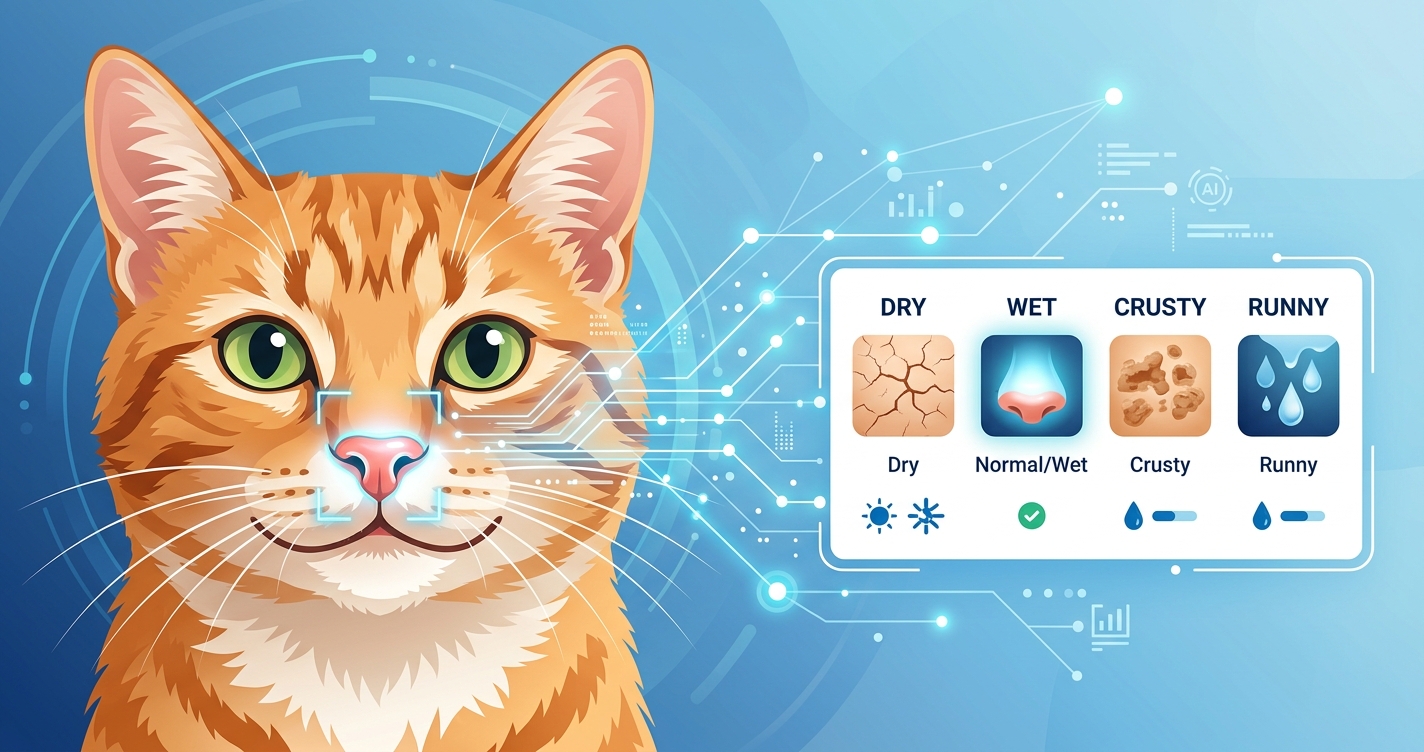
Cat Nose Checker
Cat nose dry or runny? Analyze crusty noses, nasal discharge, and sneezing symptoms with AI.

Dog Paw Checker
Dog paw injured, swollen, or infected? Check cuts, yeast infections, peeling pads, and redness between toes with AI.

Dog Acne Checker
Pimples on your dog's chin or muzzle? Tell canine acne from mange with AI — includes puppy acne, severity stage, and treatment advice.

Cat Paw Checker
Cat paw swollen, puffy, or injured? Check pillow foot, infections, abscesses, ingrown nails, and pad problems with AI.

Cat Acne Checker
Black specks on your cat's chin? Tell feline acne apart from flea dirt or mites with AI — includes severity stage and treatment advice.
Cat Urine Checker
Blood in your cat's pee? Dark or cloudy urine? Check color, clarity, and visible blood with AI — triage UTI, crystals, or liver issues.
🐾
View All Tools
Explore all AI pet health check tools