How to Heal a Dog Wound Fast at Home: 7 Vet-Approved Tips

Want to help your dog's wound heal faster? 7 proven tips for faster wound healing in dogs — from proper cleaning to nutrition to preventing licking.

Published 2026-04-16
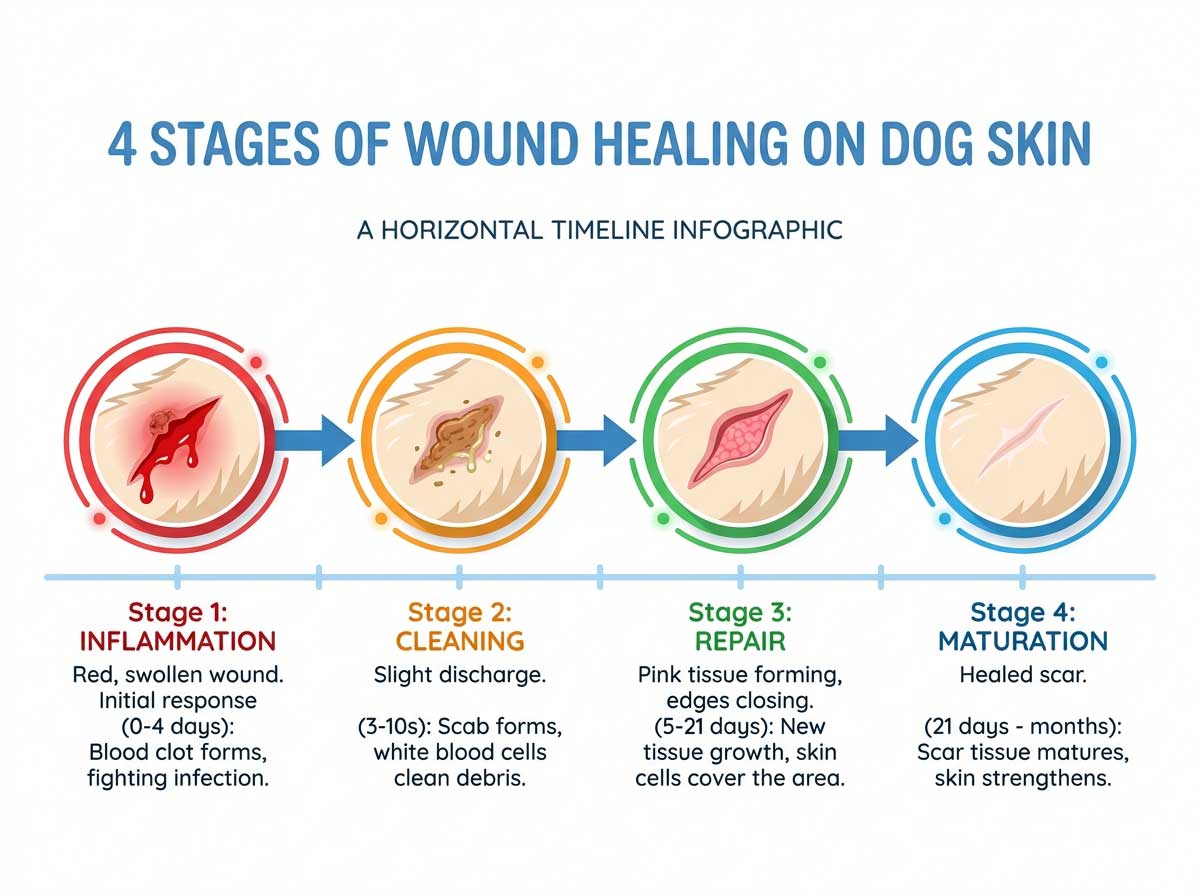
Dog wound in healing stage showing healthy pink tissue forming

Your dog has a wound and you want it to heal as fast as possible. Whether it's a scrape from rough play, a cut from stepping on something sharp, or a surgical incision — the healing process follows the same stages. The good news: there's a lot you can do at home to speed things up. Here are 7 vet-approved ways to help your dog's wound heal faster.

1. Keep the Wound Clean (But Don't Overdo It)

Cleaning is the single most important factor in wound healing. Flush the wound gently with lukewarm saline solution (1 teaspoon of salt per 2 cups of water) once or twice daily. This removes bacteria and debris without damaging new tissue. Don't scrub — be gentle. And don't over-clean. Once or twice a day is enough. Constant cleaning disrupts the healing process.

2. Stop Your Dog from Licking the Wound

This is the number one mistake dog owners make — letting their dog lick the wound because "dog saliva is healing." This is a myth. Dog saliva contains bacteria that can cause infection, and the physical act of licking reopens wounds, removes new tissue, and introduces contamination. Use an e-collar (cone of shame). Yes, your dog will hate it. But it's the single biggest thing you can do to speed up healing. Alternatives include recovery suits, bandages, or bitter-tasting wound sprays.

3. Keep the Wound Moist (Not Wet)

Contrary to the old advice of "let it dry out," modern wound care shows that wounds heal faster in a moist environment. A thin layer of veterinary wound ointment or plain Neosporin keeps the wound moist, prevents scab cracking, and supports new tissue growth. Don't glob it on — a thin layer is enough. If the wound is bandaged, change the bandage daily to prevent moisture buildup that could lead to infection.

4. Feed for Healing

Your dog's body needs extra resources to heal. Good nutrition makes a real difference:

  • Protein is critical — it provides the building blocks for new tissue. Lean chicken, fish, or eggs are excellent
  • Vitamin C supports collagen formation (blueberries, sweet potatoes)
  • Zinc helps with tissue repair (found in quality dog food, or ask your vet about supplements)
  • Keep your dog well-hydrated — dehydration slows healing
  • Feed slightly more than usual during healing — the body burns extra calories repairing tissue

5. Limit Activity (But Don't Eliminate It)

Rest is important for healing, especially for wounds on legs or joints where movement stretches the wound. Limit running, jumping, and rough play. Short, calm leash walks are fine and actually help circulation, which supports healing. Crate rest may be needed for deep wounds or surgical incisions. Talk to your vet about appropriate activity levels for your dog's specific wound.

6. Monitor the Healing Stages
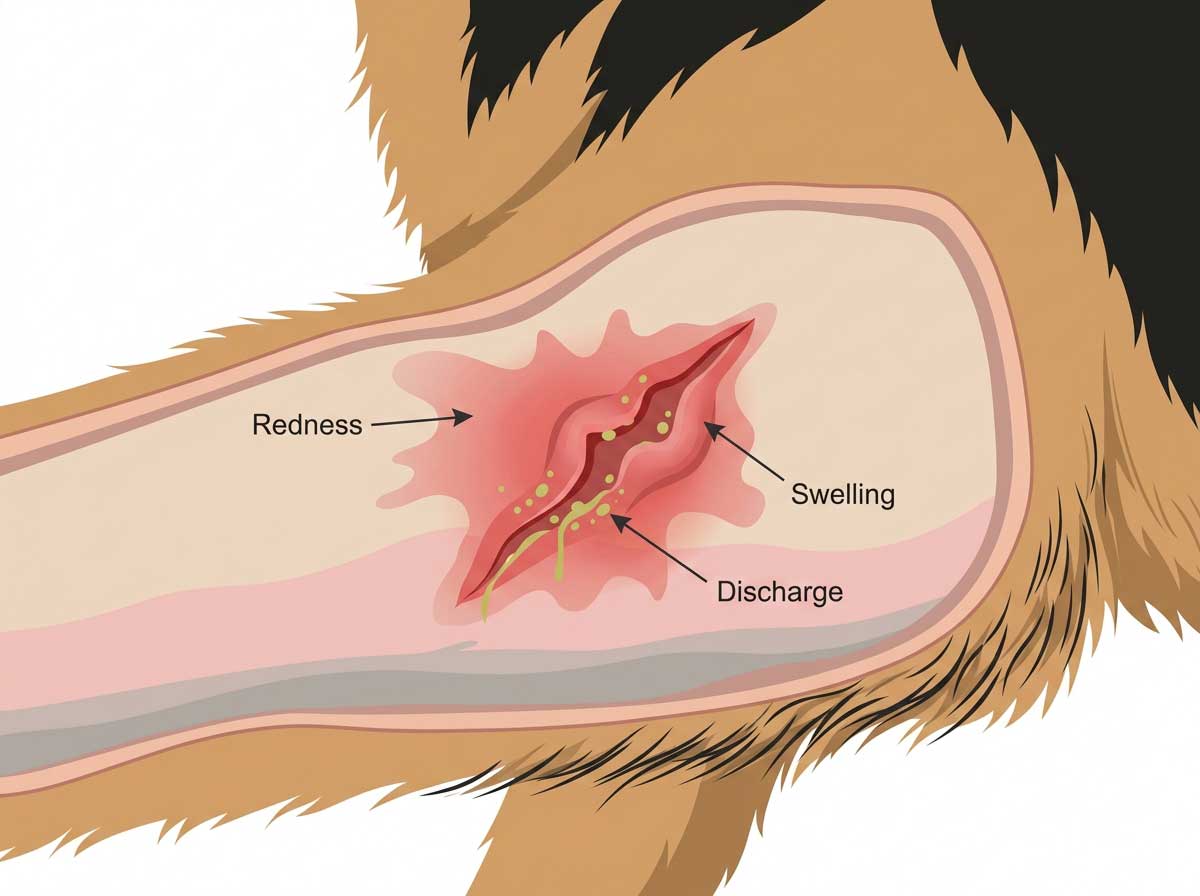
Infected dog wound — know when healing has gone wrong
If a wound looks like this instead of improving, it's likely infected

Understanding what normal healing looks like helps you catch problems early:

  • Days 1-3 (Inflammation): Redness, swelling, some clear or light pink discharge. This is normal.
  • Days 3-5 (Cleaning): The body removes damaged tissue. Slight discharge is normal.
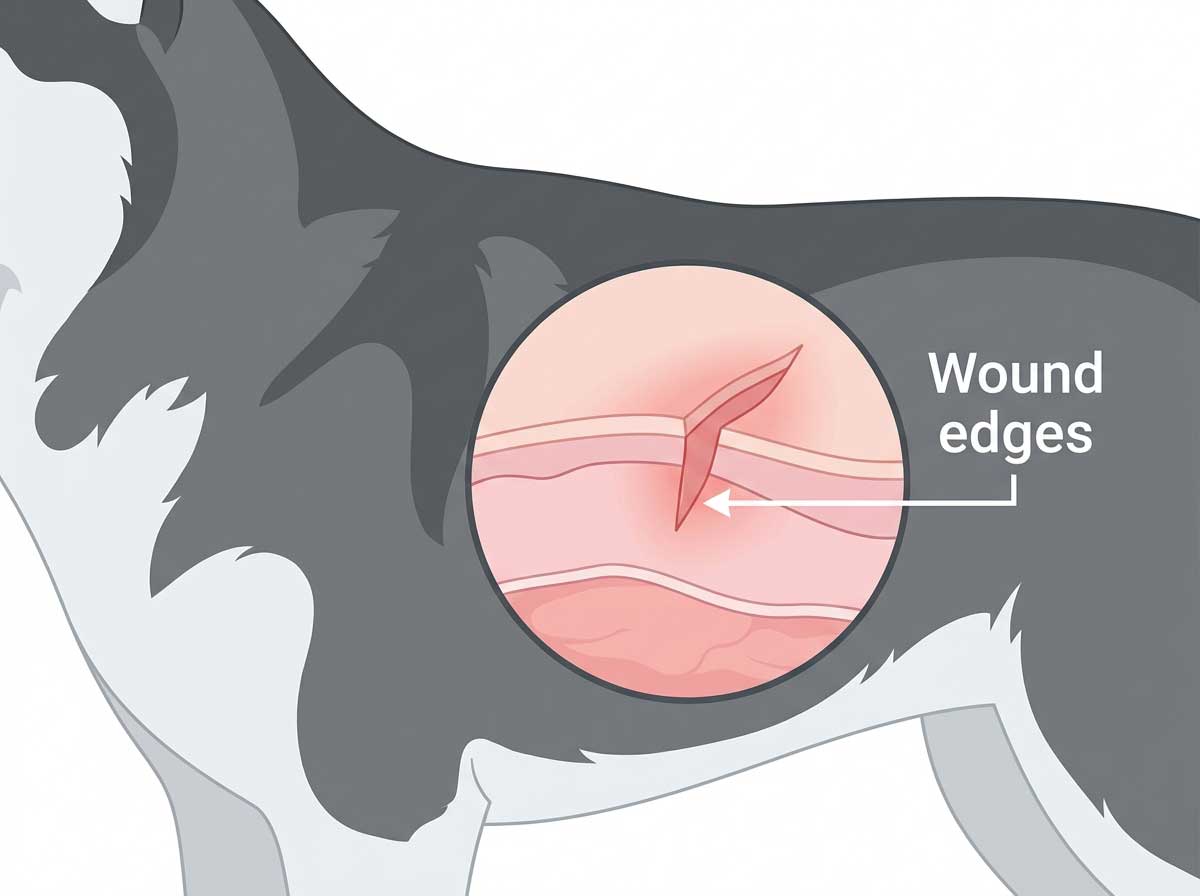
  • Days 5-14 (Repair): Pink granulation tissue forms. Wound edges start closing. This is the good stuff.
  • Weeks 2-4+ (Maturation): Scar tissue forms and strengthens.

If the wound stalls or goes backward at any stage — gets redder, more swollen, or develops discharge — that's a sign of infection and you need a vet.

7. Know When Home Care Isn't Enough

Home care works great for minor wounds, but some situations need professional help:

  • The wound isn't improving after 3-5 days of good home care
  • You see signs of infection (pus, increasing redness, bad smell)
  • The wound is deep, gaping, or won't stay closed
  • Your dog has a fever, stops eating, or is lethargic
  • There's a lot of tissue damage or skin loss

Don't feel bad about going to the vet — catching a wound infection early is much cheaper and easier to treat than dealing with a severe infection later.

Track Your Dog's Healing with AI

Not sure if your dog's wound is healing normally? Take a photo each day and upload it to our AI wound checker. It can assess infection signs, identify the healing stage, and help you decide if your dog needs professional care. Think of it as a second opinion between vet visits.

Is Your Dog's Wound Healing Normally?

Upload a photo and get an instant AI assessment of healing stage, infection risk, and whether you need to see a vet.

Disclaimer: This article is for informational purposes only and is not a substitute for professional veterinary advice. Always consult a licensed veterinarian for diagnosis and treatment of your pet's health conditions.
More Articles

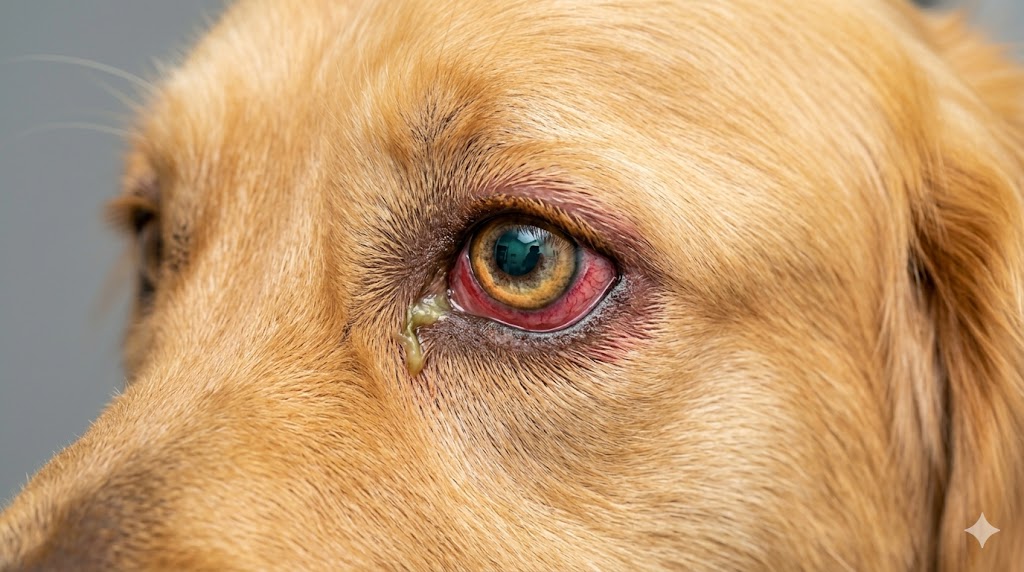
Dog eye infection showing redness and discharge in a Golden Retriever

Dog Eye Infection: Symptoms, Causes & When to See a Vet

How to identify a dog eye infection, what causes it, common types like conjunctivitis and corneal ulcers, home care tips, and when you need to see a vet.

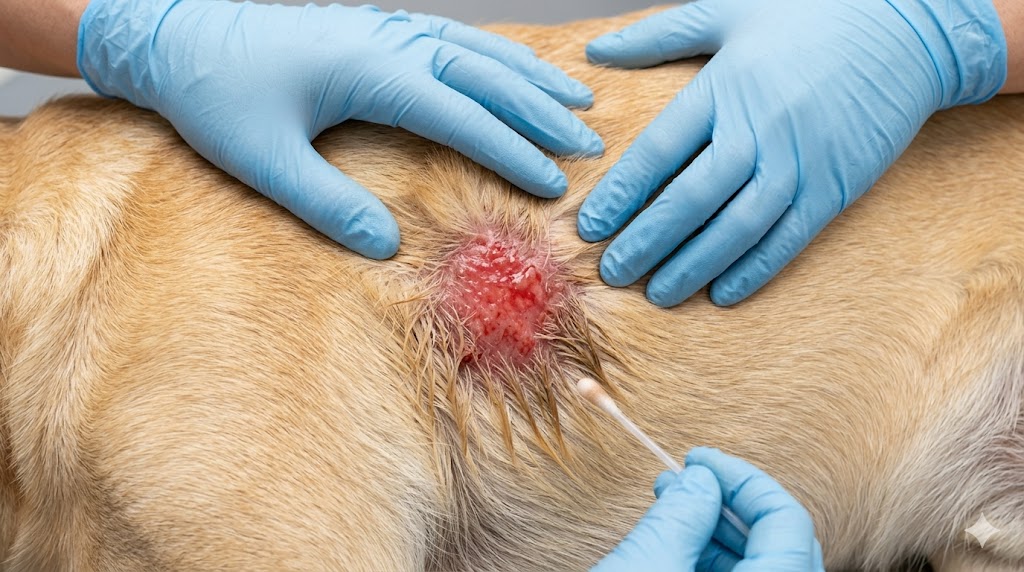
Hot spot on a Labrador Retriever showing red moist oozing skin patch

Dog Hot Spots: What They Look Like, Causes & How to Treat Them

Everything you need to know about hot spots on dogs — how to identify them, what causes them, home treatment options, and when you need a vet.

Dog ear showing brown discharge and wax buildup indicating ear problems

Why Do My Dog's Ears Smell Bad? 7 Causes and What to Do

Dogs ears smell bad for a reason. Learn the 7 most common causes of smelly dog ears, what the smell and discharge color mean, and when you need a vet.

Dermatitis on Golden Retriever belly showing red inflamed flaky skin

My Dog Has a Rash: How to Identify Common Skin Problems

Found a rash on your dog? Learn how to identify dermatitis, hot spots, mange, flea allergy, and other common skin infections from appearance and symptoms.

Dog shaking head and scratching ear showing signs of ear discomfort

Dog Keeps Shaking Head? Here's What It Means and What to Do

Why does your dog keep shaking their head? Learn the most common causes including ear infections, ear mites, and allergies, plus when to see a vet.

Dog skin allergy showing red irritated skin from flea allergy dermatitis

Dog Skin Allergy: Symptoms, Types & What Your Dog's Skin Is Telling You

Learn how to identify dog skin allergies from rashes, bumps, and itching. Understand flea allergy dermatitis, food allergies, and environmental allergies in dogs.

Dog scratching ear from food allergy showing redness and discomfort

Dog Food Allergy Symptoms: How to Tell If Your Dog's Food Is the Problem

How to identify food allergy symptoms in dogs vs food intolerance. Learn about elimination diets, common allergens like chicken and beef, and when to see a vet.

Cat with skin allergy showing patchy hair loss and irritated skin

Cat Skin Allergies & Flea Dermatitis: Signs, Causes & What to Do

How to identify cat skin allergies, flea allergy dermatitis in cats, food allergy rashes, and environmental allergies. Learn what your cat's skin is telling you.

Dog wound showing redness and swelling that needs proper care

Dog Wound Care: How to Clean, Treat & Monitor Wounds at Home

Complete guide to dog wound care at home. Learn how to clean a wound, what to put on it, signs of infection to watch for, and when to see a vet.

Open wound on dog that needs proper cleaning

How to Clean a Dog Wound: Step-by-Step Guide (With What to Avoid)

Learn the right way to clean a dog wound at home. Step-by-step instructions, what solutions to use, what to avoid, and when cleaning isn't enough.

Dog bite wound that needs proper cleaning — not hydrogen peroxide

Can You Put Hydrogen Peroxide on a Dog Wound? (Why Vets Say No)

Should you use hydrogen peroxide on your dog's wound? Learn why most vets no longer recommend it, what to use instead, and how to clean dog wounds safely.

Cat wound being gently cleaned at home with saline solution

Cat Wound Care at Home: How to Clean, Treat & Know When to See a Vet

Learn how to care for your cat's wound at home — cleaning, safe ointments, what to avoid, healing stages, and when a wound needs emergency vet care.

Cat abscess that has burst showing drainage and surrounding area

Cat Abscess Burst: What to Do, What It Looks Like & When to See a Vet

Your cat's abscess burst? Don't panic. Learn what a burst abscess looks like, what to do immediately, home care steps, healing timeline, and when it's an emergency.

Close-up of flea dirt on dog skin showing tiny black specks among fur

Flea Dirt, Flea Eggs & Black Specks on Your Dog — What They Mean

Found black specks or tiny white dots on your dog? Learn how to identify flea dirt vs regular dirt, flea eggs vs dandruff, and what black specks on dog skin mean.

Comparison of deer tick and American dog tick on dog skin

Dog Tick Identification: Deer Tick vs Dog Tick, Embedded & Engorged Ticks

How to identify ticks on your dog — deer tick vs dog tick differences, what embedded and engorged ticks look like, tick vs skin tag, and which ticks carry disease.

Cat ear showing dark brown discharge from ear mites vs normal clean ear

Cat Ear Mites: Signs, How to Tell vs Dirty Ears & Treatment Guide

How to tell if your cat has ear mites vs just dirty ears, signs and symptoms, how indoor cats get ear mites, home remedies, and when to see a vet.

Black specks on cat chin showing comparison of flea dirt vs feline acne

Black Specks on Your Cat: Flea Dirt vs Cat Acne — How to Tell & What to Do

Black specks on your cat's chin, fur, or skin? Learn how to tell flea dirt from cat acne, what black dots mean, and when to worry.