Cat Abscess Burst: What to Do, What It Looks Like & When to See a Vet
Your cat's abscess burst? Don't panic. Learn what a burst abscess looks like, what to do immediately, home care steps, healing timeline, and when it's an emergency.
Published 2026-04-17
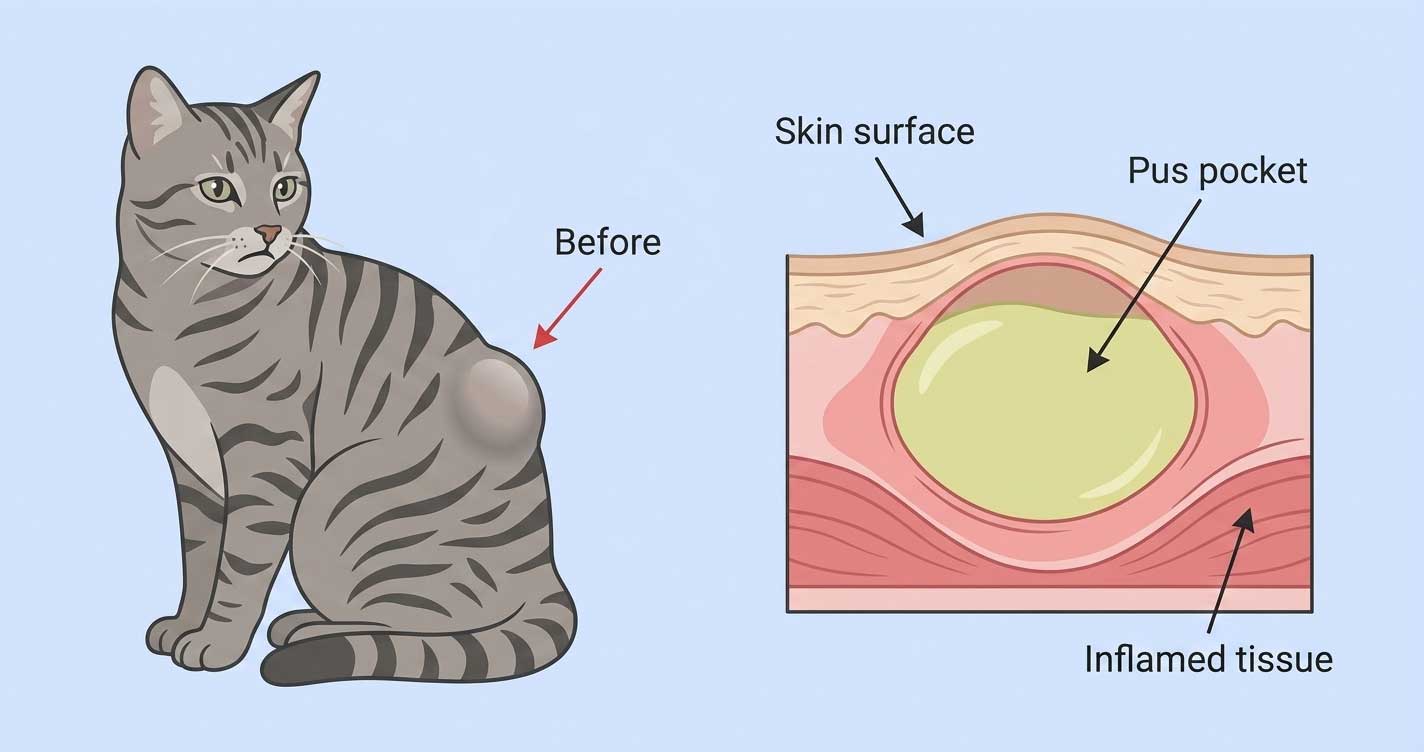
Your cat has a swelling that suddenly burst open, and now there's thick, foul-smelling fluid draining out. It looks terrible and smells worse. First: don't panic. A burst abscess is actually the body's way of draining a trapped infection — and drainage is better than the pus staying trapped inside. But you still need to act. Here's exactly what to do, step by step.
What Does a Burst Cat Abscess Look Like?
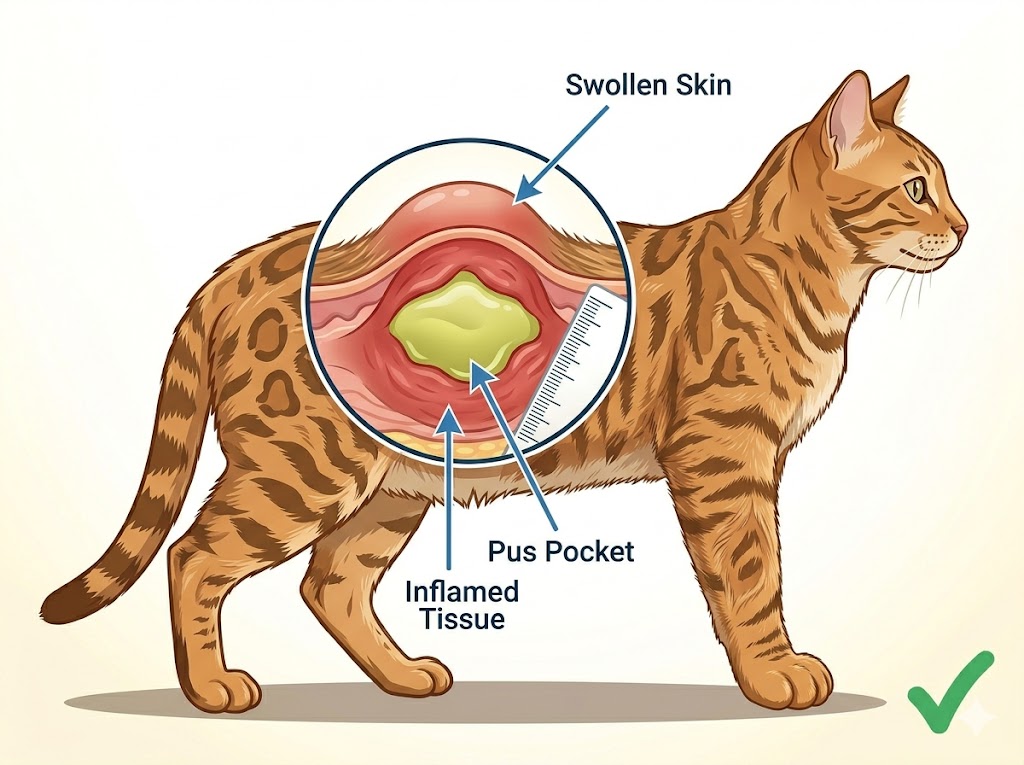
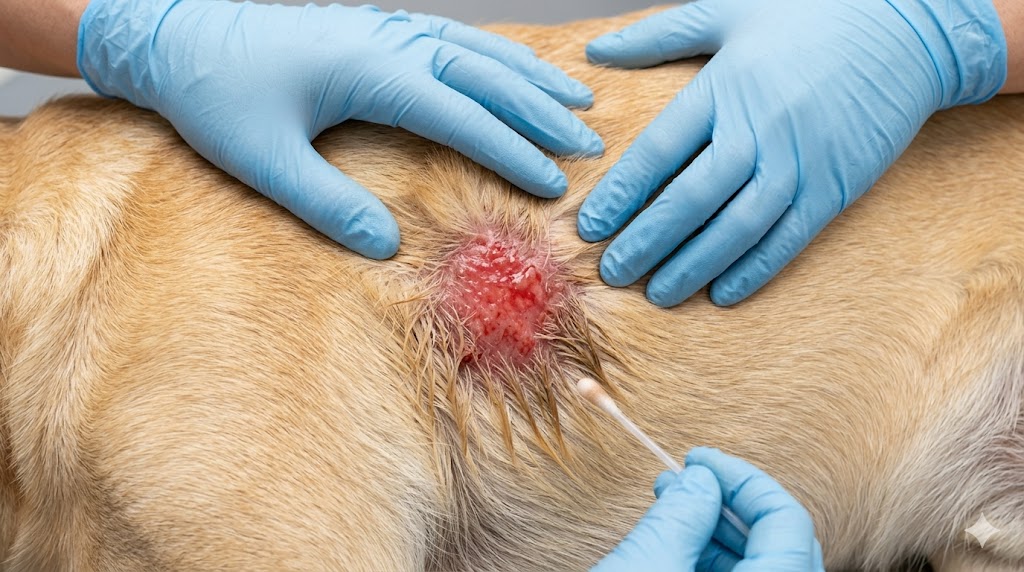
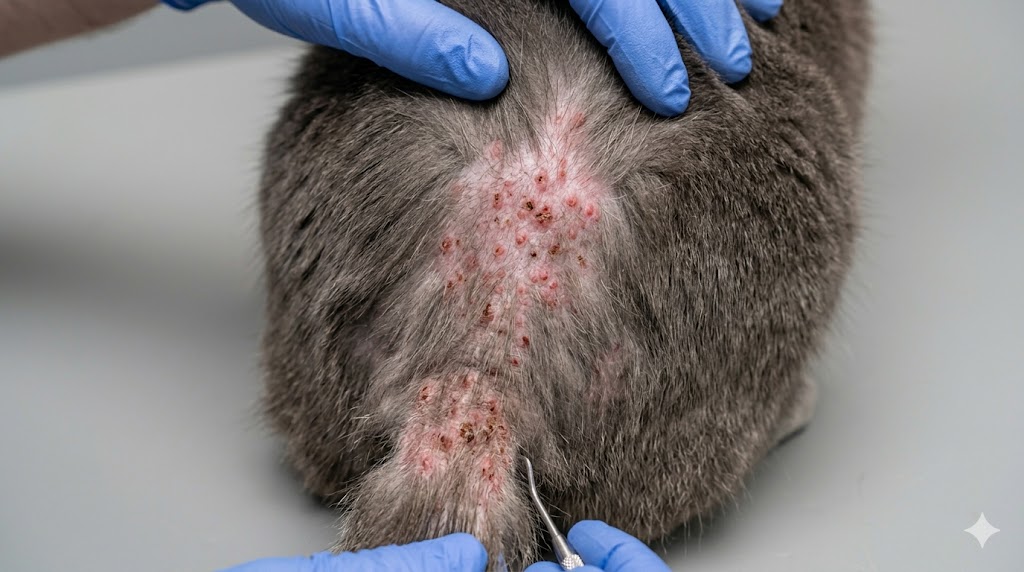
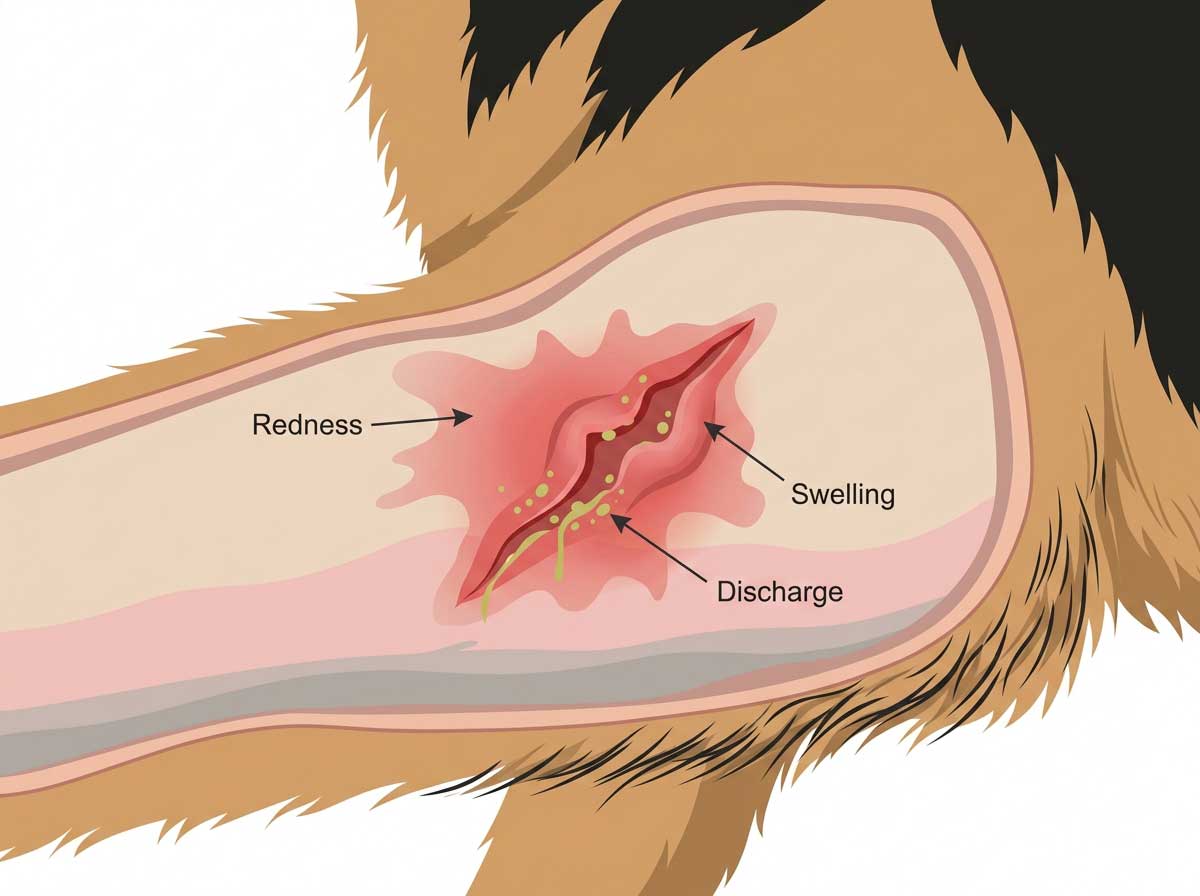
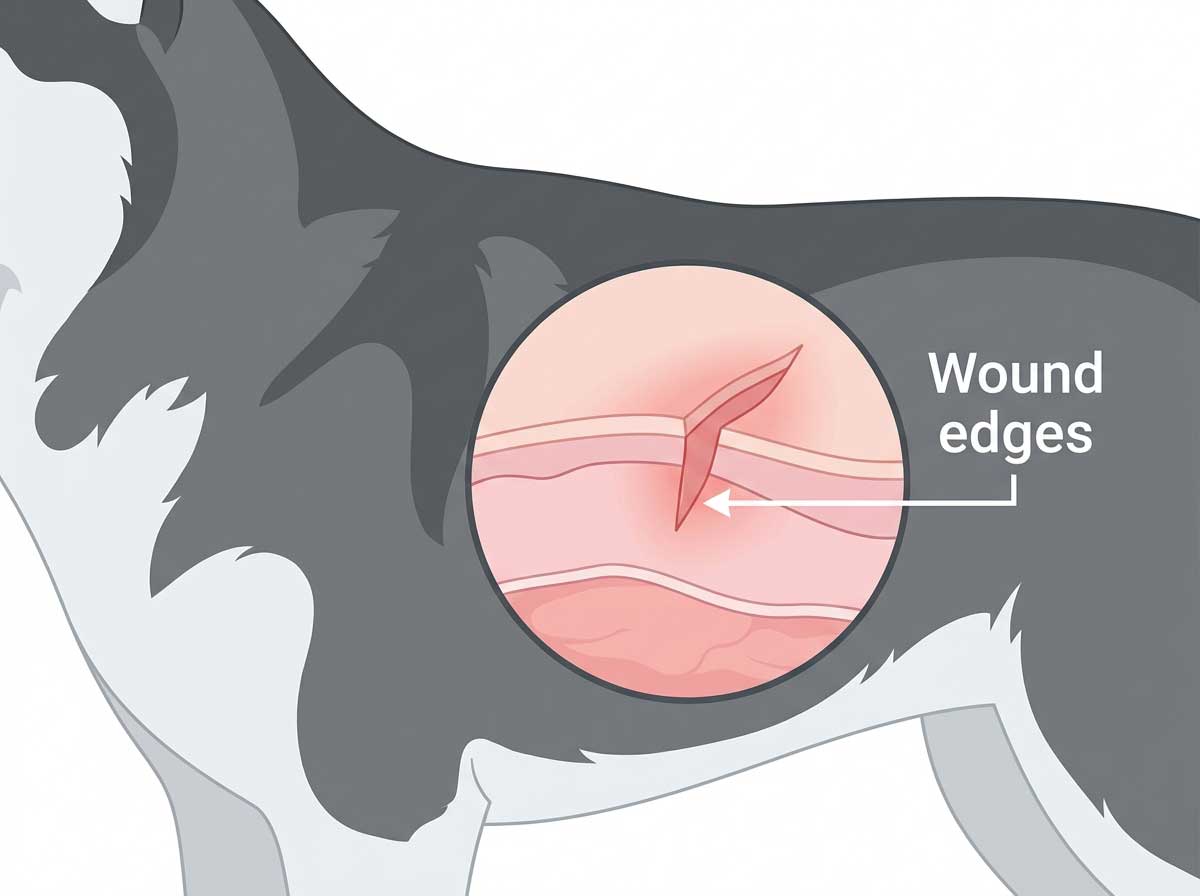
A burst abscess on a cat typically looks like:
- ✓An open hole or crater in the skin where the abscess ruptured
- ✓Thick discharge draining from the hole — usually yellow, brown, green, or bloody
- ✓A foul, rotten smell (often described as one of the worst smells you've encountered)
- ✓Matted, wet fur around the area soaked with discharge
- ✓The surrounding skin may be red, swollen, and warm
- ✓The hole may be surprisingly deep
- ✓You might see a large area of missing fur where the skin was stretched thin
Before it burst, the abscess looked like a firm, painful, dome-shaped swelling under the skin that grew over 2-4 days. Your cat may have had a fever, been hiding, lethargic, or refusing food during this time.
What to Do Immediately When a Cat Abscess Bursts
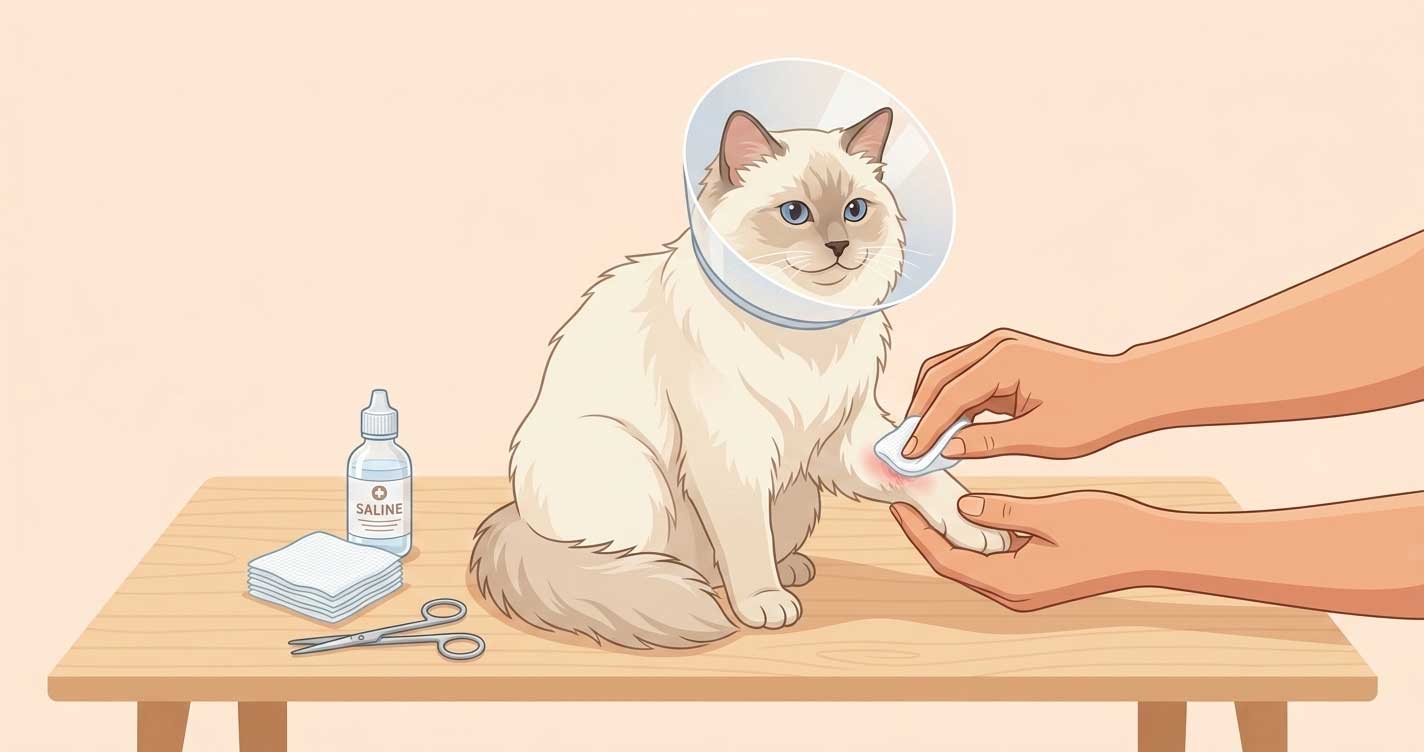
Follow these steps right away:
- ✓Stay calm — a burst abscess looks alarming but drainage is actually a good thing
- ✓Don't squeeze or press on it — let it drain naturally. Squeezing can push infected material deeper
- ✓Gently clean the area with warm saline (1 teaspoon salt in 2 cups boiled then cooled water)
- ✓Remove any matted fur around the wound with blunt-tipped scissors if possible
- ✓Pat the area dry with clean gauze
- ✓Put an e-collar on your cat to prevent licking
- ✓Call your vet — even a burst abscess that's draining needs professional care
Will a Burst Abscess Heal on Its Own?
Sometimes a small, superficial burst abscess can heal on its own if kept clean. But in most cases, the answer is no — here's why:
- ✓The wound may seal over before all the infection is drained, causing the abscess to reform
- ✓Bacteria are still deep in the tissue and need antibiotics to fully clear
- ✓Without proper flushing, pockets of pus can remain and cause new abscesses
- ✓The wound opening may need to be kept open to drain completely — your vet may place a drain
- ✓Untreated abscesses can lead to cellulitis (spreading skin infection) or sepsis (blood infection)
Bottom line: always see your vet for a burst abscess. The vet visit is usually straightforward — wound flushing, antibiotics, and sometimes a drain — and it prevents much worse complications.
What Caused the Abscess in the First Place?
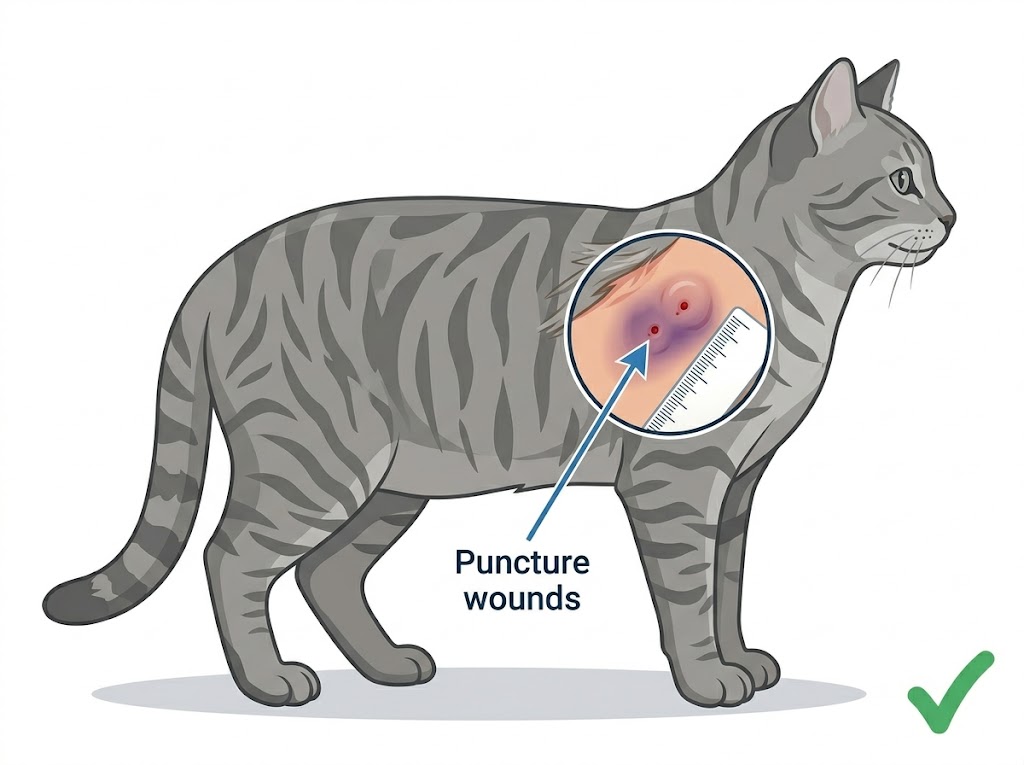
Cat abscesses are almost always caused by bite wounds from other cats. Here's the chain of events:
- ✓Your cat gets bitten during a fight (or sometimes just a rough play encounter)
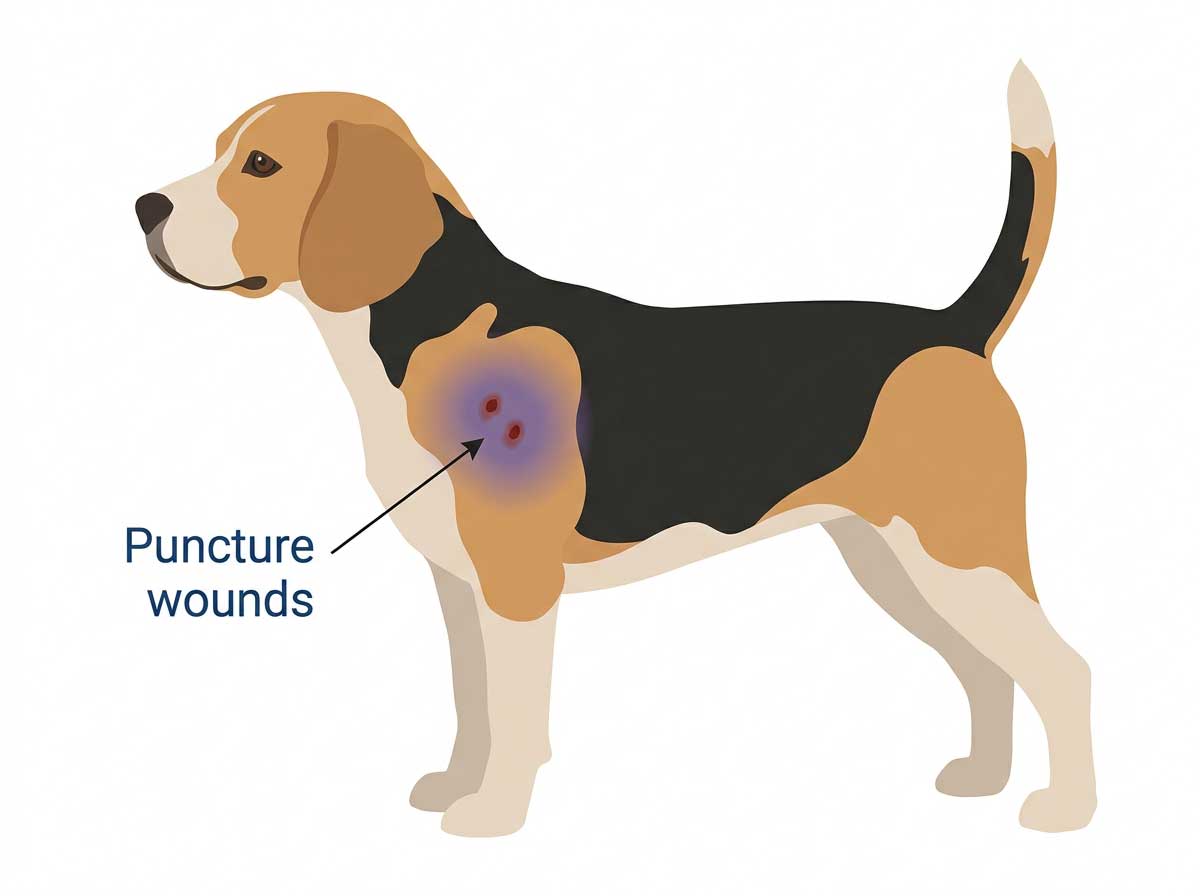
- ✓Cat teeth are thin and needle-like — they create deep puncture wounds
- ✓The puncture wound seals over within hours, trapping bacteria deep inside
- ✓Bacteria multiply in the sealed wound, creating a pocket of pus
- ✓Over 2-4 days, the pocket grows into a visible, painful swelling (the abscess)
- ✓Eventually the skin over the abscess thins and ruptures — the abscess bursts
This is why outdoor cats and unneutered males (who fight more) get the most abscesses. If your cat keeps getting abscesses, consider keeping them indoors or discussing neutering with your vet.
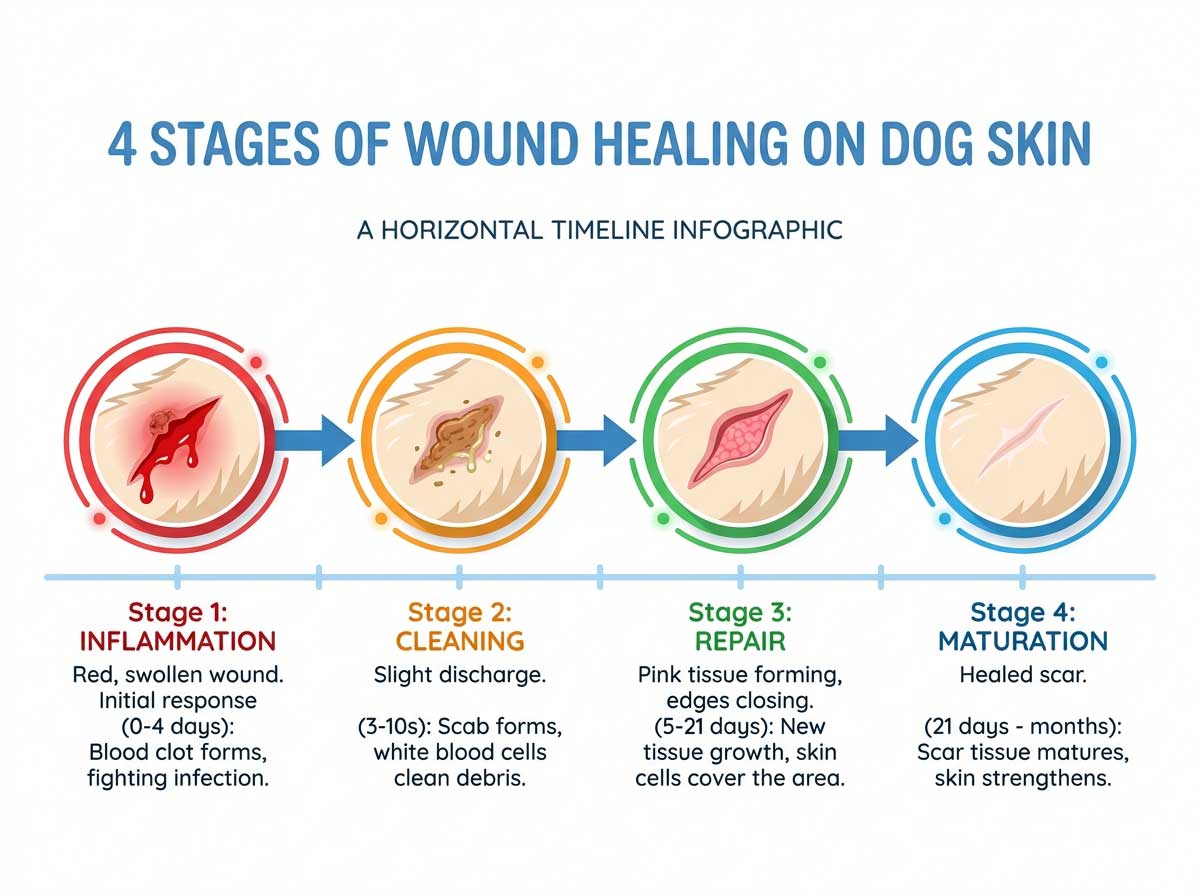
How Long Does a Burst Cat Abscess Take to Heal?
With proper veterinary treatment (flushing, antibiotics):
- ✓Days 1-3: Drainage decreases significantly, swelling goes down
- ✓Days 3-7: Discharge becomes clear/minimal, healthy tissue starts forming
- ✓Days 7-14: Wound closes and heals
- ✓Total healing time: typically 1-2 weeks with treatment
Without treatment, healing is unpredictable — the abscess may reform, the wound may not close properly, or the infection can spread. Factors affecting healing time: abscess size and depth, location on the body, your cat's overall health, whether they wear an e-collar (licking delays healing dramatically), and whether antibiotics are completed fully.
Home Care After the Vet Visit
After your vet treats the abscess, you'll need to provide home care:
- ✓Give all prescribed antibiotics — complete the FULL course even if the wound looks better
- ✓Keep the wound clean — gently flush with saline 1-2 times daily as directed
- ✓Keep the wound OPEN — this is counterintuitive, but a draining wound needs to heal from the inside out. Don't let it seal over too early
- ✓If a drain was placed, follow your vet's instructions for drain care and removal
- ✓E-collar stays on 24/7 — licking introduces bacteria and prevents healing
- ✓Keep your cat indoors until fully healed
- ✓Monitor for signs of the abscess reforming (new swelling near the same area)
Is It Good or Bad If an Abscess Pops?
A burst abscess is actually better than one that stays sealed — trapped pus with nowhere to go can spread into surrounding tissue or enter the bloodstream (sepsis). When an abscess bursts, the pressure is relieved and the infection can drain. However, "good that it burst" doesn't mean "no vet needed." The wound still requires professional cleaning, antibiotics, and monitoring to ensure complete healing. Think of the burst as step one of treatment, not the complete treatment.
When Is a Burst Abscess an Emergency?
See a vet urgently (same day or emergency vet) if:
- ✓Your cat has a fever (ears and paw pads feel very hot)
- ✓Your cat is lethargic, weak, or unresponsive
- ✓Your cat is refusing to eat or drink
- ✓The area around the burst abscess is rapidly getting more red and swollen (spreading infection)
- ✓There's heavy bleeding that won't stop
- ✓The abscess is near the eye, throat, or chest
- ✓Your cat seems to be in severe pain
- ✓Your cat is vomiting or has diarrhea along with the abscess
- ✓You see red streaks spreading outward from the wound (sign of cellulitis/sepsis)
These signs suggest the infection may be spreading beyond the abscess site and becoming systemic — this is a medical emergency.
Preventing Future Abscesses
- ✓Keep your cat indoors — eliminates cat fights, the #1 cause of abscesses
- ✓Neuter male cats — unneutered males fight significantly more
- ✓If your cat must go outside, supervise outdoor time or use a catio
- ✓Check your cat's body regularly for small puncture wounds after outdoor time — early antibiotics can prevent abscess formation
- ✓If you see a new bite wound, see your vet within 24 hours — a course of antibiotics started early can prevent the abscess from ever forming
Worried About Your Cat's Abscess or Wound?
Upload a photo and get an instant AI assessment of infection signs, healing stage, and whether you need to see a vet.
Disclaimer: This article is for informational purposes only and is not a substitute for professional veterinary advice. Always consult a licensed veterinarian for diagnosis and treatment of your pet's health conditions.