Dog Tick Identification: Deer Tick vs Dog Tick, Embedded & Engorged Ticks
How to identify ticks on your dog — deer tick vs dog tick differences, what embedded and engorged ticks look like, tick vs skin tag, and which ticks carry disease.
Published 2026-04-17
You found a tick on your dog — or at least you think it's a tick. Is it a deer tick that carries Lyme disease, or a common dog tick? Is it embedded? Engorged? Or is it actually a skin tag? Identifying the tick species matters because different ticks carry different diseases, and some are far more dangerous than others. This guide shows you exactly how to identify what's on your dog.
Deer Tick vs Dog Tick — How to Tell Them Apart
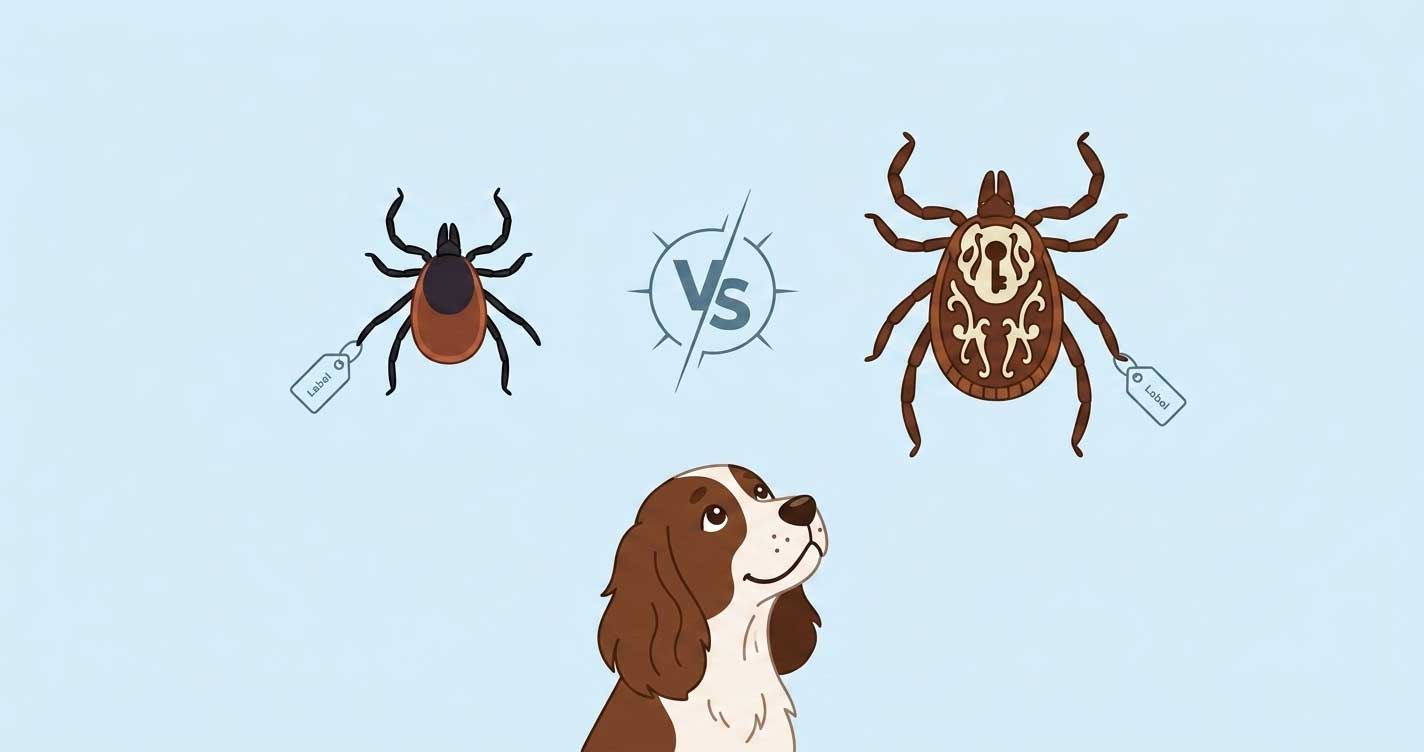
This is the most important identification to make, because deer ticks carry Lyme disease and dog ticks generally don't.
Deer Tick (Black-Legged Tick / Ixodes scapularis)
- ✓Size: very small — unfed adult is about the size of a sesame seed (2-3mm)
- ✓Color: dark brown to black body with dark legs (hence "black-legged")
- ✓Shape: oval, flat when unfed
- ✓Key feature: no white markings or patterns on the body
- ✓When engorged: swells to about 10mm, turns grayish or olive-green
- ✓Danger: carries Lyme disease, anaplasmosis, babesiosis, and Powassuris virus
American Dog Tick (Dermacentor variabilis)
- ✓Size: larger than deer ticks — unfed adult is about 5mm (watermelon seed size)
- ✓Color: brown body with distinctive white/cream marbled markings on the back
- ✓Shape: oval, flat when unfed
- ✓Key feature: white or cream-colored ornate patterns (scutum) — easy to spot
- ✓When engorged: swells to 15mm+, turns grayish-blue
- ✓Danger: carries Rocky Mountain spotted fever and tularemia (but NOT Lyme disease)
Brown Dog Tick (Rhipicephalus sanguineus)
- ✓Size: similar to deer tick (3-4mm unfed)
- ✓Color: uniform reddish-brown, no patterns
- ✓Key feature: the only tick that can complete its entire life cycle INDOORS
- ✓Danger: can infest your home, carries ehrlichiosis and babesiosis
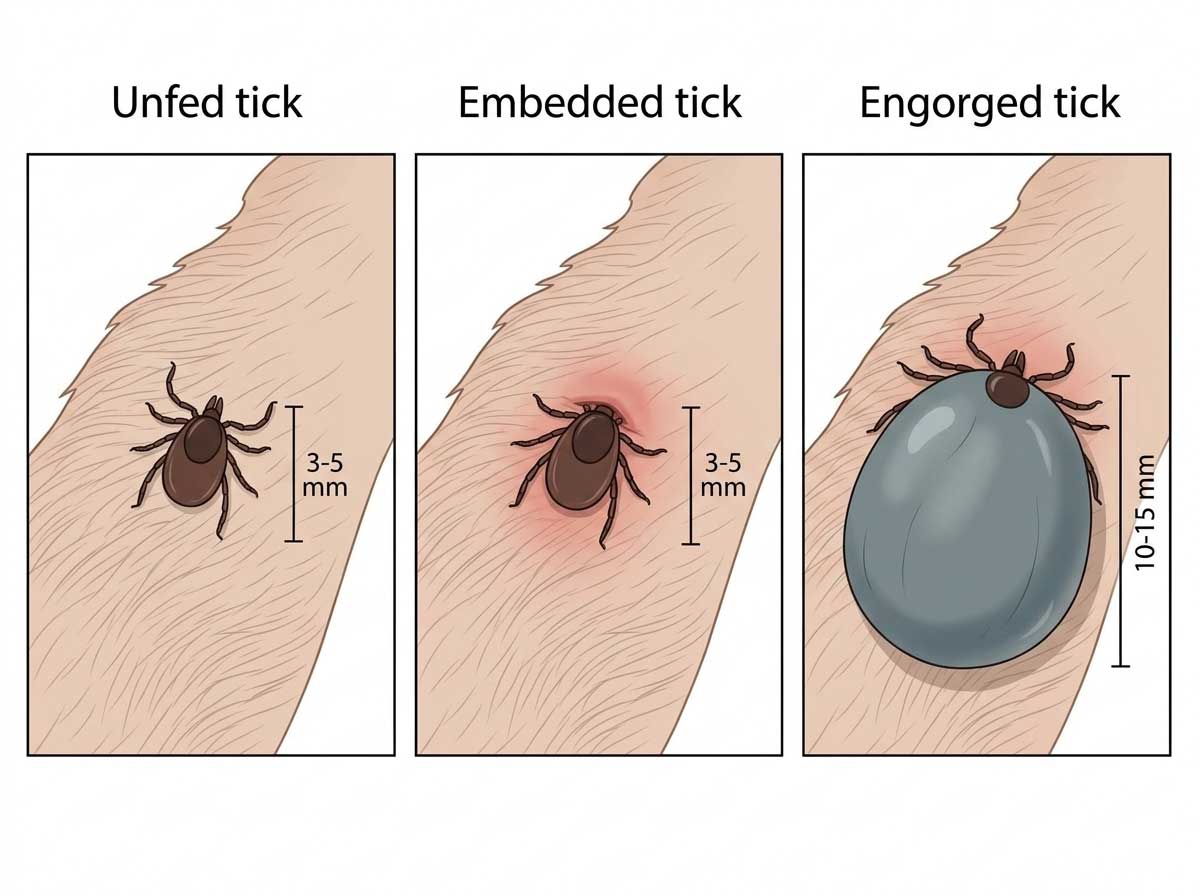
What Does an Embedded Tick Look Like on a Dog?
An embedded tick has its mouthparts buried in your dog's skin. Here's what to look for:
- ✓A small, dark, round bump on the skin that doesn't move when you touch it
- ✓It may look like a mole, wart, or skin tag at first glance
- ✓You can usually see tiny legs at the base if you look closely (use a magnifying glass)
- ✓The skin around it may be slightly red or swollen
- ✓An unfed embedded tick is flat and small (3-5mm) — easy to miss
- ✓A fully embedded tick has its entire head buried — you won't see the mouthparts
Common locations for embedded ticks: ears (inside and behind), between toes, armpits, groin, under the collar, eyelids, and along the head and neck. Always check these areas after outdoor time.
What Does an Engorged Tick Look Like on a Dog?
An engorged tick has been feeding for days and is swollen with blood:
- ✓Size: dramatically larger than an unfed tick — can swell to 10-15mm (size of a small grape)
- ✓Shape: round and balloon-like, not flat
- ✓Color: grayish-blue, olive, or silvery — very different from the original dark brown
- ✓The body looks shiny and distended
- ✓Legs may be barely visible because the body is so swollen
- ✓The attachment point is a small dark spot where the head meets the skin
An engorged tick means it has been feeding for 2-4+ days. This is significant because many tick-borne diseases (including Lyme) take 24-48 hours of attachment to transmit. If the tick is engorged, see your vet to discuss disease testing.
Tick vs Skin Tag on Dog — How to Tell the Difference
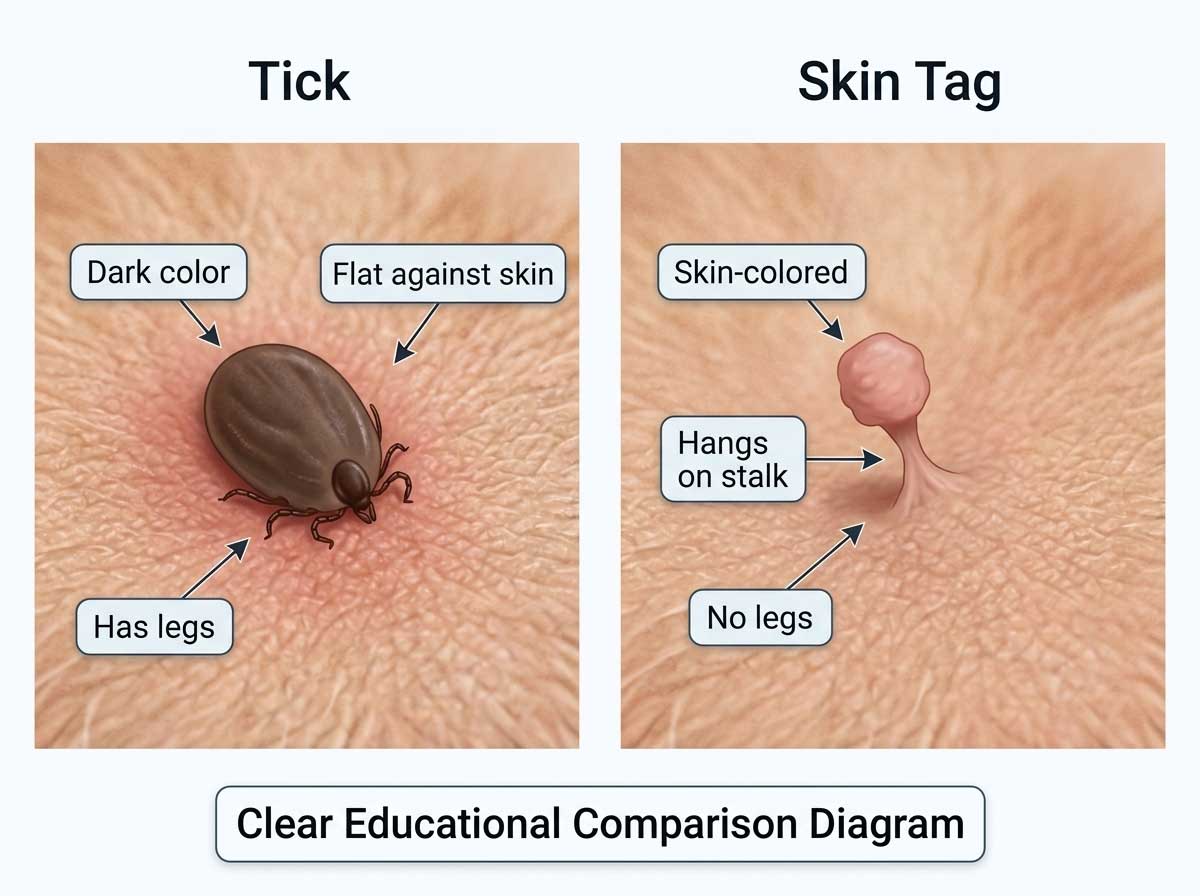
Ticks and skin tags can look surprisingly similar. Here's how to tell them apart:
- ✓Skin tag: same color as surrounding skin (flesh-colored or pink)
- ✓Tick: darker than surrounding skin (brown, black, or gray)
- ✓Skin tag: has a thin stalk connecting it to the skin
- ✓Tick: sits flat/flush against the skin with no stalk
- ✓Skin tag: soft and moves freely when touched
- ✓Tick: firm and doesn't move — it's attached
- ✓Skin tag: no legs
- ✓Tick: has visible legs at the base (use magnifying glass)
- ✓Skin tag: has been there for a while and hasn't changed
- ✓Tick: appeared recently (wasn't there last week)
If you're still not sure, upload a photo to our AI identifier. Never try to pull off a skin tag thinking it's a tick — it will hurt your dog and bleed.
How to Remove a Tick from Your Dog
- ✓Use fine-tipped tweezers (not blunt ones)
- ✓Grasp the tick as close to the skin as possible
- ✓Pull straight up with steady, even pressure — don't twist or jerk
- ✓Don't squeeze the tick's body — this can push infected fluids into your dog
- ✓If the head breaks off and stays embedded, try to remove it with tweezers. If you can't, see your vet
- ✓Clean the bite area with rubbing alcohol or soap and water
- ✓Save the tick in a sealed bag — your vet may want to identify the species
- ✓Monitor the bite site for 2-4 weeks for redness, swelling, or a "bullseye" pattern
Do NOT use petroleum jelly, nail polish, a hot match, or alcohol to "make the tick back out." These methods don't work and can cause the tick to release more disease-carrying fluids.
Which Ticks Carry What Diseases?
- ✓Deer tick (black-legged tick): Lyme disease, anaplasmosis, babesiosis — the most dangerous for dogs in the northeastern and upper midwestern US
- ✓American dog tick: Rocky Mountain spotted fever, tularemia — found throughout the eastern US
- ✓Brown dog tick: ehrlichiosis, babesiosis — the only tick that infests homes
- ✓Lone star tick: ehrlichiosis, tularemia, STARI — found in southeastern US, recognizable by the white dot on the female's back
- ✓Gulf Coast tick: hepatozoonosis — southeastern US
If you found a tick on your dog and aren't sure what species it is, upload a photo for AI identification — knowing the species helps your vet assess disease risk.
Found a Tick on Your Dog?
Upload a close-up photo and get instant AI identification — deer tick, dog tick, brown dog tick, or other species.
Disclaimer: This article is for informational purposes only and is not a substitute for professional veterinary advice. Always consult a licensed veterinarian for diagnosis and treatment of your pet's health conditions.