Can You Put Hydrogen Peroxide on a Dog Wound? (Why Vets Say No)
Should you use hydrogen peroxide on your dog's wound? Learn why most vets no longer recommend it, what to use instead, and how to clean dog wounds safely.
Published 2026-04-16
Your dog has a wound and you're reaching for the hydrogen peroxide — after all, that's what your parents always used on your scrapes as a kid, right? That satisfying fizz must mean it's killing germs. But here's the thing: most veterinarians now advise against using hydrogen peroxide on dog wounds. Let's look at why, and what you should use instead.
Why Hydrogen Peroxide Was Once Popular
Hydrogen peroxide (H₂O₂) is an antiseptic that kills bacteria through oxidation. The familiar fizzing happens when the peroxide reacts with an enzyme called catalase in blood and tissue. For decades, it was the go-to wound cleaner in medicine cabinets everywhere. And yes, it does kill bacteria. The problem is what else it kills.
The Problem: It Damages Healthy Tissue
Hydrogen peroxide doesn't discriminate between bacteria and your dog's healthy cells. Research has shown that hydrogen peroxide:
- ✓Destroys fibroblasts — the cells responsible for building new tissue and closing wounds
- ✓Damages white blood cells — the immune cells your dog needs to fight infection
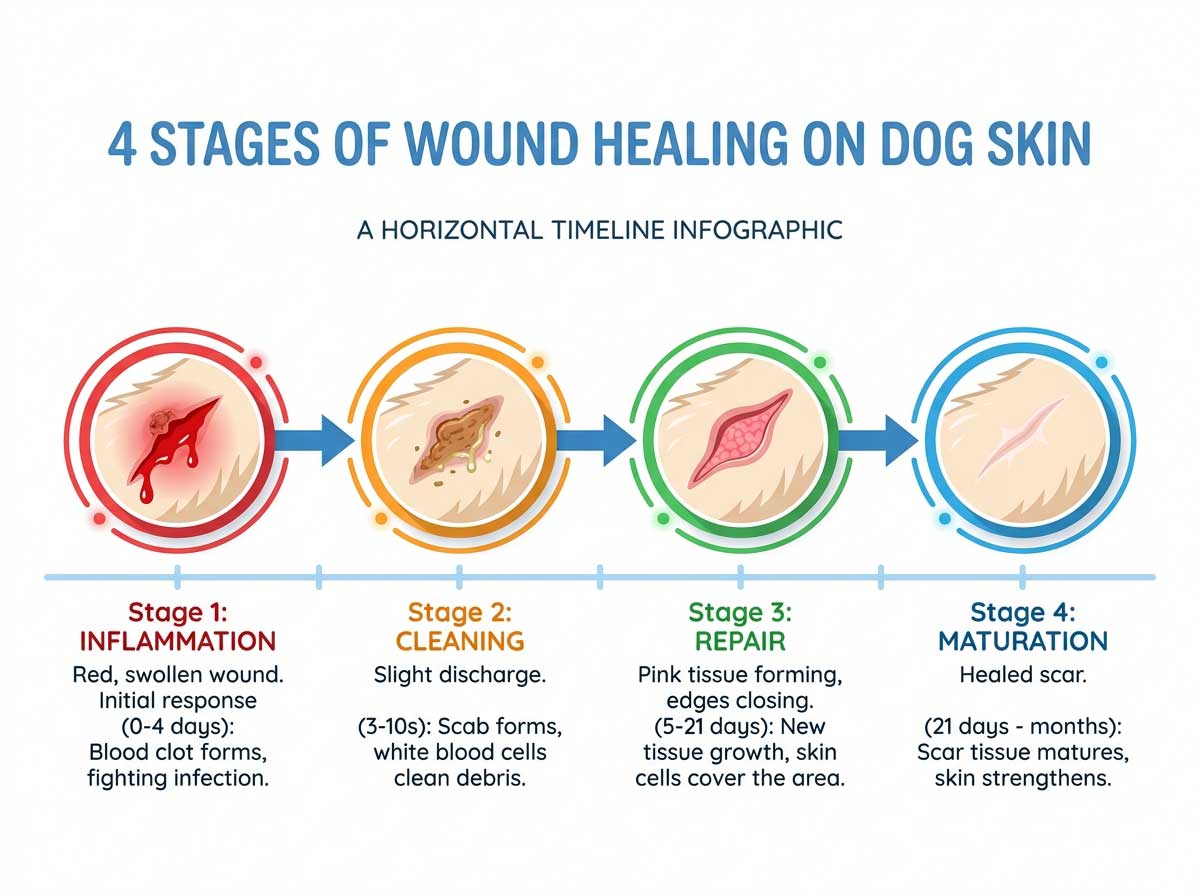
- ✓Kills new granulation tissue — the pink, healing tissue that forms in a wound
- ✓Can actually slow wound healing by up to 20-30% compared to saline alone
- ✓May cause tissue necrosis (cell death) in deeper wounds
In other words, while hydrogen peroxide kills some bacteria on the surface, it also kills the very cells your dog's body needs to heal. It trades a small antibacterial benefit for significant tissue damage.
What Veterinarians Say
The consensus among veterinary wound care specialists is clear: hydrogen peroxide should not be used for wound cleaning in dogs. The American Animal Hospital Association (AAHA) and most veterinary textbooks now recommend against it. Some vets still use very dilute hydrogen peroxide for initial wound flushing (one-time use to help remove debris), but even this is falling out of favor as better alternatives exist.
What to Use Instead
Here are the vet-recommended alternatives, ranked by effectiveness:
1. Sterile Saline Solution (Best for most wounds)
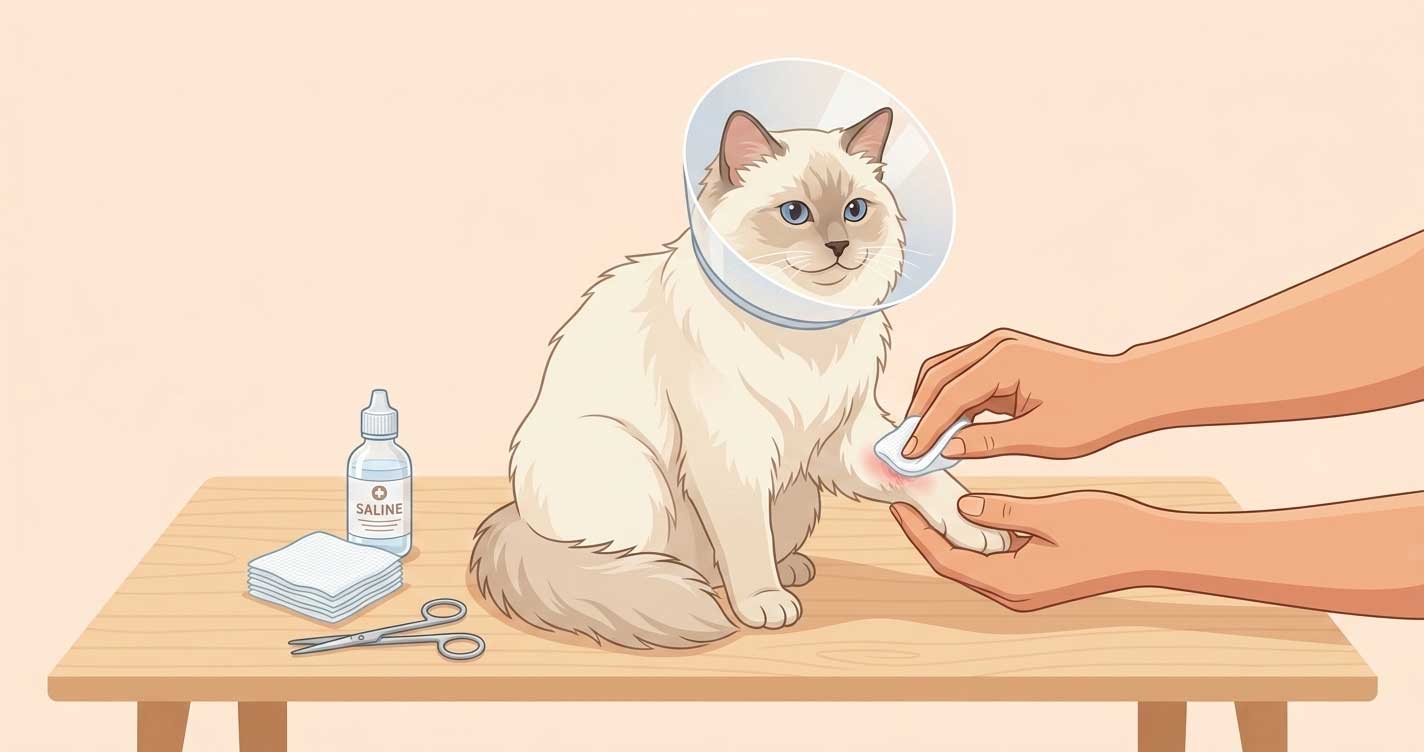
Simple, effective, and impossible to mess up. Mix 1 teaspoon of table salt in 2 cups of boiled and cooled water. This is what vets use most often for wound irrigation. It physically flushes bacteria out without damaging tissue at all. For most minor wounds, this is all you need.
2. Chlorhexidine 0.05% (Best antiseptic option)
Chlorhexidine is the gold standard antiseptic for veterinary wound care. It kills bacteria effectively while being much gentler on tissue than hydrogen peroxide. Buy the 2% concentrate and dilute it (1 part chlorhexidine to 40 parts water). It also has residual activity — it keeps working for hours after application.
3. Diluted Betadine / Povidone-Iodine
Dilute betadine until it's the color of weak tea. At this dilution, it's effective against bacteria while being gentle on tissue. Full-strength betadine is too strong and can damage cells, so always dilute it.
The One Exception: Inducing Vomiting
There is one legitimate veterinary use for hydrogen peroxide in dogs: inducing vomiting after ingesting something toxic. A 3% solution given by mouth (only under vet guidance) can make a dog vomit within minutes. But this is very different from wound care — and should only be done with explicit veterinary instruction, as it can be dangerous if done incorrectly or for the wrong toxin.
Quick Reference: What to Use and Avoid on Dog Wounds
- ✓✅ Saline solution — safe, effective, first choice
- ✓✅ Diluted chlorhexidine (0.05%) — excellent antiseptic, vet-recommended
- ✓✅ Diluted betadine (tea-colored) — good antiseptic option
- ✓✅ Plain lukewarm water — better than nothing
- ✓❌ Hydrogen peroxide — damages healthy tissue, slows healing
- ✓❌ Rubbing alcohol — extreme pain, tissue damage
- ✓❌ Essential oils — many are toxic to dogs
- ✓❌ Human painkillers — aspirin, ibuprofen, acetaminophen are toxic to dogs
When to See a Vet Instead of Cleaning at Home
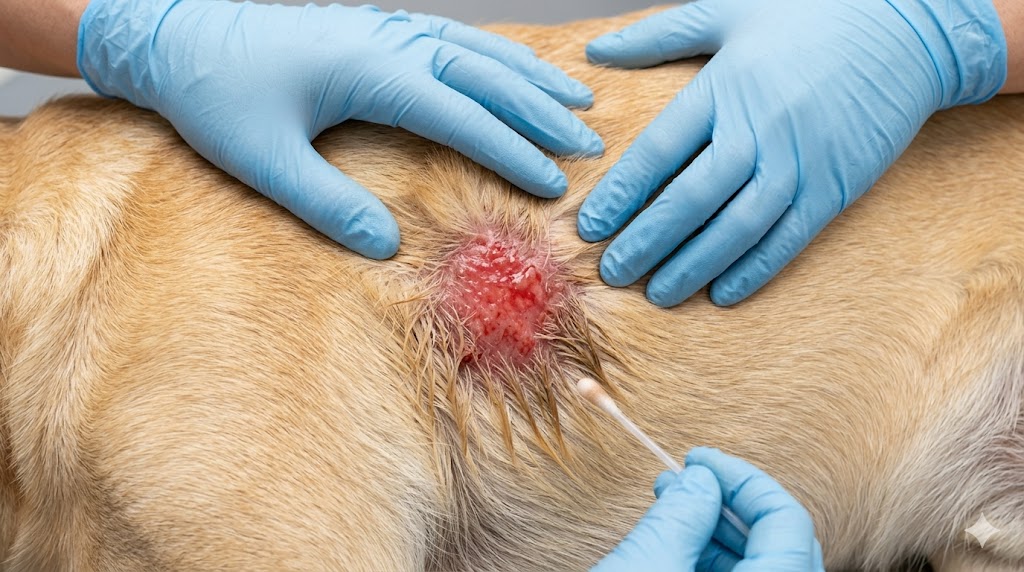
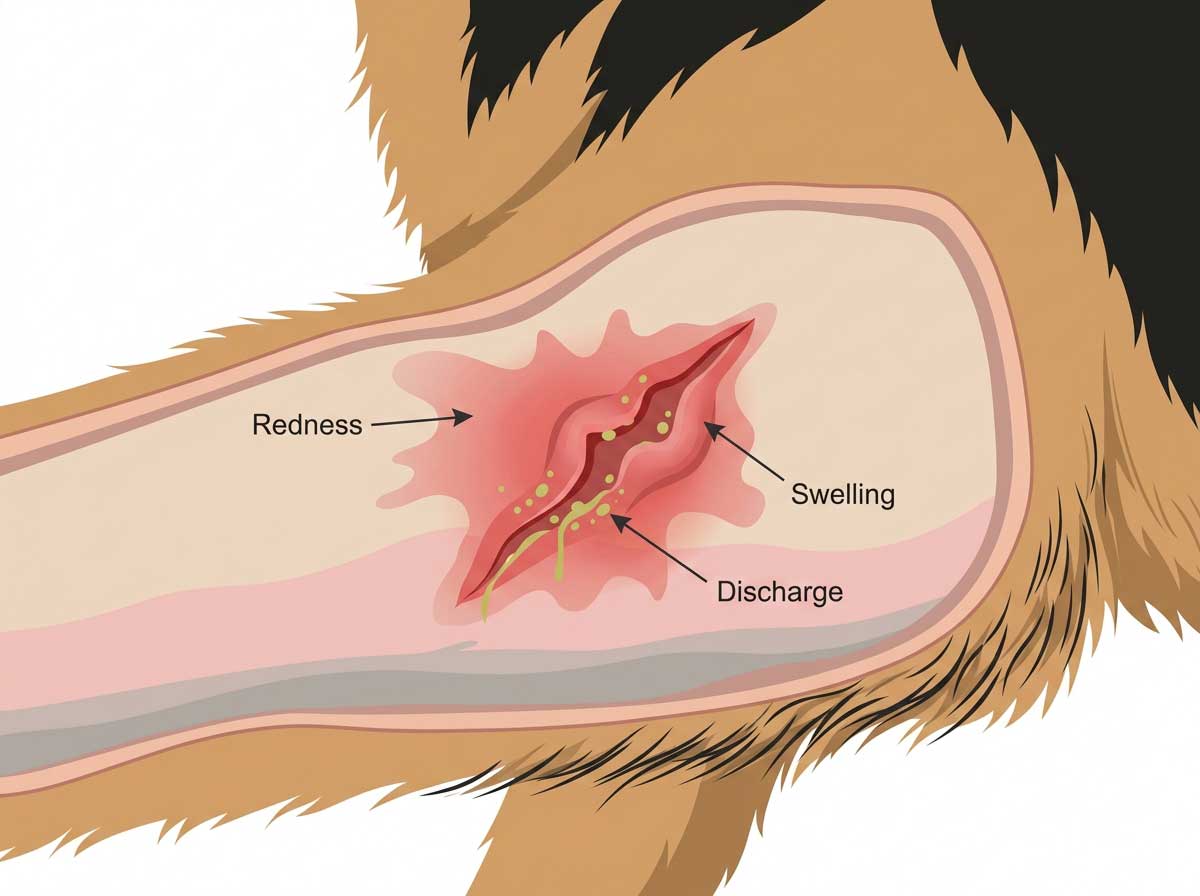
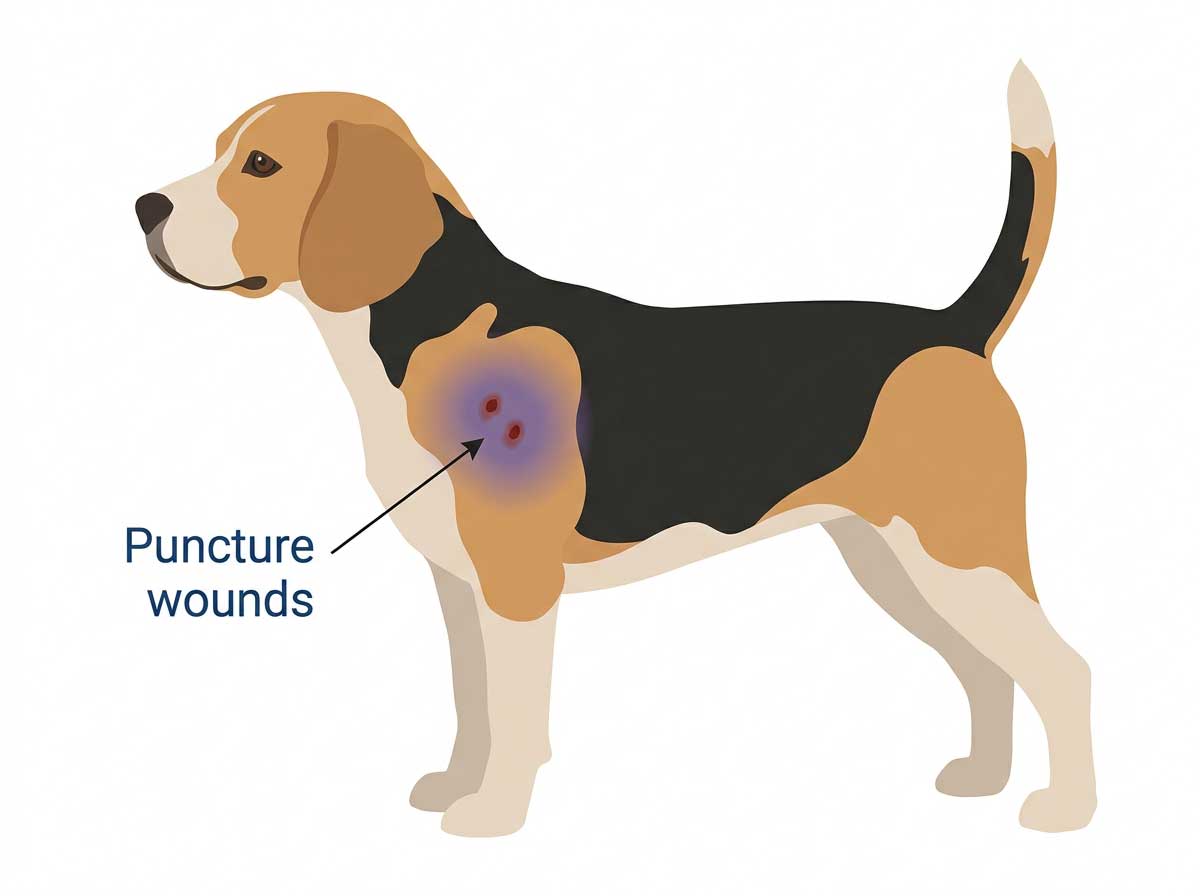
No matter what cleaning solution you use, some wounds need professional care: deep puncture wounds, bite wounds, wounds that won't stop bleeding, wounds showing signs of infection (pus, increasing redness, bad smell), and any wound that isn't improving after 2-3 days of home care. Your vet has access to stronger antiseptics, antibiotics, and wound closure techniques that aren't available at home.
Not Sure If Your Dog's Wound Needs a Vet?
Upload a photo to our AI wound checker for an instant assessment. It can evaluate infection signs, wound severity, and healing progress — helping you decide whether home care is enough or it's time to see the vet.
Worried About Your Dog's Wound?
Upload a photo and get an instant AI assessment of infection signs, wound severity, and whether you need to see a vet.
Disclaimer: This article is for informational purposes only and is not a substitute for professional veterinary advice. Always consult a licensed veterinarian for diagnosis and treatment of your pet's health conditions.