Flea Dirt, Flea Eggs & Black Specks on Your Dog — What They Mean

Found black specks or tiny white dots on your dog? Learn how to identify flea dirt vs regular dirt, flea eggs vs dandruff, and what black specks on dog skin mean.

Published 2026-04-17

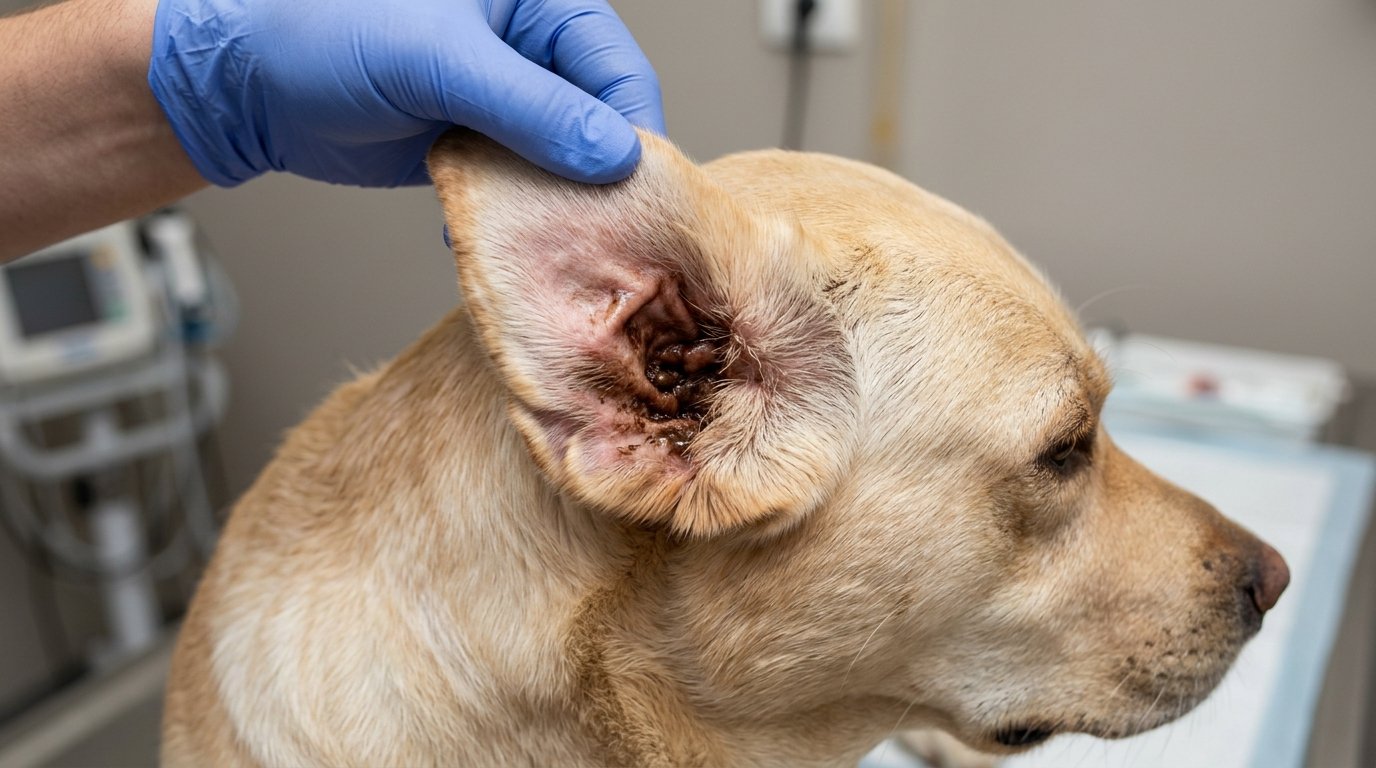
Close-up of flea dirt on dog skin showing tiny black specks among fur

You're petting your dog and notice tiny black specks on their skin. Or maybe you spotted little white dots in their fur. Is it just dirt? Dandruff? Or is it a sign of fleas? The answer matters — because if it's flea dirt or flea eggs, there's an active infestation that needs treatment. This guide shows you exactly how to identify what you're seeing and what to do about it.

What Is Flea Dirt? (And How to Confirm It)
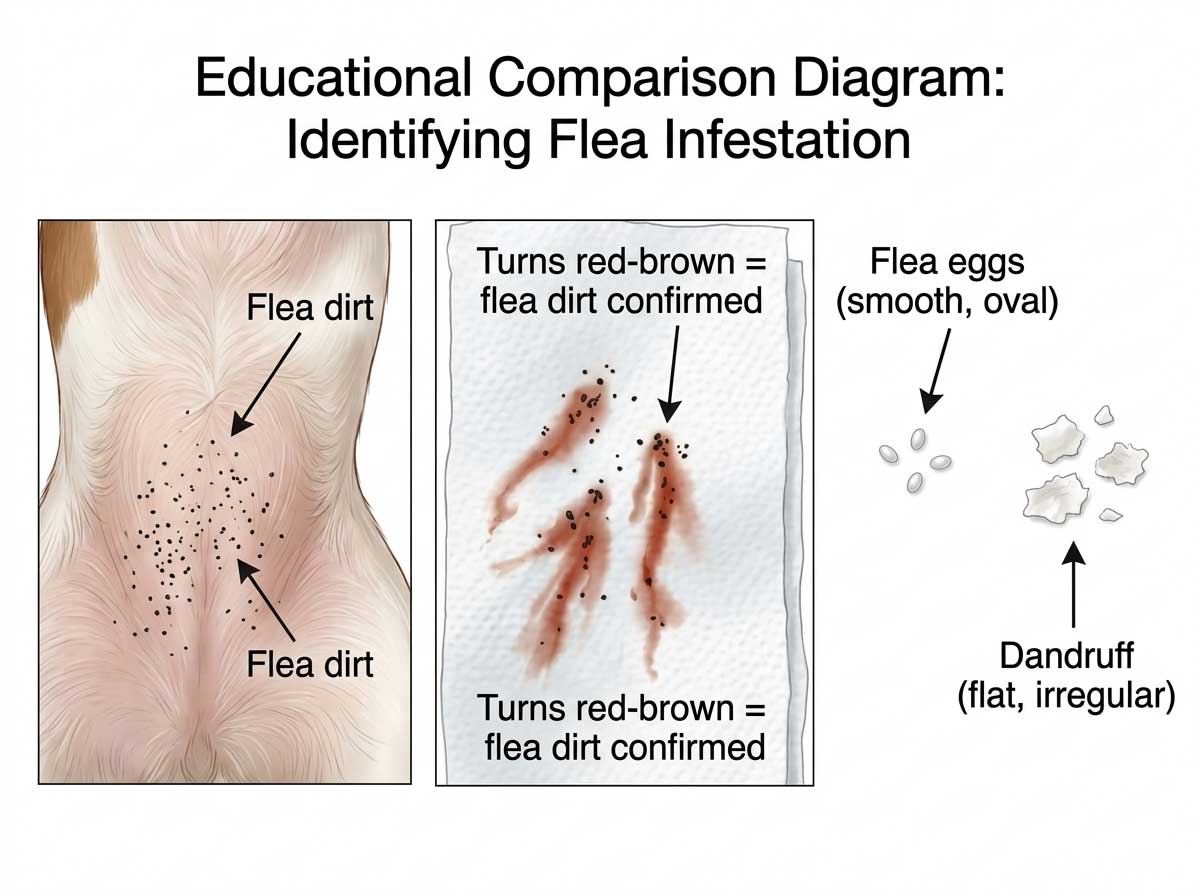
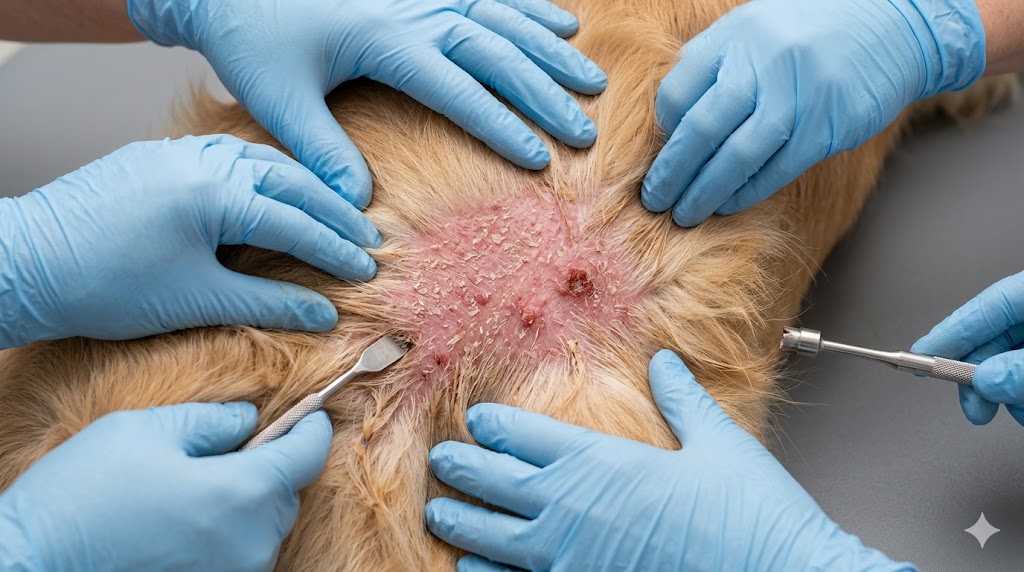
Flea dirt on dog skin with wet paper towel test showing reddish-brown streaks, and flea eggs vs dandruff comparison
Left: flea dirt on skin. Center: the wet paper towel test. Right: flea eggs vs dandruff

Flea dirt is flea feces — digested blood that fleas excrete after feeding on your dog. It looks like tiny black or dark brown pepper-like specks on your dog's skin and in their fur. Finding flea dirt is definitive proof that fleas are or were recently on your dog.

The Wet Paper Towel Test

This simple test is the gold standard for confirming flea dirt:

  • Collect some of the black specks from your dog's fur
  • Place them on a damp white paper towel
  • Wait 30-60 seconds
  • If the specks dissolve into reddish-brown streaks — it's flea dirt (because it's dried blood)
  • If they stay dark and don't change color — it's regular dirt or debris

Where to Find Flea Dirt on Your Dog
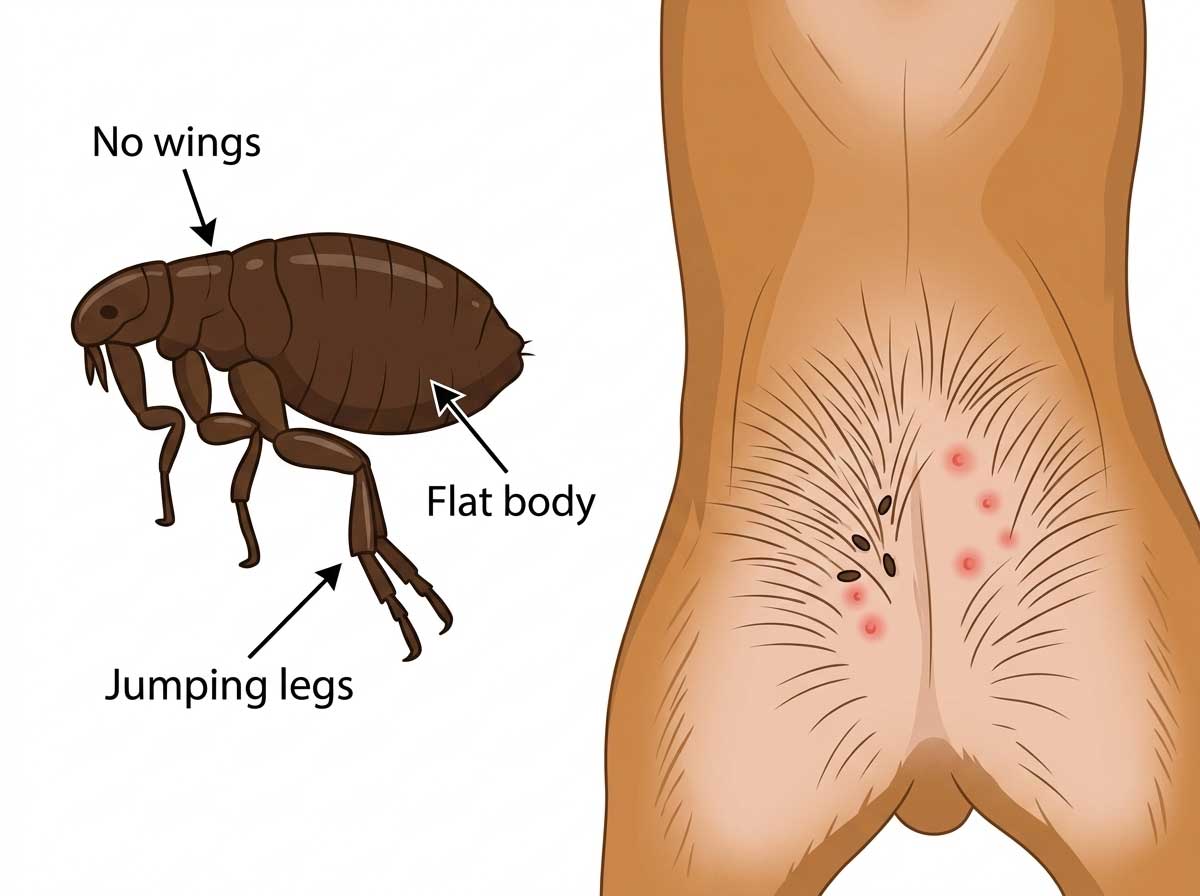
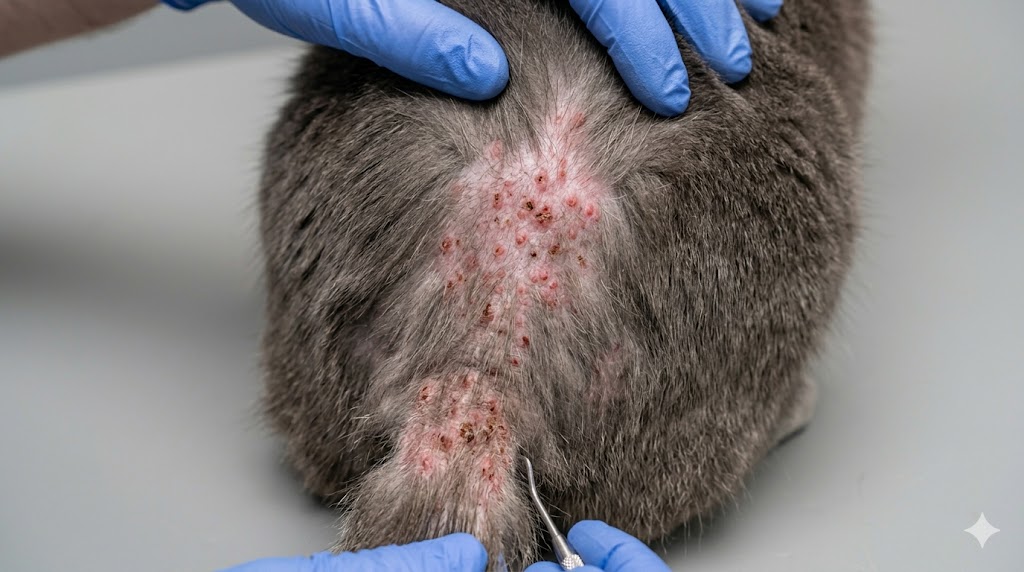
Flea anatomy diagram and flea on dog belly skin with red bite marks
What fleas look like and where they hide on your dog

Fleas have favorite spots on dogs. Check these areas first:

  • Base of the tail — the #1 spot for flea activity
  • Belly and groin — thin skin where fleas feed easily
  • Inner thighs — warm and protected
  • Along the back and spine — run a flea comb through this area
  • Around the neck and behind the ears
  • Armpits — warm and hidden

Use a fine-toothed flea comb over a white paper towel — it catches both live fleas and flea dirt. The white background makes the dark specks easy to spot.

Flea Dirt but No Fleas? Here's Why

This is very common and doesn't mean the fleas are gone. Live fleas are small, fast, and good at hiding in thick fur. You may not see them because:

  • Fleas move quickly and jump away when disturbed
  • Your dog may have groomed off or eaten some fleas
  • In early infestations, there may only be a few adult fleas
  • Dense or dark fur makes fleas nearly invisible

Bottom line: if you find flea dirt, your dog has fleas — even if you can't see a single one. Treat your dog AND your home.

What Do Flea Eggs Look Like on a Dog?

Flea eggs are often overlooked because they're tiny and easy to confuse with other things:

  • Size: about 0.5mm — barely visible to the naked eye
  • Shape: smooth, oval, slightly translucent
  • Color: white to off-white
  • Location: on the dog initially, but they fall off within hours into carpets, bedding, furniture, and cracks in the floor

Flea Eggs vs Dandruff on Dogs

People often confuse the two. Here's how to tell them apart:

  • Flea eggs: smooth, oval, uniform shape — they roll when touched
  • Dandruff: flat, irregular, flaky — they stick to fur and crumble
  • Flea eggs: slippery and fall off easily
  • Dandruff: dry and tend to cling to hair shafts

Black Specks on Dog Skin — Not Fleas?

If the wet paper towel test is negative (specks don't turn reddish-brown), the black specks might be:

  • Regular dirt — especially if your dog has been playing outside
  • Skin debris — dead skin cells can appear as dark specks
  • Comedones (blackheads) — some dogs get these, especially on the belly or chin
  • Dried blood — from minor scratches or hot spots
  • Mites — tiny dark spots that don't wipe off easily could be mite debris

If you're not sure what the specks are, upload a close-up photo to our AI bug identifier for instant analysis.

What Does Flea Dirt Mean for Your Home?

Here's the uncomfortable truth: for every flea on your dog, there are likely 50-100 eggs, larvae, and pupae in your home. The adult fleas you see (or don't see) on your dog represent only about 5% of the total flea population. The other 95% is in:

  • Carpets and rugs — eggs and larvae hide deep in fibers
  • Bedding (yours and your dog's) — wash in hot water weekly
  • Furniture — especially fabric couches and cushions
  • Cracks in hardwood floors
  • Your car — if your dog rides in it

Treating only your dog without treating your home will lead to re-infestation within weeks. Vacuum thoroughly (especially carpeted areas), wash all bedding in hot water, and use a home flea spray or fogger for severe cases.

Found Specks or Bugs on Your Dog?

Upload a close-up photo and get instant AI identification — flea dirt, flea eggs, ticks, mites, or other parasites.

Disclaimer: This article is for informational purposes only and is not a substitute for professional veterinary advice. Always consult a licensed veterinarian for diagnosis and treatment of your pet's health conditions.
More Articles

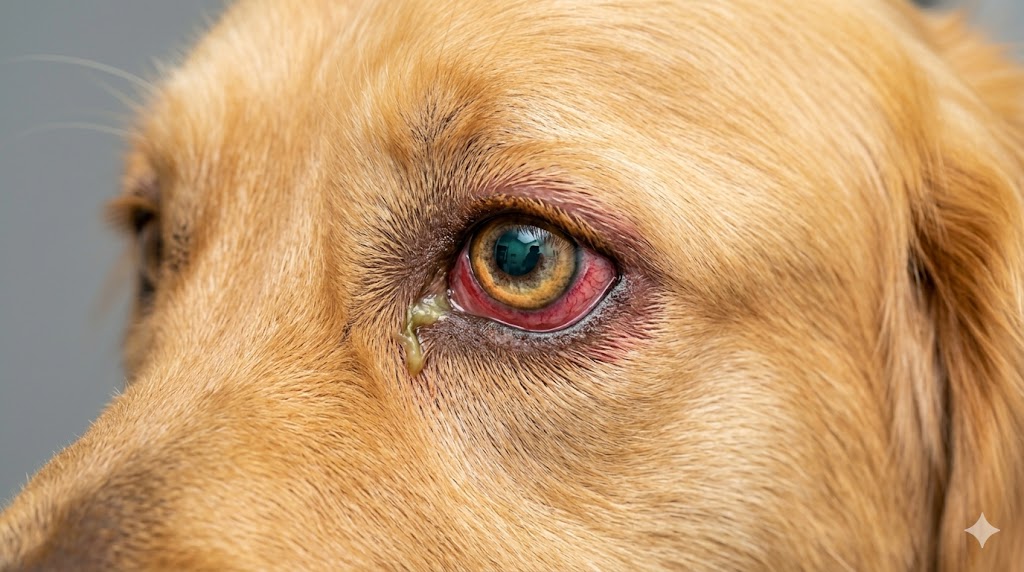
Dog eye infection showing redness and discharge in a Golden Retriever

Dog Eye Infection: Symptoms, Causes & When to See a Vet

How to identify a dog eye infection, what causes it, common types like conjunctivitis and corneal ulcers, home care tips, and when you need to see a vet.

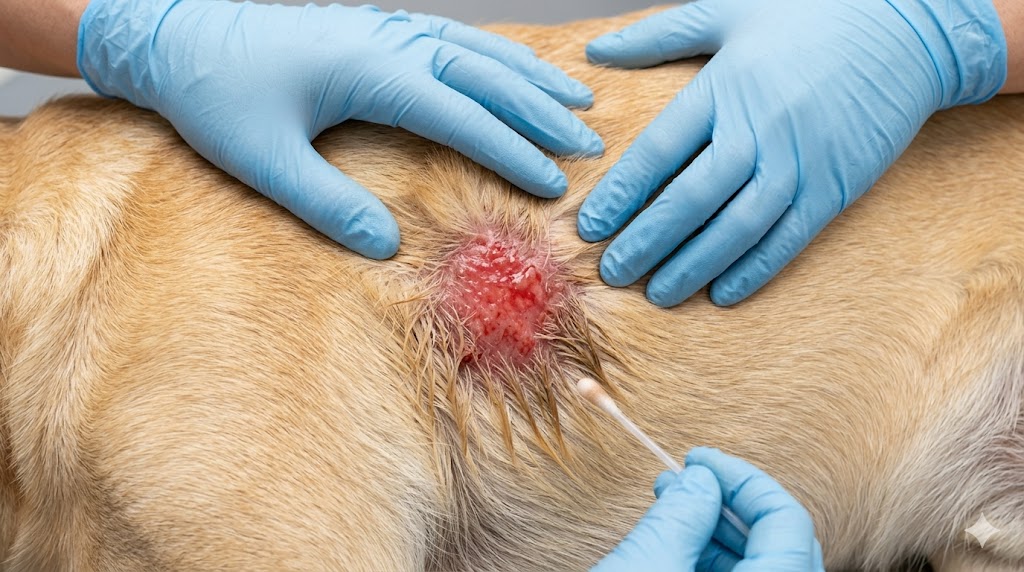
Hot spot on a Labrador Retriever showing red moist oozing skin patch

Dog Hot Spots: What They Look Like, Causes & How to Treat Them

Everything you need to know about hot spots on dogs — how to identify them, what causes them, home treatment options, and when you need a vet.

Dog ear showing brown discharge and wax buildup indicating ear problems

Why Do My Dog's Ears Smell Bad? 7 Causes and What to Do

Dogs ears smell bad for a reason. Learn the 7 most common causes of smelly dog ears, what the smell and discharge color mean, and when you need a vet.

Dermatitis on Golden Retriever belly showing red inflamed flaky skin

My Dog Has a Rash: How to Identify Common Skin Problems

Found a rash on your dog? Learn how to identify dermatitis, hot spots, mange, flea allergy, and other common skin infections from appearance and symptoms.

Dog shaking head and scratching ear showing signs of ear discomfort

Dog Keeps Shaking Head? Here's What It Means and What to Do

Why does your dog keep shaking their head? Learn the most common causes including ear infections, ear mites, and allergies, plus when to see a vet.

Dog skin allergy showing red irritated skin from flea allergy dermatitis

Dog Skin Allergy: Symptoms, Types & What Your Dog's Skin Is Telling You

Learn how to identify dog skin allergies from rashes, bumps, and itching. Understand flea allergy dermatitis, food allergies, and environmental allergies in dogs.

Dog scratching ear from food allergy showing redness and discomfort

Dog Food Allergy Symptoms: How to Tell If Your Dog's Food Is the Problem

How to identify food allergy symptoms in dogs vs food intolerance. Learn about elimination diets, common allergens like chicken and beef, and when to see a vet.

Cat with skin allergy showing patchy hair loss and irritated skin

Cat Skin Allergies & Flea Dermatitis: Signs, Causes & What to Do

How to identify cat skin allergies, flea allergy dermatitis in cats, food allergy rashes, and environmental allergies. Learn what your cat's skin is telling you.

Dog wound showing redness and swelling that needs proper care

Dog Wound Care: How to Clean, Treat & Monitor Wounds at Home

Complete guide to dog wound care at home. Learn how to clean a wound, what to put on it, signs of infection to watch for, and when to see a vet.

Dog wound in healing stage showing healthy pink tissue forming

How to Heal a Dog Wound Fast at Home: 7 Vet-Approved Tips

Want to help your dog's wound heal faster? 7 proven tips for faster wound healing in dogs — from proper cleaning to nutrition to preventing licking.

Open wound on dog that needs proper cleaning

How to Clean a Dog Wound: Step-by-Step Guide (With What to Avoid)

Learn the right way to clean a dog wound at home. Step-by-step instructions, what solutions to use, what to avoid, and when cleaning isn't enough.

Dog bite wound that needs proper cleaning — not hydrogen peroxide

Can You Put Hydrogen Peroxide on a Dog Wound? (Why Vets Say No)

Should you use hydrogen peroxide on your dog's wound? Learn why most vets no longer recommend it, what to use instead, and how to clean dog wounds safely.

Cat wound being gently cleaned at home with saline solution

Cat Wound Care at Home: How to Clean, Treat & Know When to See a Vet

Learn how to care for your cat's wound at home — cleaning, safe ointments, what to avoid, healing stages, and when a wound needs emergency vet care.

Cat abscess that has burst showing drainage and surrounding area

Cat Abscess Burst: What to Do, What It Looks Like & When to See a Vet

Your cat's abscess burst? Don't panic. Learn what a burst abscess looks like, what to do immediately, home care steps, healing timeline, and when it's an emergency.

Comparison of deer tick and American dog tick on dog skin

Dog Tick Identification: Deer Tick vs Dog Tick, Embedded & Engorged Ticks

How to identify ticks on your dog — deer tick vs dog tick differences, what embedded and engorged ticks look like, tick vs skin tag, and which ticks carry disease.

Cat ear showing dark brown discharge from ear mites vs normal clean ear

Cat Ear Mites: Signs, How to Tell vs Dirty Ears & Treatment Guide

How to tell if your cat has ear mites vs just dirty ears, signs and symptoms, how indoor cats get ear mites, home remedies, and when to see a vet.

Black specks on cat chin showing comparison of flea dirt vs feline acne

Black Specks on Your Cat: Flea Dirt vs Cat Acne — How to Tell & What to Do

Black specks on your cat's chin, fur, or skin? Learn how to tell flea dirt from cat acne, what black dots mean, and when to worry.