How to Clean a Dog Wound: Step-by-Step Guide (With What to Avoid)
Learn the right way to clean a dog wound at home. Step-by-step instructions, what solutions to use, what to avoid, and when cleaning isn't enough.
Published 2026-04-16
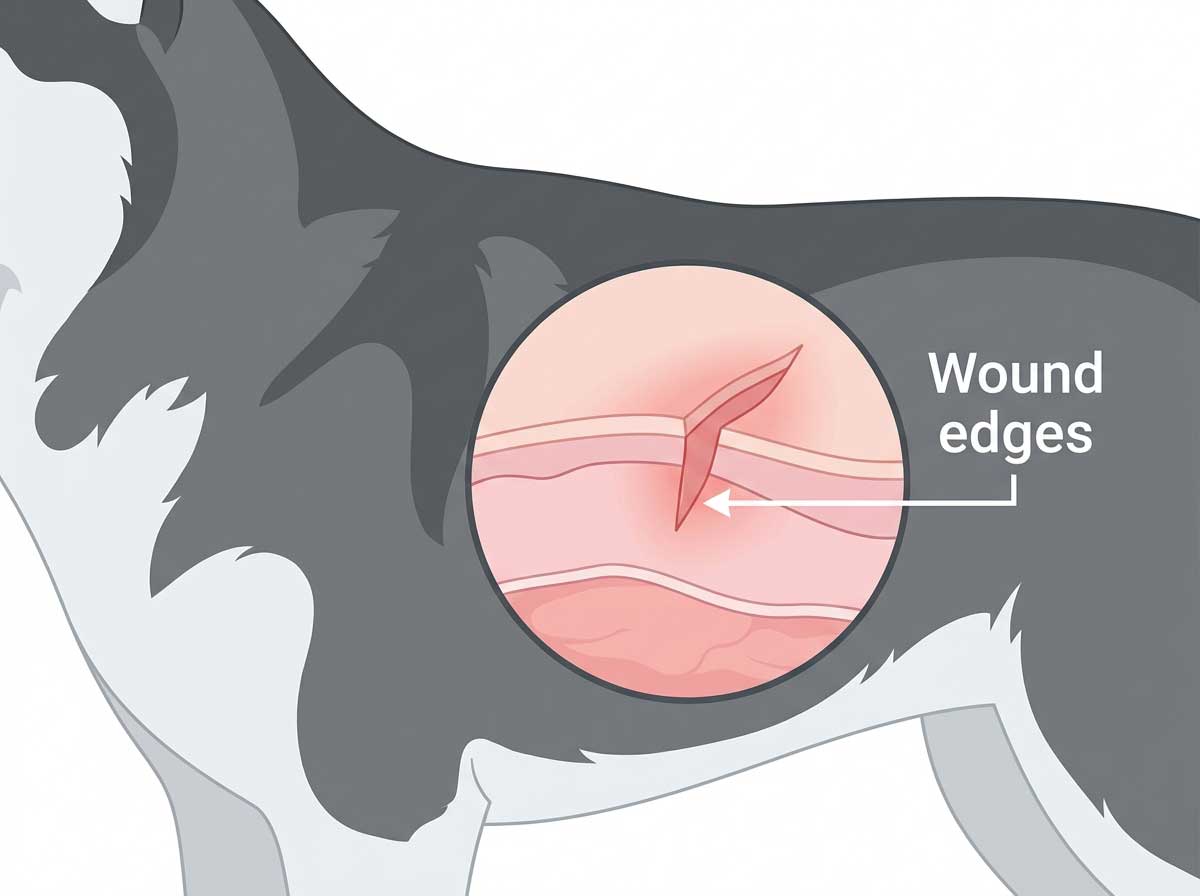
Your dog has a wound and the first thing you need to do is clean it properly. But what should you use? What should you avoid? Cleaning a dog wound correctly is the difference between a quick recovery and a nasty infection. Here's exactly how to do it, step by step.
Before You Start: Gather Your Supplies
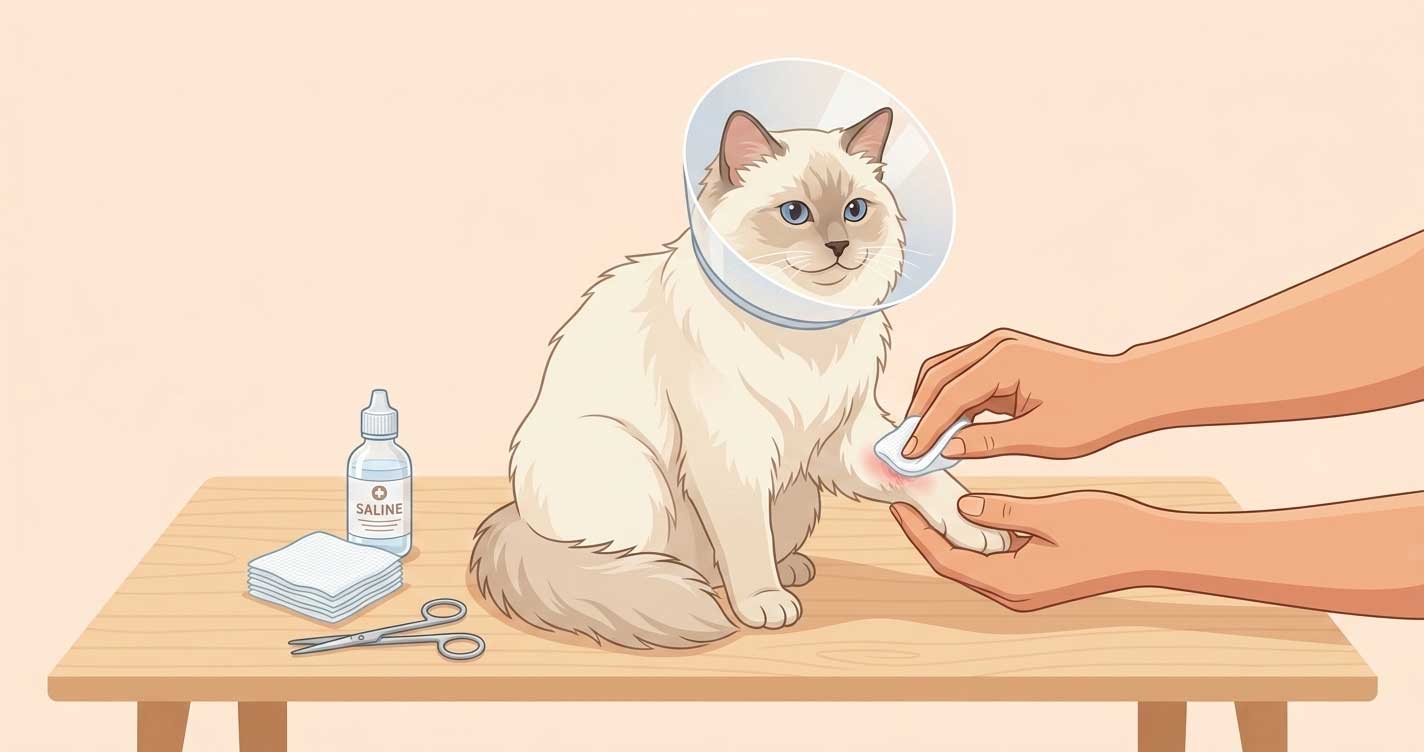
- ✓Clean lukewarm water or sterile saline solution
- ✓Clean cloths or gauze pads (not cotton balls — fibers stick to wounds)
- ✓Mild antiseptic: diluted chlorhexidine (0.05%) or diluted betadine (povidone-iodine, diluted to tea color)
- ✓Clean towel for drying
- ✓Disposable gloves if available
- ✓Treats — you'll need to keep your dog calm and cooperative
- ✓A helper to hold your dog if possible
Step 1: Restrain Your Dog Safely
Even the gentlest dog may snap when a wound is touched. Have someone hold your dog calmly, or use a muzzle if your dog seems anxious. Talk in a calm, soothing voice. If your dog is too stressed or the wound is too painful to touch, stop and go to the vet instead.
Step 2: Trim the Fur Around the Wound
Hair around a wound traps bacteria and debris. If possible, carefully trim the fur around the wound using blunt-tipped scissors or electric clippers. Apply a water-based lubricant (like KY jelly) over the wound first — trimmed hair will stick to the lubricant instead of falling into the wound. Then rinse the lubricant and trapped hair away.
Step 3: Flush the Wound
This is the most important step. The goal is to physically wash out bacteria and debris:
- ✓Use lukewarm saline solution (1 teaspoon salt per 2 cups boiled and cooled water) or plain lukewarm tap water
- ✓Use gentle pressure — a squeeze bottle or large syringe works well
- ✓Flush for at least 30 seconds, directing the stream into the wound
- ✓For deeper wounds, you may need to flush for several minutes
- ✓The solution running off should go from dirty/bloody to clear
Step 4: Apply Mild Antiseptic
After flushing, you can apply a diluted antiseptic:
- ✓Chlorhexidine 0.05% (dilute the 2% concentrate — 1 part to 40 parts water) — the gold standard for wound cleaning in dogs
- ✓Diluted betadine (povidone-iodine) — dilute until it's the color of weak tea
- ✓Apply gently with gauze, don't scrub
- ✓Let it sit for a minute, then pat dry
Step 5: Pat Dry and Protect
- ✓Gently pat the wound dry with clean gauze
- ✓Apply a thin layer of veterinary wound ointment if desired
- ✓Cover with a light bandage if the wound is in a location your dog can lick
- ✓Put on an e-collar to prevent licking — this is critical
What NOT to Use on a Dog Wound
This is just as important as knowing what to use:
- ✓Hydrogen peroxide — destroys healthy tissue and slows healing. Despite its popularity, veterinarians no longer recommend it for wound cleaning.
- ✓Rubbing alcohol — causes extreme pain and tissue damage
- ✓Human triple antibiotic ointments with pain relief (anything ending in "-caine") — toxic to dogs if licked
- ✓Essential oils (tea tree oil, lavender) — many are toxic to dogs
- ✓Human medications — aspirin, ibuprofen, and acetaminophen are all dangerous for dogs
How Often Should You Clean the Wound?
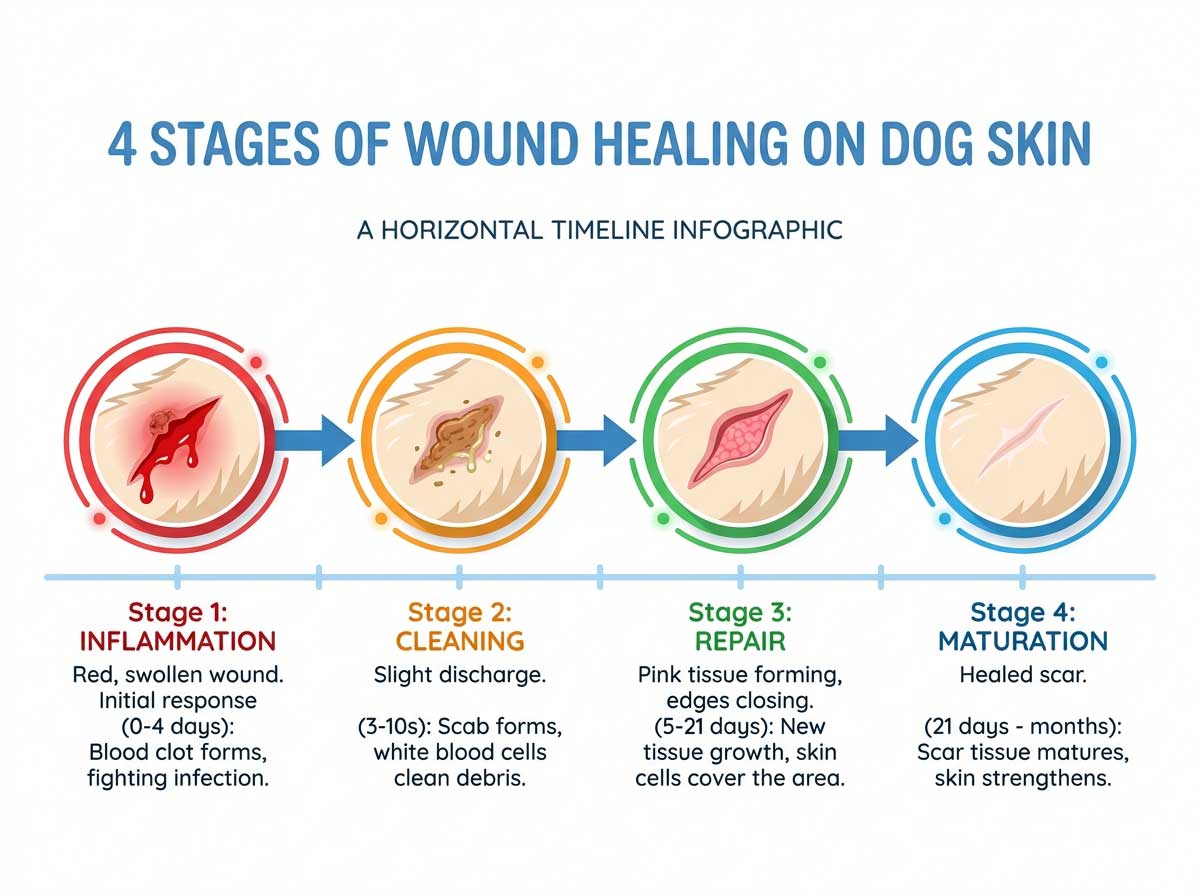
For fresh wounds: clean twice daily for the first 2-3 days, then once daily until healed. For infected wounds (being treated by your vet): follow your vet's specific cleaning instructions. Over-cleaning is counterproductive — it disrupts the healing process and removes beneficial cells your body is building. Once or twice a day is plenty.
When Cleaning Isn't Enough
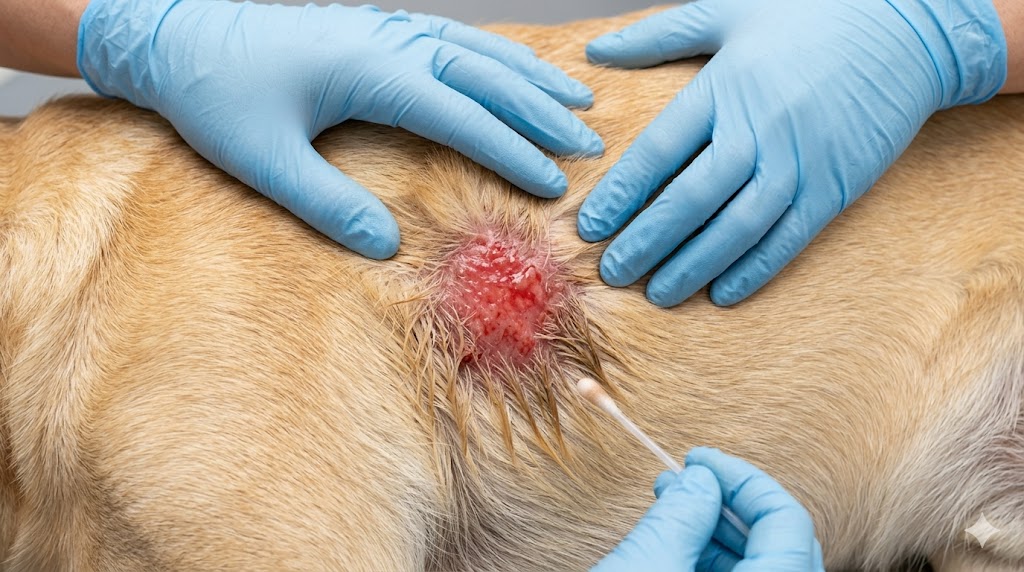
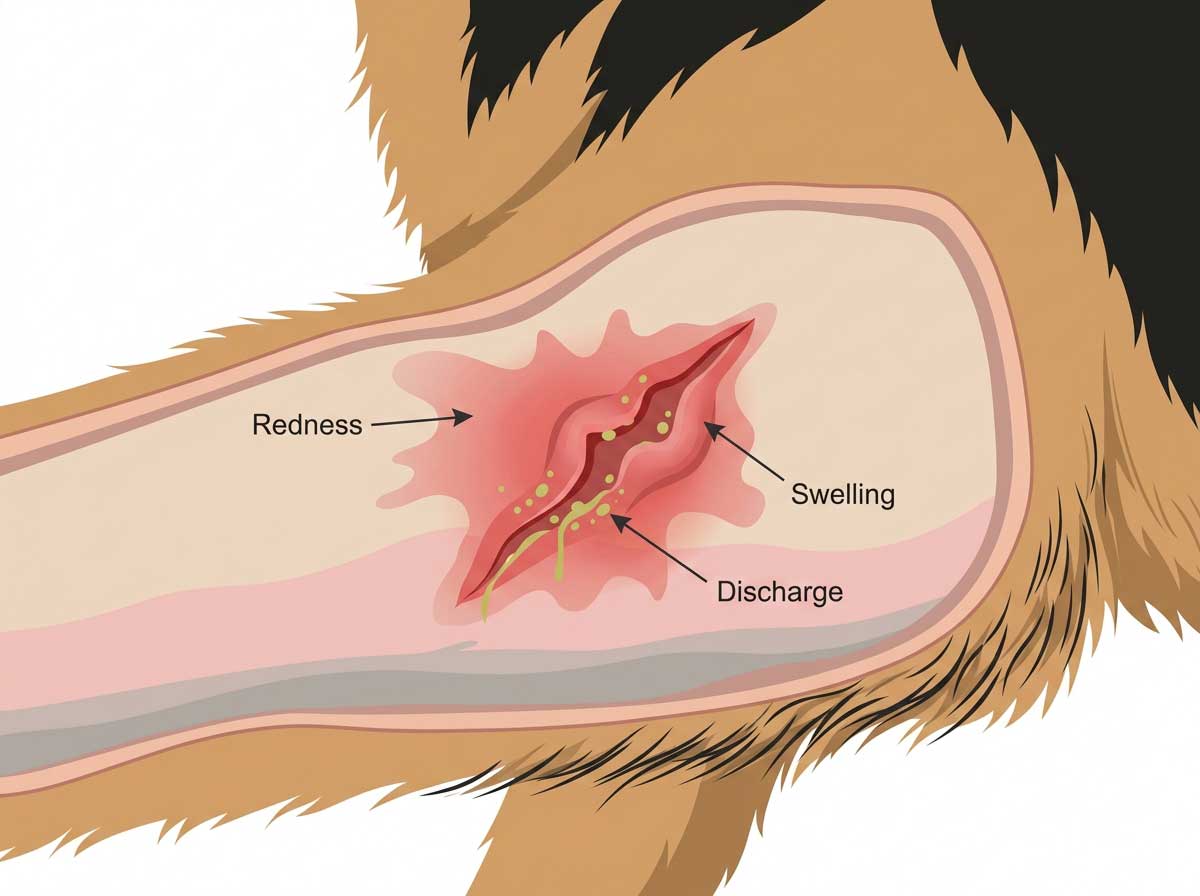
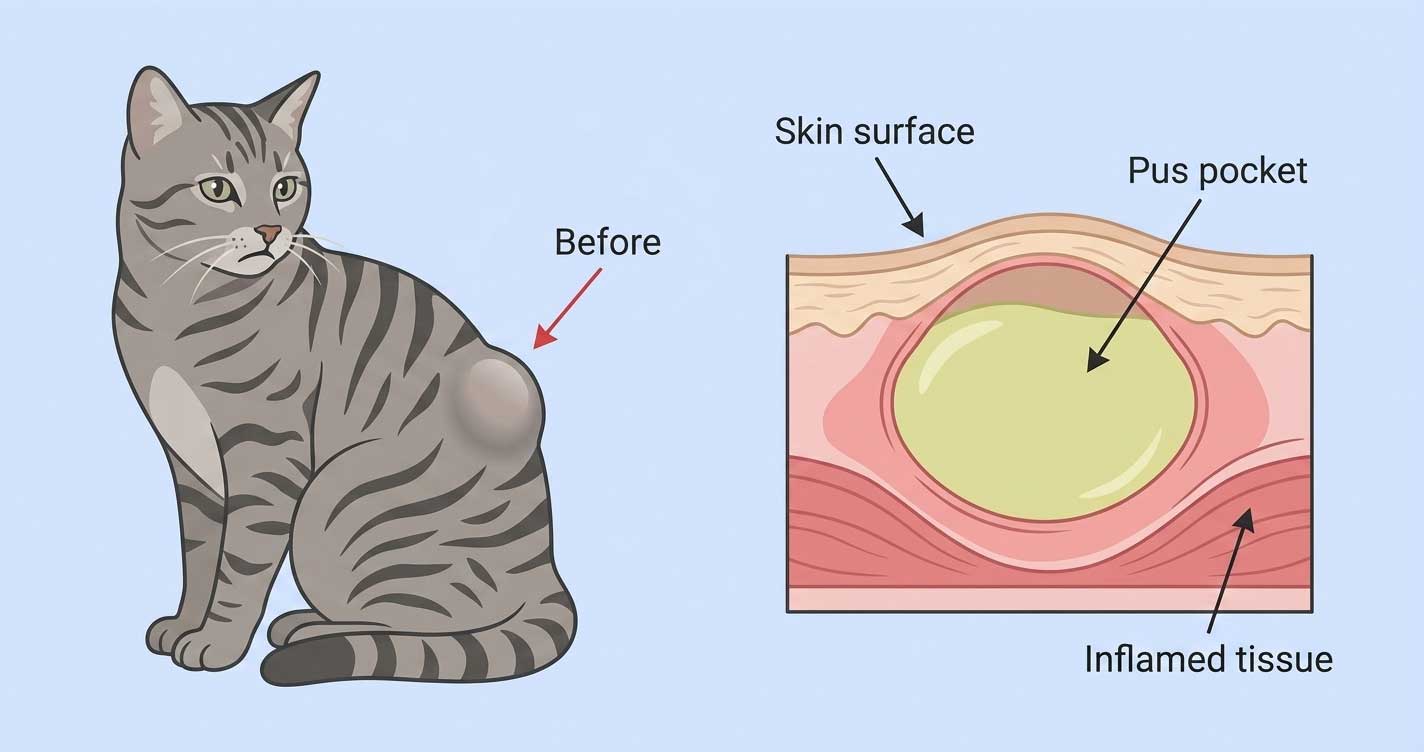
If you've been cleaning the wound properly for 2-3 days and it's getting worse instead of better (more redness, swelling, discharge, or smell), your dog likely needs antibiotics. Home cleaning is great for prevention but can't treat an established infection. See your vet if the wound shows signs of infection despite your best cleaning efforts.
Not Sure If the Wound Is Getting Better?
Upload a photo of your dog's wound to our AI wound checker. It can assess whether the wound shows signs of infection or normal healing, and help you decide if it's time for a vet visit.
Is Your Dog's Wound Infected or Healing?
Upload a photo and get an instant AI assessment. Check for infection signs and know when to see the vet.
Disclaimer: This article is for informational purposes only and is not a substitute for professional veterinary advice. Always consult a licensed veterinarian for diagnosis and treatment of your pet's health conditions.