Cat Wound Care at Home: How to Clean, Treat & Know When to See a Vet
Learn how to care for your cat's wound at home — cleaning, safe ointments, what to avoid, healing stages, and when a wound needs emergency vet care.
Published 2026-04-17
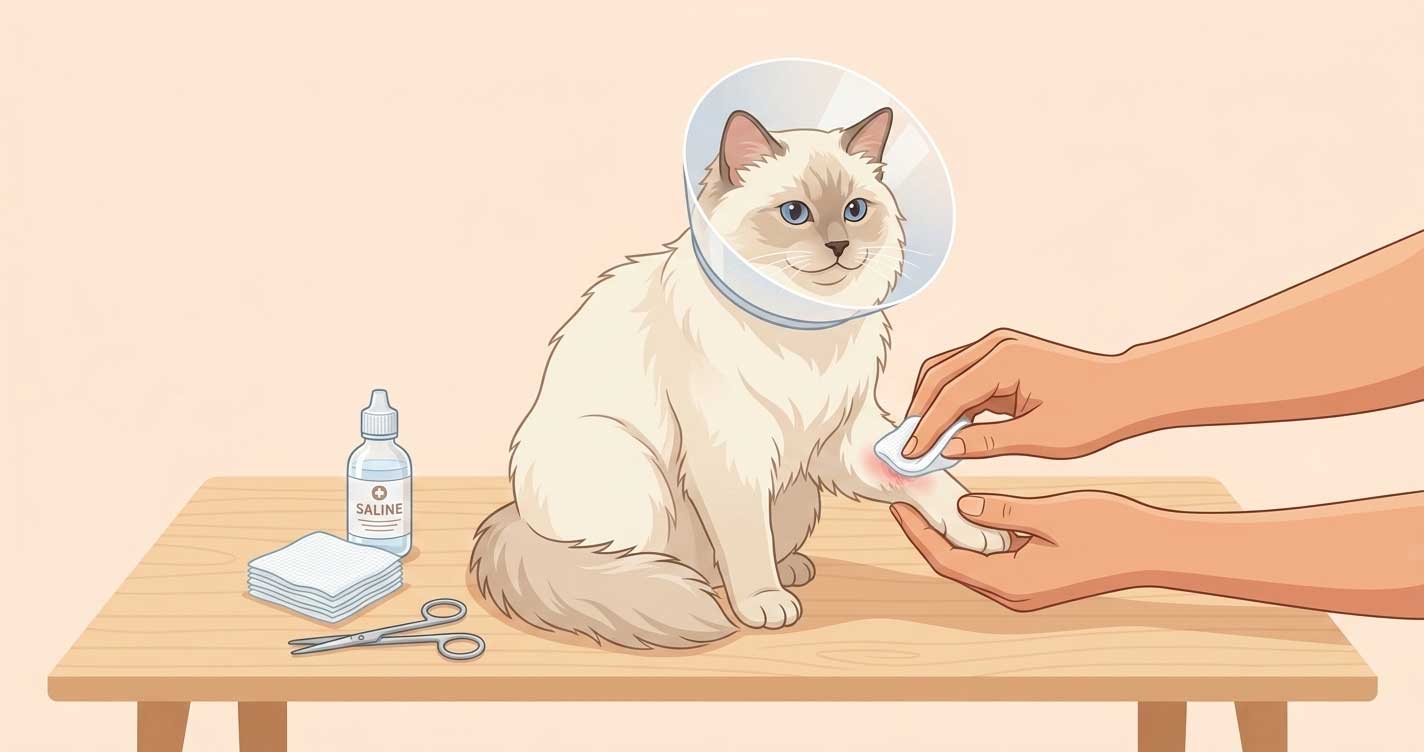
Your cat came home with a wound — maybe from a fight, a sharp object, or something you can't identify. Your first instinct is to help, but cats are sensitive to many products that are safe for dogs or humans. Using the wrong treatment can make things worse. This guide covers exactly how to care for your cat's wound at home safely, what products to avoid, and the critical signs that mean you need a vet — not home care.
How to Clean a Cat Wound at Home
For minor surface wounds (small scrapes, shallow scratches), you can clean and care for them at home. Here's the step-by-step process:
- ✓Wash your hands thoroughly before touching the wound
- ✓If there's fur around the wound, gently trim it with blunt-tipped scissors to expose the area
- ✓Flush the wound with lukewarm saline solution (1 teaspoon salt in 2 cups of boiled, then cooled water) — use a syringe or squeeze bottle for gentle pressure
- ✓Pat dry with clean gauze — don't rub
- ✓Apply a thin layer of plain antibiotic ointment (like Neosporin Original — NOT the "Pain Relief" version)
- ✓Put an e-collar on your cat to prevent licking — this is the most important step
Repeat cleaning 1-2 times daily until the wound is clearly healing. Monitor for signs of infection at each cleaning.
What Can You Put on a Cat Wound? (Safe vs Toxic)
Safe to Use
- ✓Saline solution (salt water) — safest option for flushing
- ✓Chlorhexidine solution (diluted to 0.05%) — effective antiseptic, vet-recommended
- ✓Plain Neosporin (bacitracin/neomycin/polymyxin) — thin layer only, with e-collar to prevent licking
- ✓Vetericyn wound care spray — specifically designed for animals
NEVER Use on Cats
- ✓Hydrogen peroxide — damages healing tissue and slows wound closure
- ✓Rubbing alcohol — causes severe pain and tissue damage
- ✓Tea tree oil — TOXIC to cats, can cause tremors, liver failure, and death
- ✓Any product with "-caine" ingredients (lidocaine, benzocaine) — toxic to cats
- ✓Neosporin + Pain Relief — contains pramoxine, unsafe for cats
- ✓Essential oils — most are toxic to cats
- ✓Human antiseptic sprays (Bactine, etc.) — often contain ingredients toxic to cats
Cat Wound Healing Stages — What's Normal?
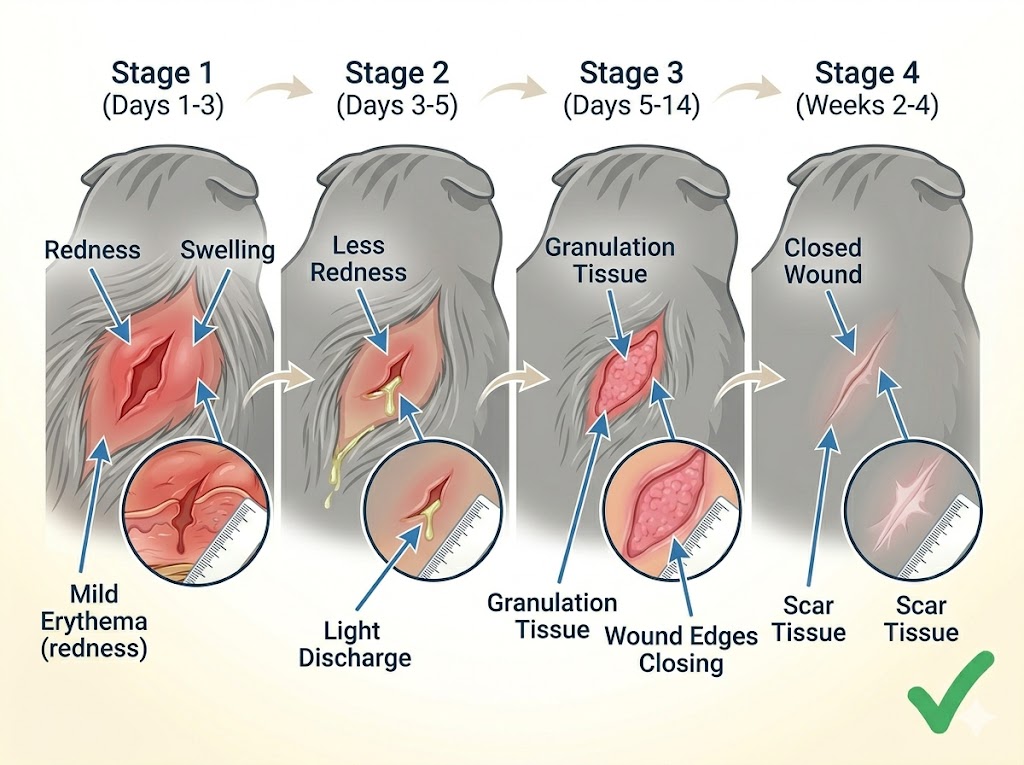
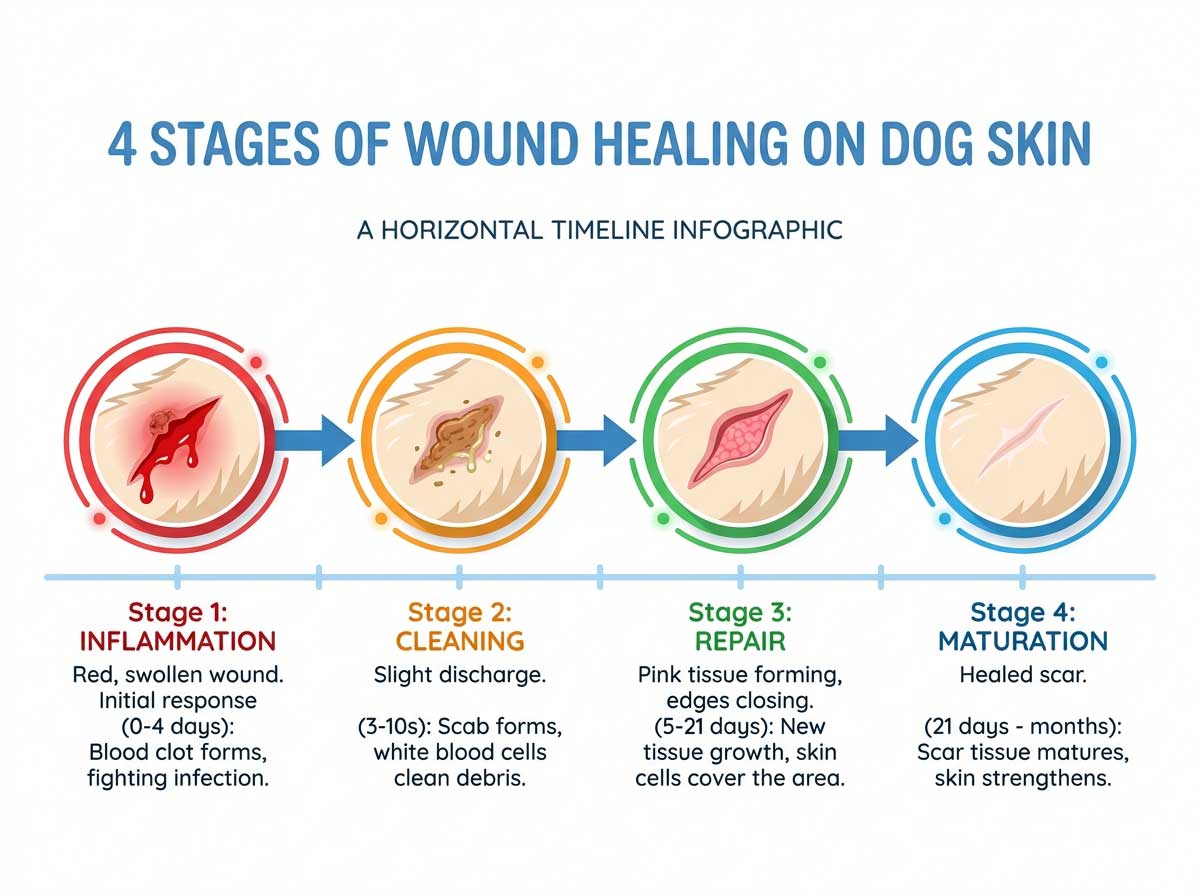
Understanding the normal healing timeline helps you know if things are progressing or going wrong:
- ✓Days 1-3 (Inflammation): Redness, mild swelling, warmth, and light clear or pink discharge. This is normal — the body is responding to injury
- ✓Days 3-5 (Cleaning): The body cleans the wound. Slight discharge may continue. The wound may look a bit messy but should not be getting worse
- ✓Days 5-14 (Repair): Pink granulation tissue forms (a good sign), wound edges start closing, a scab develops. Do not pick the scab
- ✓Weeks 2-4+ (Maturation): The wound closes, scar tissue forms. Fur may or may not grow back depending on wound depth
The key indicator of normal healing is steady daily improvement. If the wound stalls, gets worse, develops a foul smell, or your cat becomes lethargic — it's likely infected and needs a vet.
How to Heal an Open Wound on a Cat Fast
There are no magic shortcuts, but you can maximize healing speed:
- ✓Keep the wound clean — flush with saline 1-2 times daily
- ✓Prevent licking — use an e-collar 24/7, not just "when you're watching." Licking introduces bacteria and reopens wounds
- ✓Keep your cat indoors — outdoor exposure brings dirt, bacteria, and risk of re-injury
- ✓Good nutrition — a well-fed cat heals faster. Ensure access to fresh water and quality food
- ✓Follow vet instructions exactly — complete the full antibiotic course if prescribed
- ✓Don't pick scabs — they protect the healing tissue underneath
Cat Fight Wounds — Why They're More Dangerous Than They Look
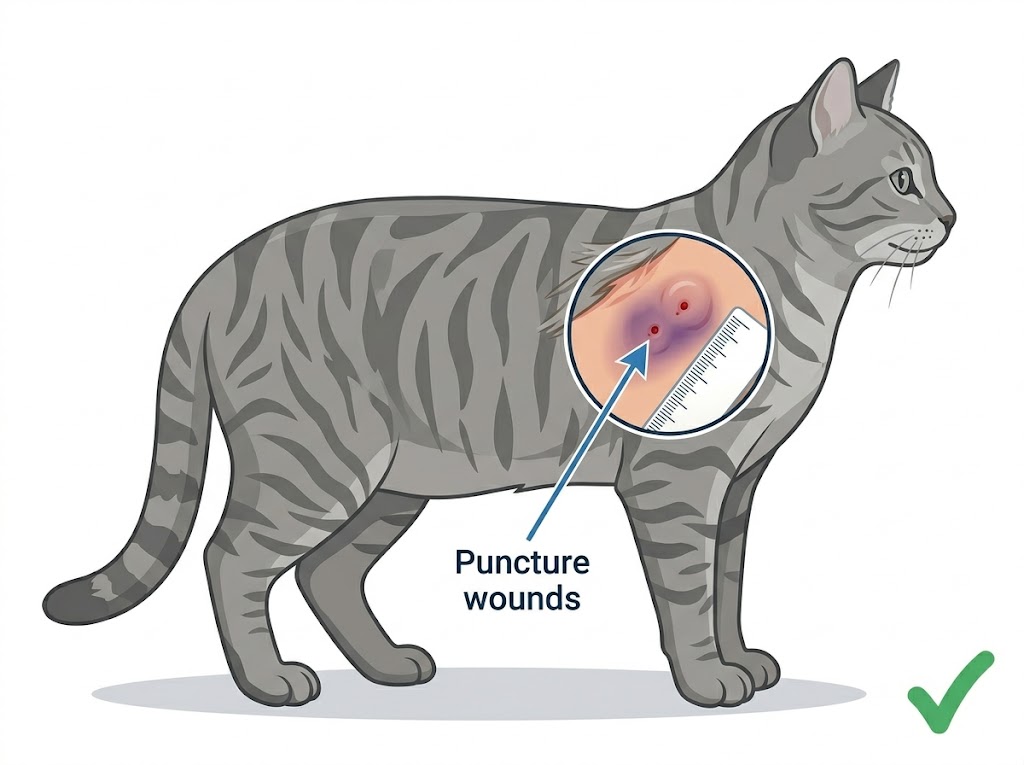
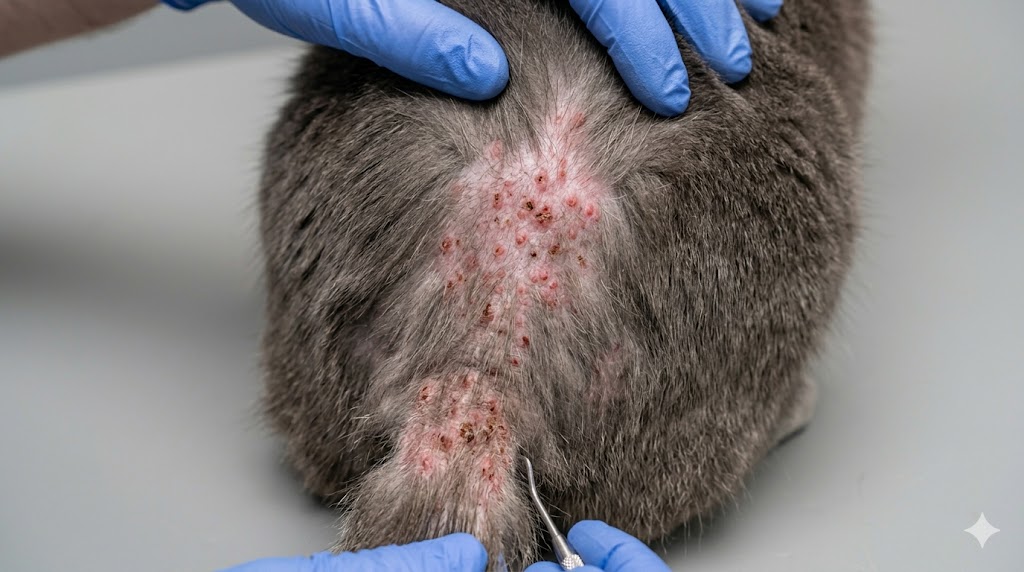
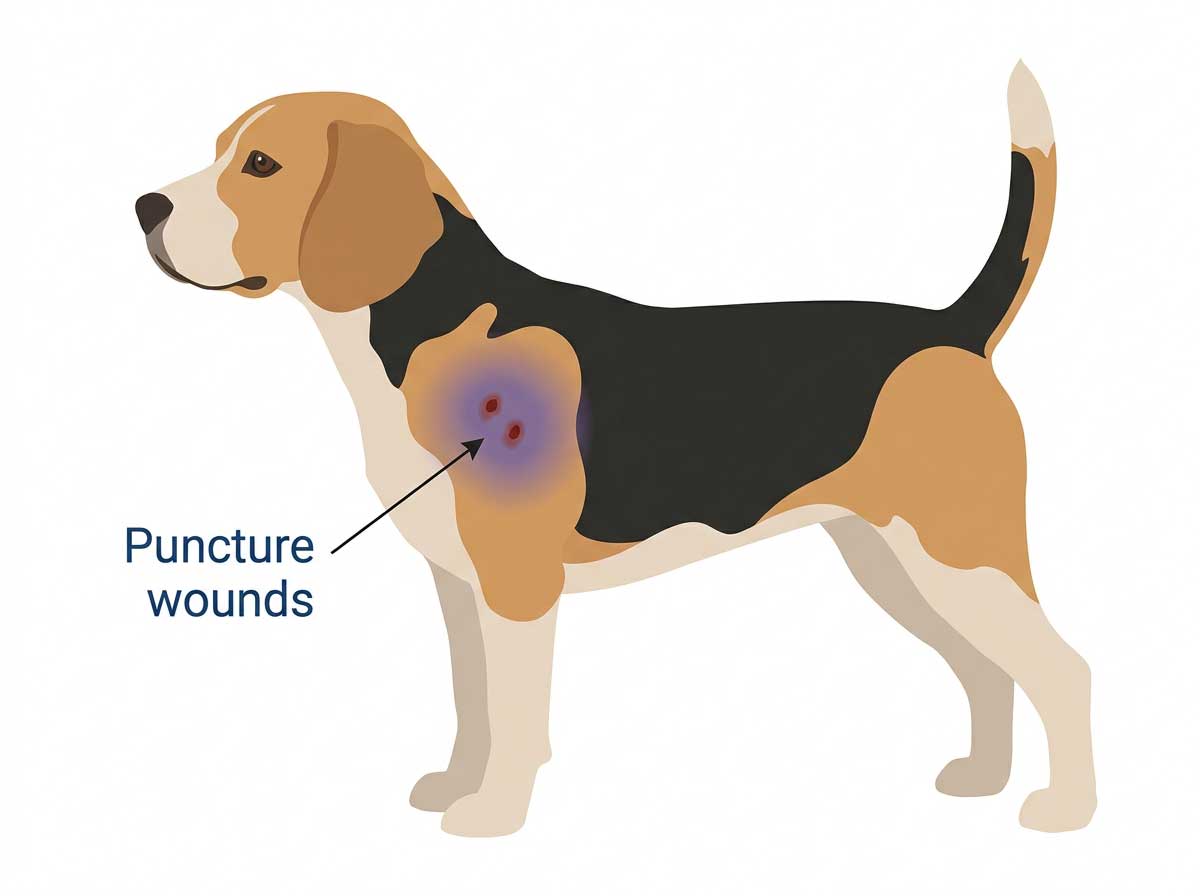
Cat fight wounds deserve special attention. Cat teeth are thin and needle-like — they create deep puncture wounds that seal over within hours, trapping bacteria deep inside. Up to 80% of untreated cat bite wounds become infected, and abscesses can form within 2-4 days. If your cat has been in a fight:
- ✓Check the entire body — fight wounds are often hidden under fur, especially on the head, neck, base of tail, and legs
- ✓Even tiny puncture wounds need veterinary attention within 24 hours
- ✓Don't let the wound seal over — gently clean and flush to keep it open and draining
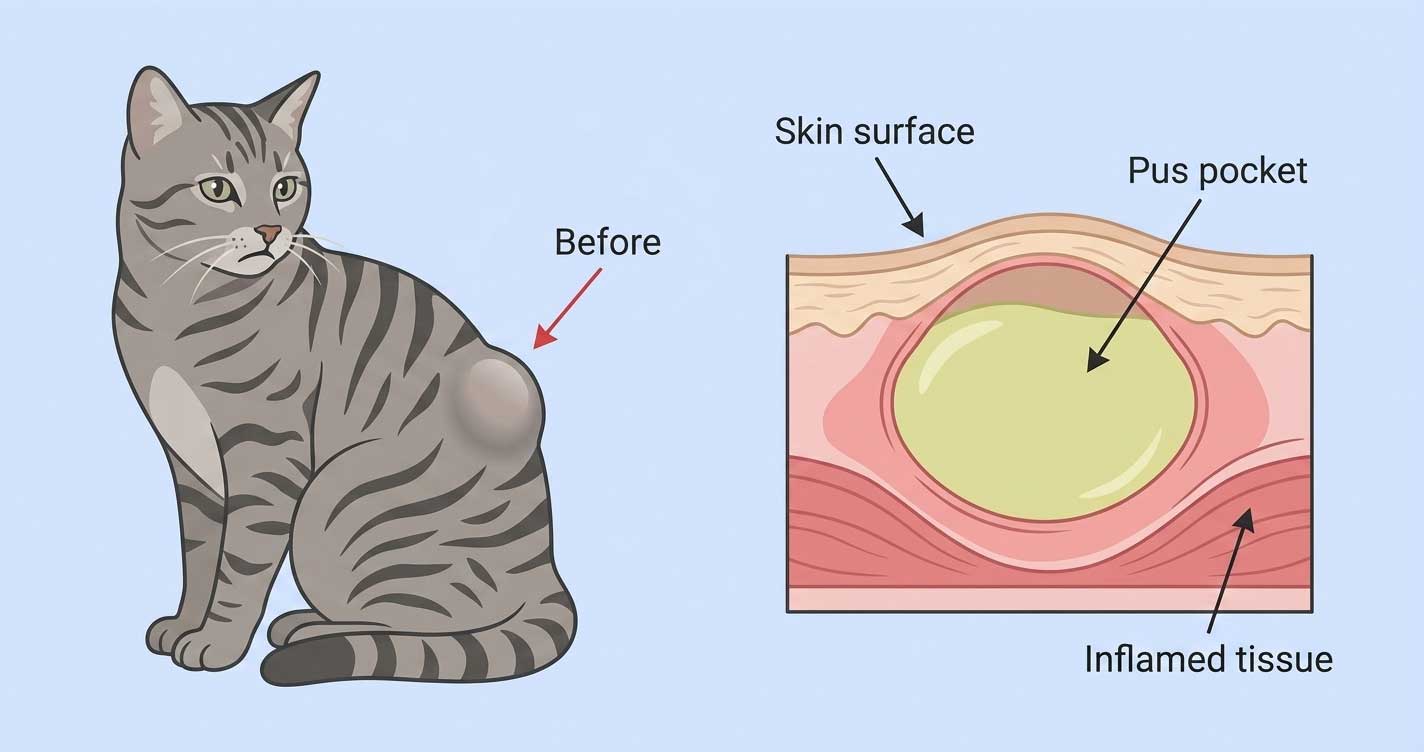
- ✓Watch for swelling developing 2-4 days later — this is an abscess forming
- ✓Early antibiotics from a vet can prevent abscess formation entirely
What to Do If a Cat Abscess Bursts
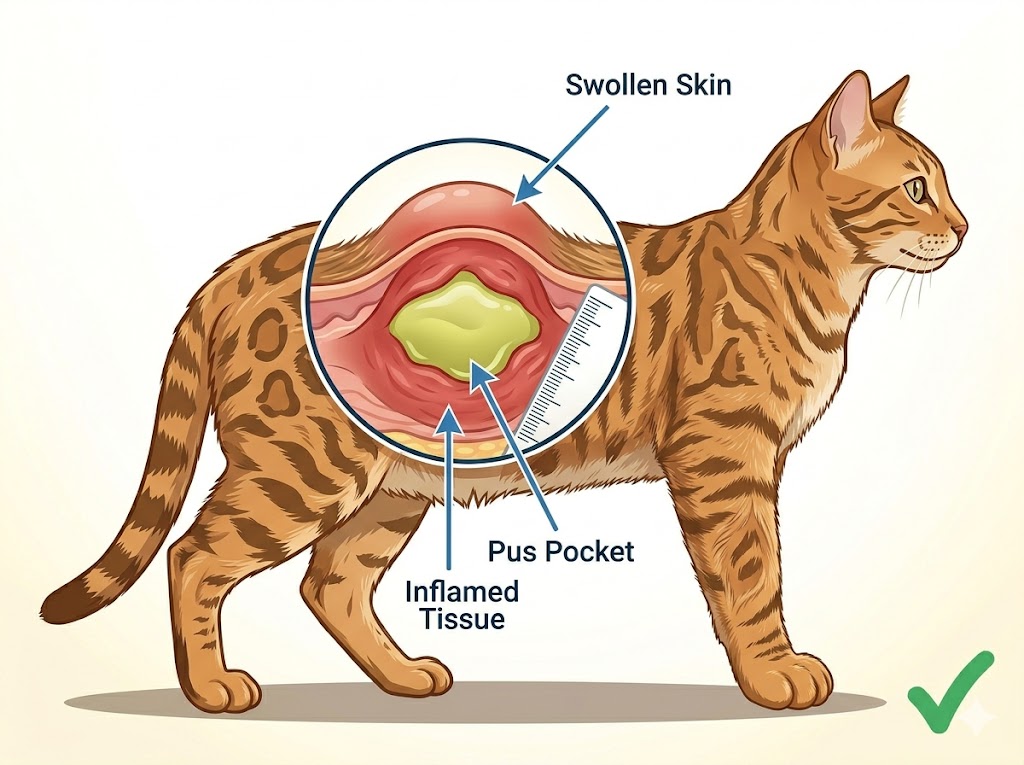
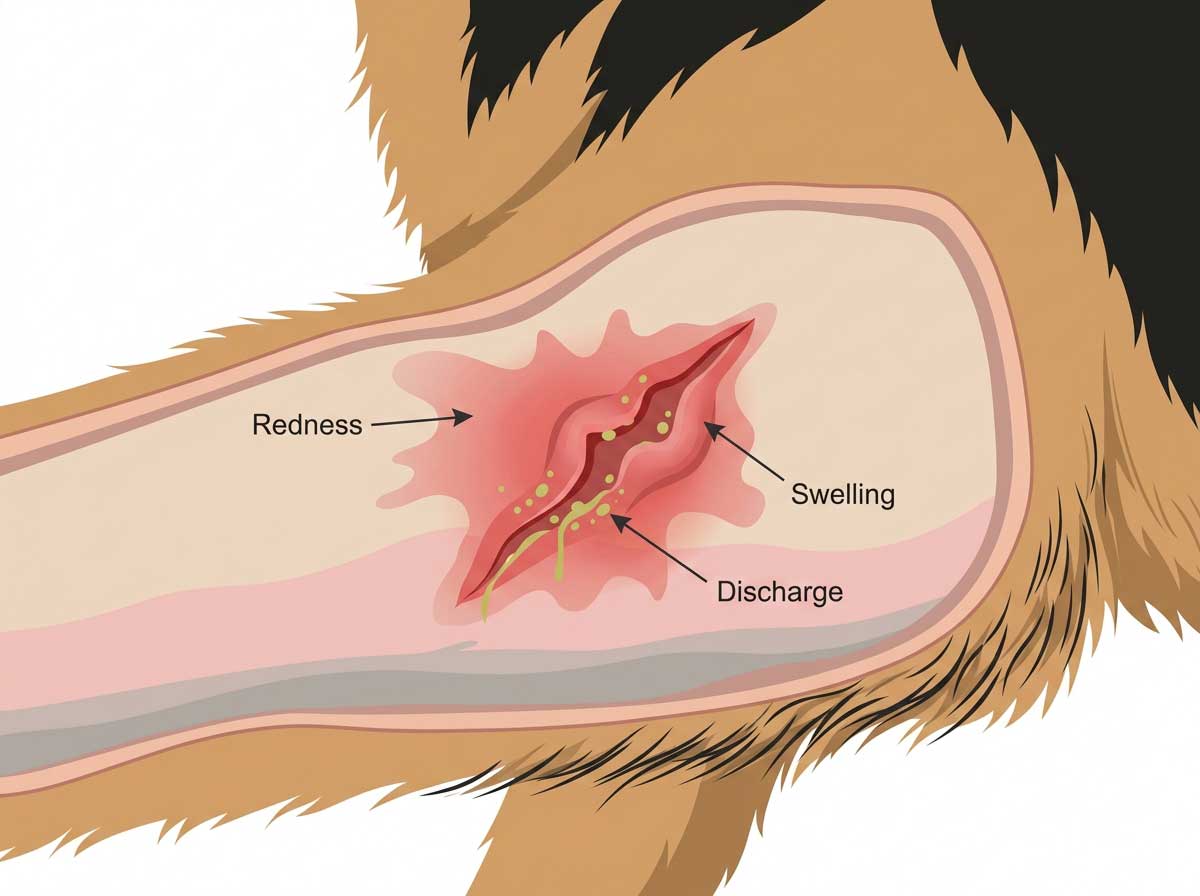
A burst abscess looks alarming — a hole with thick, foul-smelling pus draining out. But a burst abscess is actually the body's way of draining the infection. Here's what to do:
- ✓Don't panic — drainage is better than the infection staying trapped inside
- ✓Gently clean the area with saline and remove any matted fur
- ✓Do NOT squeeze the abscess — let it drain naturally
- ✓Keep the wound open — don't let it seal over before it's fully drained
- ✓See your vet — they'll flush the wound properly and prescribe antibiotics. Even a burst abscess needs professional care to heal properly
- ✓Use an e-collar to prevent licking
When to Skip Home Care and Go Straight to the Vet
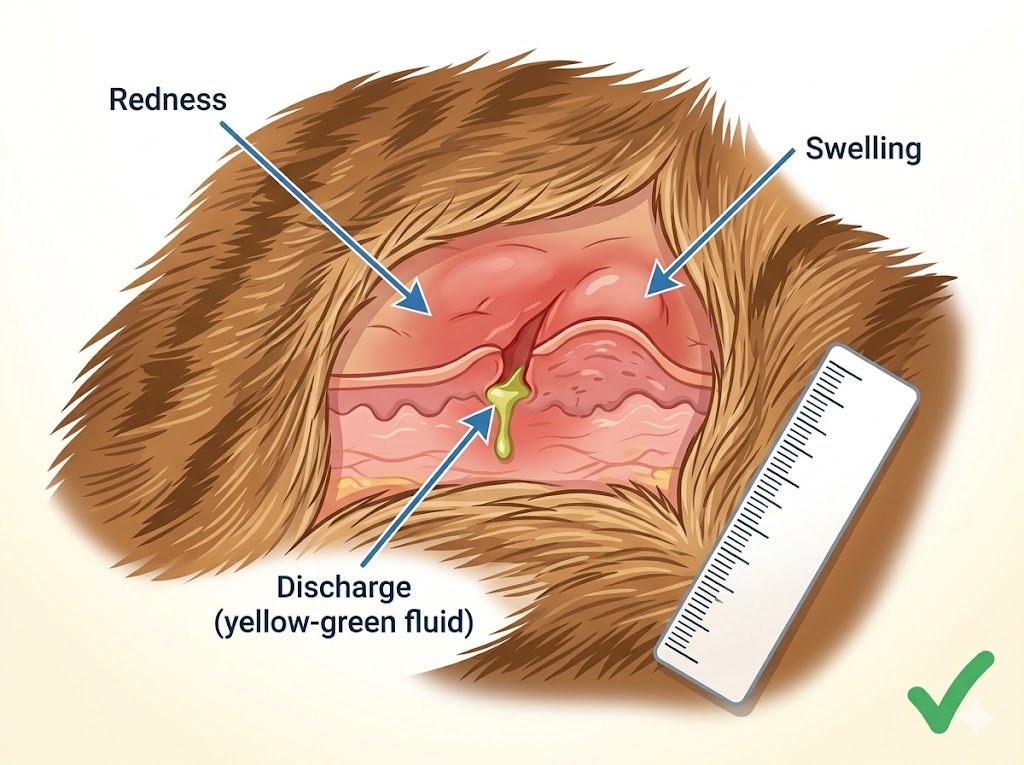
Home care is only appropriate for minor surface wounds. Go to the vet immediately if:
- ✓The wound is from a cat or animal bite (very high infection rate)
- ✓Heavy bleeding that won't stop with 5 minutes of gentle pressure
- ✓You can see deep tissue, fat, muscle, or bone
- ✓The wound is on the chest or abdomen (risk of penetrating injury)
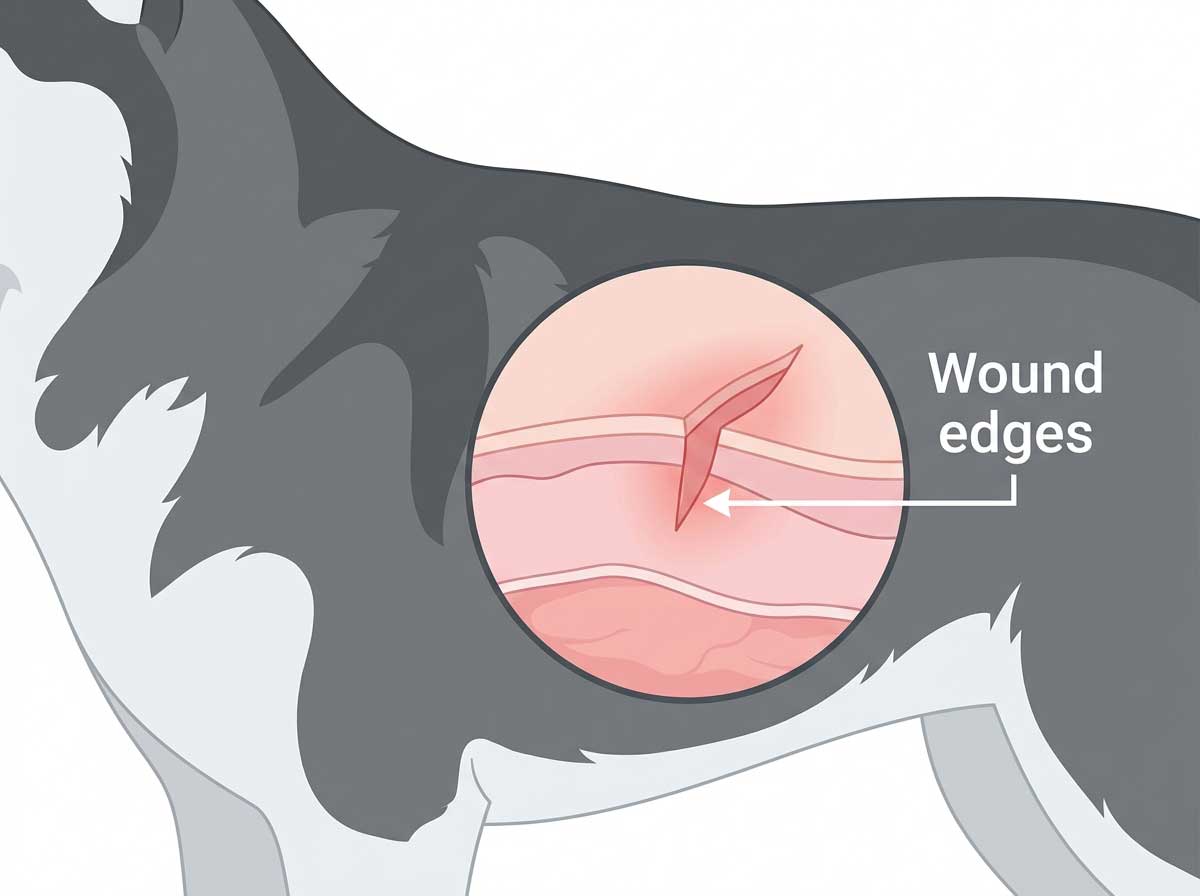
- ✓The wound is deep, gaping, or edges won't come together
- ✓Signs of infection: increasing redness, swelling, pus, foul smell
- ✓A swelling is growing near the wound (developing abscess)
- ✓Your cat has a fever, is lethargic, hiding, or refusing to eat
- ✓The wound is near the eyes, throat, or genitals
- ✓The wound isn't improving after 48 hours of home care
When in doubt, a vet visit is always the safer choice. Cat wounds — especially fight wounds — are notorious for developing serious infections quickly.
Worried About Your Cat's Wound?
Upload a photo and get an instant AI assessment of infection signs, healing stage, and whether you need to see a vet.
Disclaimer: This article is for informational purposes only and is not a substitute for professional veterinary advice. Always consult a licensed veterinarian for diagnosis and treatment of your pet's health conditions.