Dog Paw Yeast Infection: Signs, Treatment & Home Remedies
How to spot a dog paw yeast infection (the "Frito foot" smell), what causes it, and how to treat it at home — plus when you need prescription antifungals.
Published 2026-04-18
If your dog's paws smell like corn chips, Fritos, or old cheese, there's a good chance you're dealing with a yeast infection. Malassezia yeast naturally lives on dog skin in small amounts, but when conditions are right — warm, moist, and itchy — it overgrows and causes one of the most frustrating recurring paw issues dogs get.
The good news: yeast infections are very treatable once you recognize them. The bad news: they almost always come back if you don't address the underlying cause (usually allergies).
What Does a Yeast Paw Infection Look Like?
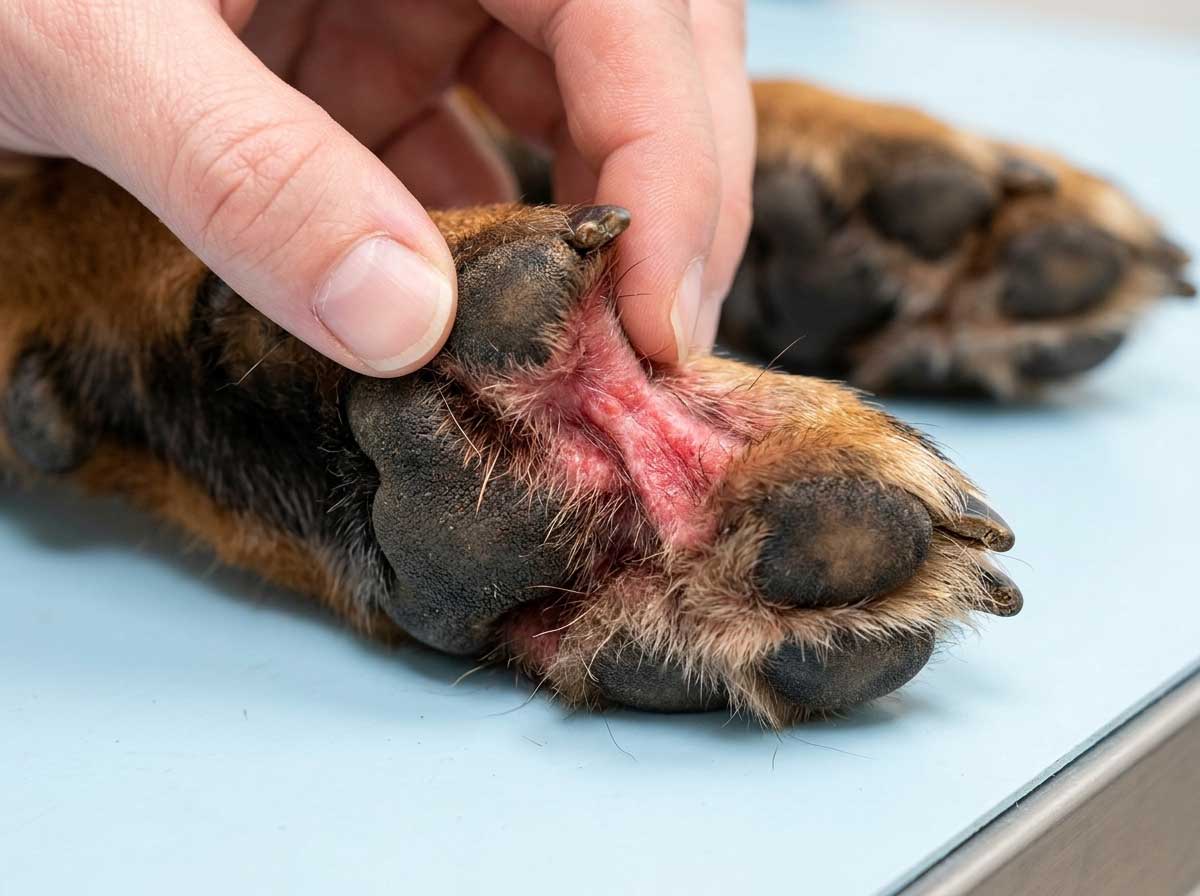
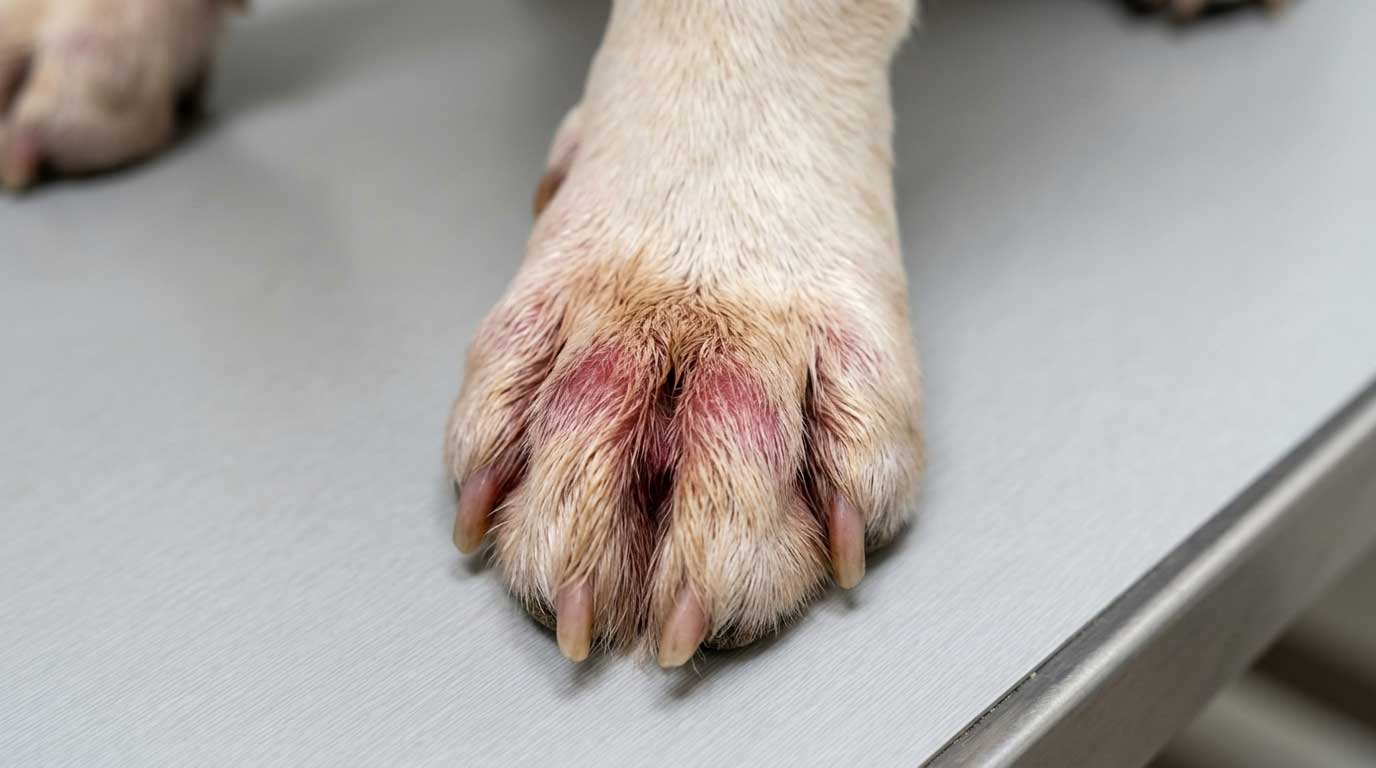
Classic signs of a dog paw yeast infection:
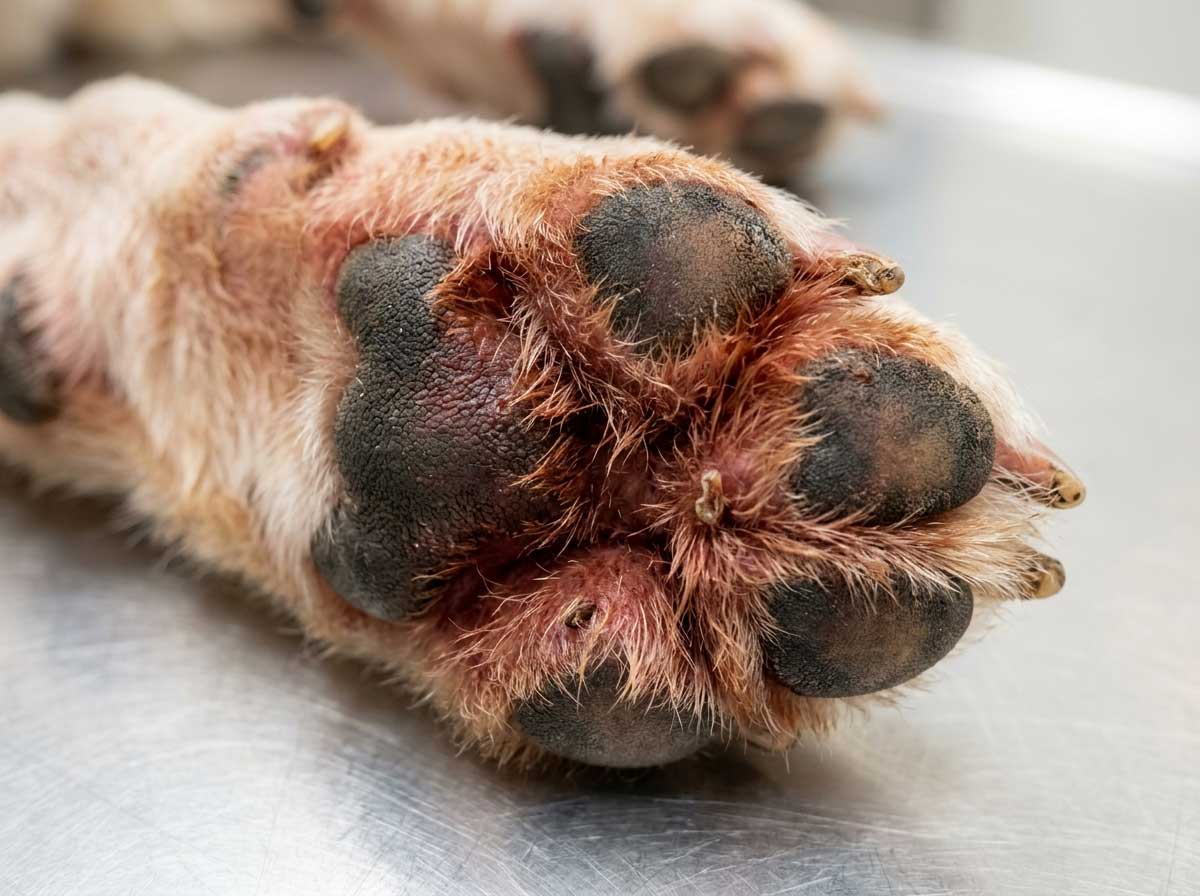
- ✓Red-brown or rust-colored staining on the fur between the toes — this is from saliva + yeast, not blood
- ✓A distinctive musty, corn-chip, or "Frito foot" smell (unmistakable once you've smelled it)
- ✓Greasy, waxy, or slightly oily residue on the skin
- ✓Thickened, darkened (hyperpigmented) paw pad skin in chronic cases
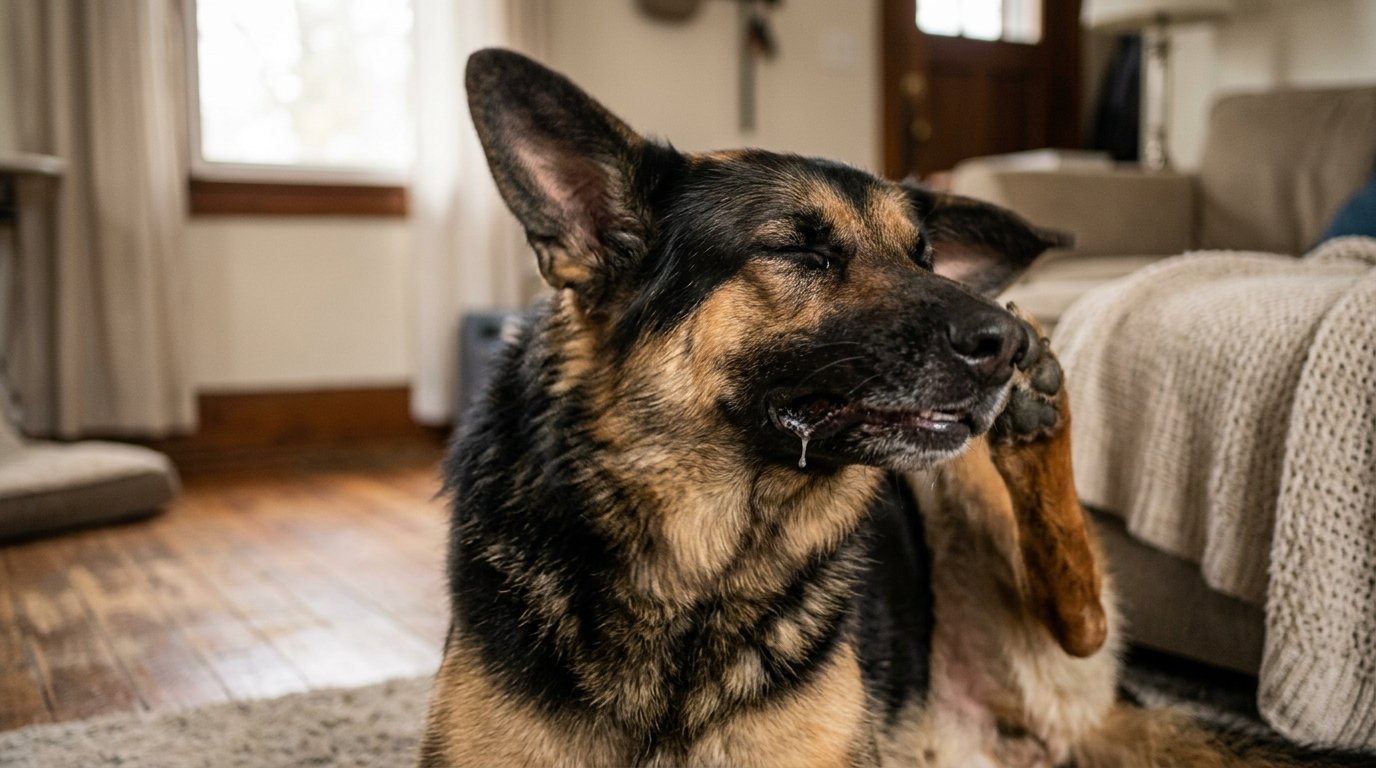
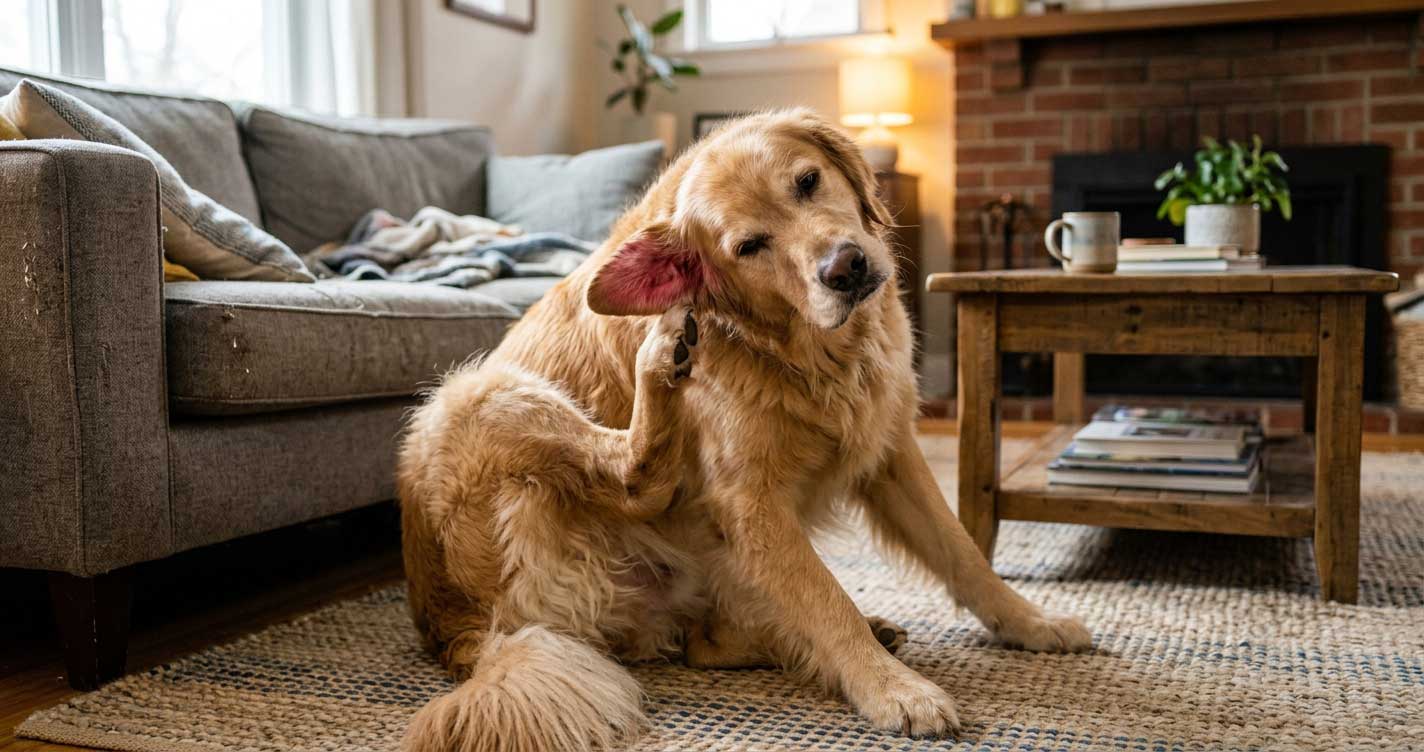
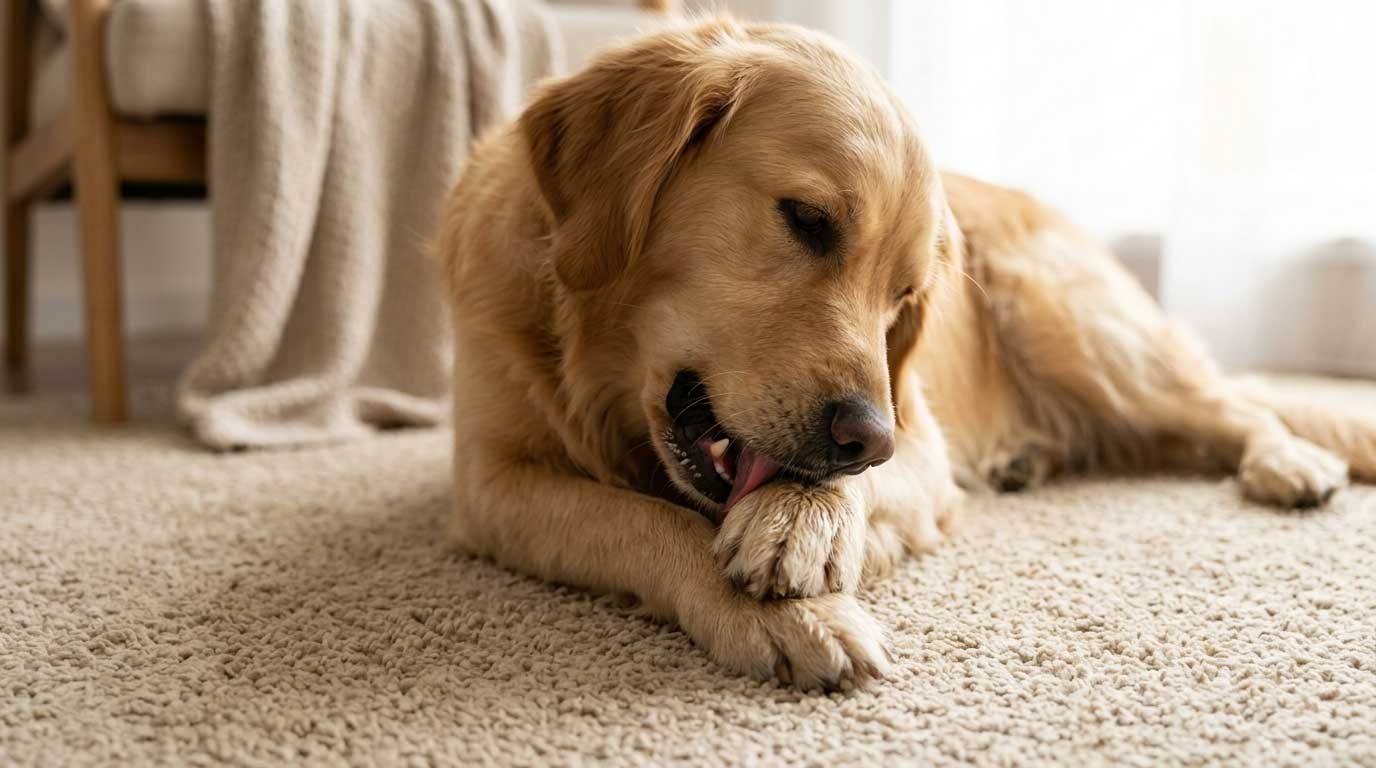
- ✓Constant licking and chewing — yeast is intensely itchy
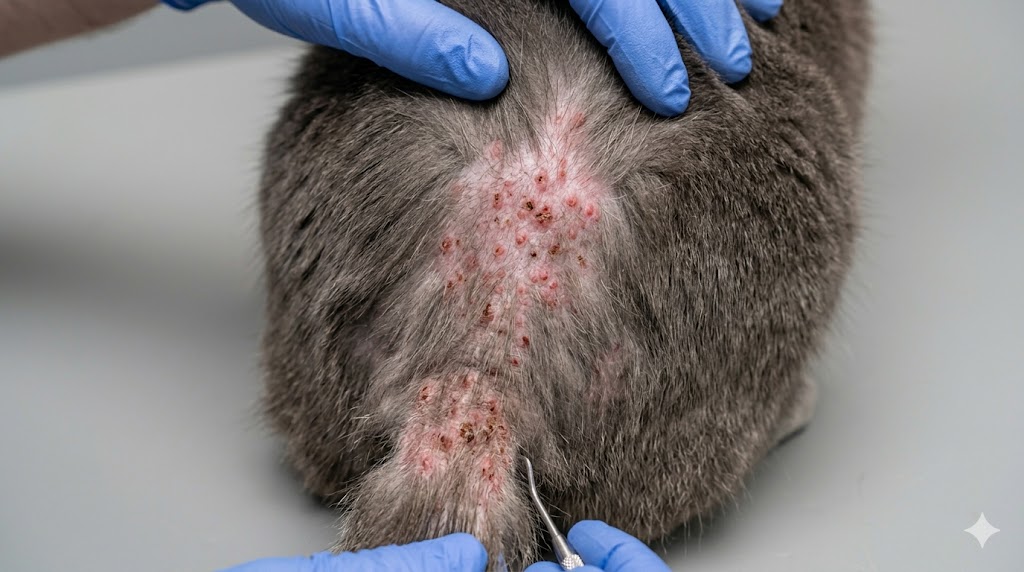
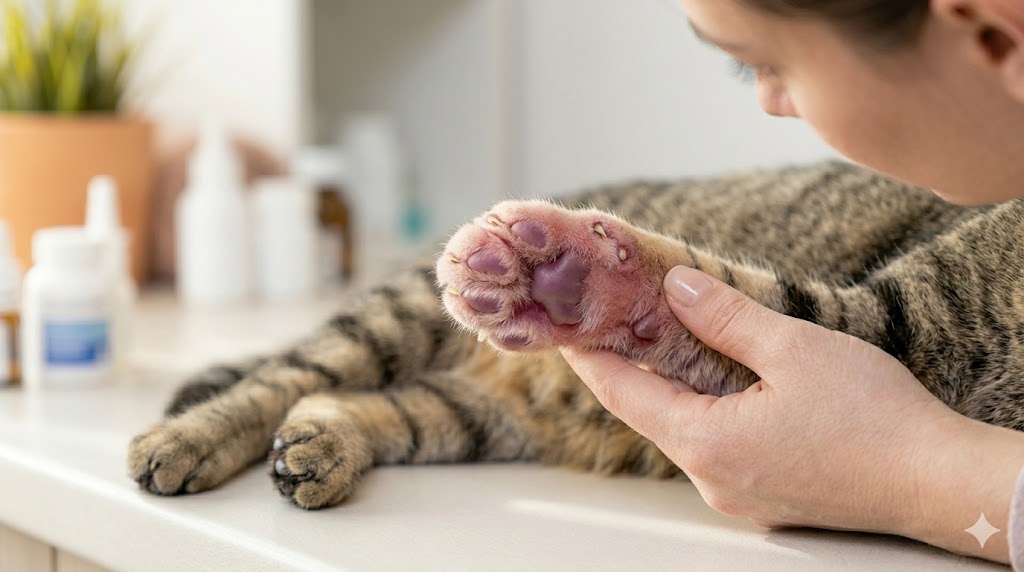
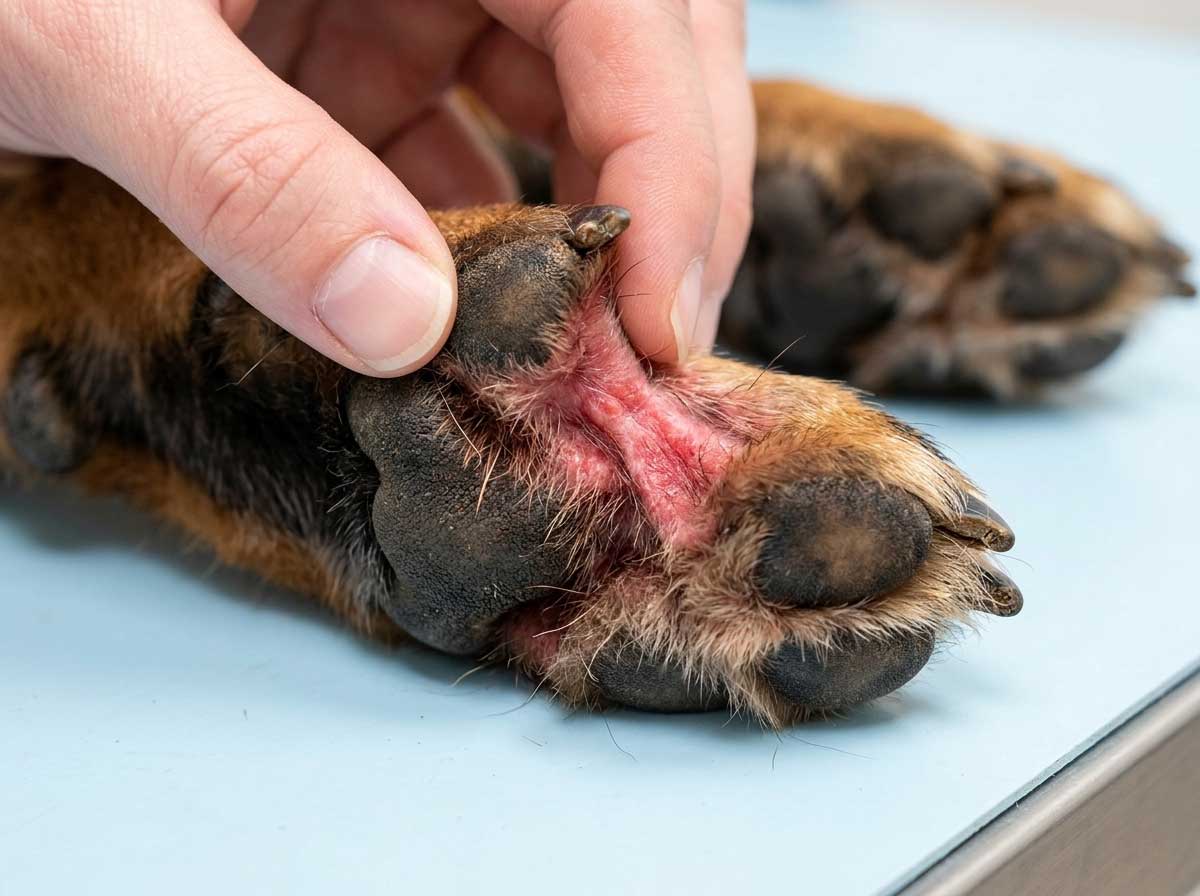
- ✓Redness between the toes and around the paw pads
- ✓Sometimes a gray or pink film on the skin
Yeast usually affects all four paws, though one may be worse than the others. If only one paw is affected, consider bacterial infection or foreign body instead.
What Causes Yeast Overgrowth?
Yeast doesn't just "appear" — it's always there. Something shifts the balance and lets it multiply:
- ✓Allergies (environmental or food) — the #1 trigger; itching leads to licking, licking creates a warm wet environment for yeast
- ✓Immune suppression — illness, steroids, or conditions like Cushing's disease
- ✓Hypothyroidism and other endocrine issues
- ✓Antibiotic use (wipes out healthy skin bacteria, letting yeast dominate)
- ✓Humidity and moisture (swimming dogs, wet paws after walks)
- ✓Breed predisposition — West Highland White Terriers, Cocker Spaniels, Basset Hounds, and Shar-Peis are especially prone
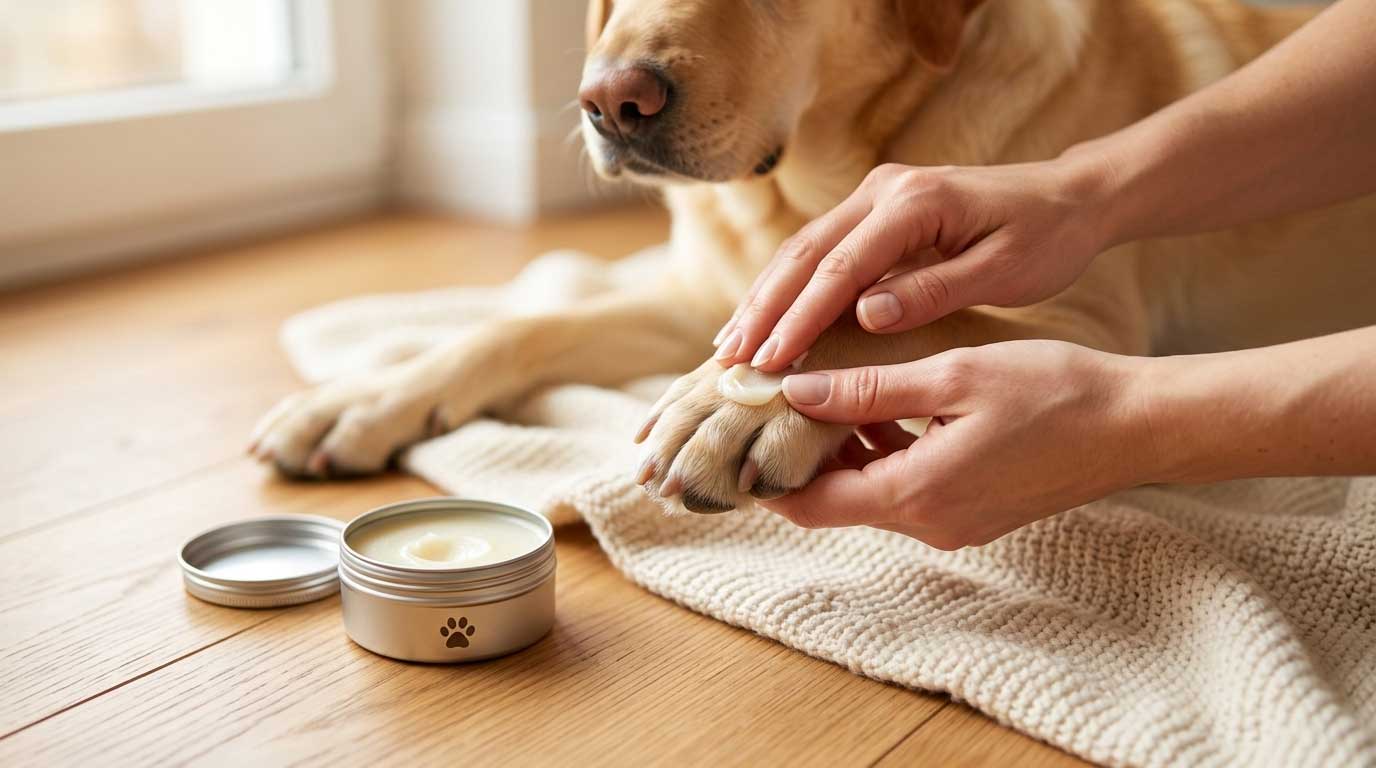
Home Treatment for Mild Yeast Infections
If caught early and the skin isn't raw or severely inflamed, you can often clear a yeast infection at home over 2-4 weeks.
Antifungal Foot Soaks
- ✓Povidone-iodine soak: dilute to iced-tea color, soak 5 minutes, 1-2x daily
- ✓Chlorhexidine solution (2%): soak or spray on paws, 1-2x daily
- ✓Apple cider vinegar rinse: 1:3 ACV:water, use on intact skin only (stings broken skin)
Medicated Shampoos
Shampoos containing ketoconazole, miconazole, or chlorhexidine are the gold standard. Brands: Malaseb, Douxo Pyo, Virbac KetoChlor. Work the shampoo into the paws, leave it on for 10 minutes (use a timer), then rinse and dry thoroughly. Use 2x per week until clear.
Keep Paws Dry
Yeast needs moisture. After walks, after baths, after swimming — dry between the toes with a towel or paper towels. This single habit shift cuts recurrence rates dramatically.
When Home Treatment Isn't Enough
See a vet if:
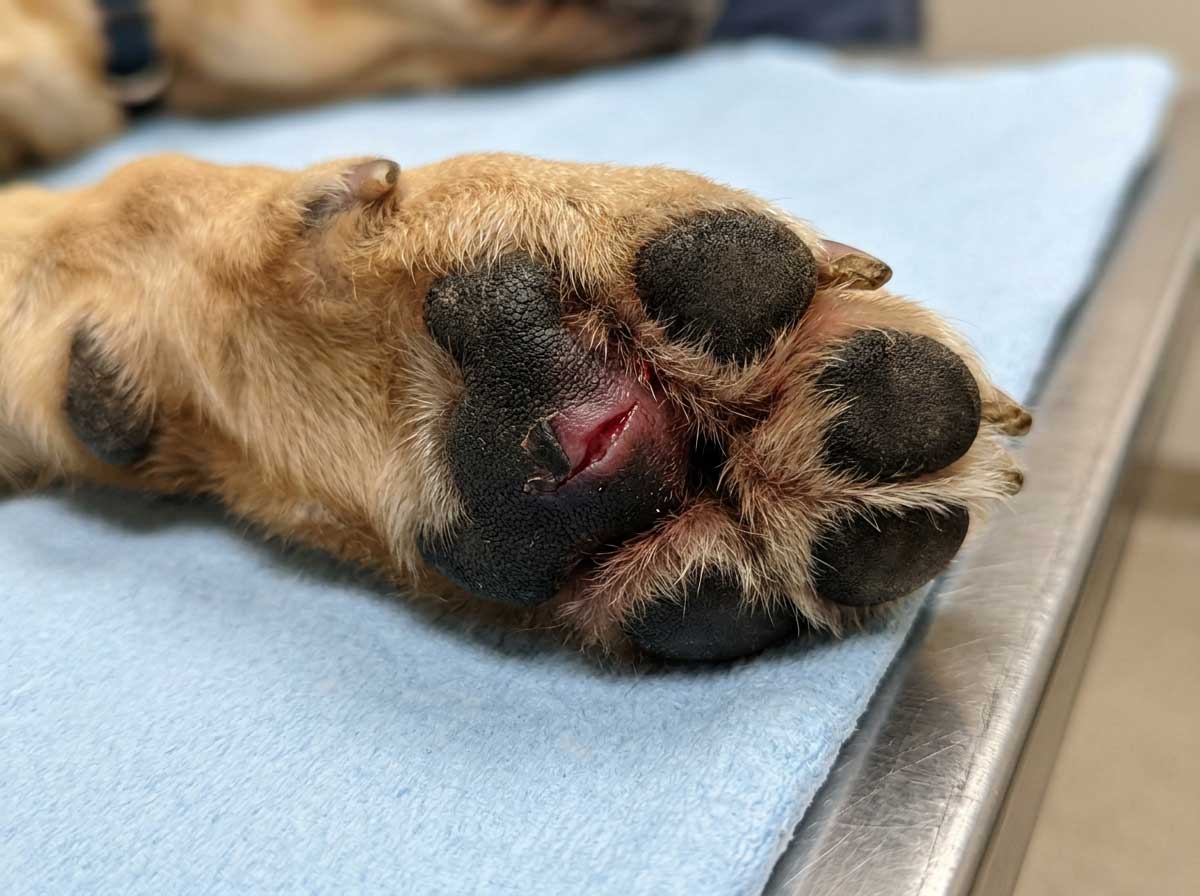
- ✓Paws are extremely red, swollen, or raw
- ✓You've been treating for 3-4 weeks without clear improvement
- ✓Your dog is in obvious pain or not walking well
- ✓The skin has deep cracks or fissures
- ✓Recurrence happens within a few weeks of clearing
The vet may prescribe oral antifungals (ketoconazole, fluconazole, or itraconazole) for stubborn cases. A skin culture can confirm whether it's yeast alone, bacteria, or both (mixed infections are common).
Preventing Recurrence
Yeast will come back if you don't address the underlying trigger. The playbook:
- ✓Work with your vet to identify allergies (environmental, food, or both)
- ✓Wipe paws with a chlorhexidine wipe after every walk, especially in pollen season
- ✓Feed a low-carb diet — yeast feeds on sugars; grain-free or low-glycemic foods can help
- ✓Add omega-3 supplements to reduce skin inflammation
- ✓Use medicated shampoo preventatively 1x every 2 weeks in allergy season
- ✓Consider long-term allergy medications (Apoquel, Cytopoint) if recurrences are severe
Yeast vs Bacterial Infection — How to Tell
Yeast smells musty/corn-chip and has red-brown staining. Bacterial smells foul/rotten and has yellow or green discharge. Mixed infections (both) are common — they need combined treatment. If you're unsure which you're seeing, a photo check can help narrow it down.
Yeast Infection, Bacterial, or Something Else?
Upload a photo of your dog's paw and get AI analysis of likely infection type and severity.
Disclaimer: This article is for informational purposes only and is not a substitute for professional veterinary advice. Always consult a licensed veterinarian for diagnosis and treatment of your pet's health conditions.