What is Pillow Foot in Cats? Causes, Signs & Pictures
Pillow foot in cats (plasma cell pododermatitis) causes soft puffy paw pads. Learn the signs, causes, whether it's contagious, and what to do about it.
Published 2026-04-18
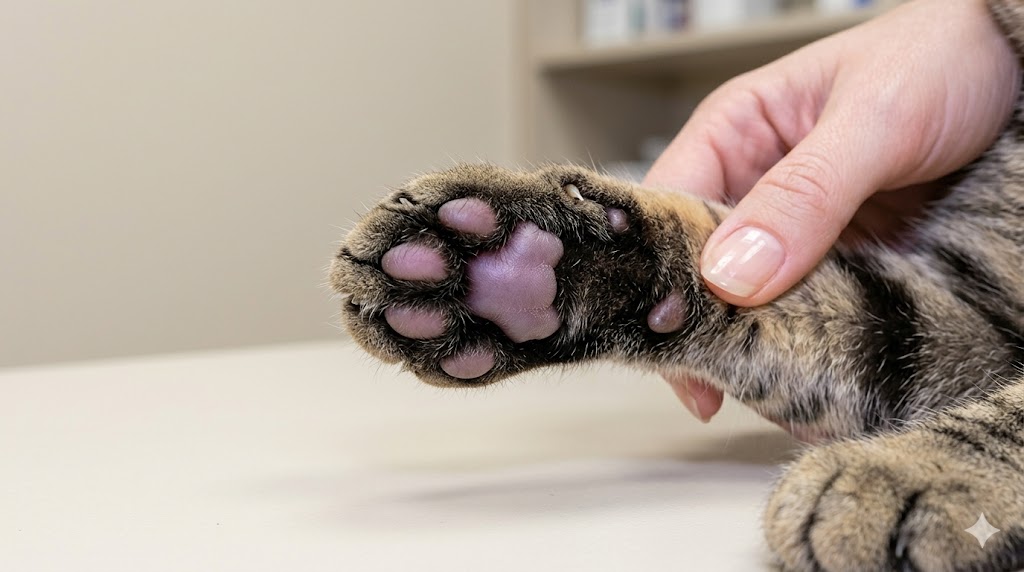
If you noticed one of your cat's paw pads suddenly looks soft, puffy, and "pillowy" — like a miniature water balloon — you're likely looking at pillow foot, a cat-specific condition with a surprising name that describes exactly what it looks like. The medical name is plasma cell pododermatitis, and while it's not common, it's distinctive enough that most cat owners recognize something is off the moment they see it.
Here's what pillow foot is, what causes it, and when you need to do something about it.
What Pillow Foot Looks Like
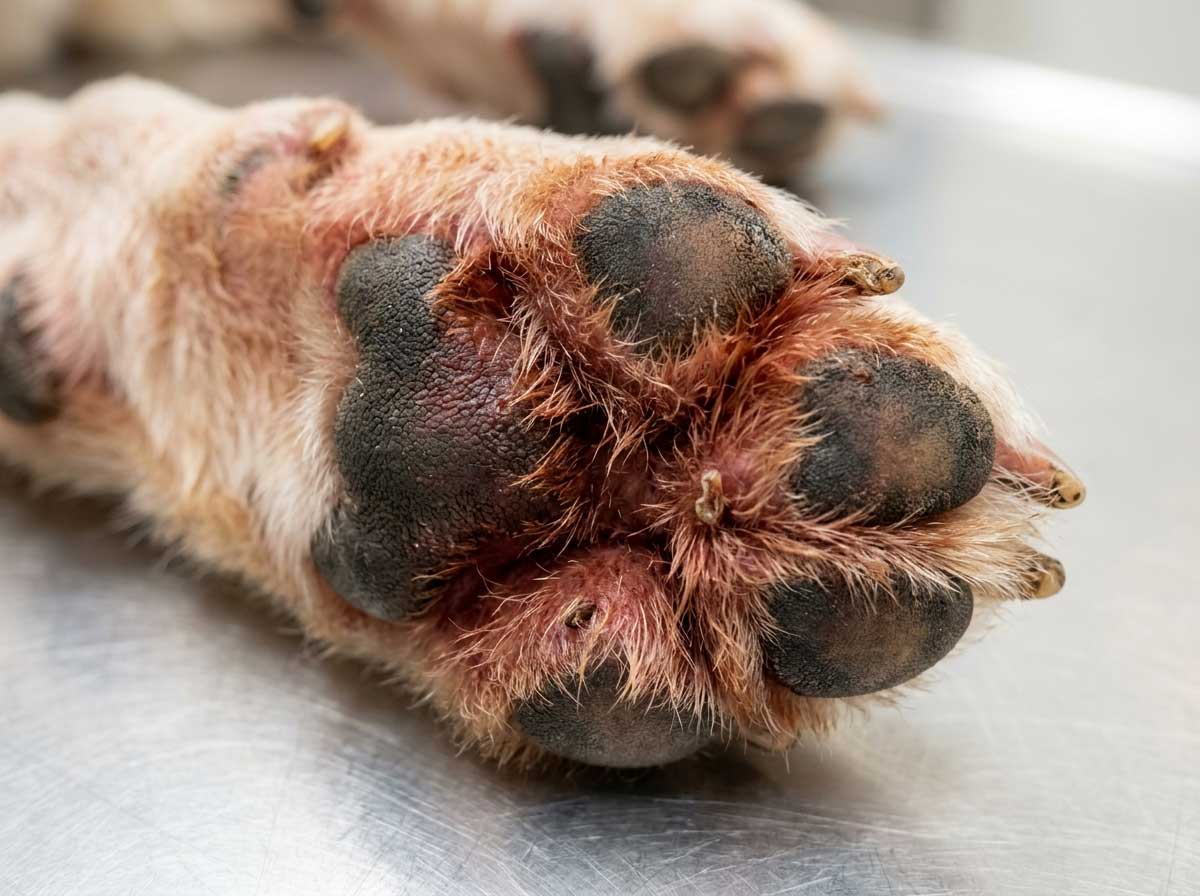
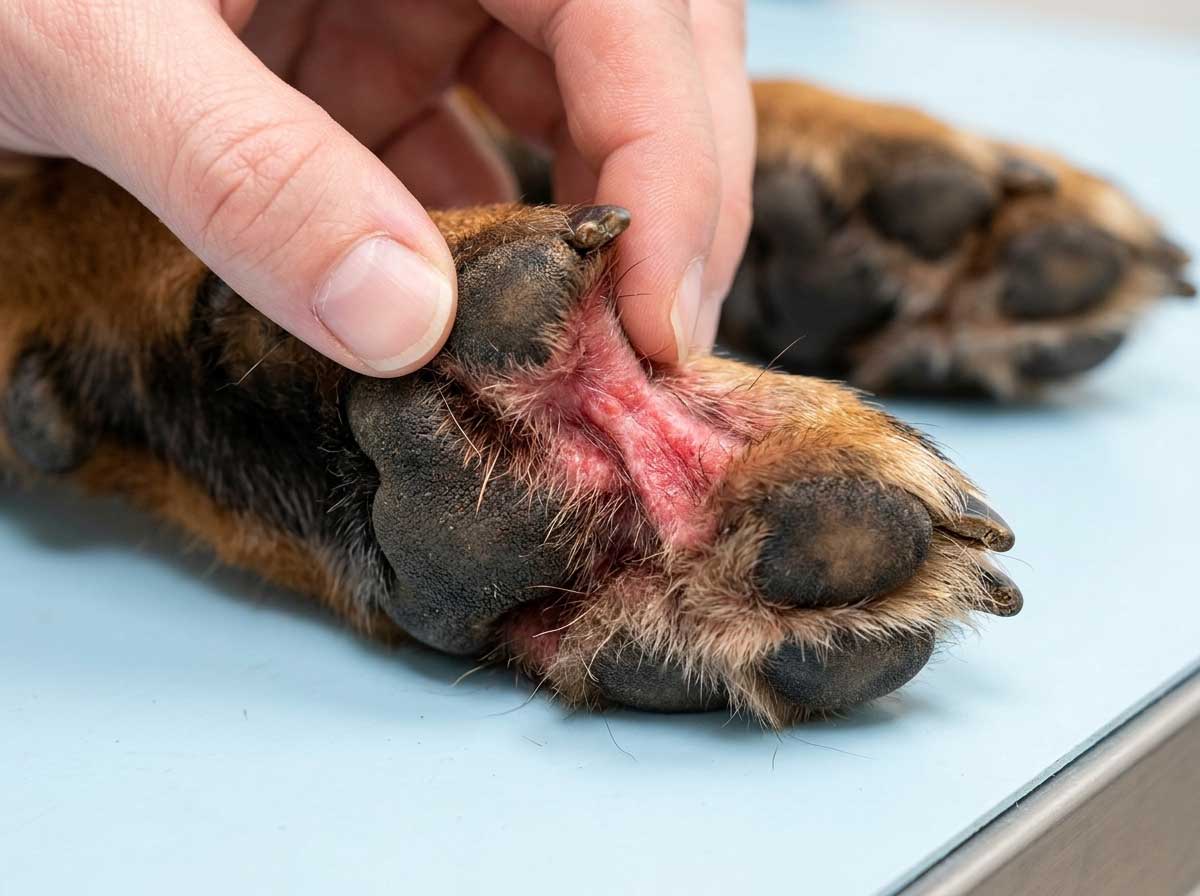
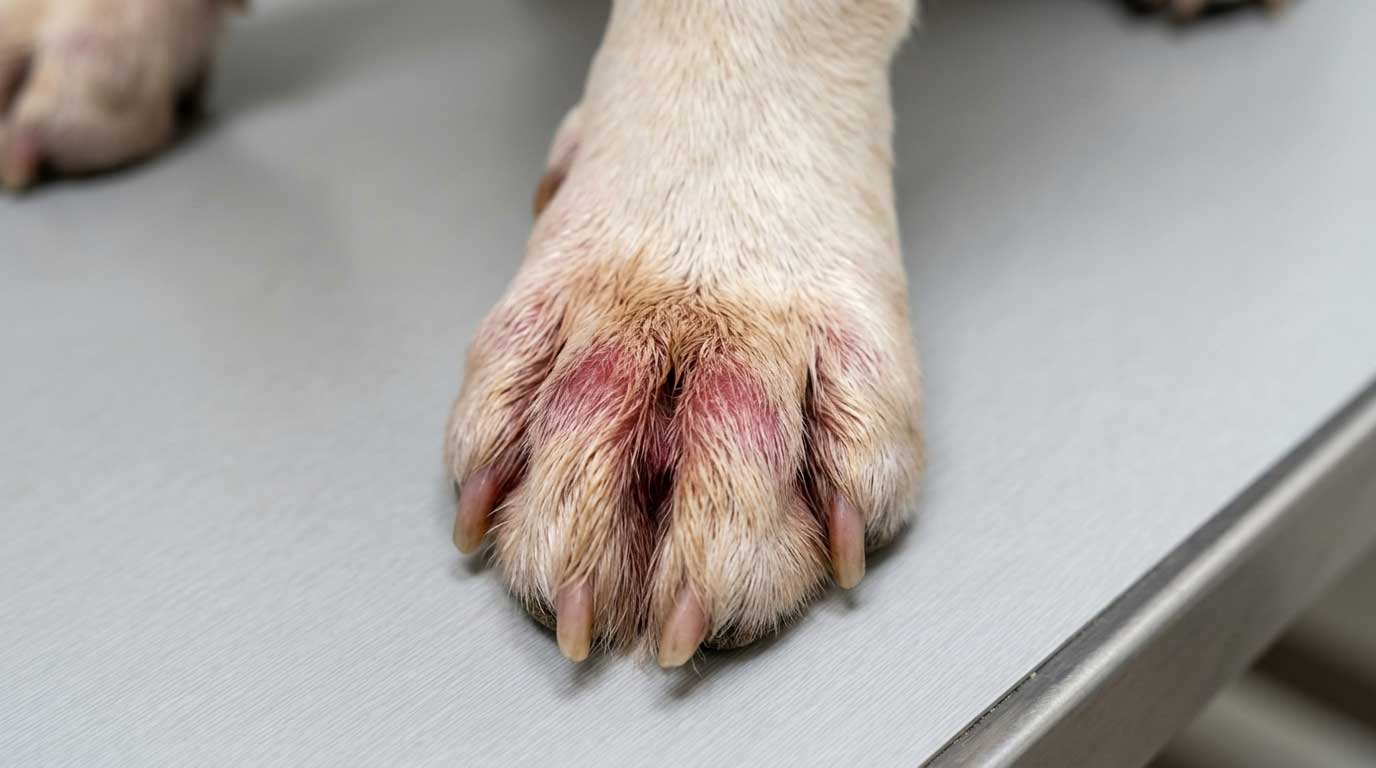
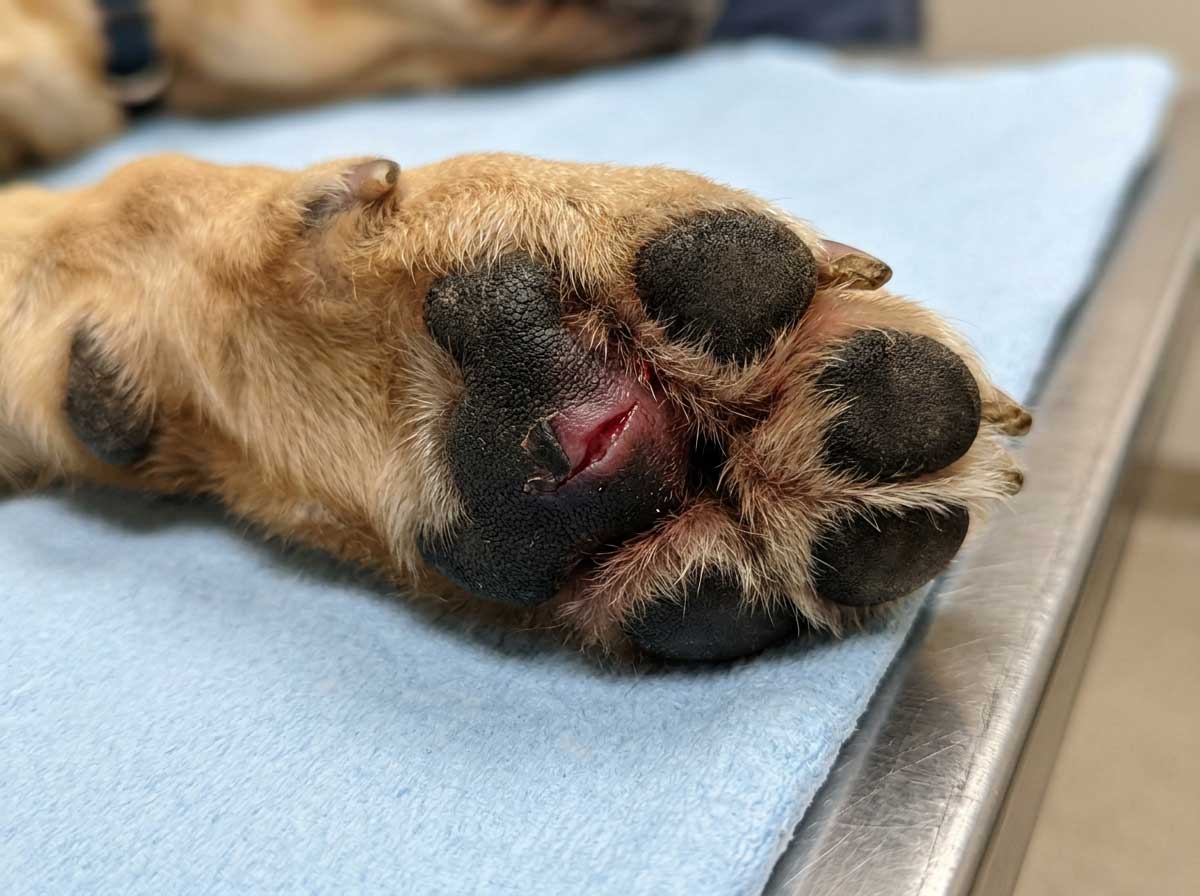
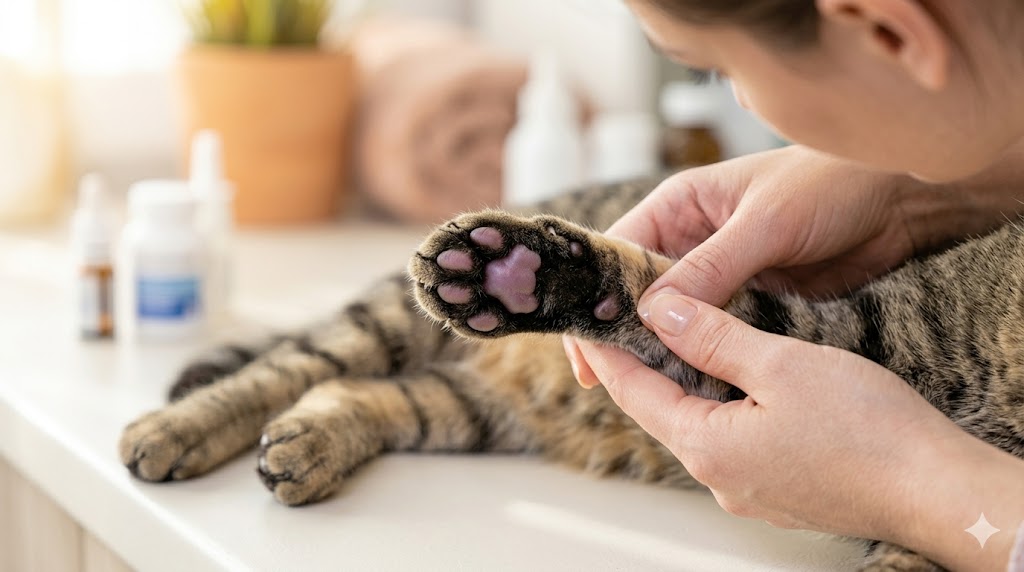
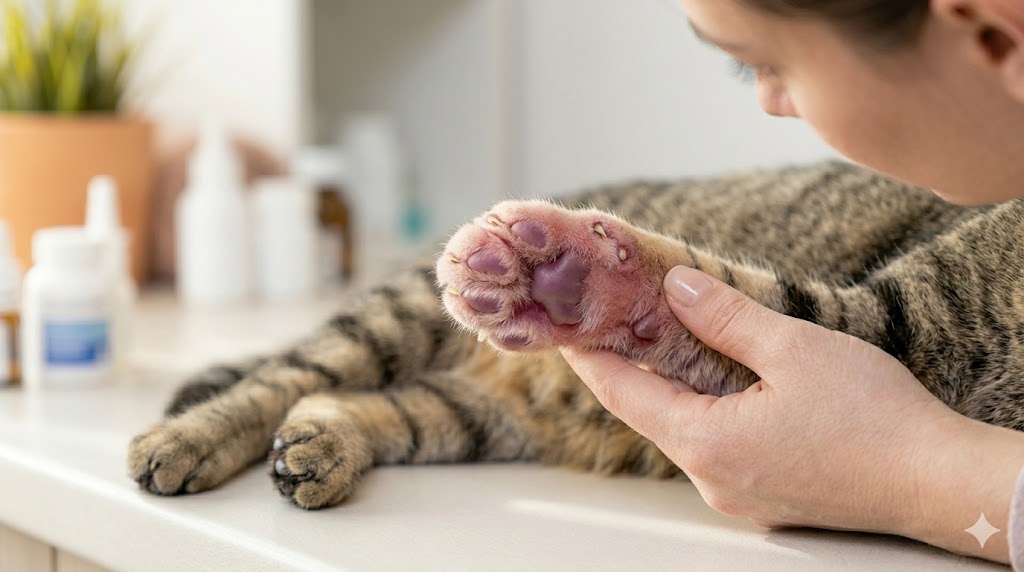
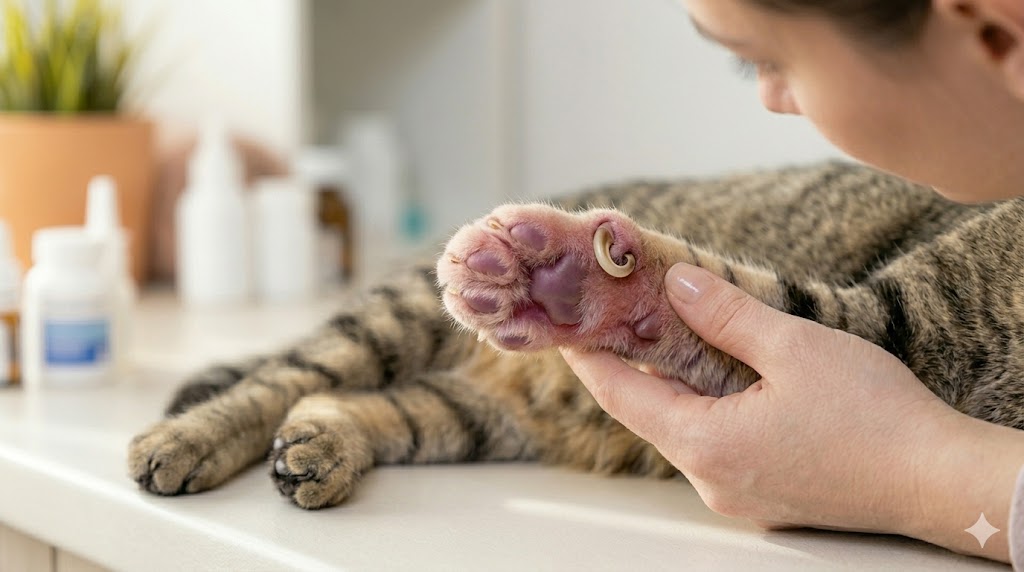
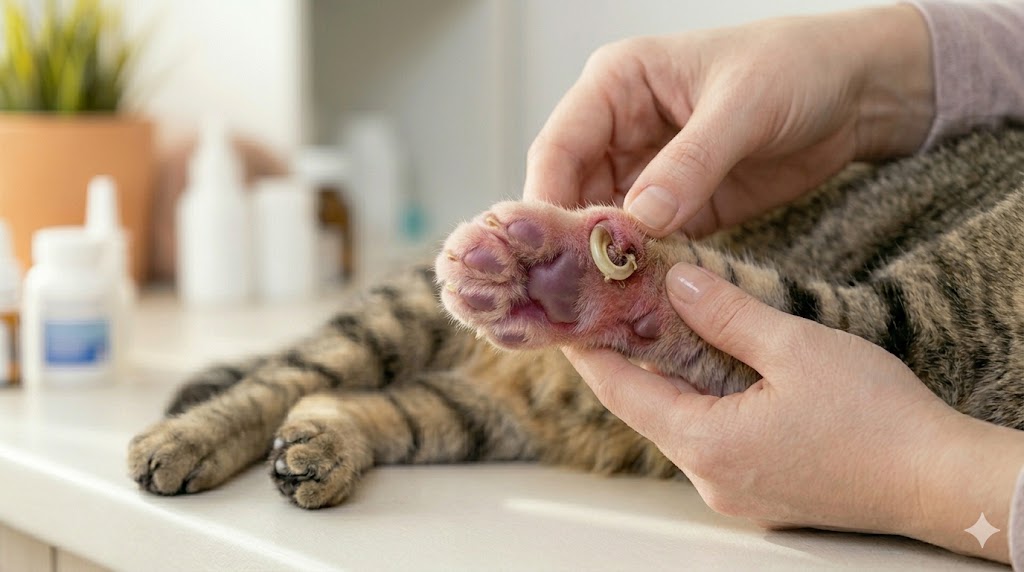
Pillow foot affects the central (metacarpal/metatarsal) pad on one or more paws. The classic presentation:
- ✓The central pad becomes soft, squishy, and enlarged — it feels like a little water balloon instead of the usual firm leather
- ✓The pad often develops a violet, purple, or bluish tint (a subtle color shift)
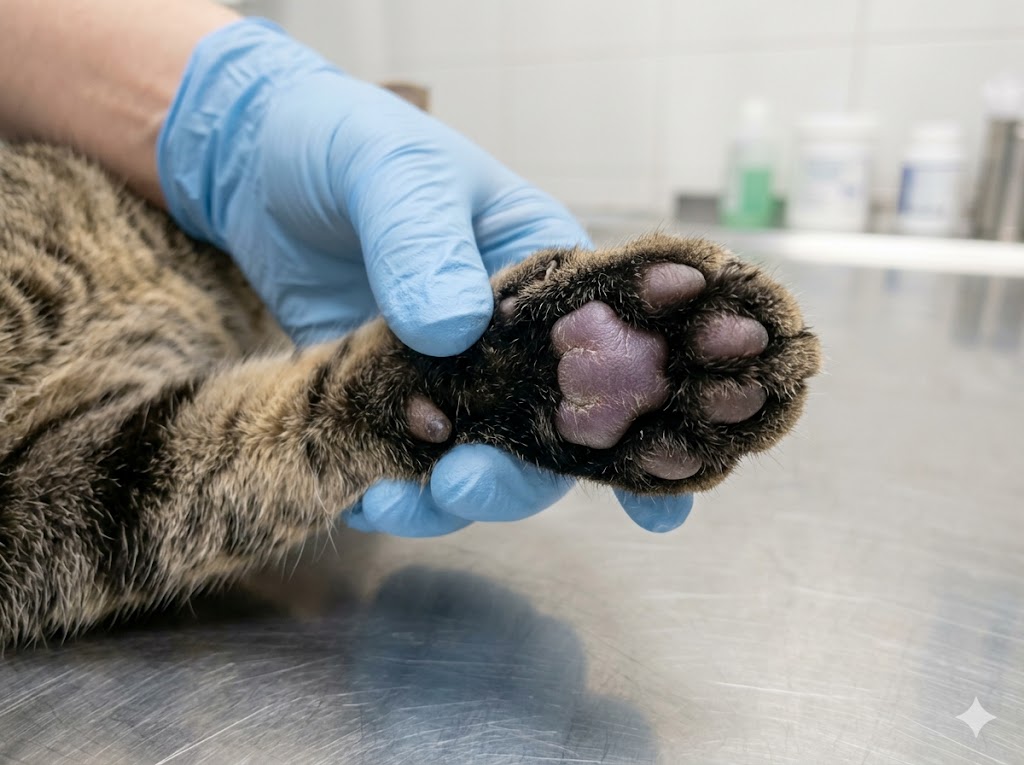
- ✓A cross-shaped crease may appear across the center of the pad
- ✓The pad surface becomes scaly or grainy-looking
- ✓In advanced cases, the pad may ulcerate, bleed, or ooze
- ✓Your cat may or may not limp — early stages often show no pain at all
Most cats have one or two pads affected, not all four. The absence of obvious pain or limping is actually a big clue pointing away from injury and toward pillow foot.
The Scientific Name: Plasma Cell Pododermatitis
Plasma cell pododermatitis is the medical name. "Plasma cell" refers to the type of immune cell that infiltrates the pad tissue and causes the swelling; "pododermatitis" simply means "inflammation of the foot skin." Under a microscope, vets see massive numbers of plasma cells (a kind of white blood cell that produces antibodies) clustered in the pad, which is what makes the pad fill up and go soft.
What Causes Pillow Foot in Cats?
The honest answer is that researchers still aren't 100% sure. What's strongly suspected:
- ✓Immune dysregulation — the immune system mounts an inflammatory response against the cat's own pad tissue
- ✓FIV (feline immunodeficiency virus) link — a significant portion of cats with pillow foot test positive for FIV, so FIV testing is recommended
- ✓FeLV (feline leukemia virus) and other chronic infections are sometimes associated
- ✓Genetic predisposition is suspected in some lines
It is NOT caused by injury, allergies to food, or external toxins. It's fundamentally an immune condition.
How Rare is Pillow Foot?
Pillow foot is uncommon but not rare. Most veterinarians see several cases a year in a general practice. It tends to affect young to middle-aged cats (average around 4-7 years), with no strong breed or sex bias. If your cat has pillow foot, you're dealing with something your vet has definitely seen before — the diagnosis is usually straightforward once they see the pad.
Can Cat Litter Cause Pillow Foot?
No. Cat litter does not cause pillow foot. This is a frequent question because owners notice their cat walking on litter with a puffy pad and wonder if the litter is irritating it. The reality is the other way around: pillow foot is already there, and certain litters (dusty, fragranced, or heavily perfumed clumping clay) can IRRITATE an already affected pad and slow healing. Once pillow foot is diagnosed, switching to a soft, unscented, low-dust litter (paper pellets, wood pellets, or silica crystals) can help, but the root cause is immune-mediated — not environmental.
Is Pillow Foot Contagious?
No — pillow foot itself is not contagious between cats, and certainly not to humans. It cannot be caught by contact. However, if FIV is the underlying cause in a specific cat, FIV itself IS contagious to other cats through deep bite wounds (though not through casual contact). This is one reason FIV testing is part of the workup.
When to See a Vet
See a vet within 1-2 weeks if:
- ✓You notice a newly soft, puffy paw pad
- ✓There's any color change (violet, purple, or deep bluish tint)
- ✓Your cat starts limping or favoring a paw
- ✓The pad surface becomes scaly or develops cross-shaped creases
Sooner (within days) if:
- ✓The pad has ulcerated or is bleeding
- ✓There's discharge, swelling that keeps growing, or signs of infection
- ✓Your cat is in obvious pain or refuses to walk
- ✓Multiple paws are affected severely
Mild cases sometimes resolve on their own in 3-6 months, but most need treatment to prevent progression. The diagnosis is confirmed by a vet's physical exam and sometimes a biopsy.
Not sure whether the puffy pad you're seeing is really pillow foot, an abscess, or something else? An AI photo check can help narrow it down in seconds.
Is It Pillow Foot or Something Else?
Upload a photo of your cat's paw and get an instant AI assessment of likely conditions — pillow foot, abscess, infection, or injury.
Disclaimer: This article is for informational purposes only and is not a substitute for professional veterinary advice. Always consult a licensed veterinarian for diagnosis and treatment of your pet's health conditions.