How to Stop a Dog from Licking Their Paws: Home Remedies That Actually Work

Practical home remedies to stop compulsive paw licking in dogs — soaks, e-collars, topical treatments, and long-term fixes. Plus when home care isn't enough.

Published 2026-04-18
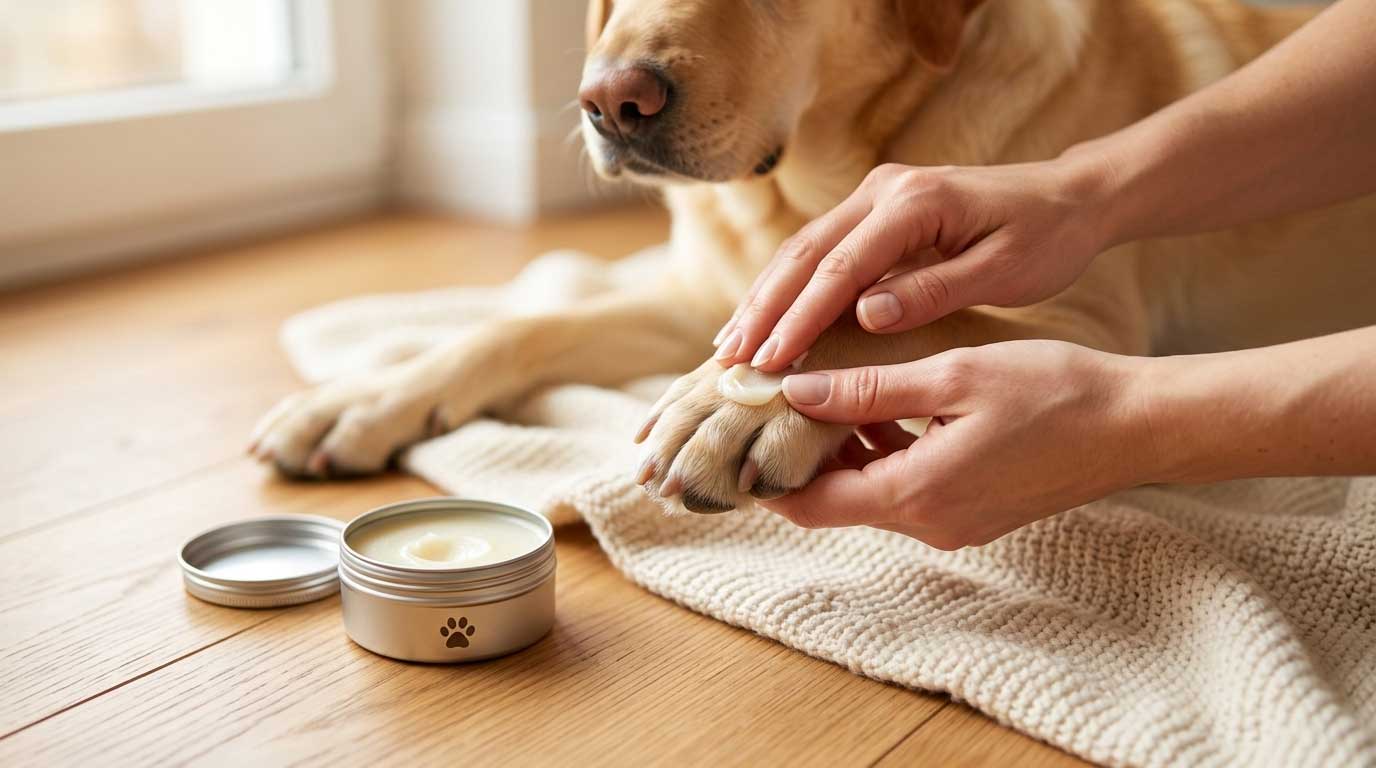
Owner applying paw balm to stop dog from licking paws

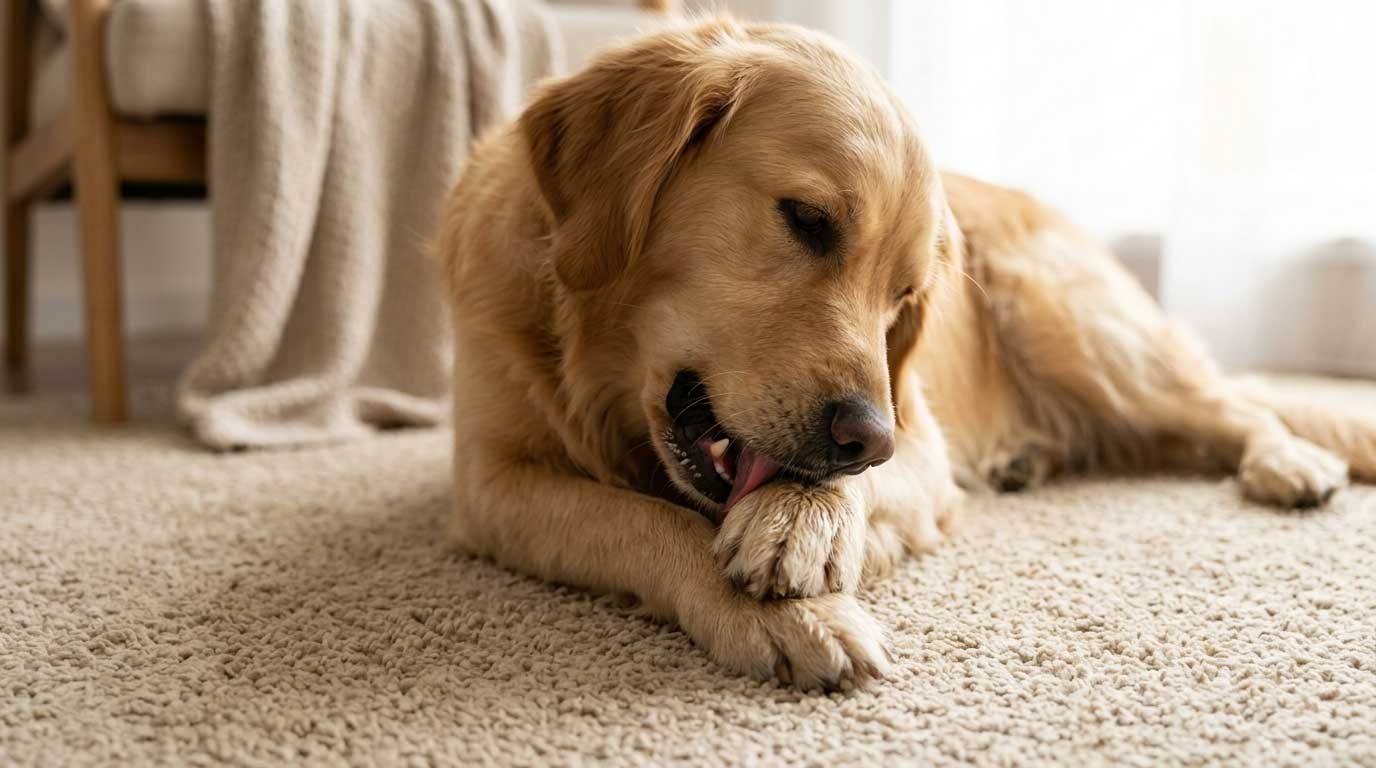
Once a dog starts obsessively licking their paws, it's hard to stop — the itch-lick-inflame cycle feeds itself. Stopping the licking is half the battle; the other half is addressing why they're doing it in the first place. Here are the home remedies that actually work, in order of how fast they help.

Step 1: Break the Cycle (Stop the Licking Physically)

Before any topical remedy can work, you have to stop the licking. Otherwise you're just giving your dog flavored paste to consume.

E-collar (Cone)

The classic "cone of shame" is the most reliable way to prevent paw licking. Newer soft fabric cones and inflatable donut collars are more comfortable and work for most dogs. Your dog needs to wear it 24/7 until the paw heals — skipping overnight undoes days of progress.

Paw Booties or Socks

Dog booties or medical socks (Pawz, Ruffwear) physically cover the paw. They're less intrusive than a cone but only work if your dog doesn't chew them off. Use tape or a vet wrap at the top to keep them on.

Bitter-Tasting Sprays

Sprays like Bitter Apple or Grannick's Bitter Apple spray taste awful to most dogs. Spray on the paw directly. Works for some dogs; determined lickers ignore it.

Step 2: Soothe the Paw (Foot Soaks)

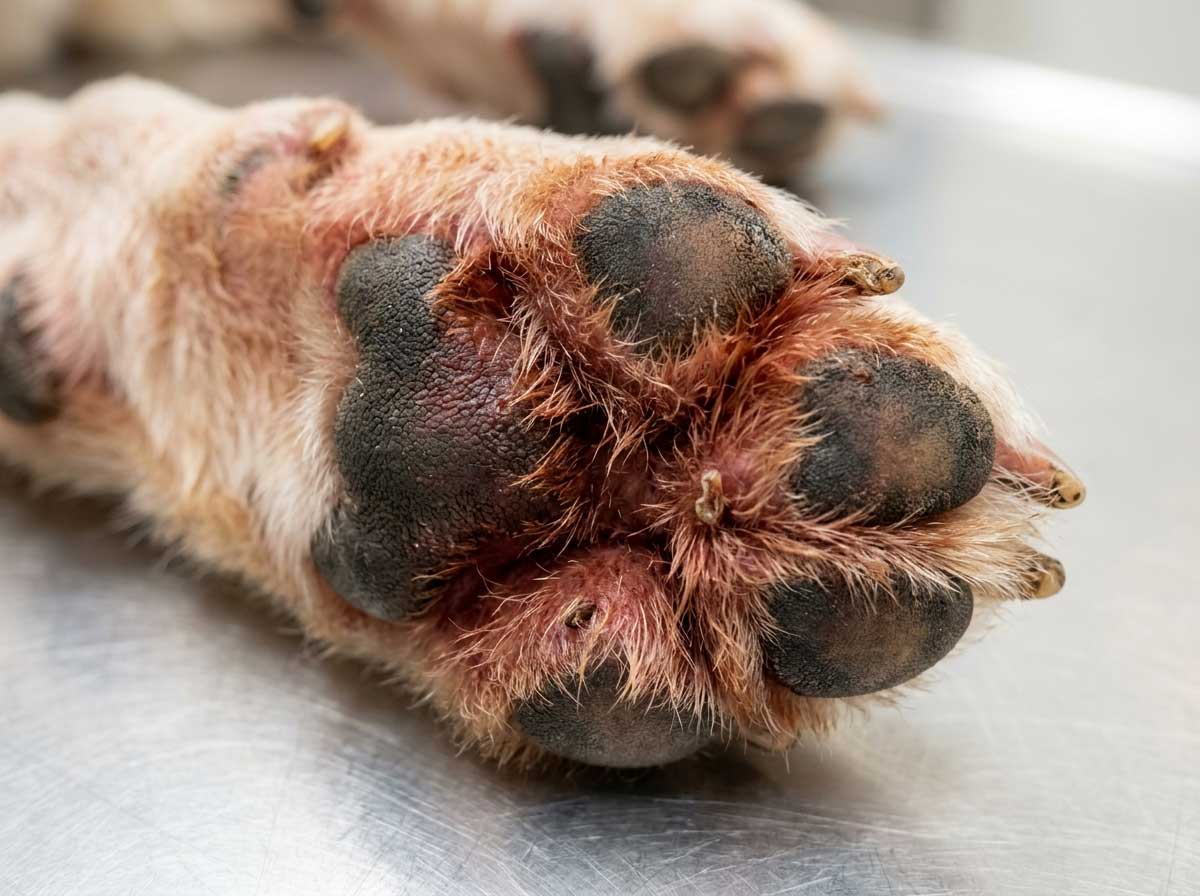
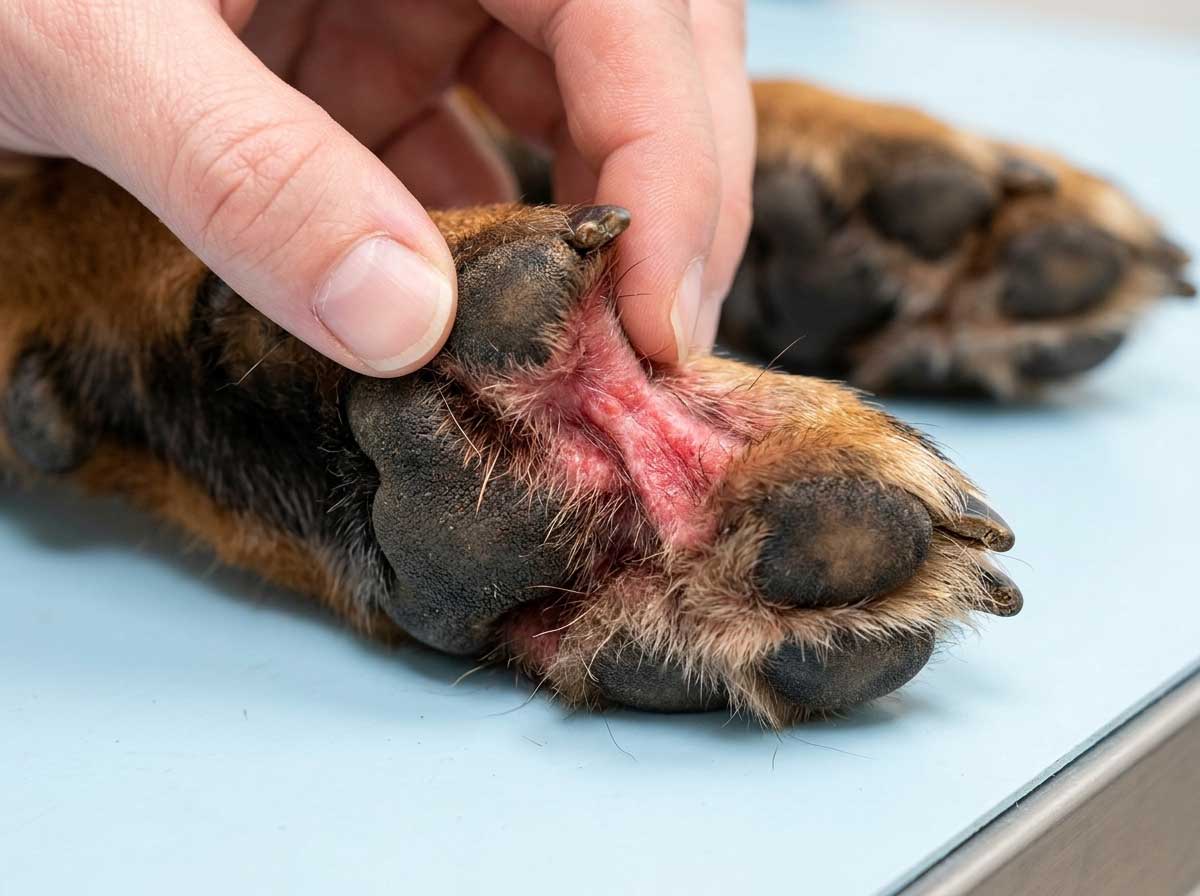
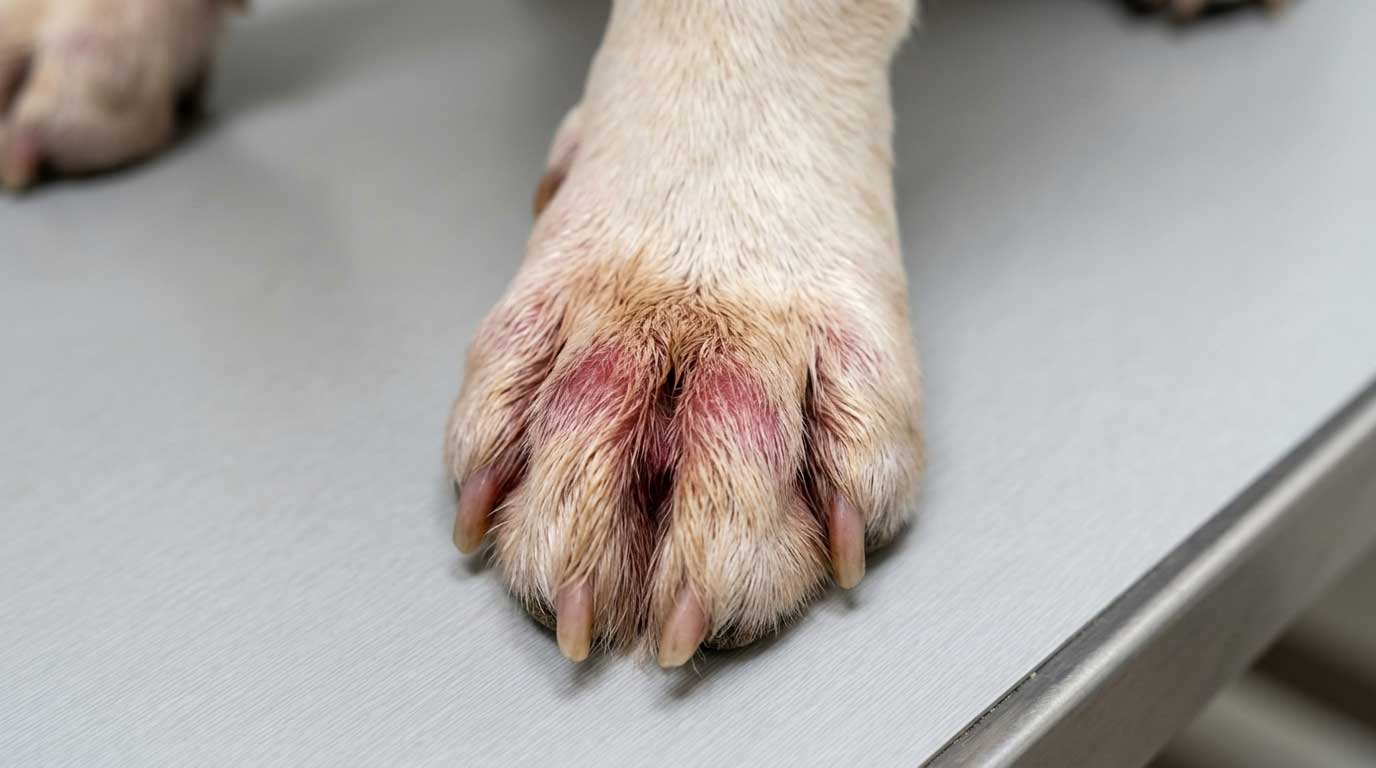
Foot soaks are incredibly effective for itchy, red, yeasty paws — they remove allergens, reduce bacteria, and soothe inflammation.

Povidone-Iodine (Betadine) Soak

Dilute povidone-iodine with water until it looks like weak iced tea (roughly 1:10). Soak each paw for 3-5 minutes, then pat dry thoroughly. Do this 1-2x daily for 5-7 days. This is the vet-recommended go-to for mild infections and allergic flare-ups.

Epsom Salt Soak

1/2 cup Epsom salt per gallon of warm water. Soak paws for 5-10 minutes. Reduces swelling and draws out any minor infection. Great for tired, sore, or swollen paws.

Apple Cider Vinegar Rinse (For Yeast)

Mix 1 part apple cider vinegar with 3 parts water. Use as a post-soak rinse (don't leave it on broken skin — it stings). Helps rebalance skin pH and kill yeast. Do NOT use if paws are raw, bleeding, or cracked.

Chlorhexidine Wipes

Pet-safe chlorhexidine wipes (Douxo, MalAcetic) are a quick daily option if soaks aren't practical. Wipe between toes and on pads after walks. Especially good for allergy dogs tracking in pollen.

Step 3: Moisturize and Protect

Once the paws are clean and drying, protective balms seal in moisture and create a barrier.

  • Paw balm (Musher's Secret, Burt's Bees Paw & Nose) — apply 1-2x daily
  • Coconut oil — safe if licked in small amounts, naturally antifungal
  • Avoid human lotion — dogs lick it off and some ingredients are toxic
  • Avoid Vaseline long-term — traps bacteria and doesn't let skin breathe

Step 4: Address the Underlying Cause

None of the above works long-term if you don't fix what's causing the licking:

  • For environmental allergies — wipe paws after every walk, consider an antihistamine (vet-approved dose)
  • For food allergies — try a limited-ingredient diet for 8-12 weeks
  • For yeast — medicated shampoo (ketoconazole or chlorhexidine) 2x weekly
  • For boredom/anxiety — more exercise, puzzle toys, calming supplements
  • For dry pads — daily paw balm, avoid salt-treated sidewalks in winter

Supplements That Can Help

Omega-3 fatty acids (fish oil) reduce skin inflammation and help allergic dogs. Probiotics support gut health, which affects skin immunity. Quercetin is a natural antihistamine (always check with your vet for dosing). These are slow-acting — give them 4-8 weeks to show results.

When Home Remedies Aren't Enough

See a vet if:

  • You've tried home care for 2 weeks with no improvement
  • The paw is bleeding, raw, or has discharge
  • Your dog is limping or in obvious pain
  • There's a bad smell or visible lump between the toes
  • Licking has created a hairless, raised sore (lick granuloma)
  • Your dog is losing sleep or becoming distressed

Chronic paw licking almost always has a root cause that needs targeted treatment — prescription allergy medications (Apoquel, Cytopoint), antifungal pills, or antibiotics. Home care helps, but it can only do so much when the underlying issue is severe.

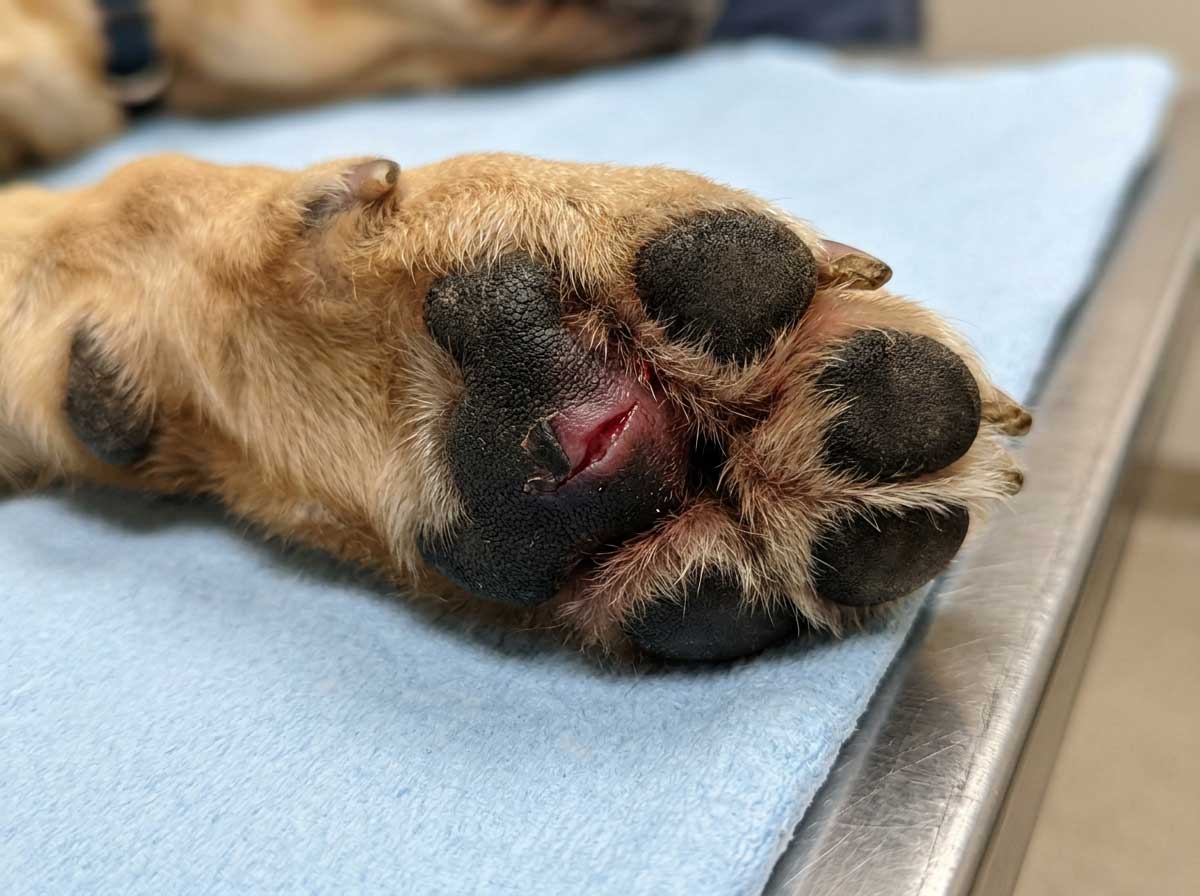
Not sure if your dog's paw needs a vet or just home care? A photo check can help you decide.

Is Your Dog's Paw Getting Worse?

Upload a photo and let AI assess whether you can keep home-treating or need to see a vet.

Disclaimer: This article is for informational purposes only and is not a substitute for professional veterinary advice. Always consult a licensed veterinarian for diagnosis and treatment of your pet's health conditions.
More Articles

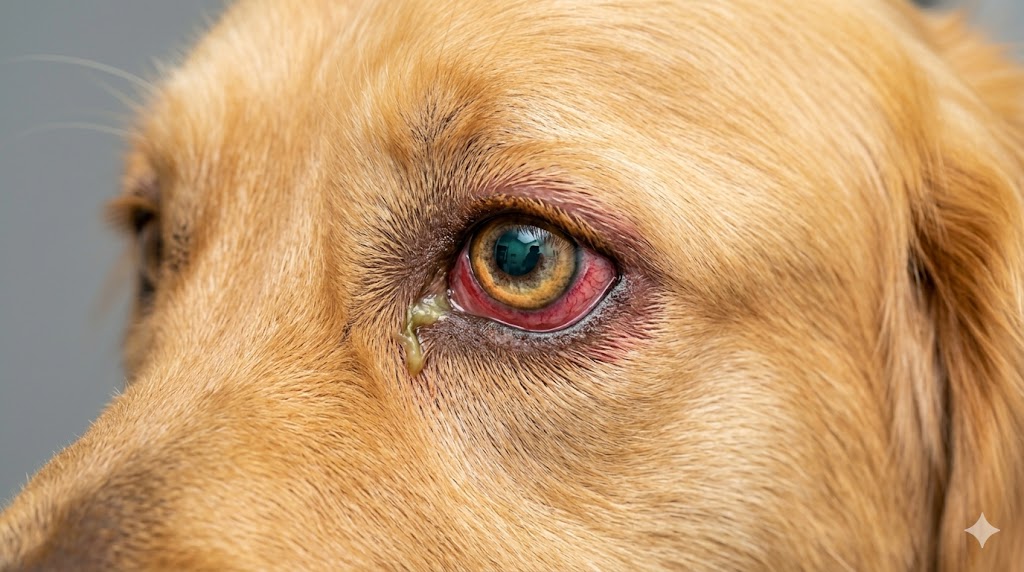
Dog eye infection showing redness and discharge in a Golden Retriever

Dog Eye Infection: Symptoms, Causes & When to See a Vet

How to identify a dog eye infection, what causes it, common types like conjunctivitis and corneal ulcers, home care tips, and when you need to see a vet.

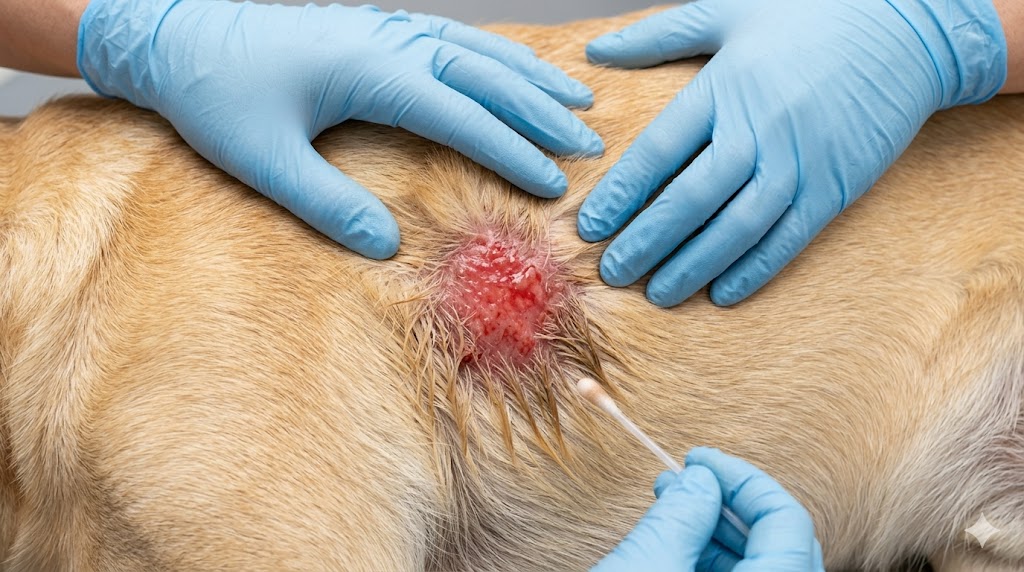
Hot spot on a Labrador Retriever showing red moist oozing skin patch

Dog Hot Spots: What They Look Like, Causes & How to Treat Them

Everything you need to know about hot spots on dogs — how to identify them, what causes them, home treatment options, and when you need a vet.

Dog ear showing brown discharge and wax buildup indicating ear problems

Why Do My Dog's Ears Smell Bad? 7 Causes and What to Do

Dogs ears smell bad for a reason. Learn the 7 most common causes of smelly dog ears, what the smell and discharge color mean, and when you need a vet.

Dermatitis on Golden Retriever belly showing red inflamed flaky skin

My Dog Has a Rash: How to Identify Common Skin Problems

Found a rash on your dog? Learn how to identify dermatitis, hot spots, mange, flea allergy, and other common skin infections from appearance and symptoms.

Dog shaking head and scratching ear showing signs of ear discomfort

Dog Keeps Shaking Head? Here's What It Means and What to Do

Why does your dog keep shaking their head? Learn the most common causes including ear infections, ear mites, and allergies, plus when to see a vet.

Dog skin allergy showing red irritated skin from flea allergy dermatitis

Dog Skin Allergy: Symptoms, Types & What Your Dog's Skin Is Telling You

Learn how to identify dog skin allergies from rashes, bumps, and itching. Understand flea allergy dermatitis, food allergies, and environmental allergies in dogs.

Dog scratching ear from food allergy showing redness and discomfort

Dog Food Allergy Symptoms: How to Tell If Your Dog's Food Is the Problem

How to identify food allergy symptoms in dogs vs food intolerance. Learn about elimination diets, common allergens like chicken and beef, and when to see a vet.

Cat with skin allergy showing patchy hair loss and irritated skin

Cat Skin Allergies & Flea Dermatitis: Signs, Causes & What to Do

How to identify cat skin allergies, flea allergy dermatitis in cats, food allergy rashes, and environmental allergies. Learn what your cat's skin is telling you.

Dog wound showing redness and swelling that needs proper care

Dog Wound Care: How to Clean, Treat & Monitor Wounds at Home

Complete guide to dog wound care at home. Learn how to clean a wound, what to put on it, signs of infection to watch for, and when to see a vet.

Dog wound in healing stage showing healthy pink tissue forming

How to Heal a Dog Wound Fast at Home: 7 Vet-Approved Tips

Want to help your dog's wound heal faster? 7 proven tips for faster wound healing in dogs — from proper cleaning to nutrition to preventing licking.

Open wound on dog that needs proper cleaning

How to Clean a Dog Wound: Step-by-Step Guide (With What to Avoid)

Learn the right way to clean a dog wound at home. Step-by-step instructions, what solutions to use, what to avoid, and when cleaning isn't enough.

Dog bite wound that needs proper cleaning — not hydrogen peroxide

Can You Put Hydrogen Peroxide on a Dog Wound? (Why Vets Say No)

Should you use hydrogen peroxide on your dog's wound? Learn why most vets no longer recommend it, what to use instead, and how to clean dog wounds safely.

Cat wound being gently cleaned at home with saline solution

Cat Wound Care at Home: How to Clean, Treat & Know When to See a Vet

Learn how to care for your cat's wound at home — cleaning, safe ointments, what to avoid, healing stages, and when a wound needs emergency vet care.

Cat abscess that has burst showing drainage and surrounding area

Cat Abscess Burst: What to Do, What It Looks Like & When to See a Vet

Your cat's abscess burst? Don't panic. Learn what a burst abscess looks like, what to do immediately, home care steps, healing timeline, and when it's an emergency.

Close-up of flea dirt on dog skin showing tiny black specks among fur

Flea Dirt, Flea Eggs & Black Specks on Your Dog — What They Mean

Found black specks or tiny white dots on your dog? Learn how to identify flea dirt vs regular dirt, flea eggs vs dandruff, and what black specks on dog skin mean.

Comparison of deer tick and American dog tick on dog skin

Dog Tick Identification: Deer Tick vs Dog Tick, Embedded & Engorged Ticks

How to identify ticks on your dog — deer tick vs dog tick differences, what embedded and engorged ticks look like, tick vs skin tag, and which ticks carry disease.

Cat ear showing dark brown discharge from ear mites vs normal clean ear

Cat Ear Mites: Signs, How to Tell vs Dirty Ears & Treatment Guide

How to tell if your cat has ear mites vs just dirty ears, signs and symptoms, how indoor cats get ear mites, home remedies, and when to see a vet.

Black specks on cat chin showing comparison of flea dirt vs feline acne

Black Specks on Your Cat: Flea Dirt vs Cat Acne — How to Tell & What to Do

Black specks on your cat's chin, fur, or skin? Learn how to tell flea dirt from cat acne, what black dots mean, and when to worry.

Dog licking and chewing their paw on a couch

Why Do Dogs Lick and Chew Their Paws? 8 Common Causes

Why is your dog licking or chewing their paws? Here are the 8 most common causes — from allergies and yeast infections to anxiety and pain — plus what to do about each.

Dog paw with brown yeast staining between the toes

Dog Paw Yeast Infection: Signs, Treatment & Home Remedies

How to spot a dog paw yeast infection (the "Frito foot" smell), what causes it, and how to treat it at home — plus when you need prescription antifungals.

Close-up of red inflamed skin between a dog's toes

Dog Paws Red Between Toes: Causes & Home Remedies

Redness between your dog's toes usually means one of five things — allergies, yeast, infection, foreign body, or a cyst. Here's how to tell which, plus what to do.

Dog paw with allergic dermatitis showing redness between toes

Dog Paw Allergies: Symptoms, Treatment & Prevention

Why do allergies hit dogs' paws so hard? Here's what paw allergies look like, the 3 main types (environmental, food, contact), and how to treat them.

Dog paw with a cut or injury on the pad

Dog Paw Pad Injury: First Aid, Flap Treatment & Healing Time

How to treat a dog paw pad injury at home — stopping bleeding, handling a paw pad flap, bandaging, and what the healing timeline looks like. Plus when you need a vet.

Cat paw showing pillow foot with puffy enlarged central pad

What is Pillow Foot in Cats? Causes, Signs & Pictures

Pillow foot in cats (plasma cell pododermatitis) causes soft puffy paw pads. Learn the signs, causes, whether it's contagious, and what to do about it.

Hand holding a cat paw showing pillow foot condition during vet examination

Pillow Foot Treatment in Cats: Home Remedies & Vet Options

How to treat pillow foot (plasma cell pododermatitis) in cats — doxycycline, steroids, home care, litter changes, and how long treatment takes.

Close-up of a swollen cat paw showing enlarged toes and redness

Swollen Cat Paw: 7 Causes + When It's an Emergency

Why is your cat's paw swollen? 7 common causes, how to tell an emergency, home remedies, and when you must see a vet — including the "silent pain" trap.

Close-up of a cat paw with an ingrown nail curling into the pad

Cat Ingrown Nail Removal at Home: Step-by-Step + When to See a Vet

How to safely trim an ingrown cat nail at home — step-by-step guide, when it's too risky, vet costs, and prevention tips. Most common in elderly cats.

Cat paw with nail bed infection showing redness and swelling around the claw base

Cat Nail Bed Infection (Paronychia): Signs, Treatment & Home Remedies

Cat nail bed infection (paronychia) causes redness, swelling, and nail discoloration. Learn to spot it, treat mild cases at home, and when antibiotics are needed.

Cat chewing on its paw while sitting on a couch

Why Is My Cat Chewing or Licking Their Paws? 6 Causes

Why your cat is obsessively chewing or licking their paws — 6 common causes, from allergies to post-declaw chewing, and when you need to see a vet.