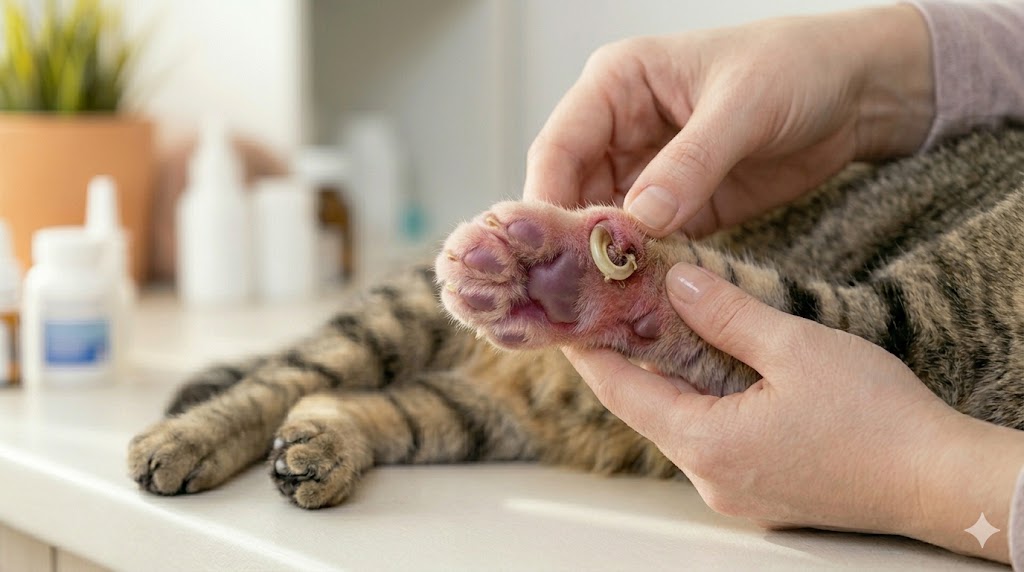
Why Is My Cat Chewing or Licking Their Paws? 6 Causes
Why your cat is obsessively chewing or licking their paws — 6 common causes, from allergies to post-declaw chewing, and when you need to see a vet.
Published 2026-04-18
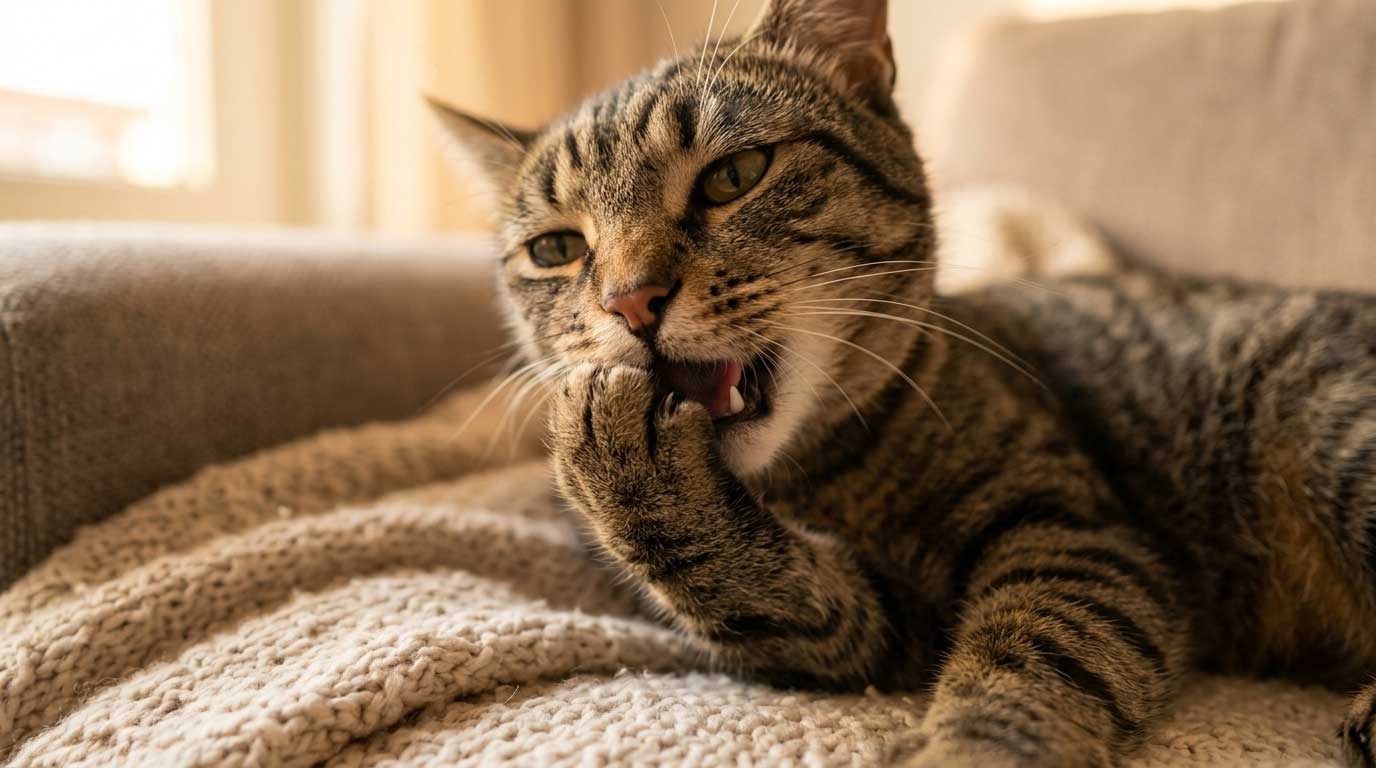
Cats groom their paws constantly — it's part of their normal hygiene routine. But when "grooming" turns into "obsessive chewing" or "can't stop licking for hours," it's no longer normal. Persistent paw chewing is always a sign that something is wrong, and like most cat symptoms, there are several possible causes that each need different fixes.
Here's how to figure out what's driving the chewing, and what to do about it.
Normal Grooming vs Problem Chewing
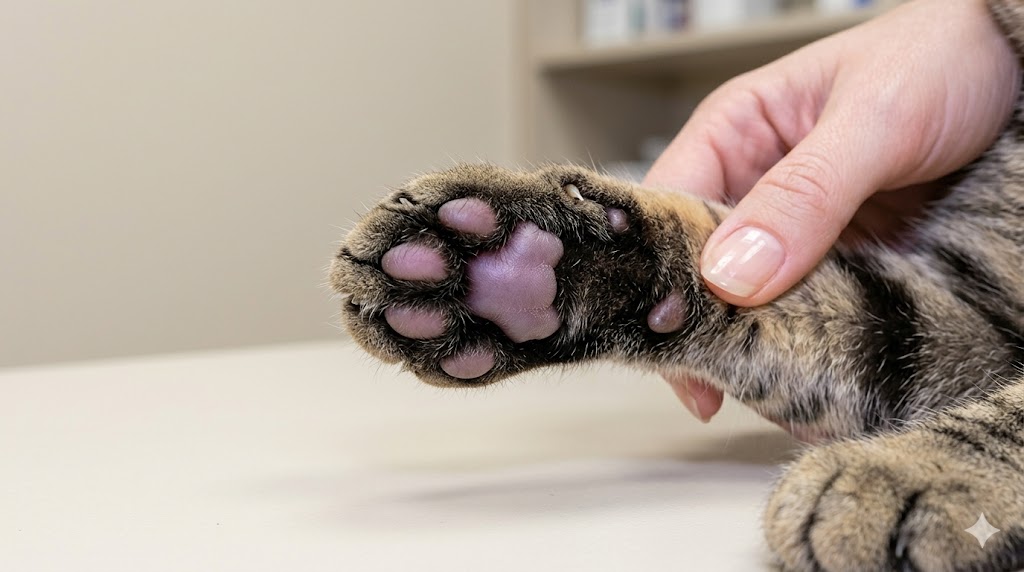
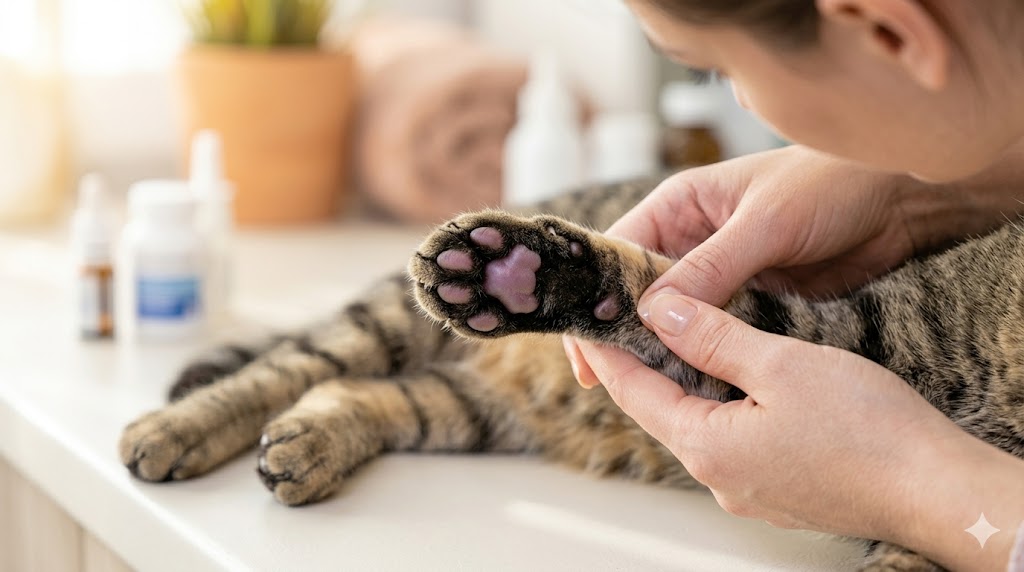
Normal paw grooming: a few minutes a few times a day, typically after eating or using the litter box, with rhythmic licking and no distress. The paw looks clean afterward, no redness, no fur thinning, no chewing.
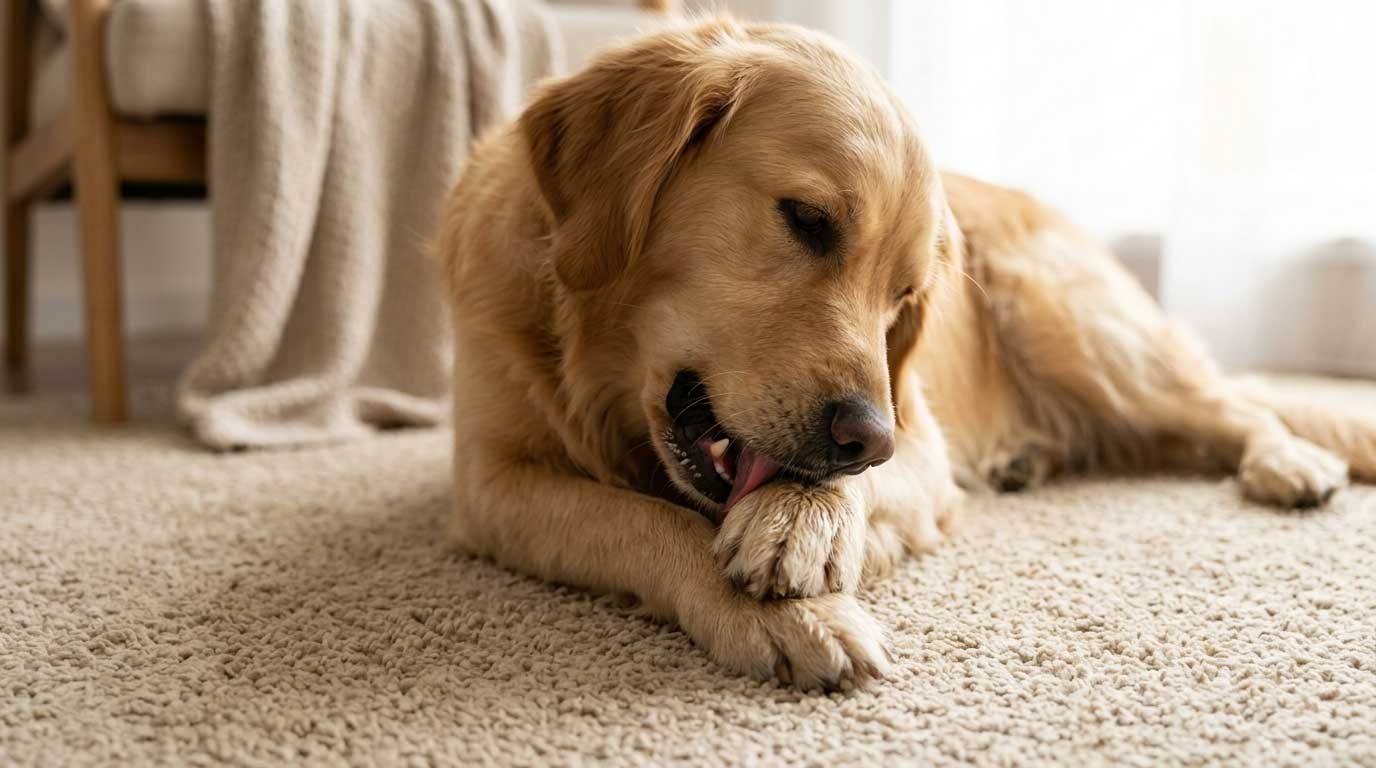
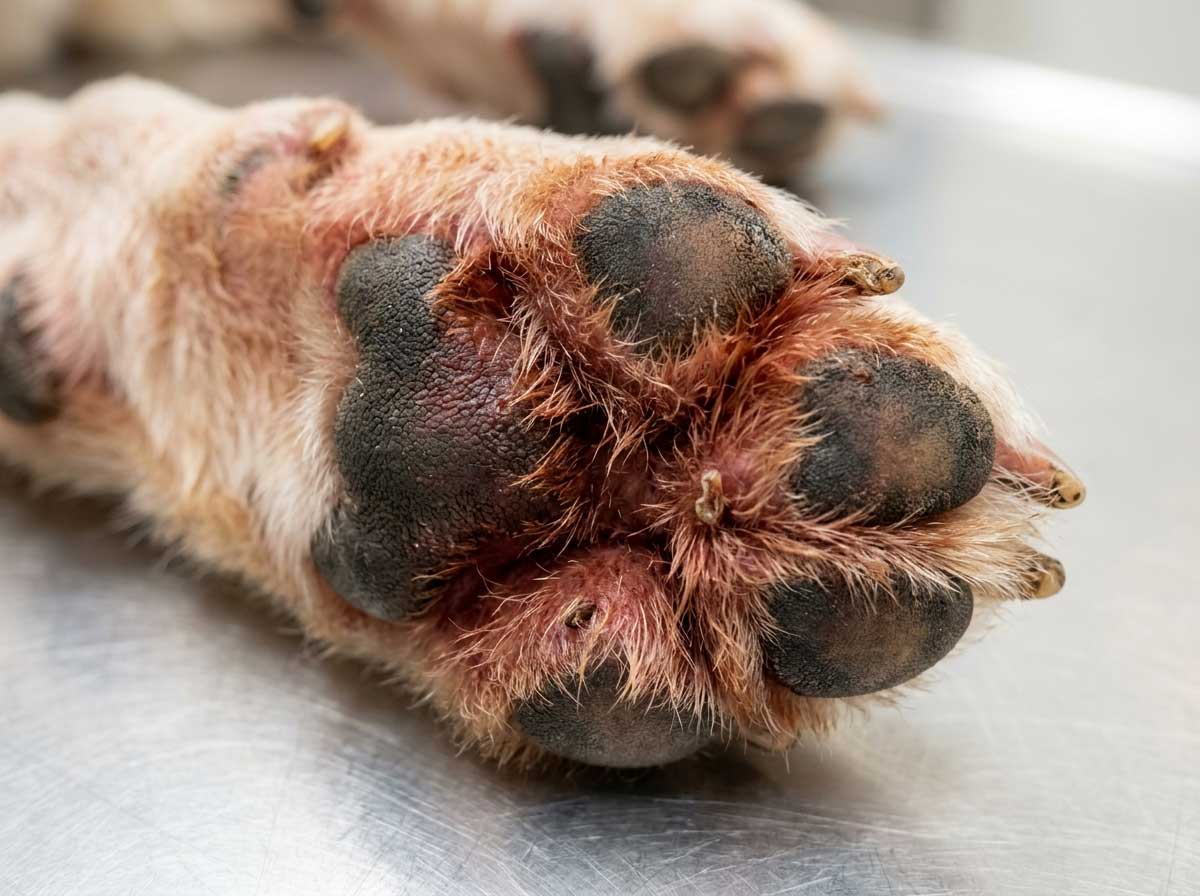
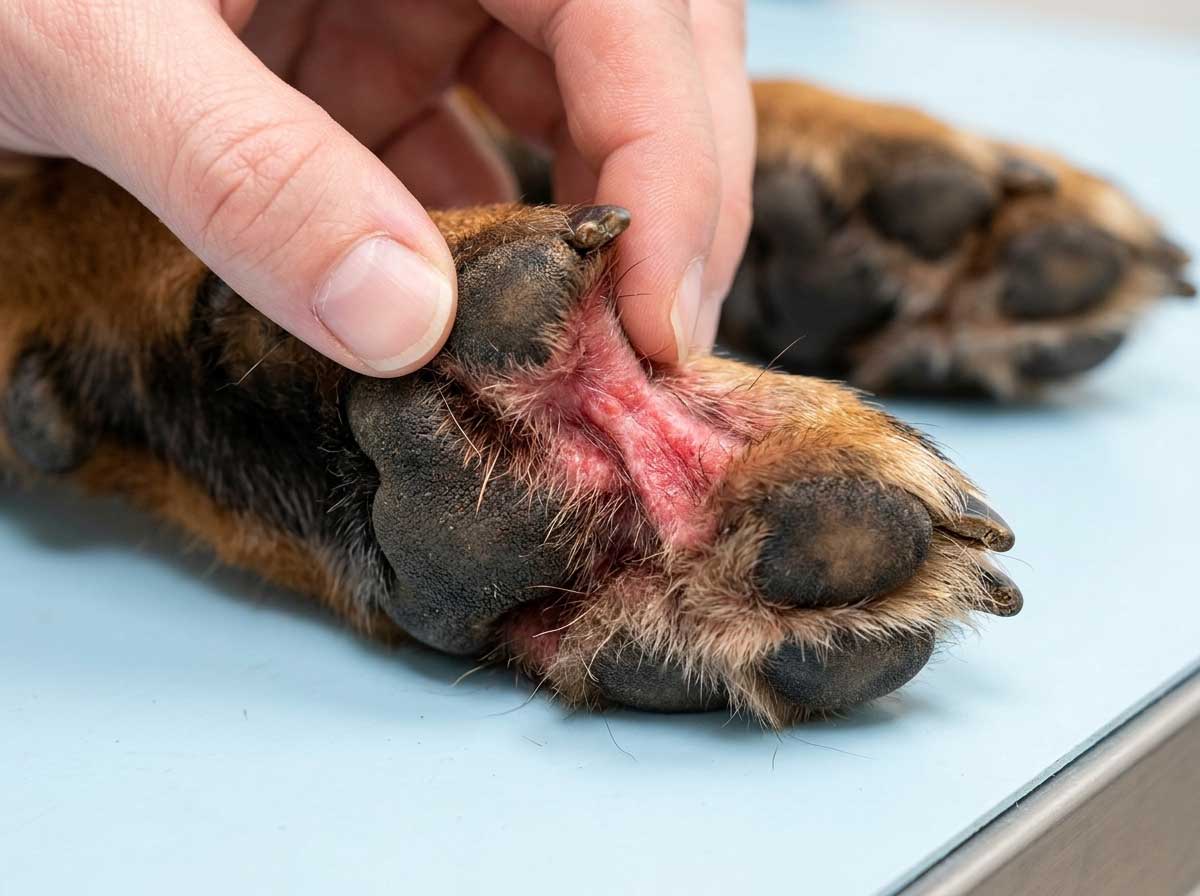
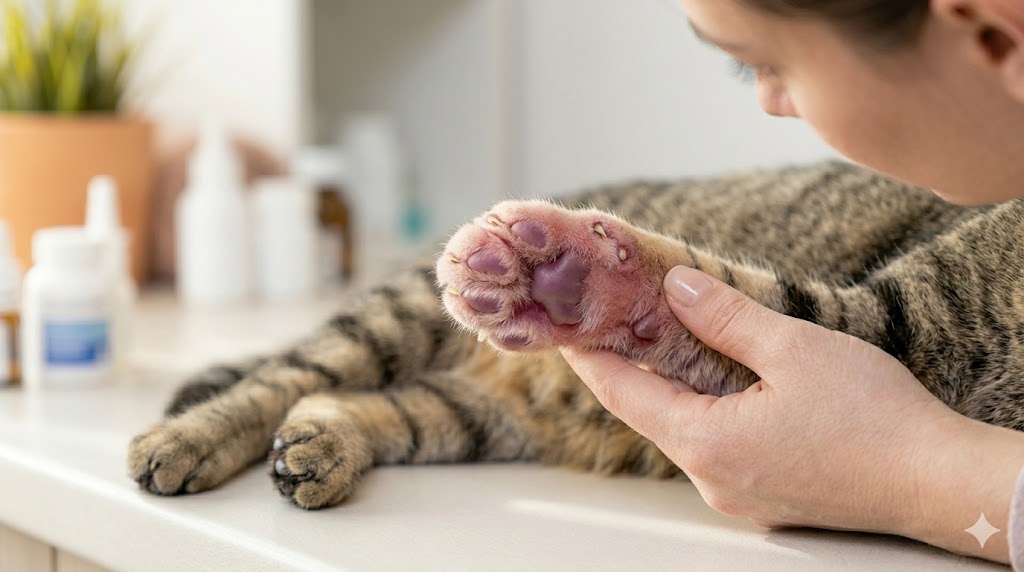
Problem chewing: 15+ minutes at a time, multiple times per hour, with biting or pulling at the fur, focus on one paw or one spot, wet matted fur, visible redness or raw skin, fur loss, or bleeding in severe cases. This is not grooming — it's a sign of discomfort.
6 Common Causes
1. Allergies
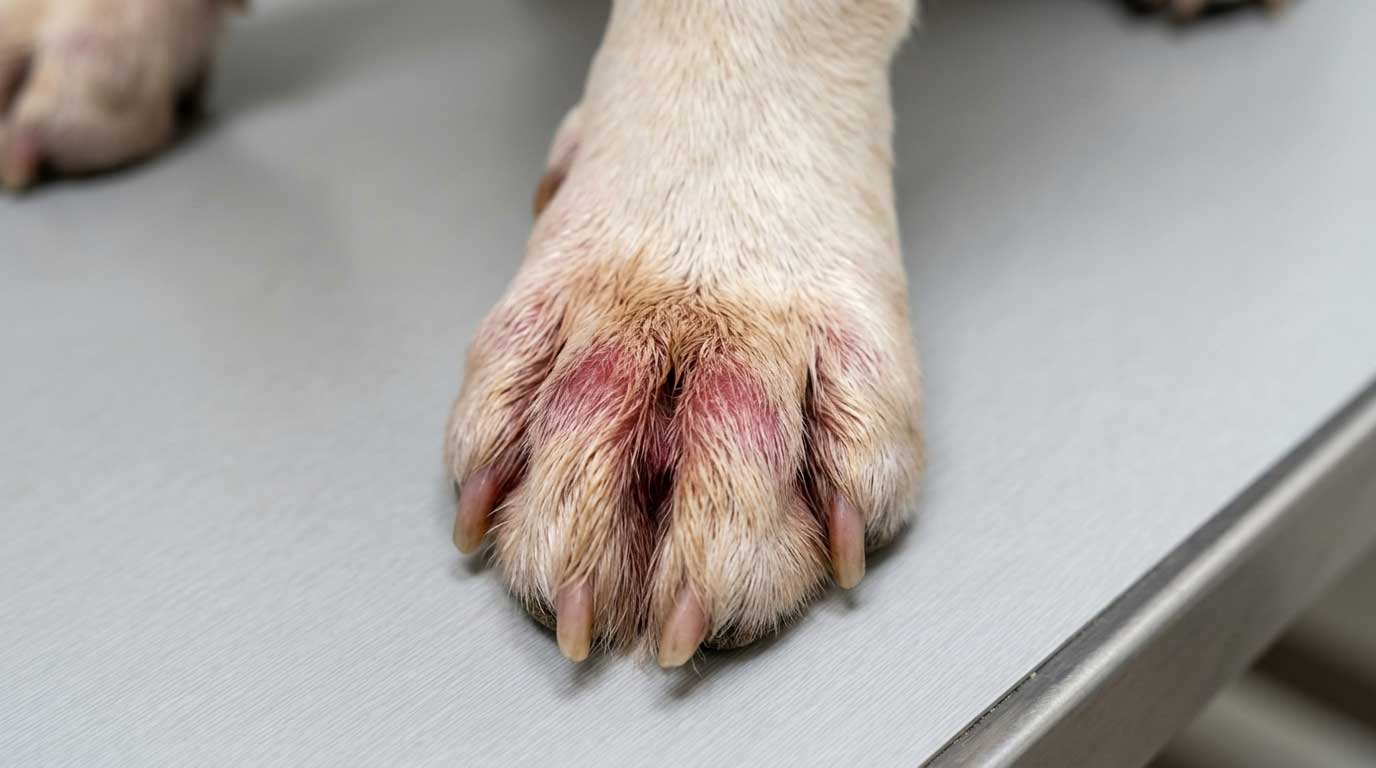
Environmental allergies (pollen, dust mites, household cleaners) and food allergies can both cause itchy paws in cats. Signs: chewing all four paws, sometimes also itchy ears and belly, seasonal pattern (environmental) or year-round with occasional GI issues (food). Treatment: allergy trial diets, antihistamines (vet-approved), flea prevention, and sometimes immunotherapy for severe cases.
2. Injury — Something Stuck Between the Toes
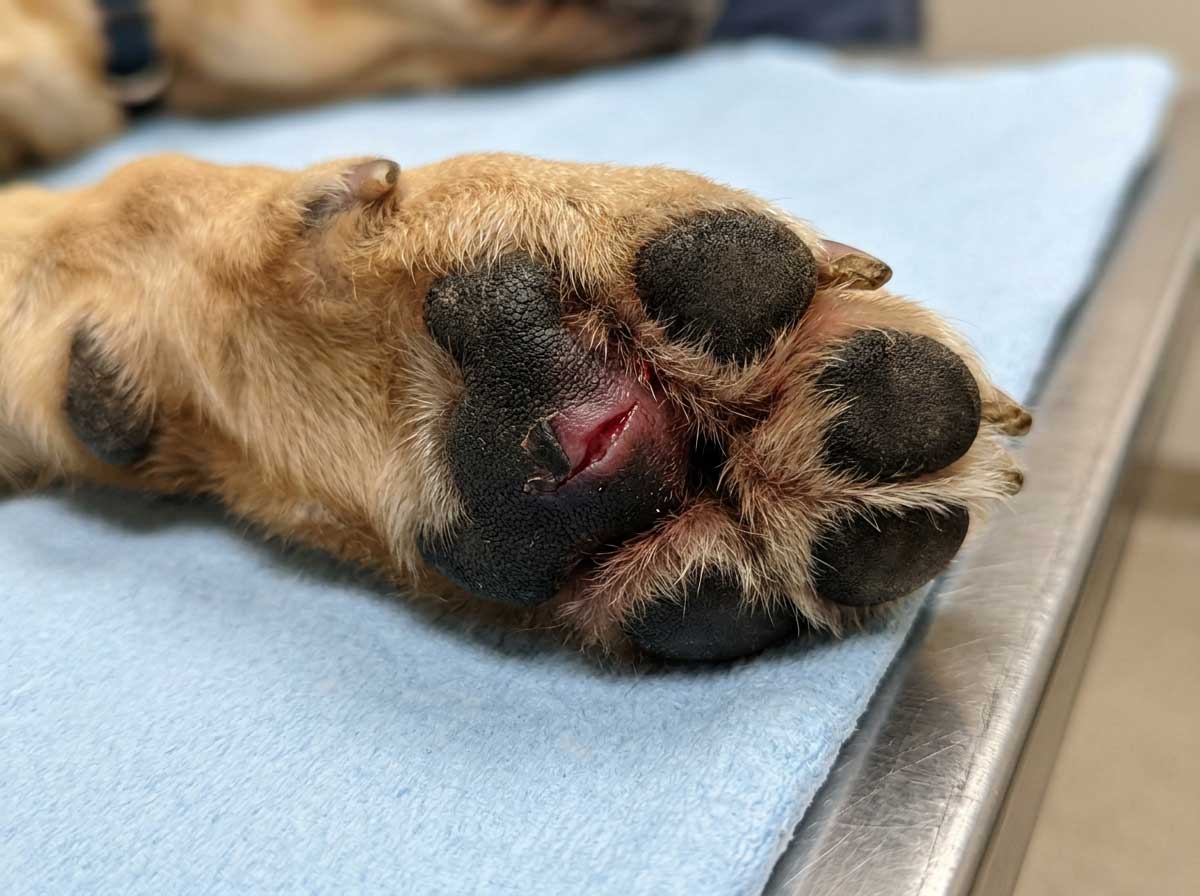
Splinters, grass awns, small thorns, or debris can lodge between the toes. Cats chew to try to remove the object. Signs: focus on one paw only, sudden onset, visible tip of something between the toes, sometimes a small wound. Treatment: careful removal with tweezers if clean and accessible; vet otherwise.
3. Bacterial or Fungal Infection
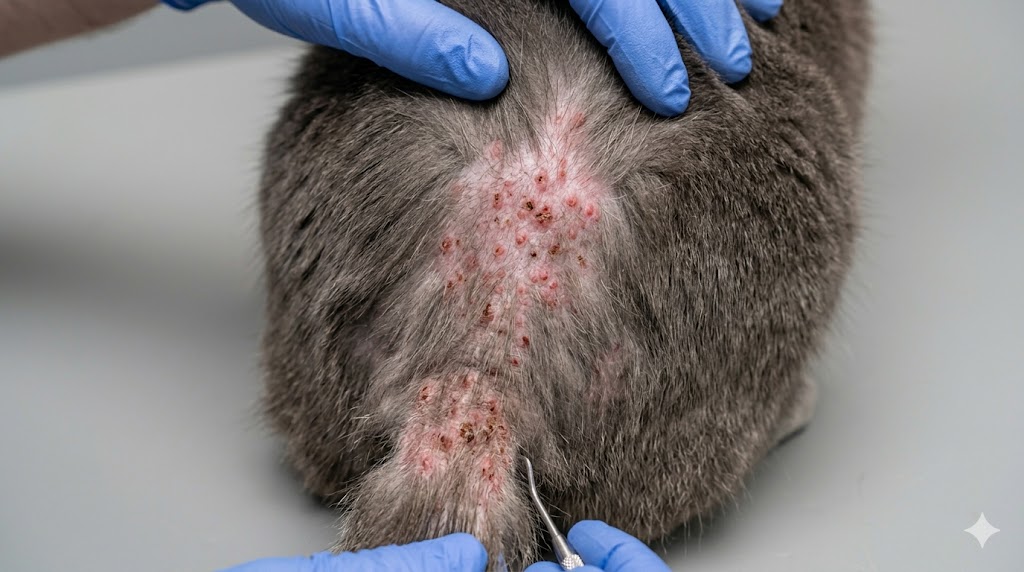
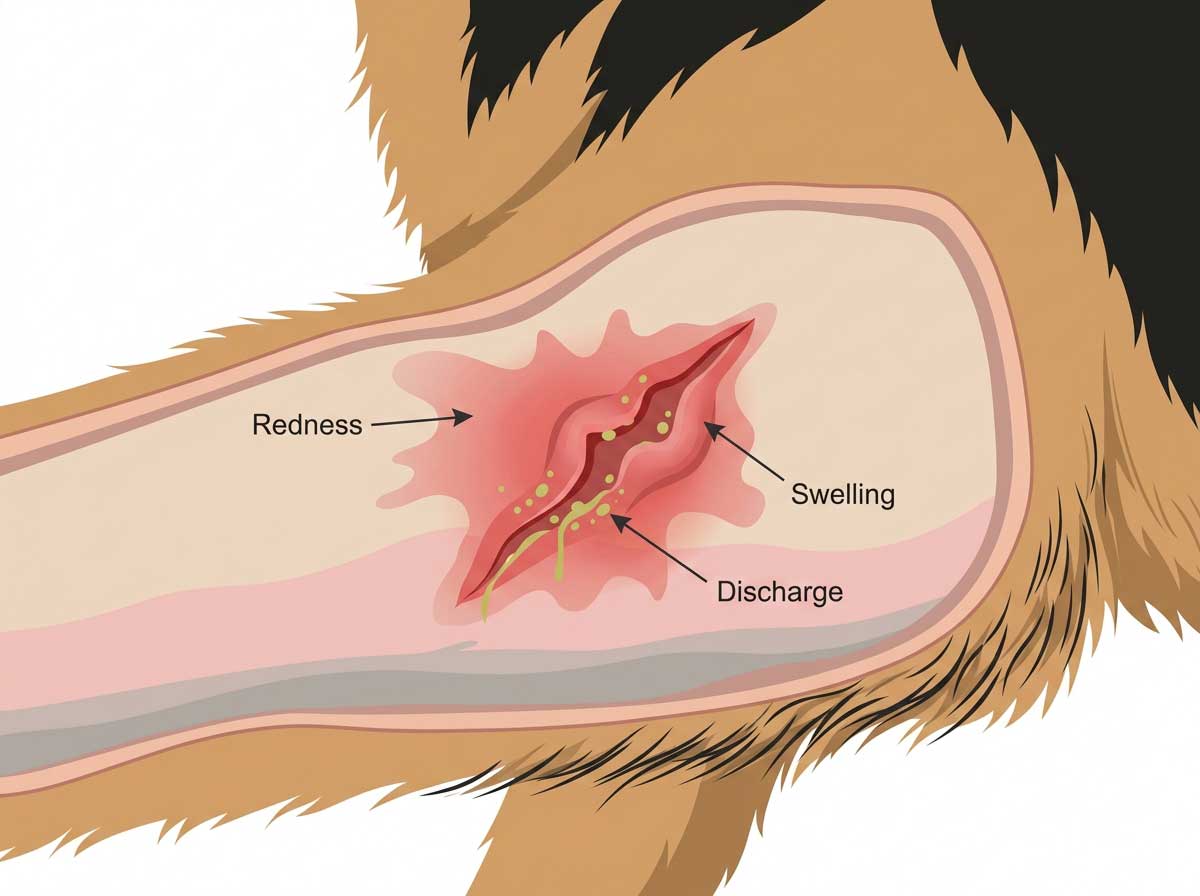
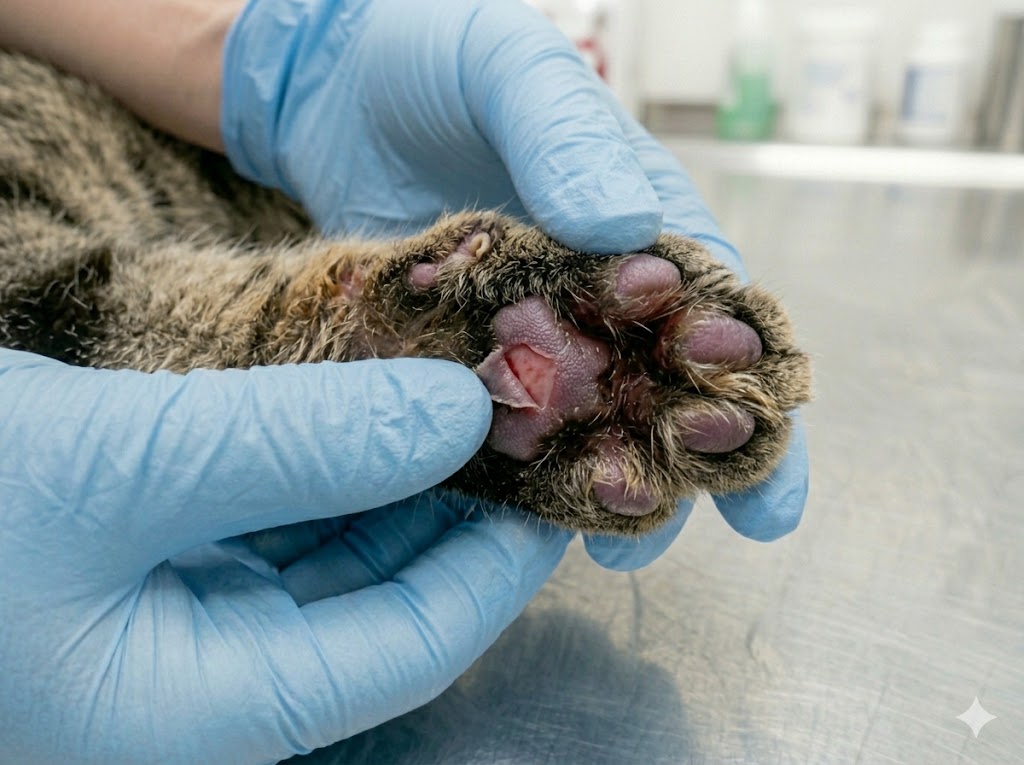
Once chewing breaks the skin, the paw can get infected — and infection is itchy, driving more chewing. Signs: redness, swelling, bad smell, brown/yellow discharge, thickened skin. Treatment: vet visit for appropriate antibiotics or antifungals; topical treatment alone rarely clears established infections.
4. Anxiety, Stress, or Boredom
Some cats develop compulsive grooming/chewing as a stress response. This is more common in indoor-only cats, single-pet households with under-stimulation, cats that recently moved, or cats in multi-cat conflicts. Signs: chewing appears when you leave or during stressful events, the same exact spot is targeted, the skin underneath may look fine (no redness). Treatment: environmental enrichment (more toys, climbing, play sessions), pheromone diffusers (Feliway), and sometimes anti-anxiety medication for severe cases.
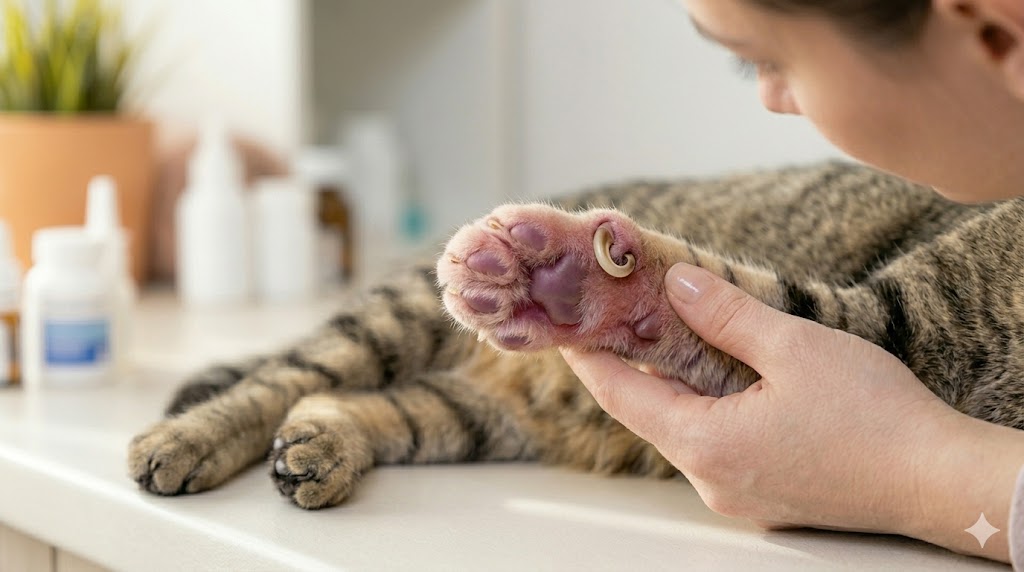
5. Ingrown Claw or Nail Problem
A cat with an ingrown claw will often chew at that paw repeatedly trying to fix the discomfort. Signs: focus on one specific paw, sometimes one specific claw, possibly visible claw problem when you look. Treatment: trim the claw at home if visible; vet otherwise.
6. After Declaw Surgery
Cats who have been declawed — whether recently or years ago — often develop chronic chewing behavior. This can be due to: lingering post-surgical pain, nerve damage, phantom-limb-like sensations, altered walking mechanics, or behavioral frustration. Signs: chewing at the front paws especially, sometimes years after surgery. Treatment: pain management (gabapentin has helped many chronic cases), soft litter, environmental enrichment, and in severe cases, behavior consultation. This is one of the reasons declaw surgery is controversial — chronic chewing can persist for life.
What Cat Licking Paws "Meaning" Is
Owners sometimes ask if paw licking has behavioral meaning. The short answer: normal paw licking after eating is just hygiene (cats clean their face by licking paws and wiping). Excessive licking is almost always a medical or stress issue, not a behavioral quirk. Don't read into it as "marking" or "affection" — if your cat can't stop, something is driving it, and the cause is almost always fixable.
When Chewing Becomes Bloody
If your cat has chewed to the point of drawing blood or creating raw spots:
- ✓This is a medical emergency (same-week, not same-day, but don't wait)
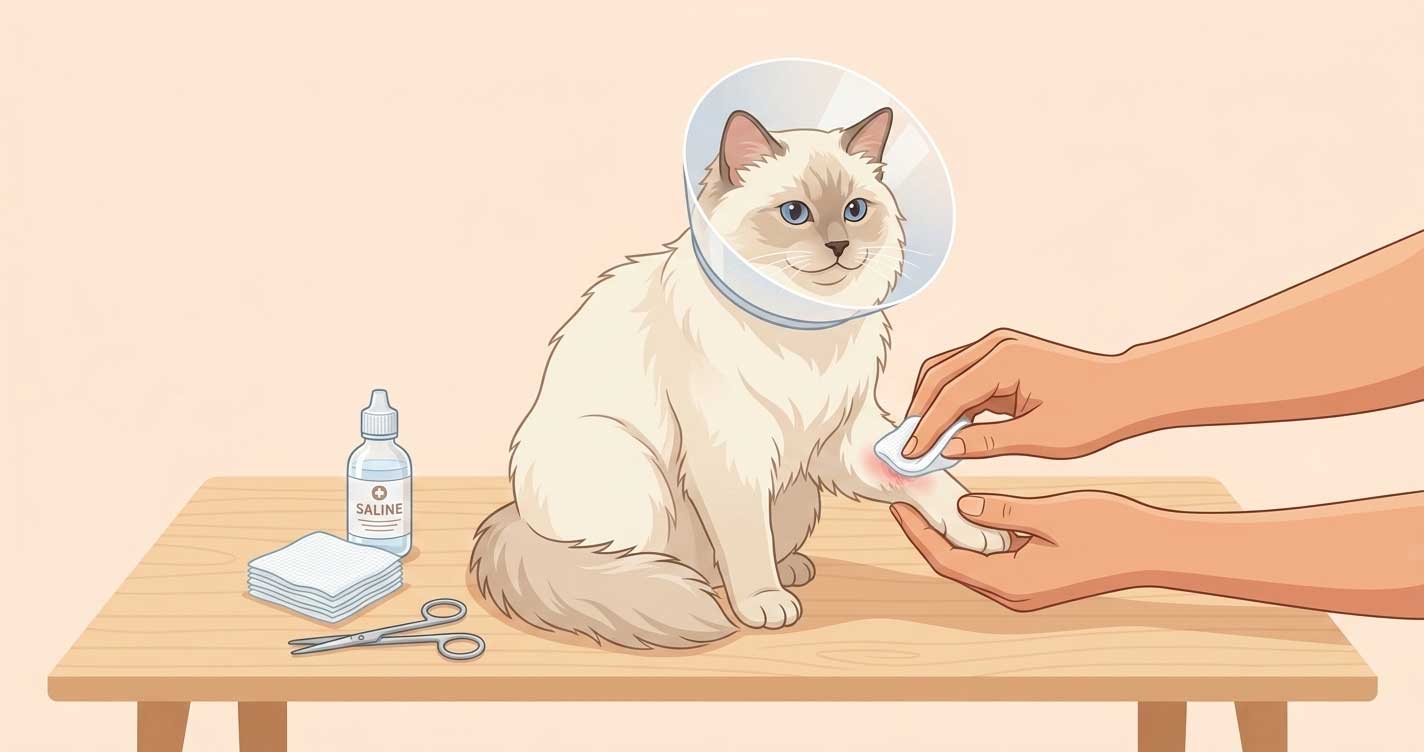
- ✓Put on an e-collar or recovery suit to stop further chewing
- ✓Clean the raw area gently with saline or diluted chlorhexidine
- ✓Get to a vet — they will need to: stop the cycle (often with pain meds or steroids), diagnose the root cause, treat any infection
Bloody chewing always escalates if left alone — cats lick at the blood, re-irritate, chew more, bleed more. Breaking the cycle medically is the only way out.
How to Stop It
Short-term (Stop the Damage)
- ✓E-collar or soft recovery collar
- ✓Recovery suit or bandage over the paw
- ✓Pet-safe bitter spray (some cats ignore these)
- ✓Trim claws short to reduce self-injury
Medium-term (Address Cause)
- ✓Identify and remove environmental allergens where possible
- ✓Try a limited-ingredient diet for 8 weeks if food allergy is suspected
- ✓Enrichment: more play sessions, climbing, puzzle feeders, window perches
- ✓Feliway pheromone diffusers for stress
Long-term (Medical)
- ✓Vet-prescribed antihistamines or steroids for allergies
- ✓Gabapentin for chronic post-declaw or nerve pain
- ✓Antibiotics or antifungals if infection is present
- ✓Behavior consult if no medical cause is found
When to Take Them to the Vet
See a vet within a week if: chewing has persisted more than 2 weeks, there's fur loss or raw skin, you can't identify the trigger, home remedies haven't helped, or chewing is getting worse rather than better. See a vet same-week if there's active bleeding or signs of infection.
Not sure what's causing the chewing? A photo of the affected paw can help narrow it down — infection, injury, or allergic signs often show on camera.
Why Is Your Cat Chewing Their Paws?
Upload a photo and let AI assess likely causes — infection, injury, allergy signs, or nail problems.
Disclaimer: This article is for informational purposes only and is not a substitute for professional veterinary advice. Always consult a licensed veterinarian for diagnosis and treatment of your pet's health conditions.