Cat Urine Smells Like Ammonia: 5 Causes & What to Do
A strong ammonia smell from cat urine can signal concentrated urine, UTI, kidney disease, or just an intact male. Here's what each smell pattern means.
Published 2026-04-18
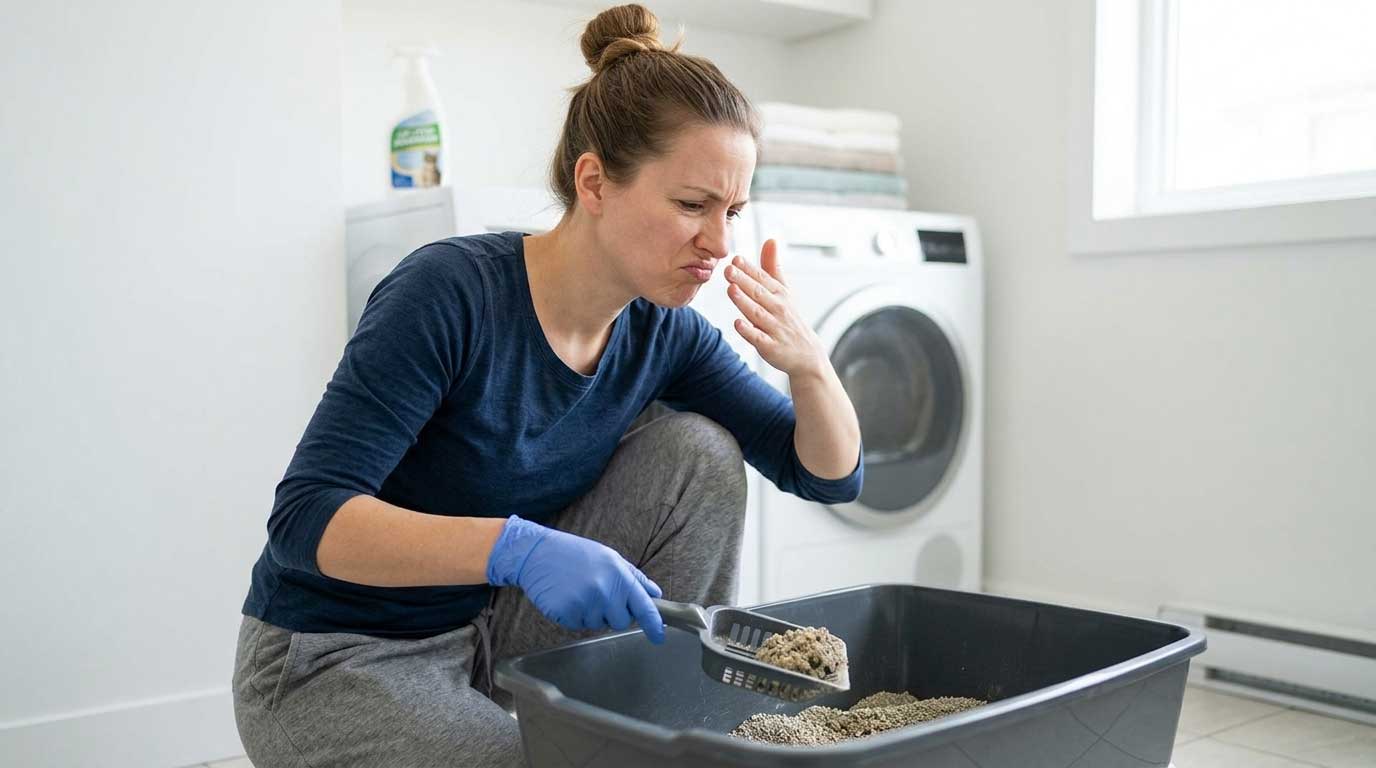
You noticed your cat's urine smells unusually strong — like ammonia, or rotten, or just "off." Cat urine normally has some smell, but a distinct change in odor is often your first clue that something's changing medically. Here's what a strong ammonia smell can mean.
Why Cat Urine Smells at All
Cat urine is naturally more concentrated than human or dog urine — cats evolved from desert ancestors who had to conserve water aggressively. Their kidneys pull more water out of urine, leaving behind a higher concentration of urea (which breaks down to ammonia) and other waste products. That's why cat urine is notoriously strong-smelling compared to dog urine.
A "normal" smell is slightly ammoniacal with some yeasty or earthy undertones. "Abnormal" is when the smell changes in intensity or quality — stronger than usual, or suddenly fishy, metallic, or rotten.
1. Dehydration / Concentrated Urine (Most Common)
This is the #1 cause of a sudden increase in ammonia smell. When a cat doesn't drink enough water, their urine becomes even more concentrated than normal, and the ammonia smell intensifies. Common in:
- ✓Cats on dry-food-only diets
- ✓Summer / hot weather
- ✓Cats with limited water access
- ✓Older cats who drink less
- ✓Cats recovering from illness
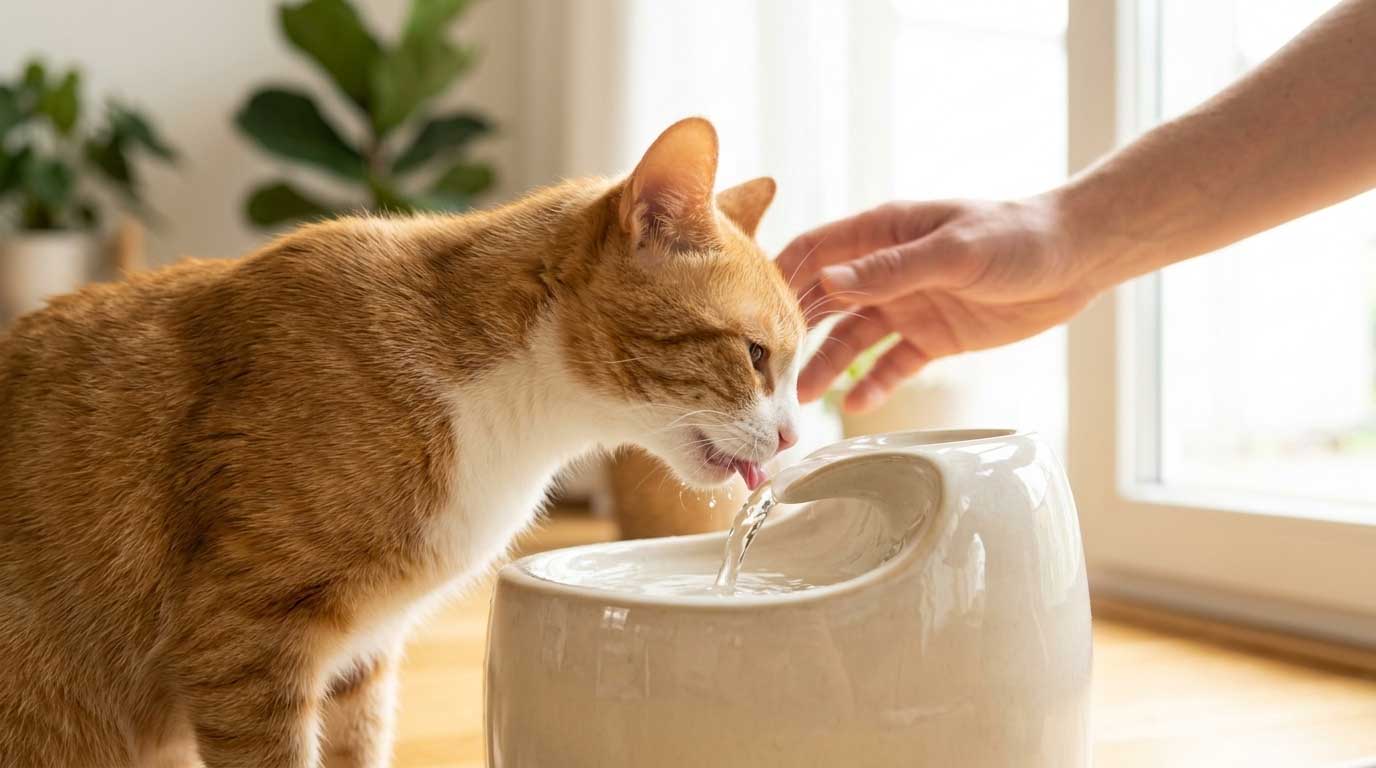
What to do: provide more water sources, add wet food, water fountain. Urine smell should improve in 1-2 days of better hydration. If it doesn't, look at other causes.
2. Urinary Tract Infection (UTI)
When bacteria break down urea in urine, they produce extra ammonia — so UTI urine often smells much stronger than normal. The smell is often described as:
- ✓Fishy
- ✓Rotten or "off"
- ✓Like old ammonia
- ✓Sometimes sweet or fruity (rare)
Combined with cloudiness, blood, or frequent small urinations, UTI is very likely. Though UTIs are less common in cats than dogs, they happen, especially in senior and diabetic cats. What to do: urinalysis at the vet — simple test, confirms within minutes.
3. Kidney Disease
This is a common one to miss. Cats with chronic kidney disease (CKD) have kidneys that can't process urea as efficiently, leading to buildup in the blood and a distinctive ammonia smell in urine (and sometimes on the breath). CKD is extremely common in senior cats — around 40% of cats over 10 have some kidney disease.
Other signs of kidney disease:
- ✓Drinking a lot more water than usual
- ✓Urinating in larger amounts (but also smells stronger if dehydrated)
- ✓Weight loss despite eating
- ✓Vomiting occasionally
- ✓Bad breath with ammonia tone
- ✓Poor coat quality
What to do: blood test (BUN, creatinine, SDMA) + urinalysis. Early CKD is very manageable with diet and medication. Late-stage is harder but still treatable.
4. Intact Male Cat Marking
Unneutered adult male cats have EXTREMELY strong-smelling urine — it's loaded with pheromones designed to mark territory and attract females. The smell is often described as:
- ✓Overwhelmingly ammoniacal
- ✓Musky or skunk-like undertones
- ✓Impossible to ignore even from across a room
- ✓Persistent despite cleaning
If your male cat suddenly has much stronger smelling urine and he's not neutered (or was neutered late), this is probably why. Neutering dramatically reduces urine odor within 2-6 weeks. Some male-marked urine can be ALMOST IMPOSSIBLE to remove from carpet and furniture — enzymatic cleaners help.
5. High-Protein Diet or Supplements
Cats on very high-protein diets produce more nitrogen waste (urea), which breaks down to more ammonia. While cats SHOULD eat meat-based diets, some premium foods have extremely high protein content that can amplify urine smell. Certain supplements (especially amino acid supplements like taurine, methionine) can also increase odor.
Usually not a concerning cause — just a byproduct of diet. If odor is bothersome but cat is healthy, check protein content of food and consider a more moderate diet.
When to Worry
- ✓Sudden change in smell + other symptoms (blood, straining, peeing outside box) = vet visit
- ✓Stronger smell + drinking/peeing more than usual = kidney disease suspect
- ✓Rotten/fishy smell + cloudy urine = possible UTI
- ✓Any smell change in senior cat = vet bloodwork + urinalysis
- ✓Intact male cat + strong smell = probably just marking (consider neutering)
- ✓Unchanged smell + healthy cat = probably normal concentration variation
Home Remedies for Lingering Ammonia Smell (On Surfaces)
If urine got on carpet, flooring, or furniture:
- ✓Use enzymatic cleaners (Nature's Miracle, Rocco & Roxie) — regular soap doesn't break down urine
- ✓Avoid ammonia-based cleaners (cats think this is another cat and re-mark)
- ✓Blot, don't rub, to remove as much liquid as possible
- ✓Let enzymatic cleaner sit 10-15 minutes, then blot
- ✓For deep-set stains, may need multiple treatments
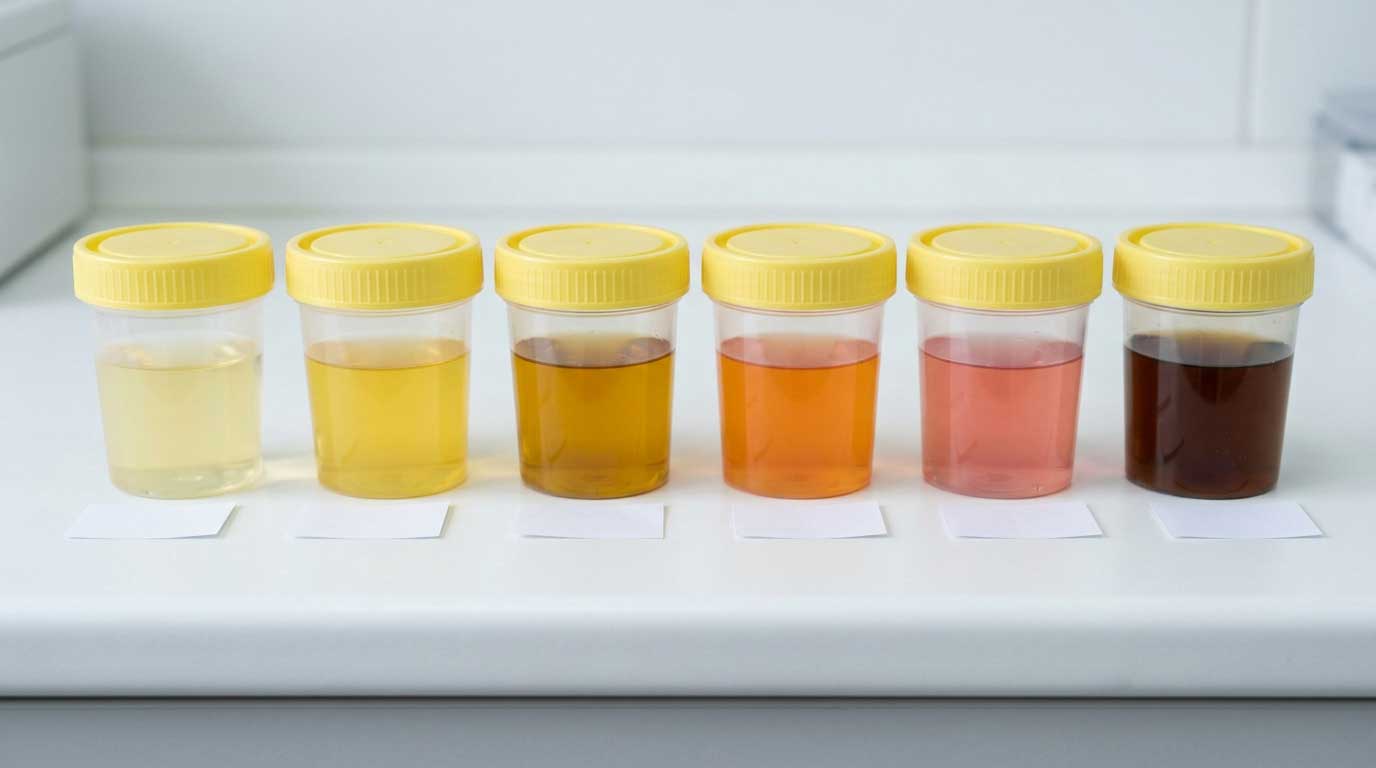
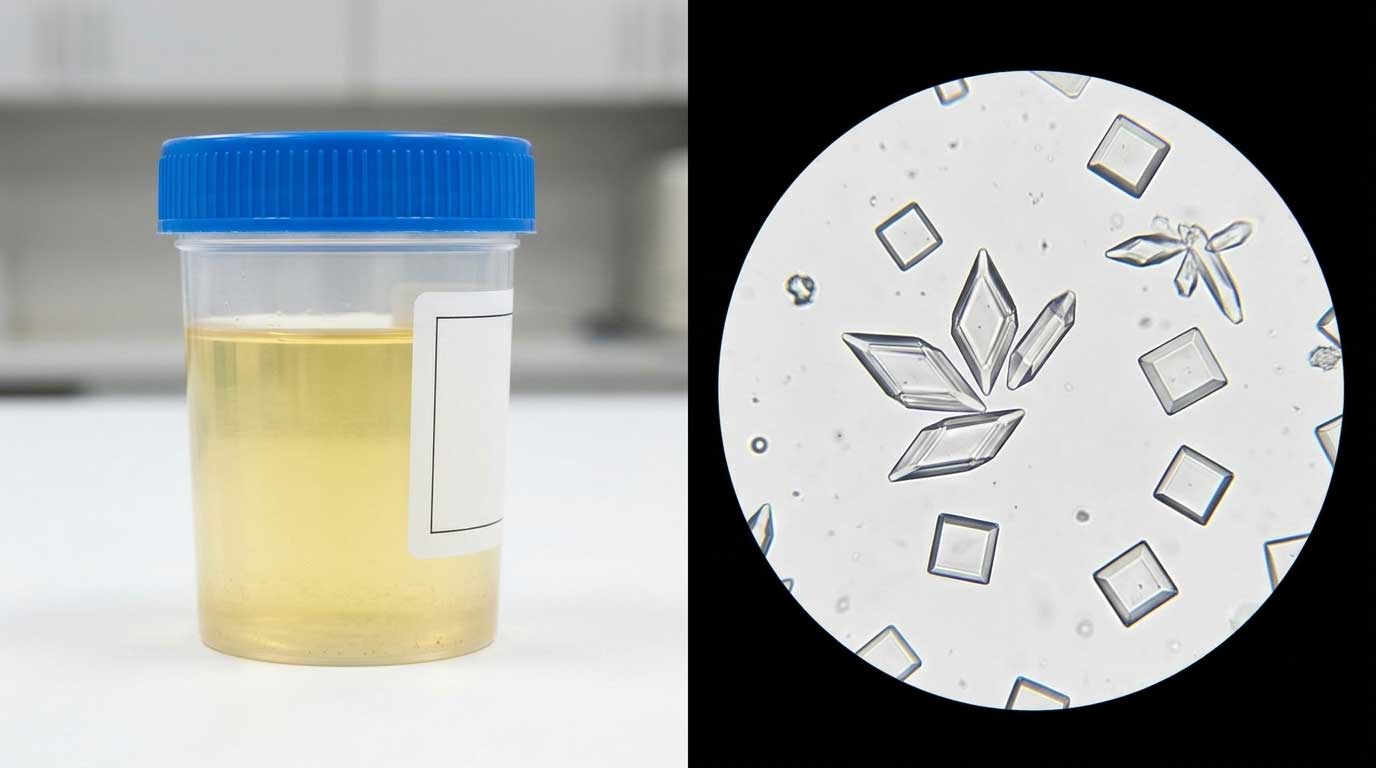
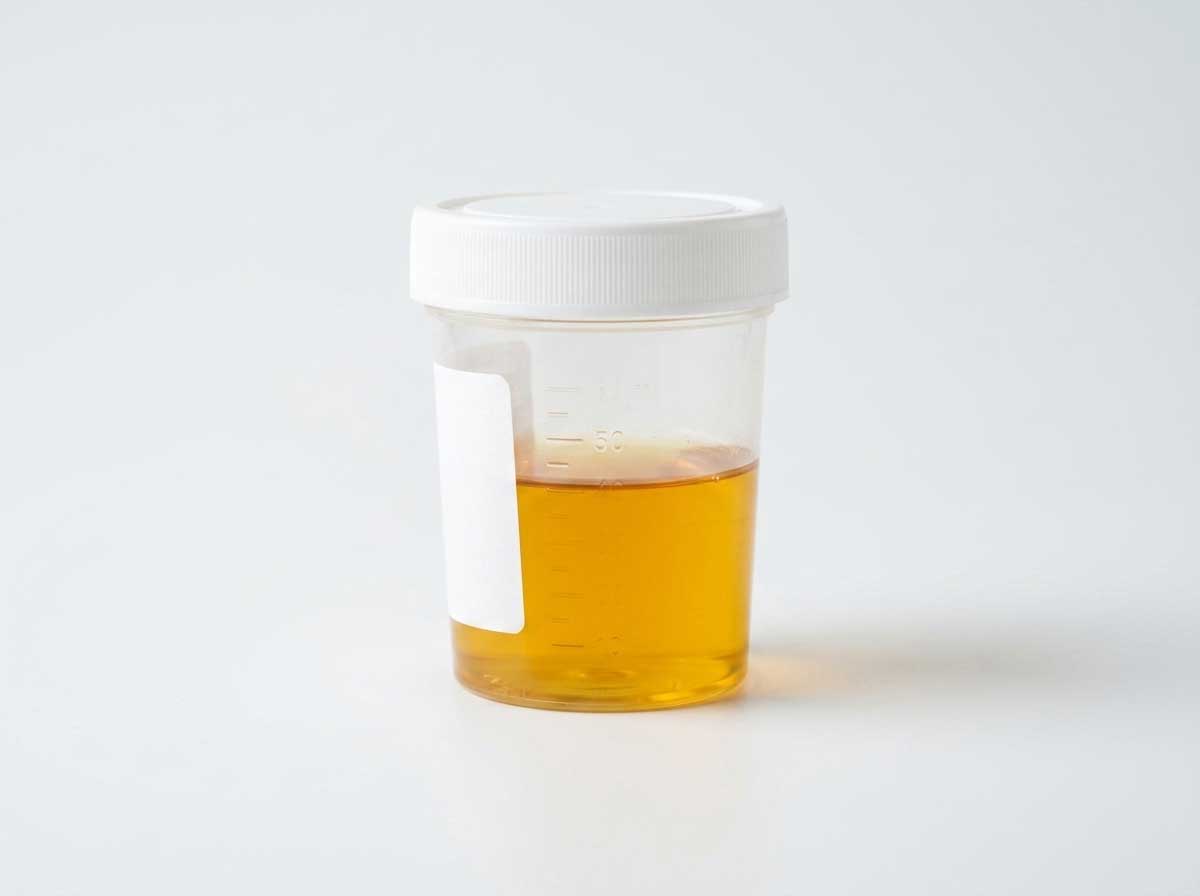
Our AI tool can assess urine color and clarity from a photo — but obviously not smell. If the smell is the main concern but urine looks normal, see a vet for a urinalysis.
Does the Urine Look Normal?
Even if AI can't smell urine, we can check color, clarity, and visible blood — often these correlate with the smell change.
Disclaimer: This article is for informational purposes only and is not a substitute for professional veterinary advice. Always consult a licensed veterinarian for diagnosis and treatment of your pet's health conditions.