Black Spots on Dog Tongue: Normal Breed Pigmentation or Something Worse?
Black spots on your dog's tongue? Usually completely normal in Labs, Goldens, GSDs, and many breeds. Here's how to tell benign lentigo from rare concerning changes.
Published 2026-04-19

You peeked in your dog's mouth and noticed black spots on their tongue. Maybe you've seen them forever, maybe they look new. The internet is confusing — some sites suggest it means your dog has Chow Chow ancestry, others mention cancer, and some folklore claims it means a "wise" or "loyal" dog.
Here's the straightforward truth: in the vast majority of cases, black spots on a dog's tongue are completely normal and harmless. Let's cover what causes them, which breeds are most commonly affected, and the rare scenarios where they do need a vet check.
What Are Black Spots on a Dog's Tongue?
The technical term is LENTIGO — hyperpigmentation where extra melanin (the pigment that determines color) is deposited in the tongue tissue. It's essentially the canine version of a harmless birthmark or age spot. The pigment is in the outer layer of the tongue and doesn't interfere with taste, eating, or health.
Two distinct patterns exist:
- ✓SCATTERED SPOTS — one or several flat black spots on an otherwise pink tongue. Common in Labradors, Goldens, GSDs, and many mixed breeds.
- ✓FULL BLUE-BLACK TONGUE — the ENTIRE tongue is dark blue or black. This is a BREED TRAIT seen in Chow Chow and Chinese Shar-Pei, present from birth. This is not a disease.
What Breeds Have Black Spots on Their Tongues?
Very common in many breeds — not at all limited to Chow descendants. Frequently affected breeds:
- ✓Labrador Retriever — extremely common; many Labs have 1-3 black spots
- ✓Golden Retriever — common, especially as they age
- ✓German Shepherd — frequent; may be present from puppyhood or appear in adulthood
- ✓Dalmatian — often have spots on tongue matching their coat pattern
- ✓Rottweiler
- ✓Newfoundland
- ✓Mastiff (English, French, Neapolitan, Bullmastiff)
- ✓Doberman Pinscher
- ✓Belgian Malinois and Belgian Tervuren
- ✓Airedale Terrier
- ✓Cocker Spaniel
- ✓Chow Chow and Shar-Pei (solid blue-black tongue, a breed-defining trait)
- ✓Any mixed-breed dog — tongue pigmentation can come from many genetic sources
The Chow Chow Ancestry Myth
A common folklore: "if your dog has black spots on the tongue, it must have Chow Chow or Shar-Pei in its bloodline." This is NOT accurate.
Tongue spotting (lentigo) is a form of hyperpigmentation that can occur in any breed due to normal melanin variation — similar to how humans can have freckles, moles, or birthmarks regardless of ancestry. DNA tests on spotted-tongue dogs consistently show most have zero Chow or Shar-Pei ancestry. Solid blue-black tongues ARE specific to Chow/Shar-Pei genetics, but scattered spots are a general canine trait found across most breeds.
Is It Normal for Dogs to Have Black Spots on Their Tongues?
Yes — completely normal in the vast majority of cases. Key features of benign lentigo:
- ✓FLAT — you can't feel a bump if you ran your finger over it (though you shouldn't — dogs dislike having tongues handled)
- ✓UNIFORM color — solid black or dark gray without mixed colors inside
- ✓STABLE — present for months or years without visible change
- ✓PAINLESS — dog doesn't react when that area touches food
- ✓REGULAR borders — smooth edges, not jagged
- ✓NOT BLEEDING — no blood, no ulceration
- ✓NOT INTERFERING with eating, drinking, or panting
- ✓NO BAD BREATH associated with the spot location
If your dog has had these spots since puppyhood OR you've seen them develop slowly over years, and they meet all the above criteria, they are almost certainly harmless lentigo.
When Black Spots ARE Concerning
Although rare, a few scenarios DO warrant a vet check:
1. Oral Melanoma (Rare but Serious)
Melanoma is malignant cancer arising from melanin-producing cells. Most common on gums, palate, or lip margins — less often on the tongue itself. Signs that a dark tongue spot might be melanoma, NOT lentigo:
- ✓NEW appearance — the spot definitely wasn't there weeks or months ago
- ✓RAISED — you can see it lifted above the tongue surface
- ✓GROWING in size or changing shape
- ✓IRREGULAR borders — jagged, asymmetric edges
- ✓BLEEDING — even occasional
- ✓ULCERATED — surface looks raw or wet
- ✓Mixed colors — black with red, brown, or gray mottling
- ✓BAD BREATH that's new or noticeably worse
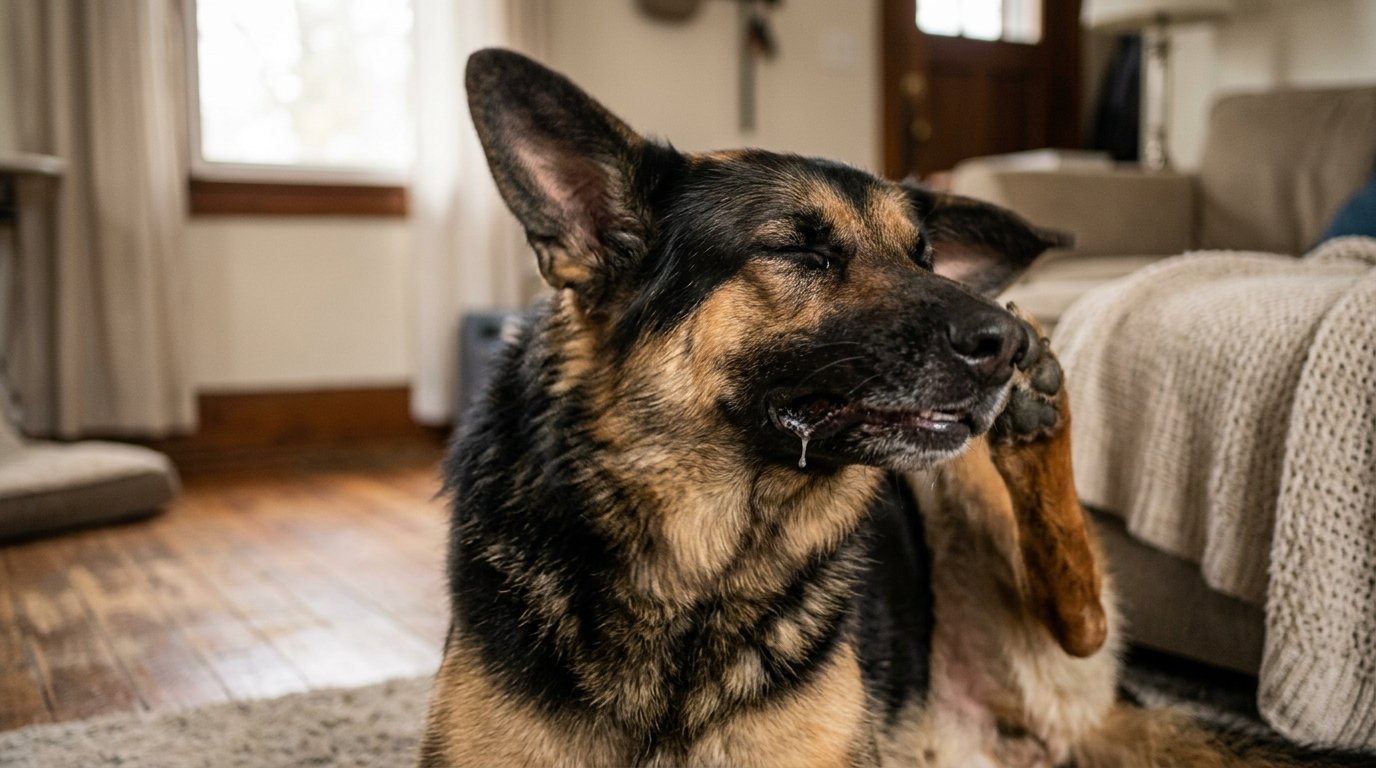
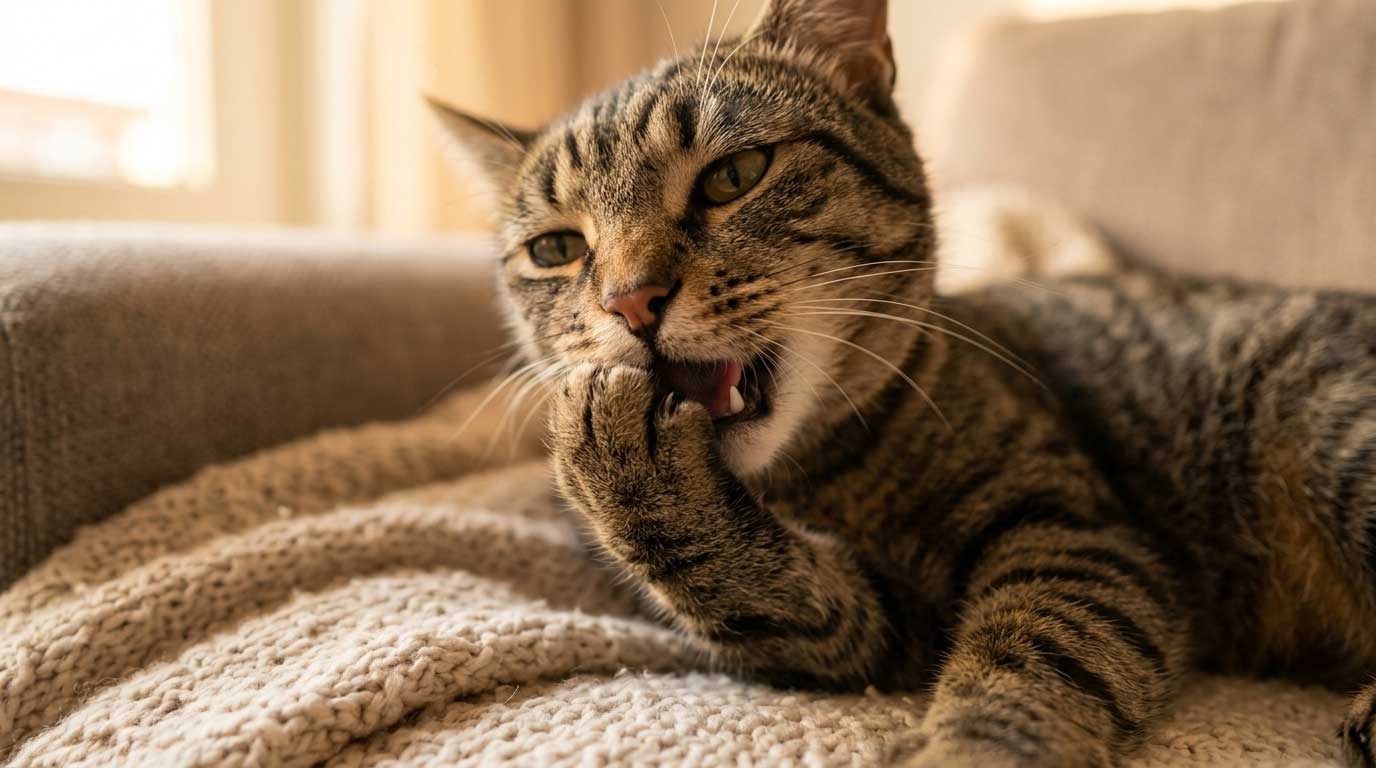
- ✓Dog shows mouth discomfort — dropping food, drooling, pawing at mouth, reluctant to eat
Oral melanoma in dogs is aggressive but treatable if caught early. Standard workup: biopsy or fine-needle aspirate, chest X-rays to check for lung spread, lymph node palpation. Treatment can include surgery, radiation, and the Oncept melanoma vaccine. Small-breed older dogs (especially over 10 years) have the highest risk.
2. Bruising (Hematoma)
A single dark spot that appeared suddenly after known trauma (bit tongue, ran into something, chewed something sharp). Usually resolves within 1-2 weeks like a bruise elsewhere on the body. If it doesn't resolve, vet check.
3. Necrotic Tissue
Dead tissue from severe localized infection or prior injury. Almost always accompanied by foul smell, visible damage, or obvious signs the dog is unwell. Rare but possible in dogs with weakened immune systems or complex dental disease.
4. Certain Medications or Conditions (Rare)
Tetracycline antibiotics, some chemotherapy drugs, and a few metabolic conditions can cause tongue pigmentation changes. Your vet will know the history.
What About Chow Chow Tongues?
Chow Chow tongues are SOLID blue-black, not spotted. Present from around 2-3 months of puppyhood, once the pigmentation fully develops. Chinese Shar-Pei share this trait. Mixed-breed dogs with Chow/Shar-Pei ancestry may have partial dark tongue coloration.
IMPORTANT: A Chow Chow's blue-black tongue is NOT cyanosis and NOT an emergency — it's a breed-defining characteristic. If your Chow suddenly has a DIFFERENT color (more purple, whitish, or mottled), that's the concerning change — not the baseline blue-black.
Monitoring at Home
If your dog has existing tongue spots, a simple monthly check keeps you ahead of trouble:
- ✓Open your dog's mouth gently during a calm moment — reward with a treat
- ✓Look at the tongue surface, lip margins, gums, and roof of mouth
- ✓Note existing spots — their size, shape, color, location
- ✓Take a phone photo once a year or when anything looks different
- ✓Watch for: NEW spots, GROWING spots, RAISED spots, BLEEDING, or BAD BREATH
This takes 60 seconds per month and catches oral issues before they become serious.
Superstition vs Reality
You may have heard black tongue spots mean your dog is "loyal," "smart," "blessed," or has Chow ancestry. These are folklore — tongue pigmentation has no relationship to personality or intelligence. What it DOES mean: your dog has normal melanin deposition, which most dogs have to some degree. Nothing more, nothing less.
Bottom Line
Black spots on a dog's tongue are almost always benign lentigo — harmless pigmentation present in many breeds. If the spots are flat, stable, painless, and have been there for months or longer, you almost certainly have nothing to worry about. Only NEW, raised, changing, bleeding, or irregular spots need a vet check. And a Chow Chow's solid blue-black tongue is a normal breed trait, not a disease.
Not sure if what you're seeing is benign lentigo or something to check? Upload a photo and let AI assess the spot characteristics.
Benign Lentigo or Something to Check?
Upload a photo of your dog's tongue — AI assesses spot characteristics and suggests whether a vet visit is warranted.
Disclaimer: This article is for informational purposes only and is not a substitute for professional veterinary advice. Always consult a licensed veterinarian for diagnosis and treatment of your pet's health conditions.