Is My Cat Overgrooming? How to Tell + What Actually Stops It
Overgrooming affects up to 10% of cats. Here's how to tell if your cat is overgrooming, why it happens, and what actually stops it — not just "reduce stress."
Published 2026-04-19

Up to 10% of cats develop excessive grooming behavior at some point in their lives. For owners, it's often hard to spot — cats groom in private and bald patches appear "suddenly" from the owner's perspective. Here's a practical guide to recognizing overgrooming, understanding why it happens, and actually fixing it.
How to Tell If Your Cat Is Overgrooming
Visual Clues on the Cat
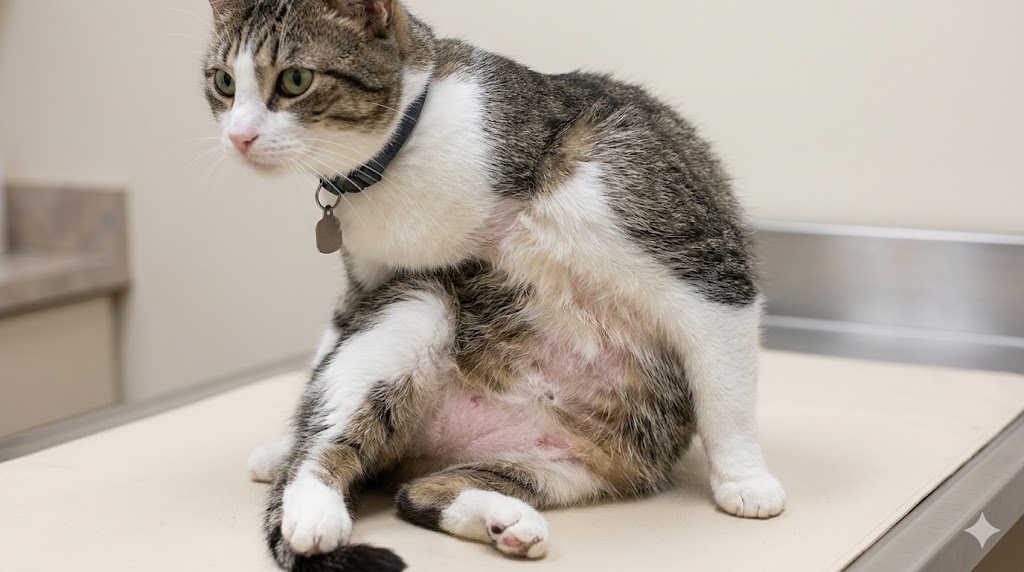
- ✓BALD OR THINNING patches in areas she can reach with her tongue — belly, inner thighs, back legs, flanks, forelegs, base of tail
- ✓Hair is BROKEN AT THE SHAFT (when you feel the stubble it's not sharp like growing fur, but blunt-ended like it was cut)
- ✓"Barbered" appearance — short even fur as if clipped
- ✓Skin underneath usually NORMAL — not red, not scaly
- ✓Pattern may be symmetric (affecting both sides equally)
- ✓Normal fur elsewhere, especially on unreachable areas (top of head, between shoulders)
Behavioral Clues
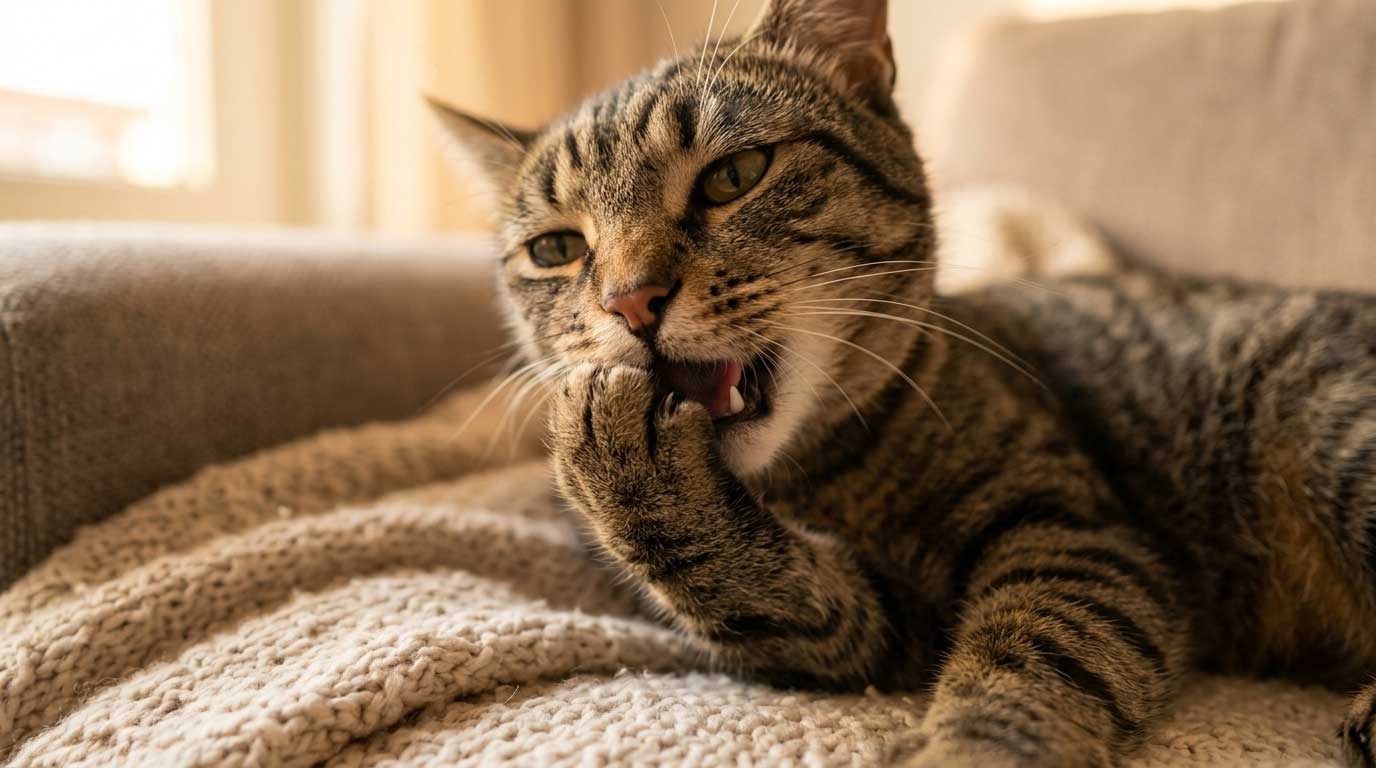
- ✓Frequent intense grooming sessions, especially of one particular area
- ✓Stops briefly when approached or distracted, resumes when she thinks you're not watching
- ✓May groom during or after stressful events (vet visit, new pet introduction, loud noises)
- ✓May show a "trance-like" focused grooming appearance
- ✓Sometimes visible licking in the bald area even during rest
- ✓Extra-frequent grooming ritual before bed or in early morning
What DOESN'T Look Like Overgrooming
- ✓Hair loss on TOP of head, between shoulder blades, or other unreachable areas — external cause
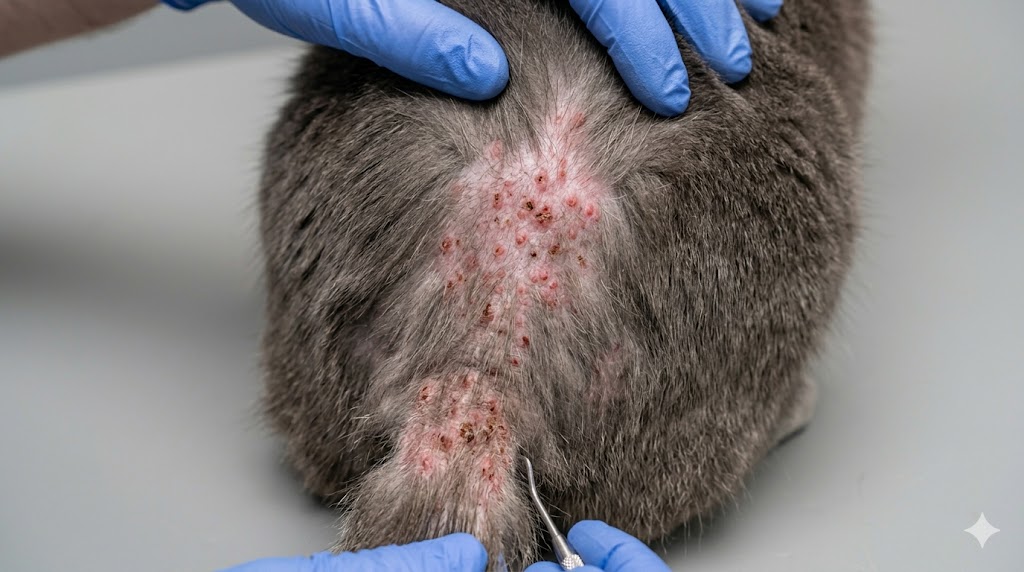
- ✓Bald spots with red/crusty/scaly skin — infection or allergic reaction, not self-trauma
- ✓Hair that falls out easily when you touch it (not broken, but root-absent) — follicular disease
- ✓Hair thinning with weight gain and lethargy — hypothyroid (rare in cats) or hyperthyroid pattern
- ✓Circular bald patches with scaly edges — ringworm
Why Cats Overgroom: The Medical vs Psychological Split
Every case of cat overgrooming has a CAUSE. The cause is almost always in one of two categories:
Medical Causes (Must Rule Out FIRST)
This is critical: the biggest mistake owners and some vets make is assuming "it's just stress" without proper workup. Most overgrooming has a medical driver. Common medical triggers:
- ✓HIDDEN FLEA ALLERGY — #1 medical cause; even without visible fleas, one bite can cause weeks of over-grooming in allergic cats
- ✓FOOD ALLERGY — frequent cause; often presents primarily as over-grooming rather than obvious itching
- ✓ENVIRONMENTAL ALLERGIES (atopy) — pollen, dust mites, mold; seasonal or year-round
- ✓SKIN INFECTION — bacterial (pyoderma) or yeast (Malassezia)
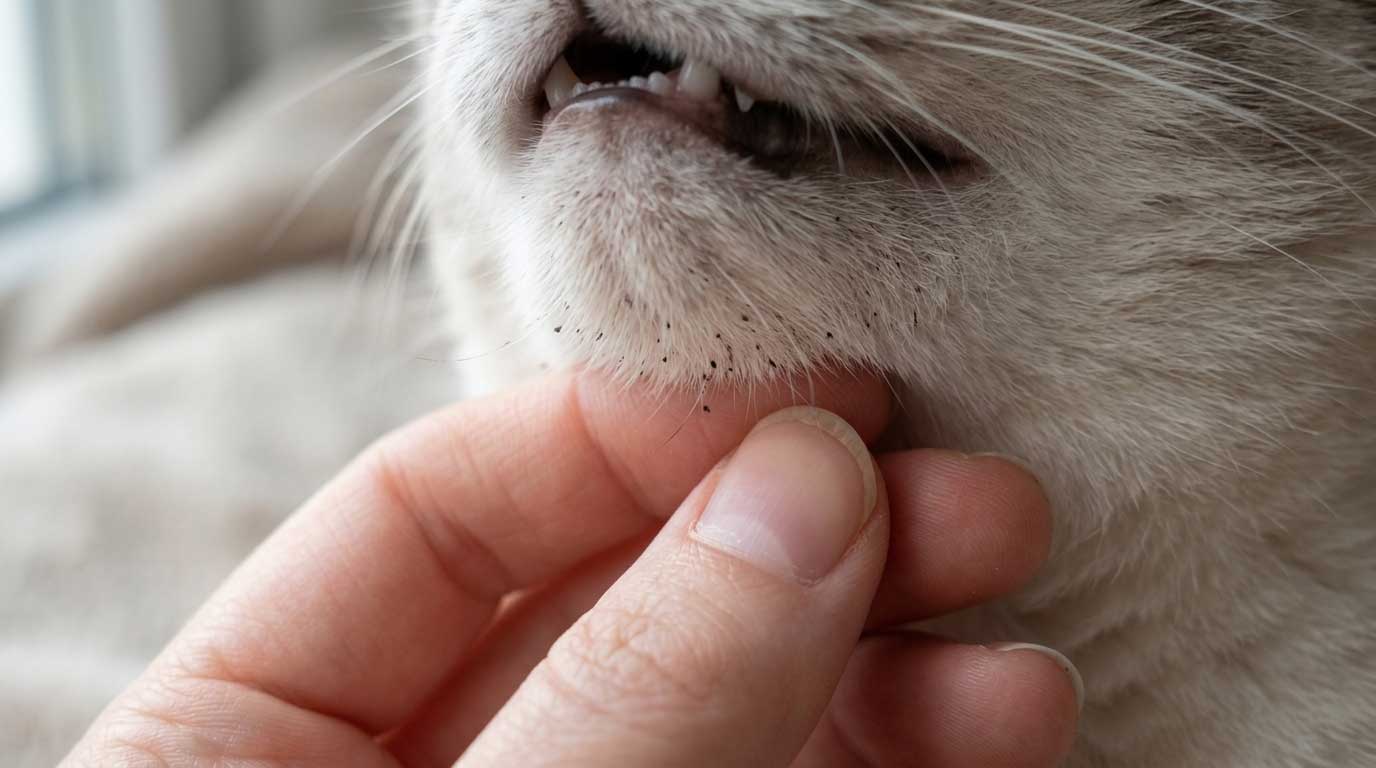
- ✓PAIN — arthritis (senior cats grooming affected joints), lower urinary tract disease (grooming belly), anal gland discomfort (grooming tail base), dental pain (grooming face)
- ✓Parasites other than fleas — mites (demodex, Cheyletiella), lice
- ✓Rarely: endocrine disease (hyperthyroidism can increase grooming), neurological conditions
Psychological Causes (After Medical Excluded)
If thorough medical workup is negative, psychogenic alopecia is diagnosed. Common psychological triggers:
- ✓Chronic stress — ongoing situation rather than acute event
- ✓Inter-cat conflict in multi-cat households (often unnoticed by owners — cats communicate through body language humans miss)
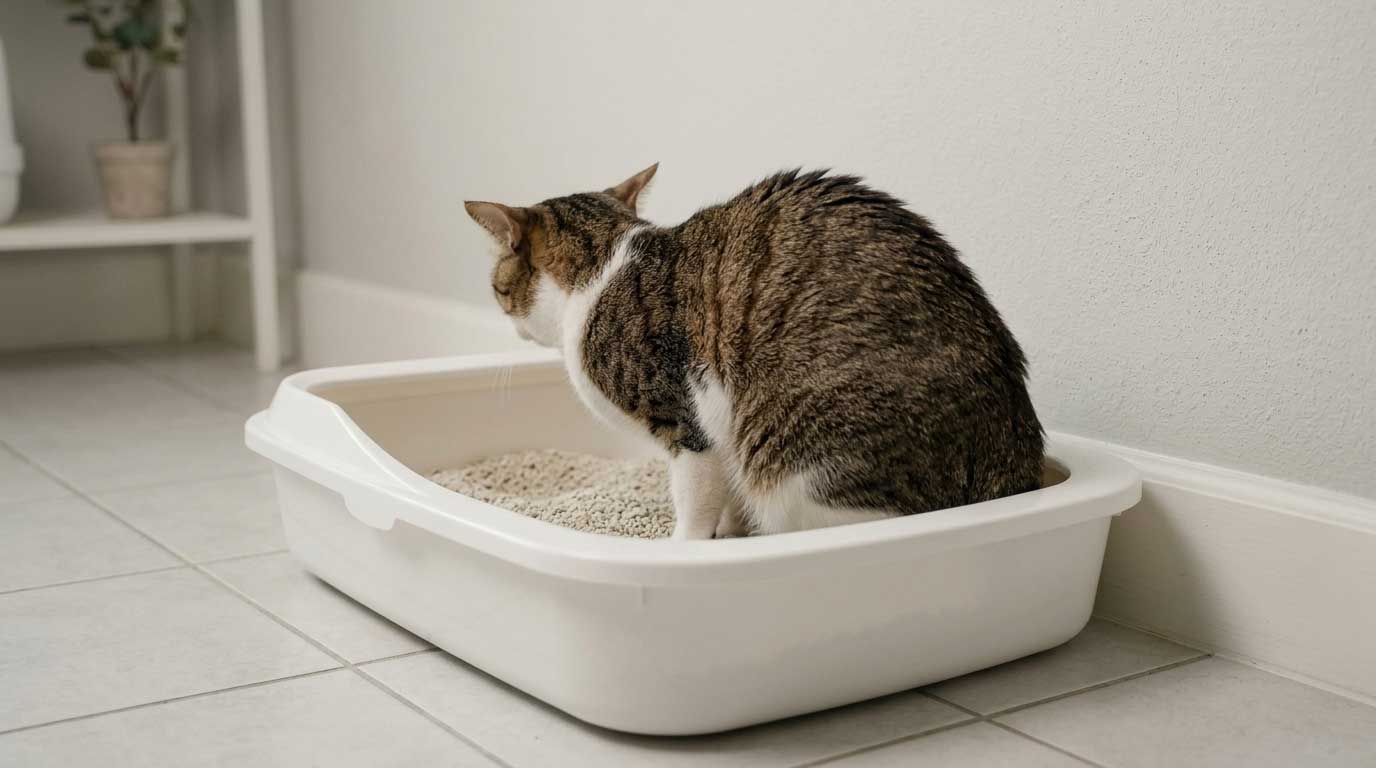
- ✓Inadequate resources — too few litter boxes, food/water stations, resting spots, hiding places
- ✓Loss of companion — cat or human
- ✓Moving homes, renovation, new furniture
- ✓New pet, new baby, changed schedule
- ✓Boredom in indoor-only cats without enrichment
- ✓Anxiety disorders — some cats have naturally anxious temperaments
What Actually Stops Overgrooming (Evidence-Based)
Step 1: Rule Out Medical Causes (Weeks 1-8)
- ✓Start prescription flea prevention for ALL pets in household (Revolution, Bravecto, Credelio for cats) — do this even without visible fleas; many cases resolve here
- ✓Vet exam with skin scraping (rule out demodex/mites) and cytology (rule out bacterial/yeast infection)
- ✓Fungal culture for ringworm if any suspicious areas
- ✓Full bloodwork: CBC, chemistry, T4, FeLV/FIV, sometimes Bartonella
- ✓If indicated: hypoallergenic diet trial — strict 8-12 weeks on novel protein or hydrolyzed diet
- ✓If indicated: pain workup for senior cats (X-rays for arthritis, urinalysis for urinary tract)
Step 2: Address Environment (In Parallel)
- ✓Feliway pheromone diffusers in main living areas — takes 2-4 weeks to show effect
- ✓Increase enrichment: interactive play 15-30 min daily, food puzzles, window perches, rotating toys
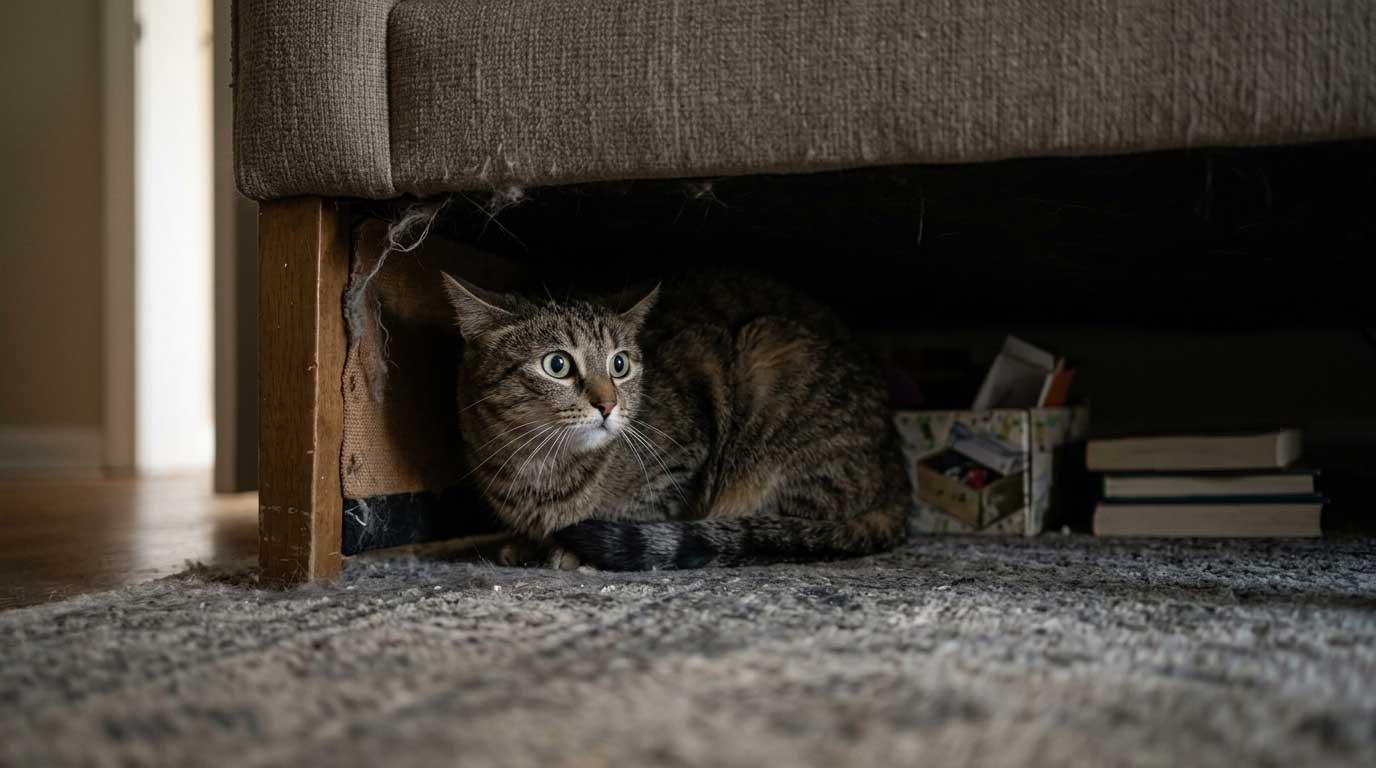
- ✓Provide vertical territory (cat trees, shelves) and hiding spots — especially in multi-cat homes
- ✓Review resources: 1+ litter box per cat plus one extra, multiple food/water stations, quiet resting areas
- ✓Address inter-cat conflict: feed separately, create vertical escape routes, sometimes short-term separation for reset
- ✓Maintain routine: feeding times, play times, bedtime — cats thrive on predictability
Step 3: Medication for Persistent Cases
If thorough medical workup is negative and environmental changes don't resolve grooming after 6-8 weeks:
- ✓FLUOXETINE (Prozac) — most commonly used; takes 4-6 weeks to show effect; about 50% response rate
- ✓CLOMIPRAMINE (Clomicalm) — another option; similar mechanism
- ✓GABAPENTIN — for suspected pain-driven grooming, or as calming adjunct
- ✓ATOPICA (cyclosporine) — for allergic-type over-grooming even if specific allergen not identified
- ✓Anti-anxiety medications ALWAYS in combination with environmental modification — not a substitute
What DOESN'T Work
- ✓Punishment — increases stress, makes it worse
- ✓Yelling "no" — cat interprets as aggression or general household stress
- ✓Spraying with water — damages trust, doesn't stop behavior
- ✓Bitter spray on the bald area — most cats just groom elsewhere
- ✓Ignoring it hoping it resolves — rarely works for entrenched habits
- ✓E-collar alone — stops the behavior but doesn't address cause; high stress; short-term use only
- ✓CBD oil or "natural remedies" — limited evidence, doesn't address medical causes
Prognosis
With proper workup + treatment: most overgrooming cats improve substantially within 2-6 months. Fur regrows within 2-3 months once the grooming stops. Complete "cure" depends on cause — flea allergy requires lifelong prevention; psychogenic may need ongoing medication and environmental management. Early intervention has better outcomes — the longer the behavior is entrenched, the harder it is to break even with proper treatment.
Not sure if what you're seeing is overgrooming? Upload a photo — AI identifies self-trauma patterns (broken hair + cat-reachable location) and can help you distinguish overgrooming from other hair loss causes.
Is Your Cat Overgrooming?
Upload a photo — AI identifies the self-trauma pattern and helps you plan the medical workup vs stress intervention.
Disclaimer: This article is for informational purposes only and is not a substitute for professional veterinary advice. Always consult a licensed veterinarian for diagnosis and treatment of your pet's health conditions.