Cat Eye Infection: Feline Herpesvirus, Chlamydia & Treatment
Cat eye infection isn't like dog eye infection — it's usually herpesvirus or chlamydia. Here's what causes it, how to treat it, and why herpesvirus can be lifelong.
Published 2026-04-19

Cat eye infections are very common — but the causes are dramatically different from dogs. While dogs usually get plain bacterial conjunctivitis, 80% of cat eye infections involve FELINE HERPESVIRUS, and many also involve CHLAMYDIA felis — a cat-specific bacterium. Understanding what's actually causing your cat's infected eye changes how you treat it.
The 5 Main Causes of Cat Eye Infection
1. Feline Herpesvirus-1 (FHV-1) — The #1 Cause
Roughly 80-90% of cats have been exposed to feline herpesvirus at some point. Key facts:
- ✓Transmitted cat-to-cat; very common in shelters, multi-cat households, stray origins
- ✓Once infected, cats are LIFELONG CARRIERS
- ✓Virus hides dormant in nerve tissue, reactivates during STRESS (new pet, moving, illness, boarding)
- ✓Each flare-up: watery to yellow-green eye discharge + sneezing + sometimes fever
- ✓Can cause corneal ulcers specific to herpes (dendritic ulcers)
- ✓Kittens born to infected mothers almost always infected
- ✓Treatment: antiviral eye drops (cidofovir, idoxuridine) for severe cases; L-lysine supplementation (debated efficacy); antibiotic drops for secondary bacterial infection; stress reduction
Important: herpesvirus CANNOT be cured, but flares can be managed. Reduce stress, maintain vaccinations, treat flares promptly.
2. Chlamydia felis — Bacterial Cat-Specific
Chlamydia felis is a different species from human Chlamydia — doesn't spread between species. Features:
- ✓Most common in kittens (2-6 months) and multi-cat households
- ✓Causes chronic conjunctivitis that may persist weeks/months if untreated
- ✓Yellow-green discharge, sometimes mild respiratory signs
- ✓Often one eye first, spreads to both
- ✓Treatment: oral DOXYCYCLINE for 3-4 WEEKS (important — shorter courses risk relapse); plus topical antibiotic drops
- ✓Sometimes empirically prescribed when chronic conjunctivitis suspected
3. Mycoplasma felis
Small bacteria often co-infecting with herpesvirus. Similar treatment (doxycycline). Often found together in complex URI cases.
4. Calicivirus
Viral cause of cat upper respiratory infection. Primarily causes mouth ulcers and respiratory signs; eye involvement secondary. Less focused on eyes than herpesvirus but contributes.
5. Secondary Bacterial Infection
When viral disease damages the eye, normal bacterial flora (Staphylococcus, Streptococcus) can invade. Yellow-green thick discharge is usually secondary bacterial infection on top of viral cause. Antibiotic drops treat this effectively.
Recognizing Cat Eye Infection
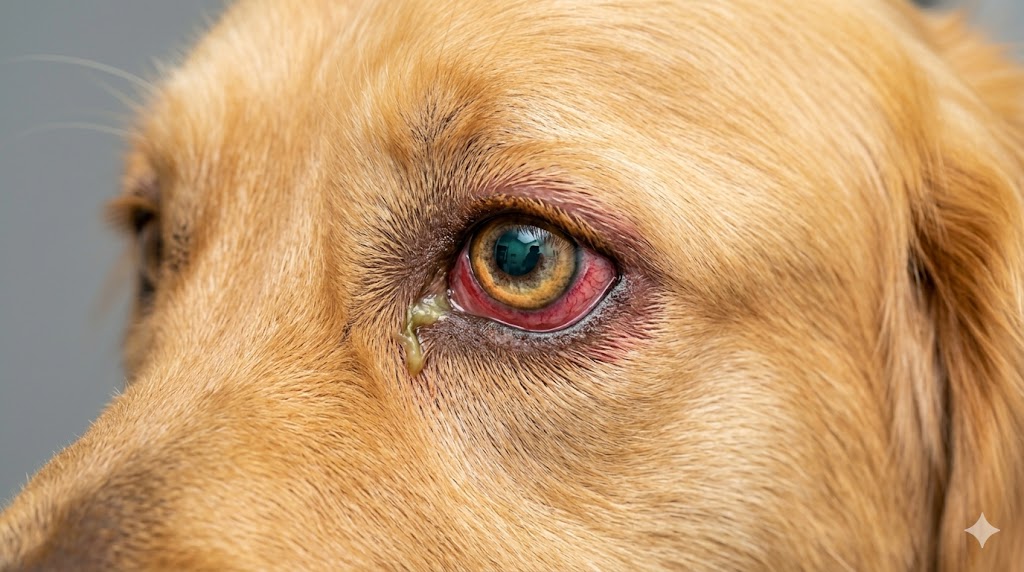
- ✓Yellow or green discharge (bacterial; secondary to viral in most cases)
- ✓Watery clear discharge progressing to thicker colored discharge
- ✓Squinting or holding eye closed
- ✓Eye redness
- ✓Third eyelid showing (pink membrane in inner corner)
- ✓Sneezing (strong indicator of URI)
- ✓Reduced appetite (CRITICAL — if not eating for 24+ hours = urgent)
- ✓Lethargy
- ✓Sometimes mild fever
- ✓One eye first, often both within 1-2 days
How Did My Indoor Cat Get an Eye Infection?
Common pathways even for indoor cats:
- ✓FELINE HERPESVIRUS HIDING DORMANT — virus was already in your cat (probably from kittenhood); recent stress triggered a flare-up
- ✓NEW CAT in household brought virus
- ✓HUMANS carrying virus on hands/clothes from other cats
- ✓BORDERED OR SHELTER EXPOSURE during recent vet visit or boarding
- ✓STRESSFUL EVENT (moving, construction, new pet, loss of pet) triggered dormant herpesvirus reactivation
Treatment Approach
Vet Visit (Required for Moderate-Severe)
The vet will:
- ✓Examine eye + check for corneal ulcer with fluorescein stain
- ✓Assess for URI signs (temperature, nasal discharge, lung sounds)
- ✓Sometimes swab cytology to identify bacteria
- ✓Prescribe antibiotic eye drops (terramycin, tobramycin, oxytetracycline) 2-3x daily 7-14 days
- ✓Sometimes oral doxycycline if Chlamydia/Mycoplasma suspected (3-4 week course)
- ✓Antiviral drops for severe herpes flares
- ✓L-lysine supplementation for herpesvirus
- ✓Supportive care recommendations
Typical cost: $100-200 for exam + drops. More if oral antibiotics added.
Home Supportive Care
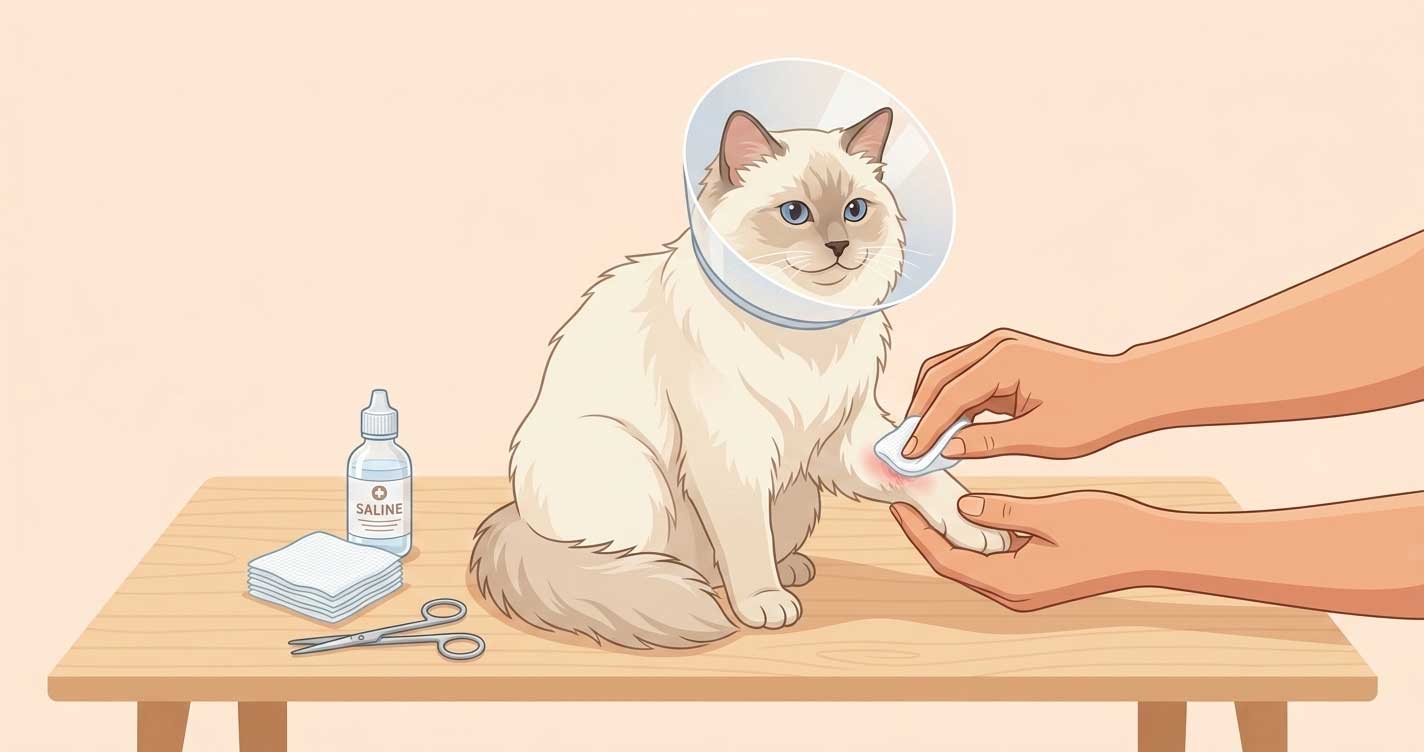
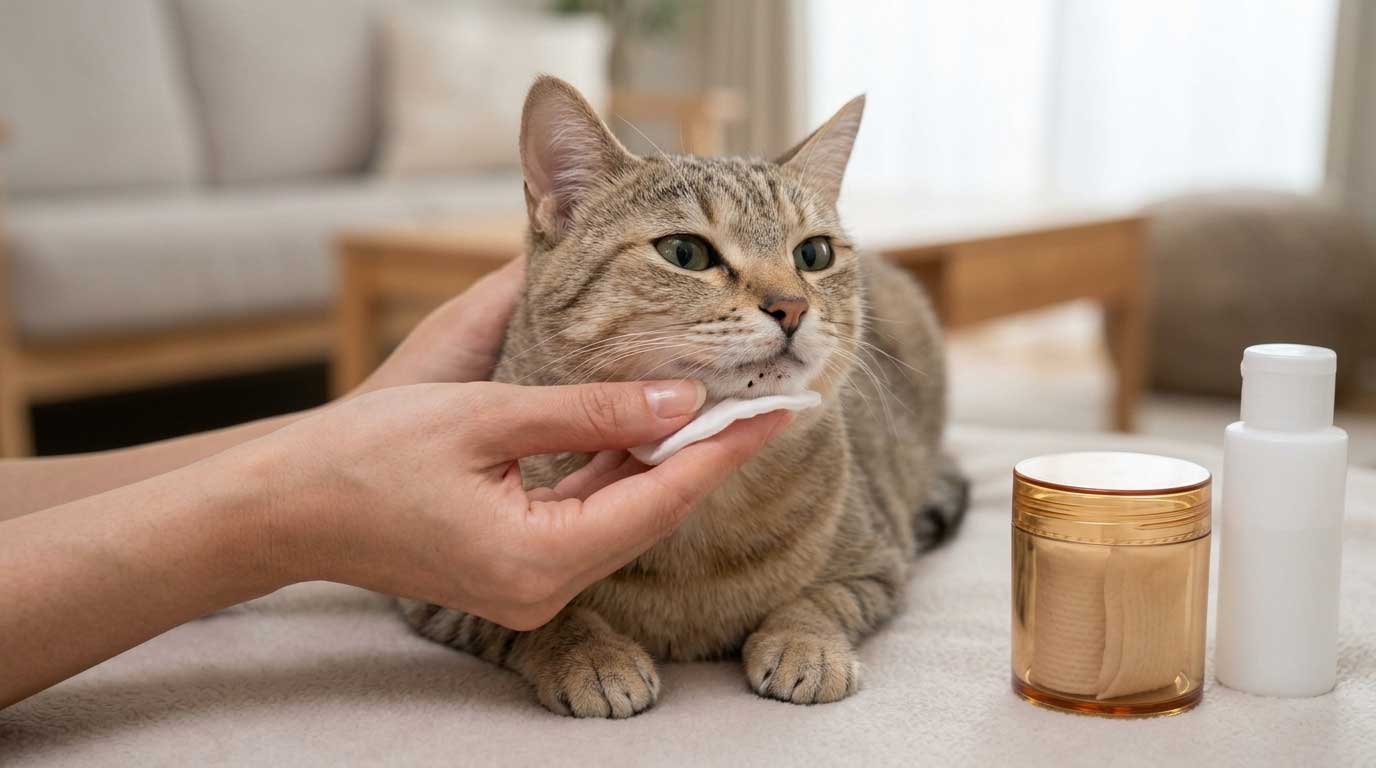
- ✓Gentle cleaning 2-3x daily with warm saline
- ✓Warm compresses 5-10 min 2-3x daily
- ✓Humidifier (eases breathing in URI)
- ✓Encourage eating with warm aromatic food (critical — cats stop eating fast)
- ✓Isolate from other cats
- ✓Reduce stressors
- ✓Complete full antibiotic course even if it looks better
- ✓E-collar if cat paws at eye
Prognosis
Most bacterial conjunctivitis: excellent with treatment, resolves in 7-14 days. Herpesvirus infection: flares resolve in 7-14 days but underlying virus persists for life; recurrent flares are possible. Chlamydia: excellent with proper 3-4 week doxycycline course; incomplete treatment = recurrence. Untreated infections: can cause corneal ulcers → vision loss; can spread to other cats; in kittens can cause permanent eye damage.
When to See the Vet URGENTLY
- ✓Kitten with any eye discharge
- ✓Cat not eating for 24+ hours with eye discharge
- ✓One eye with heavy squinting and pain
- ✓Cloudy or bluish eye appearance
- ✓Third eyelid covering a significant portion of eye
- ✓Breathing difficulty alongside eye issues
- ✓Blood from eye
Not sure if your cat has a bacterial infection, herpesvirus flare, or blocked tear duct? Upload a photo — AI identifies color and ranks likely feline-specific causes.
Identify Your Cat's Eye Problem
Upload a photo — AI differentiates herpesvirus, chlamydia, bacterial infection, and tear duct blockage.
Disclaimer: This article is for informational purposes only and is not a substitute for professional veterinary advice. Always consult a licensed veterinarian for diagnosis and treatment of your pet's health conditions.