Why Is My Dog Losing Hair Around the Eyes? Demodex, Allergies & More
Hair loss around a dog's eyes has 6 common causes — Demodex mange is #1 in puppies, but allergies, hypothyroidism, and infection are possible in older dogs.
Published 2026-04-19

Hair loss around a dog's eyes is one of the most common types of patchy alopecia — and it has a different list of causes than hair loss elsewhere on the body. The specific location narrows down the possibilities significantly. Here are the 6 most common causes and how to tell them apart.
1. Demodectic Mange (Demodex) — The #1 Cause in Puppies
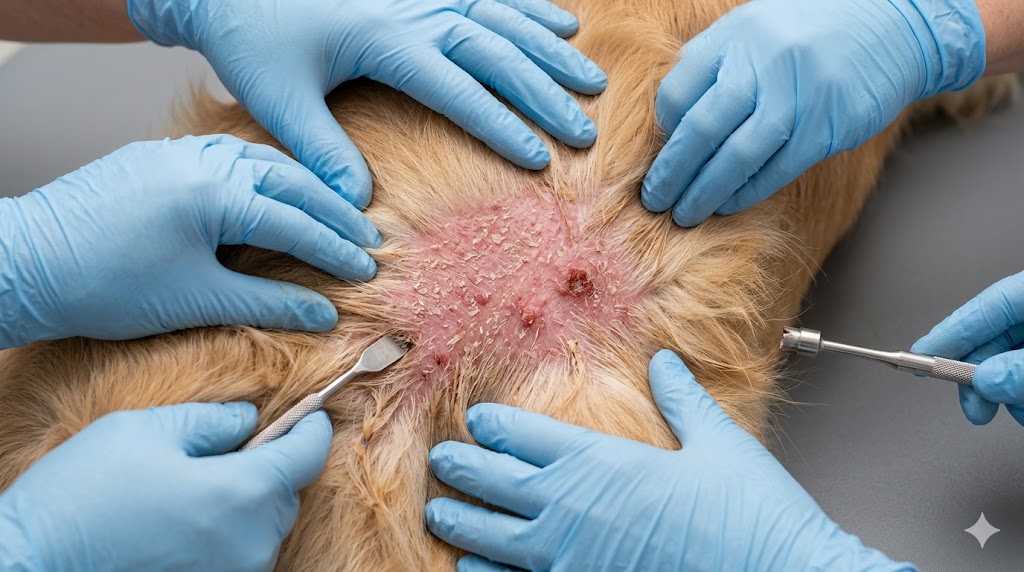
Demodectic mange is caused by Demodex canis mites that live normally on most dogs' skin in small numbers. In puppies under 18 months, these mites can sometimes multiply and cause hair loss. Classic pattern: LOCALIZED DEMODEX begins as 1-4 small bald patches, typically around the EYES, MUZZLE, or FRONT PAWS. Skin may look slightly reddened underneath but is usually NOT itchy. Affected dogs feel fine otherwise. Diagnosis: deep skin scraping — the vet scrapes the skin surface and examines the material under a microscope to find the mites. Treatment for localized demodex: often self-resolves in healthy puppies; vet may prescribe a flea/tick preventative (Bravecto, NexGard, Credelio) which also kills demodex mites. Hair regrows within 4-8 weeks as mites clear. Most puppy demodex resolves permanently. Generalized demodex (spreading, with body-wide patches, or in older dogs) is more serious and may indicate immune suppression — needs aggressive treatment and workup.
2. Allergies (Environmental or Food)
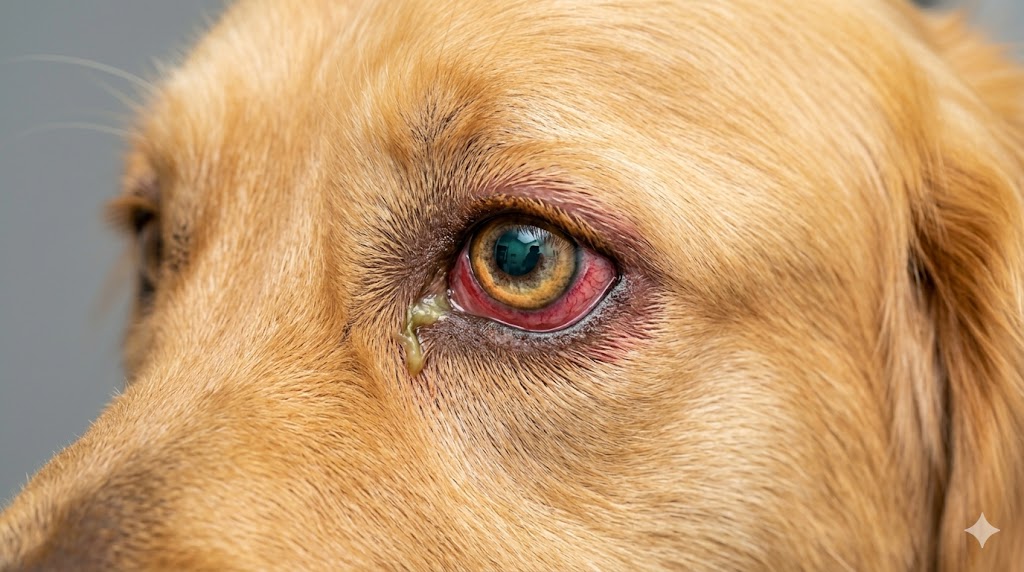
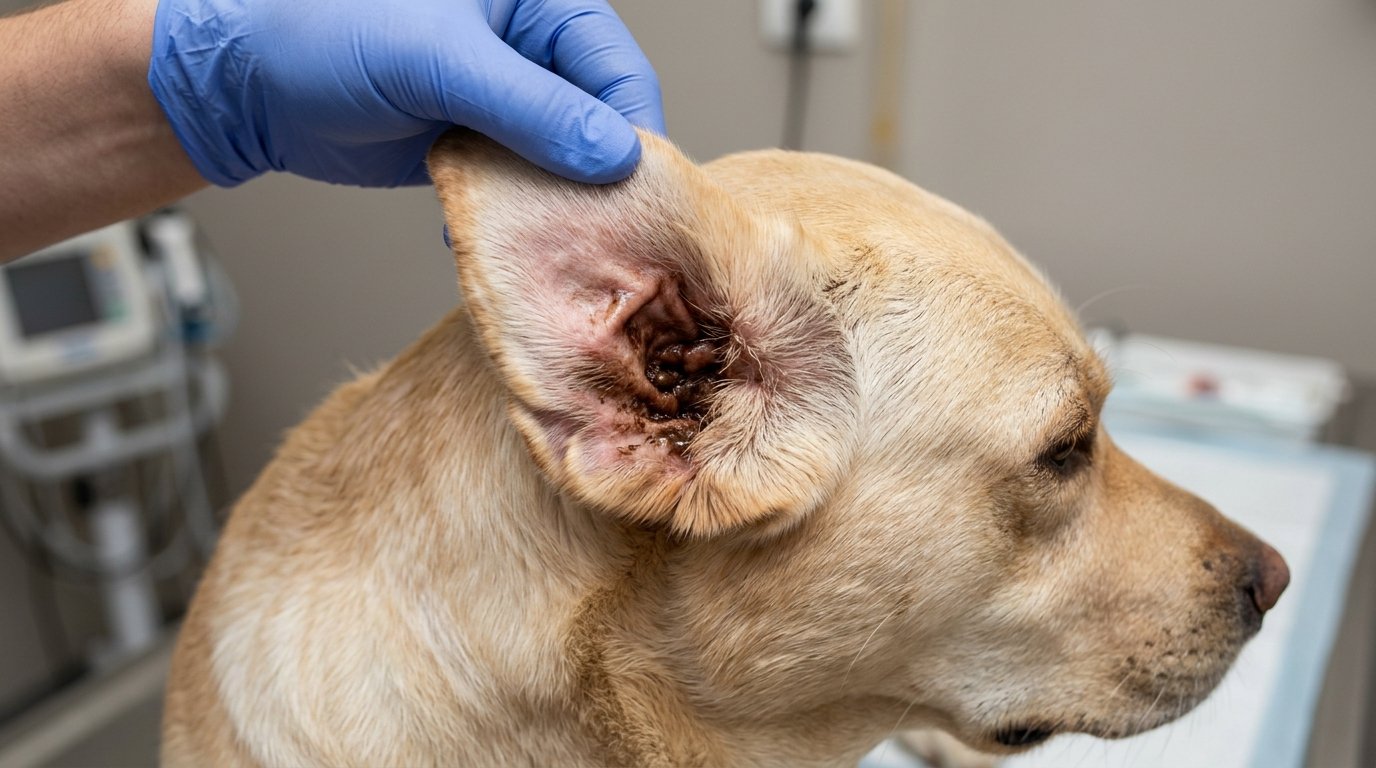
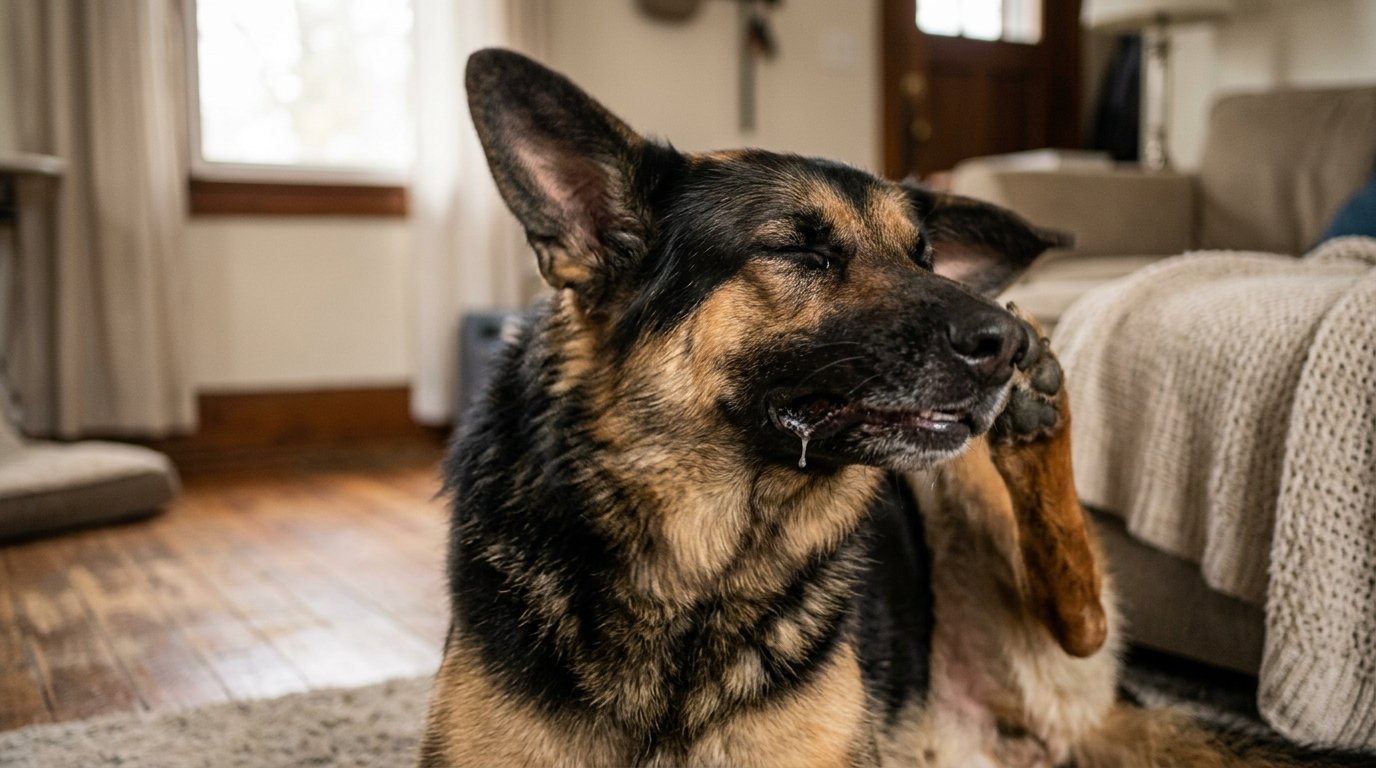
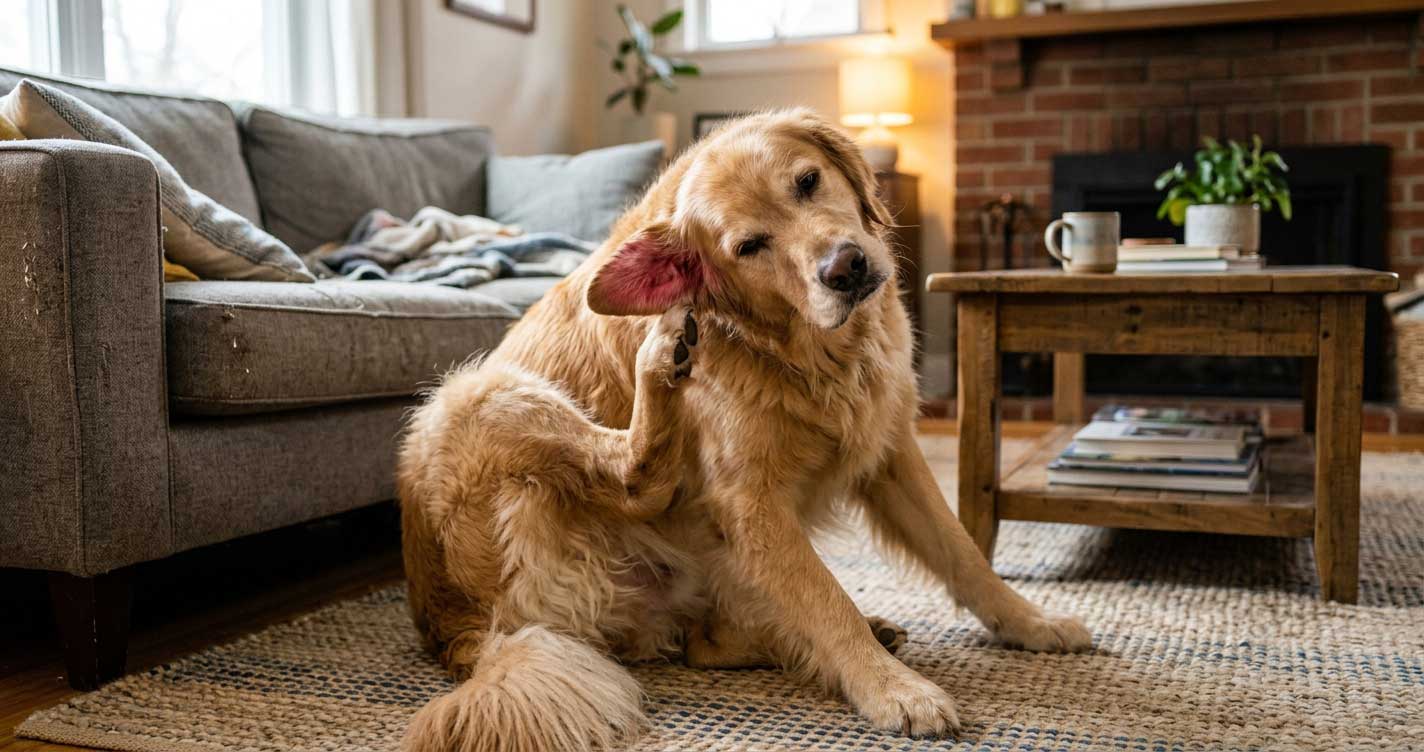
Dogs with atopic dermatitis (environmental allergies) or food allergies often develop hair loss around the eyes from face rubbing. Pattern: bilateral (both eyes affected), skin may be red and inflamed, often combined with: rubbing face on carpet/furniture, chewing paws, recurrent ear infections, itching elsewhere on body. Allergies also cause chronic eye discharge that moistens the surrounding fur, contributing to hair loss. Diagnosis: environmental allergies via elimination or allergy testing (serum or skin testing); food allergies via strict 8-12 week elimination diet. Treatment: Apoquel or Cytopoint for itching relief, hypoallergenic diet, immunotherapy ("allergy shots") for long-term management, treating secondary infections. Hair typically regrows once itching is controlled.
3. Hypothyroidism
In middle-aged to senior dogs, hypothyroidism can cause facial hair thinning — often described as "tragic face" or mask-like appearance. The hair thins around the eyes, on the bridge of the nose, and may extend down the muzzle. Usually paired with: other symmetric body-wide hair thinning (rat tail, trunk thinning), lethargy, weight gain, cold intolerance, slow heart rate. Diagnosis: thyroid blood panel. Treatment: daily oral levothyroxine. Hair regrows in 3-6 months, and the dog's entire demeanor often improves dramatically within weeks.
4. Skin Fold Dermatitis (Brachycephalic Breeds)
Brachycephalic (short-faced) breeds — Pug, Bulldog, French Bulldog, Shih Tzu, Pekingese, Boston Terrier — often have skin folds around the eyes that trap moisture and bacteria. Pattern: hair loss localized specifically within the skin folds, often with: odor, dark crusty discharge, redness, secondary bacterial or yeast infection. Diagnosis: visual exam, sometimes cytology to identify bacteria vs yeast. Treatment: gentle daily cleaning of the folds with a pet-safe antiseptic wipe, topical medication for infection, sometimes surgical fold reduction for severe cases. Prevention is lifelong management — these breeds need ongoing fold care.
5. Chronic Eye Discharge (Epiphora, Tear Staining)
Persistent wetness from excessive tearing causes hair loss through: constant moisture damaging fur, chemical irritation from tear proteins, secondary yeast/bacterial overgrowth in the wet area. Common in breeds with shallow eye sockets or blocked tear ducts — Maltese, Shih Tzu, Poodle, Cocker Spaniel. Causes of excessive tearing: conformational eye abnormalities, blocked nasolacrimal duct, eye irritation from hair (entropion, hair rubbing cornea), corneal problems, allergies. Treatment: identify and address the cause of excess tearing; tear stain removers (pet-safe); keeping the area clean and dry; hair typically regrows once tearing is controlled.
6. Ringworm (Fungal Infection)
Less common around eyes specifically but possible. Pattern: circular patches with scaly edges, often just one or two patches, may or may not itch. Highly contagious to other pets and humans. Diagnosis: fungal culture or PCR. Treatment: 4-12 weeks of topical antifungal shampoo + oral antifungal medication; environment decontamination.
Rare Causes Worth Mentioning
- ✓Juvenile cellulitis ("puppy strangles") — inflammatory swelling with hair loss on face and around eyes in young puppies; needs aggressive steroid treatment
- ✓Uveodermatologic syndrome (VKH-like) — autoimmune disease in certain breeds (Akita, Samoyed, Siberian Husky) causing eye inflammation + hair depigmentation around eyes
- ✓Pemphigus foliaceus — autoimmune skin disease causing crusting and hair loss, often starting on face
- ✓Dermatomyositis — genetic condition in Collies, Shetland Sheepdogs with facial hair loss
- ✓Self-trauma from pain (corneal ulcer, glaucoma) — dog rubs painful eye, losing fur nearby
How to Figure Out Which One You Have
Key questions that narrow the diagnosis:
- ✓AGE: Under 18 months → Demodex is #1 suspect; Over 5 years → allergies, hypothyroidism, or skin infection
- ✓BREED: Brachycephalic (Pug, Bulldog) → skin fold dermatitis; Maltese/Shih Tzu → tear staining; Akita/Samoyed → consider autoimmune
- ✓UNILATERAL vs BILATERAL: one eye only → trauma or localized demodex; both eyes → allergies, endocrine, or generalized cause
- ✓ITCHING: yes → allergies most likely; no → demodex, hypothyroid, SFA
- ✓DISCHARGE: clear + excessive → tear staining; purulent → infection; minimal → demodex or endocrine
- ✓OTHER BODY AREAS AFFECTED: yes → generalized cause (hypothyroid, generalized demodex); no → localized cause
What to Expect at the Vet Visit
For eye-area hair loss, the vet will typically:
- ✓Perform a SKIN SCRAPING to rule out demodex (fast, done in office)
- ✓Check for CORNEAL DAMAGE with fluorescein stain
- ✓Check TEAR PRODUCTION (Schirmer tear test) if discharge is an issue
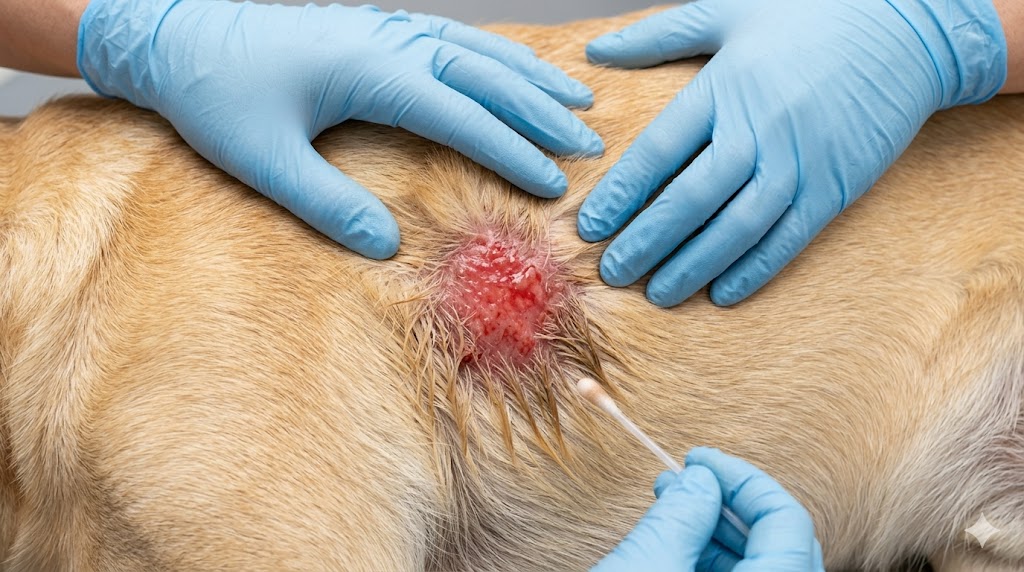
- ✓Take CYTOLOGY (swab) if infection suspected
- ✓Consider FUNGAL CULTURE if ringworm possible
- ✓Recommend BLOODWORK if endocrine disease suspected
Not sure what's causing the hair loss around your dog's eyes? Upload a photo — AI assesses the pattern (symmetric vs unilateral, inflammation level, breed-specific considerations) and suggests likely causes to ask your vet about.
Hair Loss Around Your Dog's Eyes?
Upload a photo — AI checks for classic demodex, allergy, or skin fold patterns and ranks the most likely causes.
Disclaimer: This article is for informational purposes only and is not a substitute for professional veterinary advice. Always consult a licensed veterinarian for diagnosis and treatment of your pet's health conditions.