Dog Has Pale Gums But Acting Normal — Should You Still Worry?
Your dog's gums are pale but they seem fine? Here's why "acting normal" can be dangerously misleading, and when pale gums need an ER trip regardless of behavior.
Published 2026-04-19

You lifted your dog's lip and noticed their gums look paler than usual — maybe pale pink, maybe white. But the dog is eating, wagging, playing, acting totally normal. Do you wait and see, or do you rush to the vet?
Short answer: don't rely on behavior. A dog with pale gums who is "acting normal" is one of the most dangerous scenarios in small-animal medicine, because several life-threatening conditions start this way — and by the time behavior changes, it's often too late.
Why "Acting Normal" Is Misleading
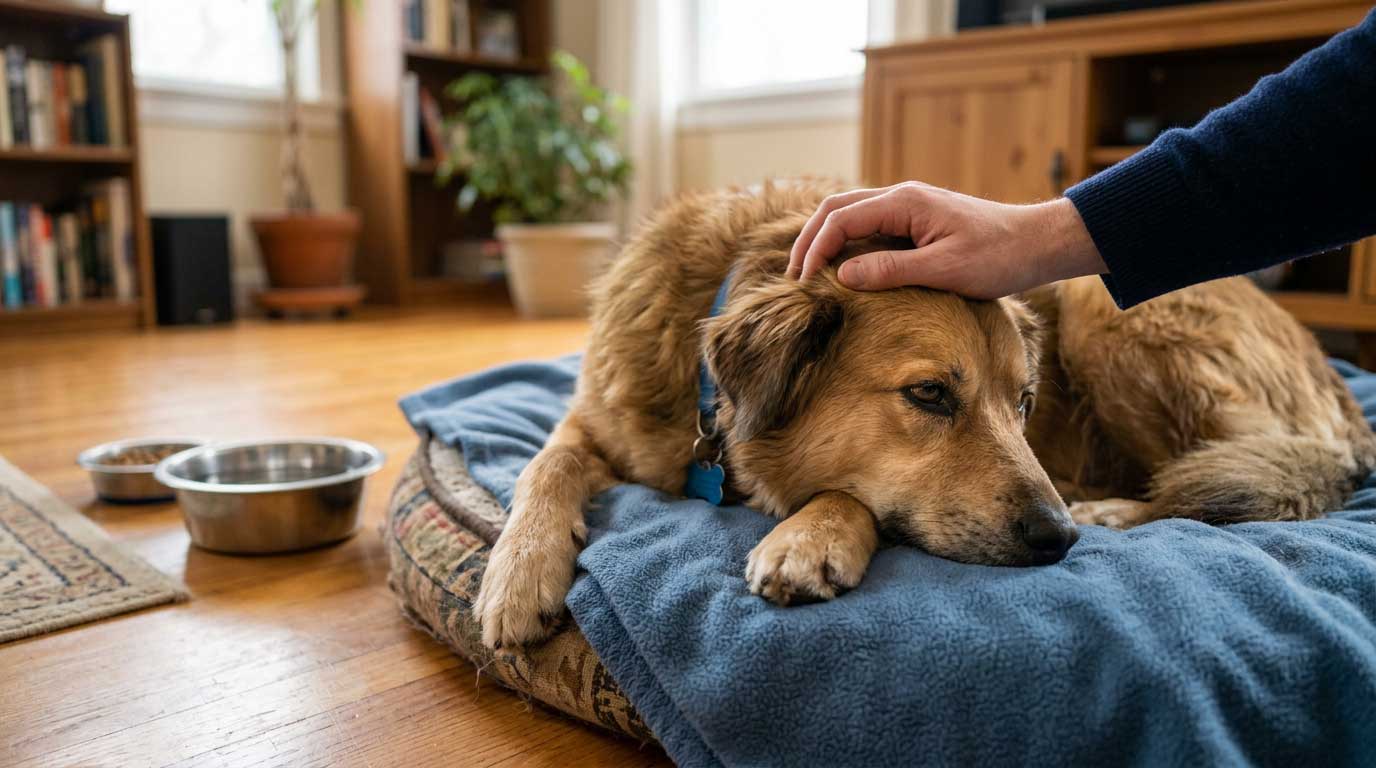
Dogs are experts at hiding illness. Evolutionary pressure selected for this — a dog who looks weak in the wild gets targeted by predators or pack rivals. Even 15,000 years after domestication, the instinct remains.
Beyond instinct, the body compensates physiologically. Early blood loss, early anemia, and early shock all have a "compensated phase" — the heart pumps faster, blood vessels constrict, and the dog seems okay. This phase lasts 30 minutes to several hours. Then it decompensates, often suddenly.
6 Conditions Where Pale Gums Appear Before Symptoms
1. Internal Bleeding (Splenic Tumor Rupture)
The classic scenario: an older large-breed dog (Golden Retriever, Lab, German Shepherd, Great Dane) is found with pale gums, still alert, maybe slightly quiet. Within 2-6 hours, the dog collapses. Cause: a splenic hemangiosarcoma that slowly bled, then ruptured. The "acting normal" phase is the slow bleed; collapse is the full rupture.
This is the #1 reason to take pale gums seriously even without symptoms. A dog over 8 years old with pale gums should be assumed to have internal bleeding until proven otherwise.
2. Immune-Mediated Hemolytic Anemia (IMHA)
The immune system attacks its own red blood cells. Onset can be rapid or gradual. Dogs often appear relatively normal with mild lethargy until hemolysis becomes severe — then they crash. Predisposed breeds: Cocker Spaniel, Poodle, Bichon Frise, Old English Sheepdog.
3. Rat Poison (Anticoagulant Rodenticide)
Anticoagulant rodenticides cause internal bleeding 3-5 days AFTER ingestion. The dog seems fine for days, then develops pale gums, lethargy, sometimes a cough (lung bleeding) or swollen joint (joint bleeding). By the time there's visible bleeding, the dog has lost significant blood.
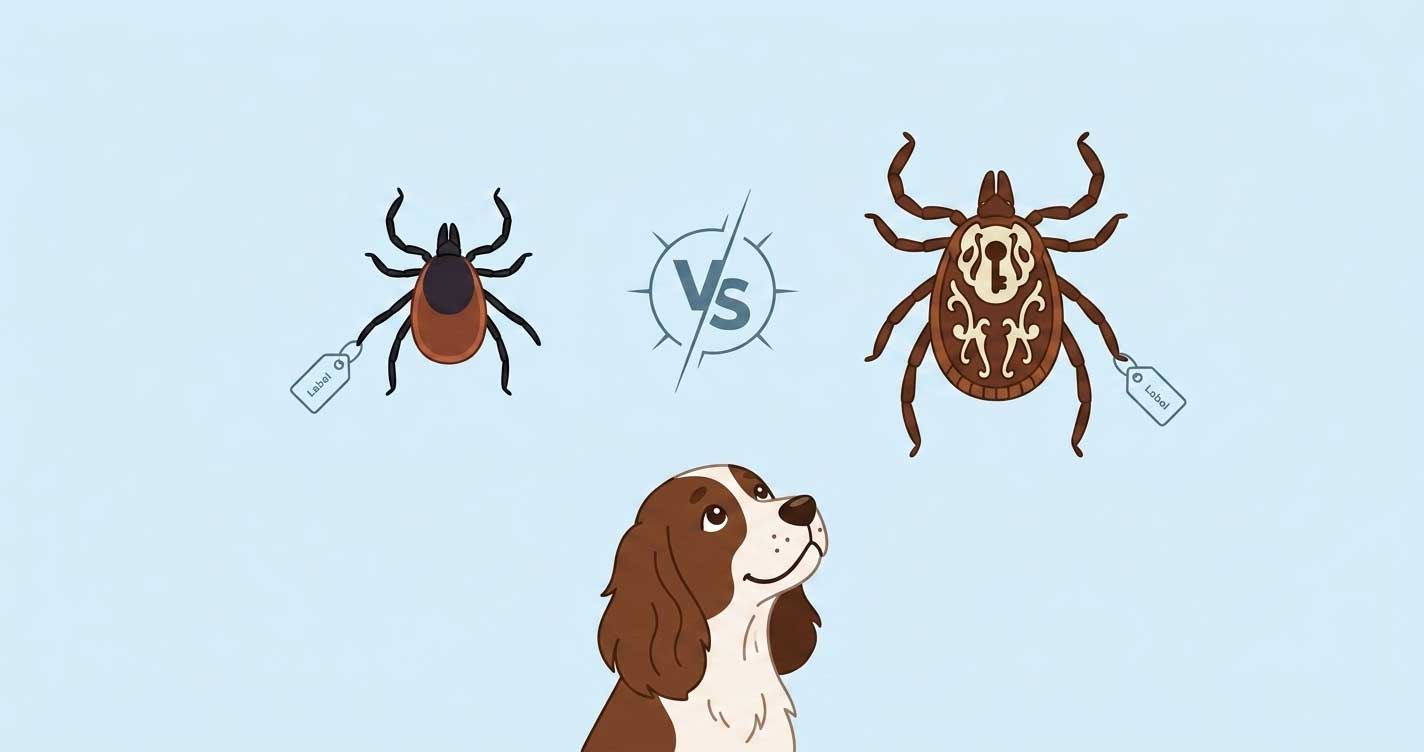
4. Tick-Borne Disease (Babesia, Ehrlichia, Anaplasma)
These parasites destroy red blood cells or suppress bone marrow. Dogs can have pale gums for days to weeks before owners notice reduced energy. Any dog with a history of tick exposure and pale gums needs tick-borne disease testing.
5. Bloat / GDV Early Stage
Bloat usually presents as distended belly, unproductive retching, restlessness. But very early bloat in deep-chested breeds can start with just pale gums and mild restlessness — before the belly is obviously swollen. If your dog is a Great Dane, German Shepherd, Weimaraner, Standard Poodle, Setter, Saint Bernard, or similar deep-chested breed and has pale gums, assume bloat until ruled out.
6. Chronic Kidney Disease
Failing kidneys produce less erythropoietin, the hormone that tells bone marrow to make red cells. Chronic anemia develops slowly. The dog seems "just a bit off" for months — drinking more water, losing weight slowly, occasionally off food. Pale gums are often the first visible sign.
The 15-Minute Rule
If you notice pale gums on your otherwise-normal dog, here's a simple protocol:
- ✓Minute 0: Re-check in good natural daylight — not under bathroom fluorescents
- ✓Minute 0: Check capillary refill time (press gum 2 sec, release, time until pink returns — over 2 seconds is abnormal)
- ✓Minute 0: Check heart rate (count beats for 15 sec × 4 — normal dog rest rate is 60-140 bpm)
- ✓Minute 0: Check gums and eyelid color — still pale after calm rest?
- ✓Minute 15: Recheck — if still pale or CRT still slow, CALL A VET NOW
- ✓Do NOT wait until morning, do NOT "give it a few hours"
When Pale Gums Might NOT Be Urgent
A few scenarios where slightly pale gums are usually benign:
- ✓Anxiety / stress — gums return to normal color within 15 minutes in a calm space
- ✓Mild dehydration — offer water, recheck in 30 minutes; gums should improve
- ✓Very cold environment — circulation returns with warmth
- ✓Puppies have naturally slightly paler gums than adult dogs
- ✓Some breeds (Weimaraner, some Labs) have naturally lighter pink gums
If your dog's gums don't return to normal pink within 30 minutes of a rest/water/warmth test, stop testing at home and see a vet.
The Baseline Photo Trick
Once a month, take a clear photo of your dog's gums in natural daylight when they're completely healthy. Keep the photo in your phone labeled "[Dog name] healthy gums." In an emergency, comparing current color to this baseline helps you (and the vet) decide urgency fast.
Not sure if your dog's gums look normal? Upload a photo for AI assessment — it gives you a second opinion in 30 seconds.
Pale Gums? Get a Second Opinion
Upload a photo of your dog's gums and let AI assess the color. Triage urgency is returned in seconds.
Disclaimer: This article is for informational purposes only and is not a substitute for professional veterinary advice. Always consult a licensed veterinarian for diagnosis and treatment of your pet's health conditions.