Stud Tail in Cats: Treatment and Prevention That Actually Works
Stud tail is a greasy patch at the base of a cat's tail caused by overactive oil glands. Here's what actually works to treat it — shampoos, neutering, and what doesn't help.
Published 2026-04-19

You noticed a greasy, waxy, slightly darkened patch at the base of your cat's tail — maybe the fur there is matted and the area feels different to touch. You've got stud tail (also called supracaudal gland hyperplasia or tail gland hyperplasia), and it's very common, especially in intact male cats.
It's generally not dangerous, but it IS treatable — and many owners are stuck using ineffective home remedies. Here's what actually works.
What Stud Tail Actually Is
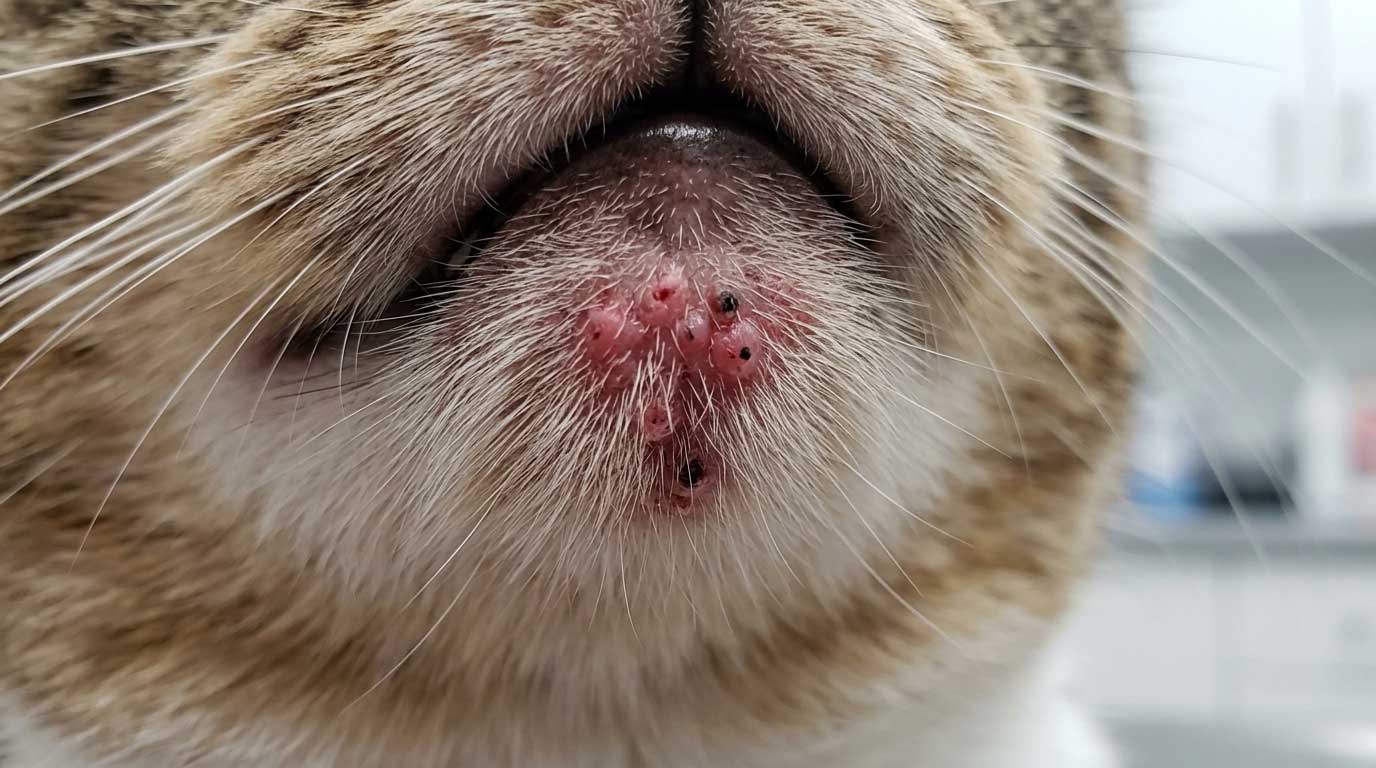
Cats have sebaceous (oil) glands concentrated in several areas — the chin (hence cat acne), the base of the tail (called the supracaudal gland), and between the toes. In stud tail, the tail-base sebaceous glands become OVERACTIVE, producing excessive sebum (oily material). This oil accumulates in the fur, creating the characteristic greasy-waxy patch.
It's called "stud tail" because it's most prominent in intact (un-neutered) male cats due to the influence of testosterone on these glands — but it can happen in any cat.
What It Looks Like
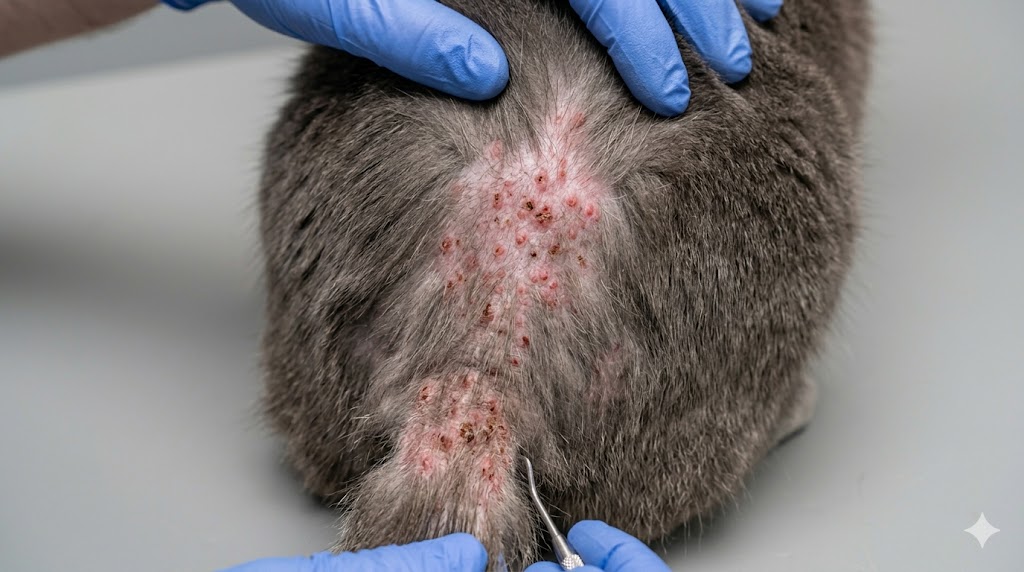
- ✓LOCATION: top (dorsal) side of the TAIL BASE — where the tail meets the back. Specifically the supracaudal gland area
- ✓APPEARANCE: greasy, waxy, oily patch; may feel slightly thickened
- ✓COLOR: fur often looks darker, sometimes yellow-brown; skin may have brownish-yellow crusty material
- ✓TEXTURE: hair matted, clumped together, feels slick or sticky
- ✓SIZE: variable — from 1-2 cm to extending several cm along the tail base
- ✓HAIR LOSS: fur may thin or fall out in severe cases as sebum plugs follicles
- ✓SMELL: may have slight waxy/rancid odor if severe
Who Gets Stud Tail?
- ✓INTACT MALE CATS — most common; hormonal influence on sebaceous glands
- ✓INTACT FEMALE CATS — less common but occurs
- ✓NEUTERED MALES — occurs in about 10-20% despite hormonal changes (cells still produce some sebum)
- ✓Senior cats — as oil glands enlarge with age
- ✓Overweight cats — may groom less thoroughly
- ✓Cats that rub the tail base against surfaces — can contribute
What Actually Works (Evidence-Based Treatment)
1. Gentle Degreasing Washes (First Line)
This is the most effective home treatment. Use pet-specific products:
- ✓Malaseb shampoo (ketoconazole + chlorhexidine) — degreases and treats secondary yeast/bacteria
- ✓Benzoyl peroxide 2-3% pet shampoo (DermaBenSs, Pyoben, OxyDex) — strongest degreasing
- ✓Chlorhexidine shampoo — milder, for maintenance
- ✓Apply to the affected area only, lather gently, LEAVE ON for 5-10 minutes, rinse thoroughly
- ✓Frequency: 2-3 times per week until resolved, then 1x per week for maintenance
2. Gently Clip Matted Fur
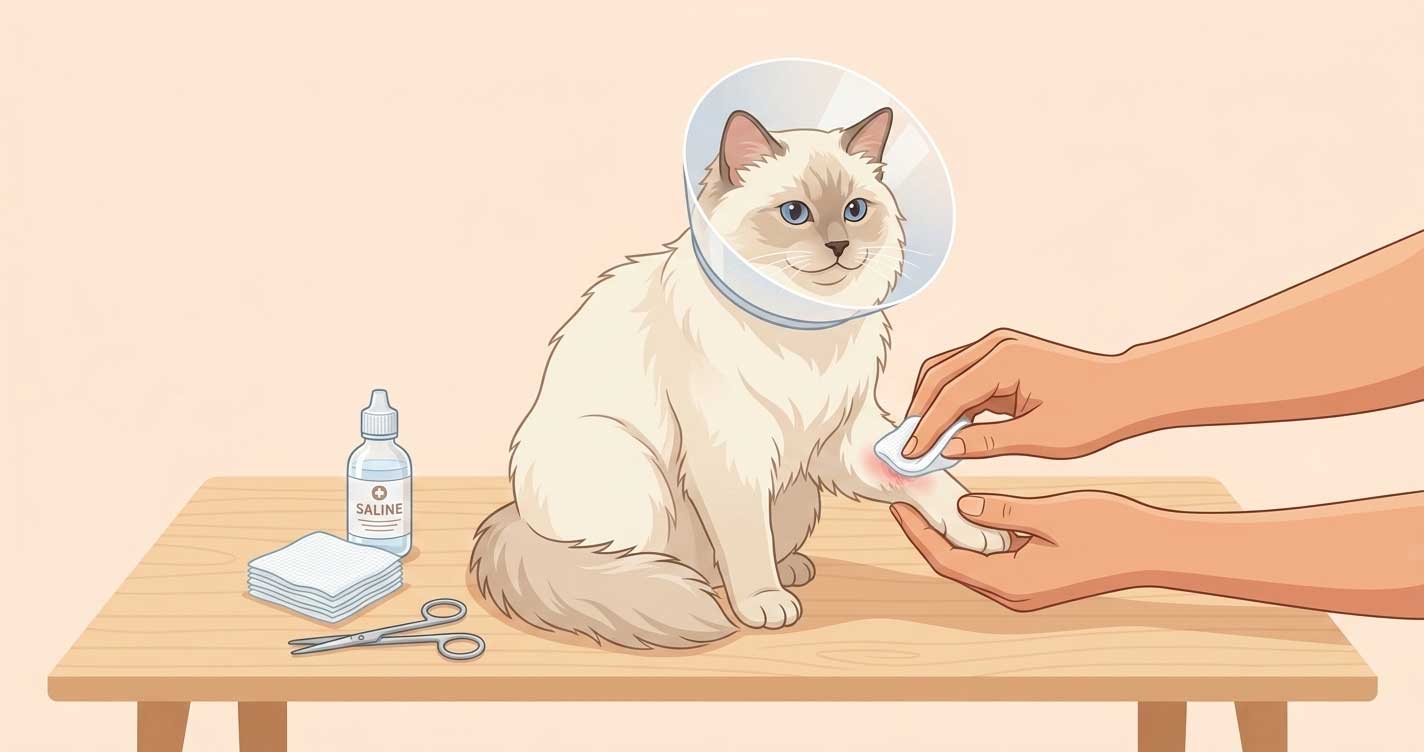
If the fur is heavily matted around the affected area, gently clip it short with clippers or scissors (careful not to cut skin). This lets treatment products reach the skin directly. Don't shave completely — just shorten enough to expose the area.
3. Neuter Intact Males (Long-Term Solution)
Neutering often reduces stud tail substantially over 2-6 months as testosterone decreases. It won't eliminate completely in all cats (~80-85% see significant improvement) but is the most effective long-term fix for intact males. Usually recommended anyway for other health and behavior reasons.
4. Treat Secondary Infections
The oily environment can support bacterial or yeast overgrowth. Signs of secondary infection: redness, swelling, heat, worsening odor, pus. Treatment: antibiotics or antifungals as prescribed by vet. If you see these signs, don't just wash — get a vet exam.
5. Topical Retinoid (For Stubborn Cases)
Prescription topical retinoids (vitamin A derivatives) can help reduce sebaceous gland activity in severe refractory cases. Only under vet supervision — can cause irritation.
What DOESN'T Work (Or Is Harmful)
- ✓DAWN dish soap — degreasing but HARSH on cat skin; causes dryness, irritation
- ✓Human shampoos (including anti-dandruff) — pH wrong for cats; many ingredients toxic if licked
- ✓Just "brushing it out" — doesn't remove the oil, can spread it
- ✓Water-only washes — oil is hydrophobic, water alone does almost nothing
- ✓Apple cider vinegar — doesn't degrease effectively; irritating
- ✓Ignoring it — can progress to secondary infection
- ✓Cutting the hair extremely short — exposes skin to sunburn; doesn't fix the underlying gland activity
- ✓Essential oils — tea tree especially is TOXIC to cats
Prevention
- ✓For intact males — consider neutering (most effective long-term)
- ✓Regular grooming — brush the tail base area 2-3x per week to distribute oils
- ✓Maintain healthy weight — obesity reduces self-grooming
- ✓Monitor for early signs — slight greasiness is easier to treat than established stud tail
- ✓Monthly maintenance wash of the area with pet-specific shampoo for cats with history
When to See a Vet
Most stud tail can be managed at home, but see a vet if:
- ✓Secondary infection signs — redness, swelling, heat, pus, rapid worsening
- ✓Cat seems painful when the area is touched
- ✓No improvement after 4-6 weeks of consistent home treatment
- ✓The area looks more like a tumor than greasy fur (raised, firm lump)
- ✓Smell is severe or foul
- ✓Bleeding or open wounds
Can It Heal on Its Own?
Mild cases occasionally improve with better overall grooming (especially in younger cats who start grooming more). However, most established stud tail does NOT self-resolve and continues to progress or recur. Treatment is recommended for all but very mild cases. The good news: most cats respond well to consistent home treatment within 4-6 weeks.
Not sure if the greasy patch on your cat's tail is stud tail? Upload a photo — AI confirms the classic pattern and distinguishes it from other tail-base conditions (flea allergy, skin tumor, trauma).
Greasy Patch on Your Cat's Tail Base?
Upload a photo — AI confirms stud tail vs other conditions (like flea allergy miliary dermatitis at tail base).
Disclaimer: This article is for informational purposes only and is not a substitute for professional veterinary advice. Always consult a licensed veterinarian for diagnosis and treatment of your pet's health conditions.