Seasonal Flank Alopecia in Dogs (Boxers, Bulldogs, Schnauzers) — The Bilateral Bald Patch Explained
Seasonal flank alopecia causes symmetric hair loss on both sides in fall/winter — common in Boxers, Bulldogs, Schnauzers. Here's how to recognize it and treatment options.
Published 2026-04-19

You noticed matching bald patches on both sides of your Boxer's body — or your Bulldog's, Schnauzer's, or Airedale's. The bald areas look eerily symmetric. The skin underneath looks fine — no redness, no itching, no scabs. Maybe it's winter or early spring. If this matches your dog, you're likely looking at SEASONAL FLANK ALOPECIA (SFA).
SFA is one of the most distinctive canine skin conditions and also one of the most benign — but it's also one of the most confusing for owners because it looks dramatic. Here's everything you need to know.
What Does Seasonal Flank Alopecia Look Like?
Classic features:
- ✓BILATERAL and SYMMETRIC — matching patches on BOTH flanks (sides between ribs and hips)
- ✓SHARPLY DEMARCATED borders — the bald areas have clear edges, not gradual fading
- ✓Skin underneath often DARKER (blue-gray hyperpigmentation) but OTHERWISE NORMAL — not red, not swollen, not scaly, not itchy
- ✓Size varies from small patches to covering most of both flanks
- ✓Can affect the back, shoulders, tail base, or ear flaps in some dogs
- ✓Often SPARES the head, legs, and belly
- ✓Dog is otherwise completely healthy — normal energy, normal appetite, no symptoms
When Does It Appear?
The "seasonal" part matters. SFA typically appears in LATE FALL or WINTER (November-March in the northern hemisphere) and often regrows in SPRING or SUMMER. It may recur year after year in affected dogs — some develop a reliable pattern where hair loss returns every November and regrows every May. Not every dog is seasonal though; some have "cyclical flank alopecia" where the pattern is less predictable.
Which Breeds Get SFA?
Strongly predisposed breeds:
- ✓Boxer — the classic presentation; probably the most frequently affected
- ✓English Bulldog
- ✓French Bulldog
- ✓Miniature Schnauzer (and Standard, Giant Schnauzer less commonly)
- ✓Airedale Terrier
- ✓Scottish Terrier
- ✓Bull Mastiff
- ✓Staffordshire Bull Terrier
- ✓American Bulldog
- ✓Less commonly: Labrador Retriever, Golden Retriever, Doberman, Great Dane
Mixed-breed dogs with any of these breeds in their ancestry can also develop SFA. If you have a Boxer mix who develops symmetric flank hair loss in November, SFA should be the first thing on your radar.
What Causes Seasonal Flank Alopecia?
The exact mechanism isn't fully understood, but evidence points to: (1) response to changes in daylight length (photoperiod) affecting the pineal gland and melatonin production; (2) genetic predisposition in specific breeds; (3) changes in hair follicle cycling influenced by seasonal hormonal shifts. It is NOT caused by: infection, parasites, allergies, nutrition deficiency, or anything you did wrong as an owner.
How Is SFA Diagnosed?
Diagnosis is by ruling out other causes plus confirming the classic presentation:
- ✓Physical exam — confirms symmetric flank pattern, normal skin, no inflammation
- ✓Bloodwork (CBC, chemistry, thyroid panel, sometimes cortisol) — MUST be normal to rule out endocrine disease that can mimic SFA
- ✓Fungal culture — to rule out ringworm
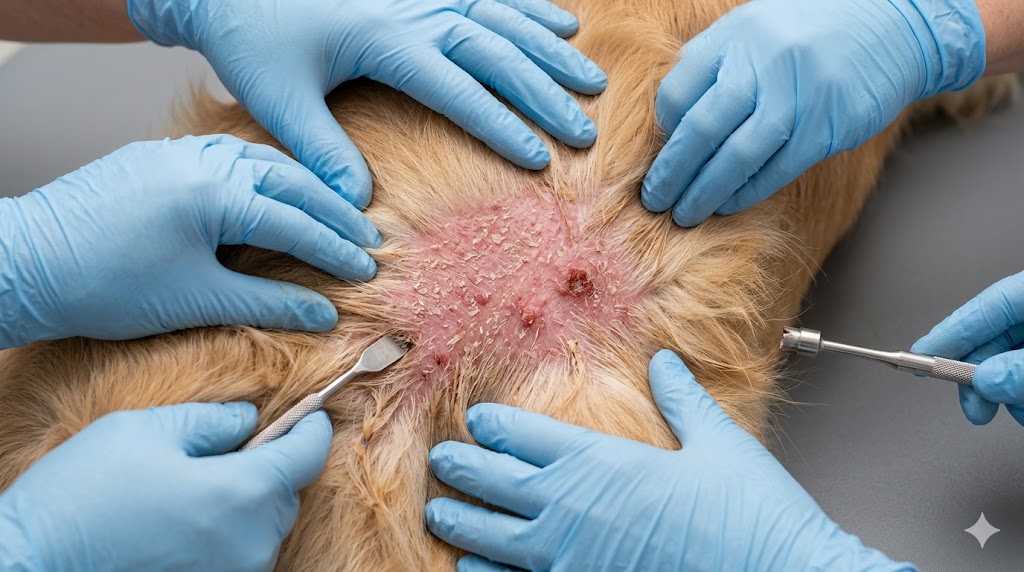
- ✓Skin scrape — to rule out demodex
- ✓Skin biopsy — sometimes done; histology shows characteristic follicular changes without inflammation
Don't skip the bloodwork — Cushing's disease can look remarkably similar to SFA in early stages. The difference matters a lot (Cushing's is dangerous if untreated; SFA is cosmetic).
Is SFA Dangerous? Does It Need Treatment?
SFA is purely COSMETIC in most cases. Your dog is entirely healthy underneath. Many owners choose not to treat it at all — hair typically regrows naturally with seasonal changes. Some reasons to consider treatment:
- ✓Cosmetic concerns — especially for show dogs or if the owner is bothered
- ✓The dog lives in a climate where cold-weather protection matters (bald areas get cold)
- ✓Psychological comfort for owner/dog
Treatment Options
Melatonin Supplementation (Most Common)
Melatonin is the most frequently prescribed treatment. Dosing (with vet approval): 3-6 mg per dog, once to twice daily orally for 2-3 months. Some dogs respond dramatically with full regrowth within 2-3 months; others show partial or no response. Usually well-tolerated; possible side effects include mild sedation or digestive upset.
Light Box / Increased Light Exposure
Since photoperiod (daylight length) is implicated, increasing light exposure sometimes helps. Use bright light near the dog for 8-12 hours daily, or use a pet-safe lightbox. Evidence is limited but it's harmless to try.
Neutering / Hormone Changes
Some case reports suggest intact dogs neutered at the right time may have improvement — but this is inconsistent and not a reliable treatment.
What NOT to Use
- ✓Human hair regrowth products (minoxidil/Rogaine) — TOXIC TO DOGS, can be fatal
- ✓Steroid creams — unnecessary (no inflammation to treat)
- ✓Antifungals or antibiotics — no infection to treat
- ✓Essential oils — some toxic to dogs, no evidence of benefit
How Long Does SFA Last?
Duration varies:
- ✓Some dogs: 3-6 months of hair loss, then regrowth, then recurrence next year
- ✓Some dogs: year-round hair loss once established, no seasonal pattern
- ✓Some dogs: one-time episode that never recurs
- ✓With melatonin treatment: often 2-3 months to see regrowth
- ✓Without treatment: variable, often 3-6 months
Long-Term Outlook
Excellent. SFA is purely cosmetic in the vast majority of dogs. It doesn't affect lifespan, doesn't cause pain or illness, doesn't indicate any underlying serious condition. Many affected dogs live long healthy lives with seasonal bald patches that come and go. If your vet has confirmed the diagnosis (and ruled out endocrine disease through bloodwork), you can proceed with confidence that this is manageable.
Not sure if what you're seeing is SFA vs something else? Upload a photo — AI checks the pattern against SFA's distinctive bilateral symmetric flank hair loss pattern and tells you honestly whether it fits the SFA profile or needs further investigation.
Could It Be Seasonal Flank Alopecia?
Upload a photo — AI checks against the classic bilateral symmetric pattern that distinguishes SFA from endocrine disease.
Disclaimer: This article is for informational purposes only and is not a substitute for professional veterinary advice. Always consult a licensed veterinarian for diagnosis and treatment of your pet's health conditions.