Feline Miliary Dermatitis: The Cat-Specific Flea Allergy Signature
Tiny scattered scabs on your cat's back + itching = feline miliary dermatitis. It's the classic sign of flea allergy in cats, even without visible fleas.
Published 2026-04-19

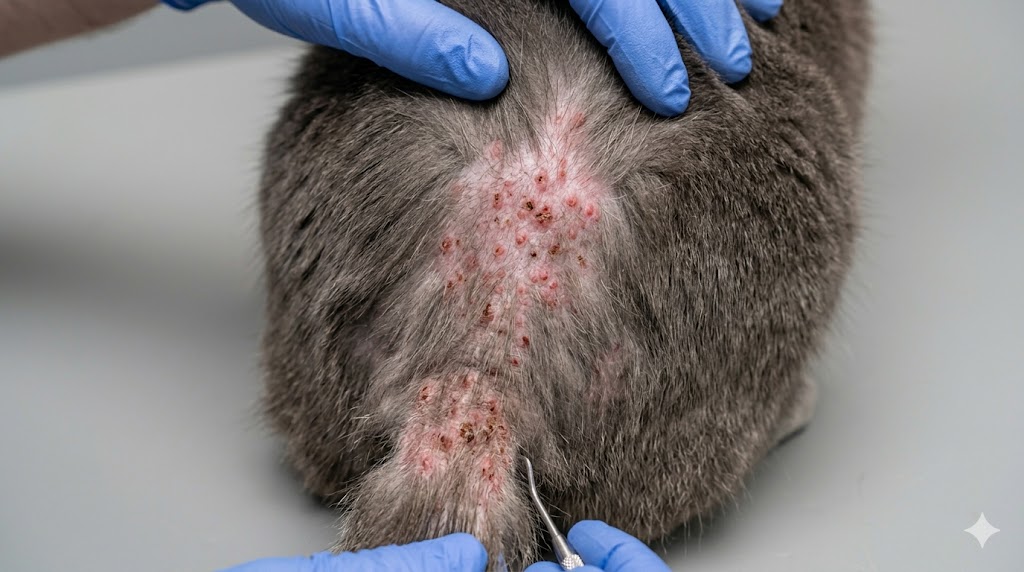
You part your cat's fur and discover dozens of tiny scabs scattered across her back — like ground pepper or millet seeds. Maybe she's been scratching more, chewing at her back, or seems generally itchy. You have feline miliary dermatitis — and there's an 80% chance it's flea allergy, even if you've never seen a flea.
Here's everything cat owners need to know about this distinctive skin condition.
What Is Feline Miliary Dermatitis?
Miliary dermatitis isn't a disease itself — it's a REACTION PATTERN that cats develop in response to various skin irritants. The name comes from "millet" (miliary = millet-seed-like) because the scattered small bumps resemble millet seeds on the skin.
Because cats have limited ways to show skin reactions (compared to dogs), many different irritants converge on this same pattern — like a skin "common final pathway." The trick is figuring out which irritant is driving it in YOUR cat.
What It Looks Like
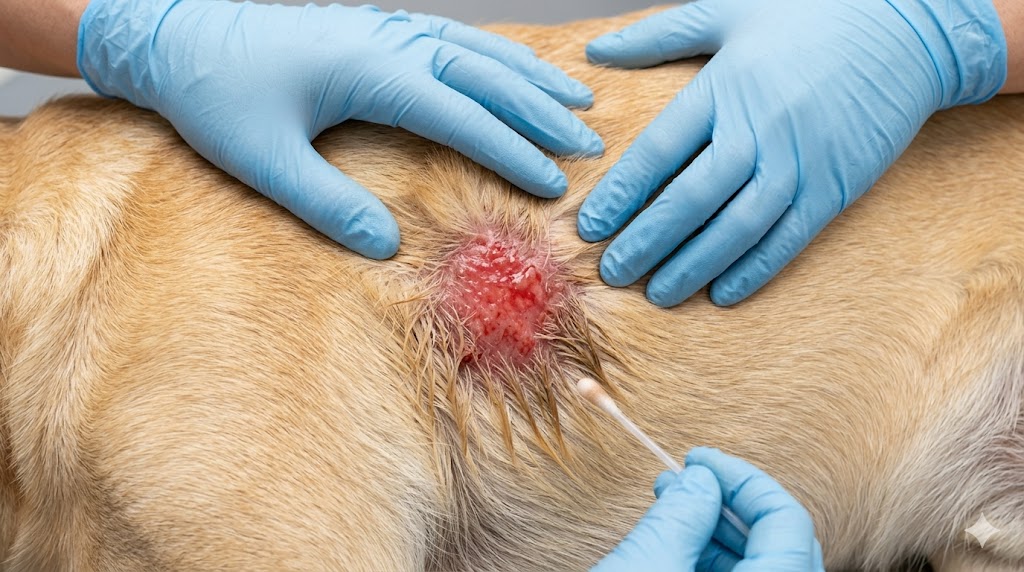
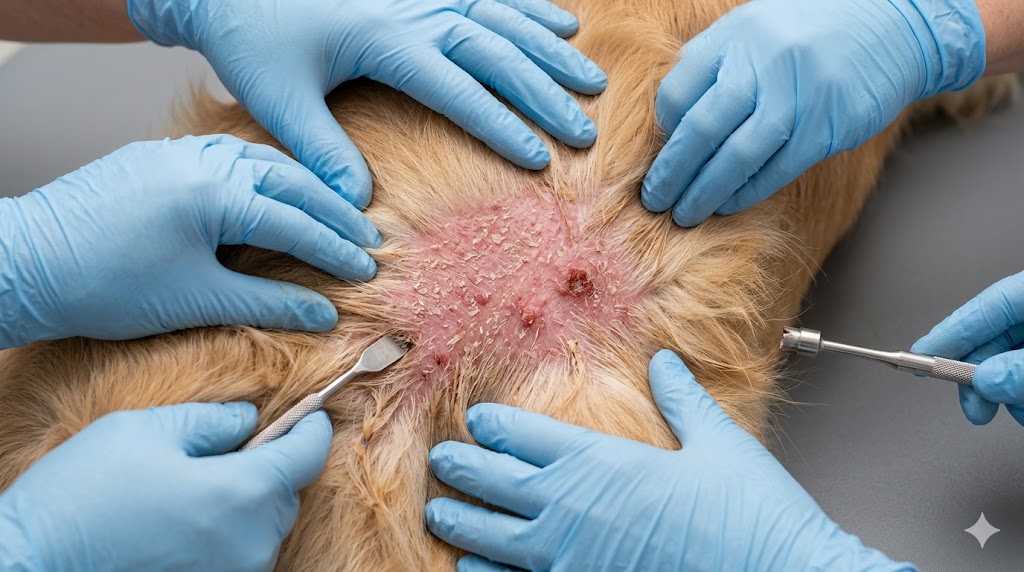
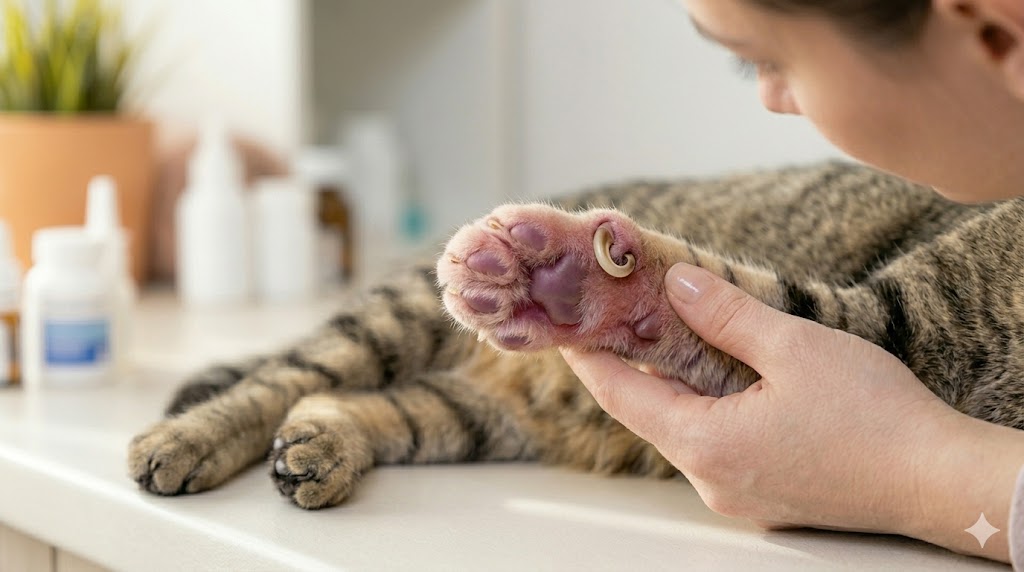
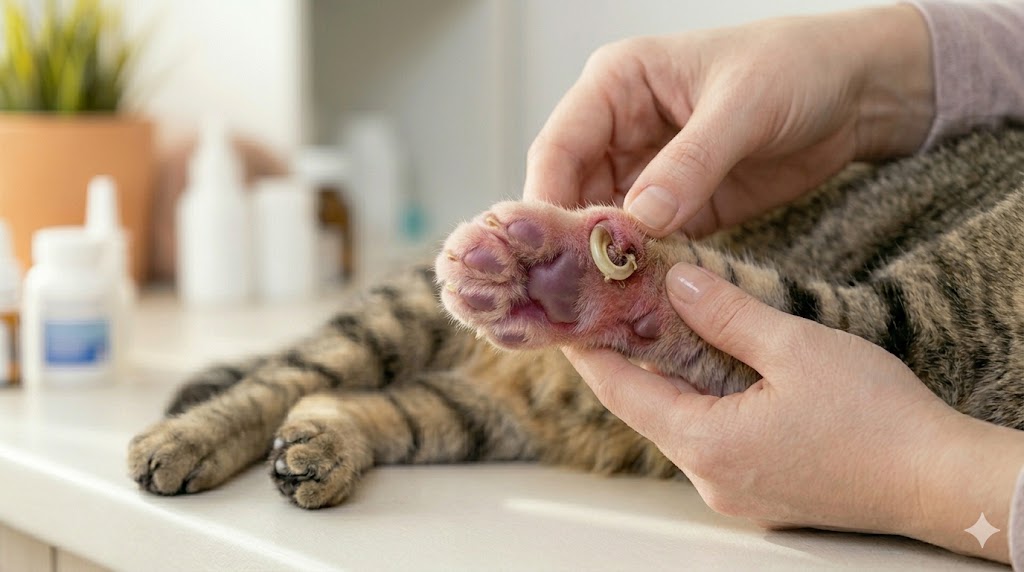
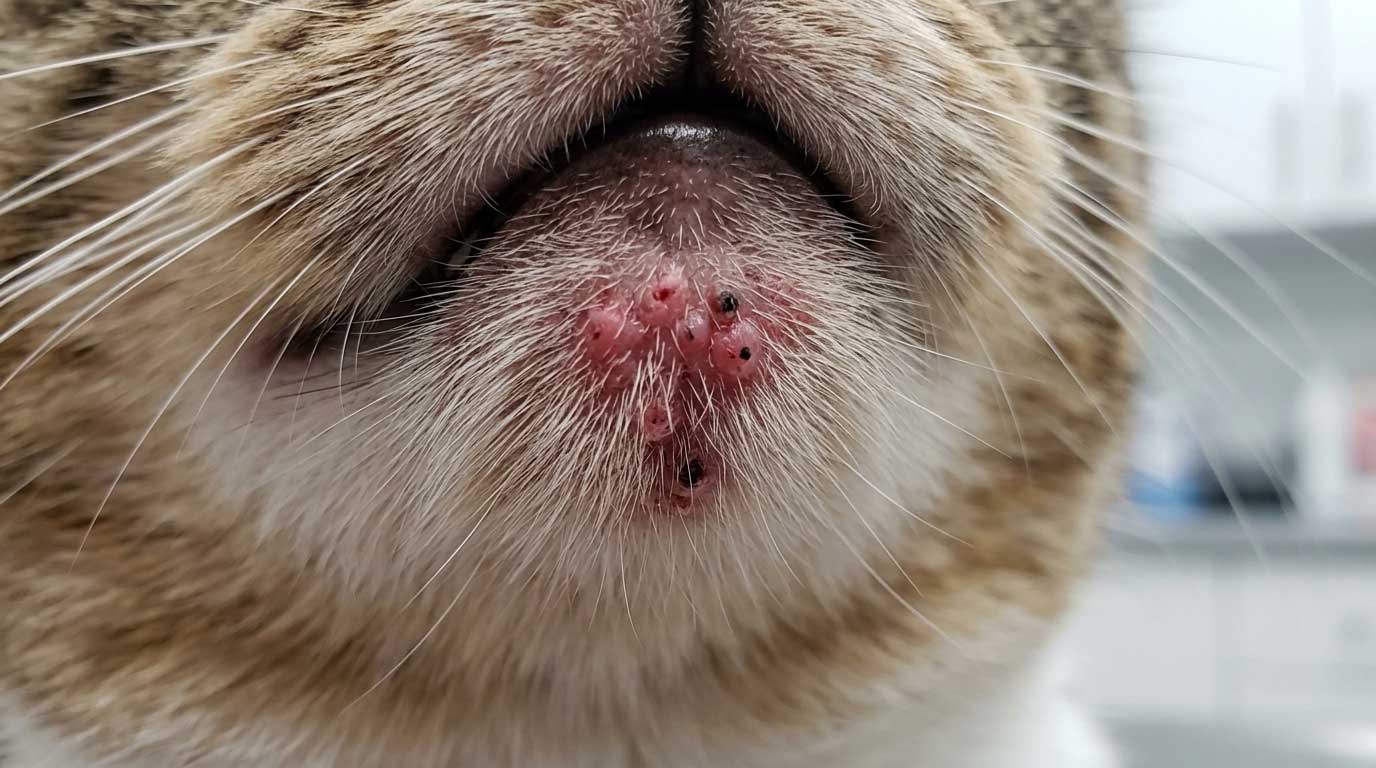
The Bumps
- ✓Tiny (1-3 mm) crusted bumps or scabs
- ✓Scattered across the skin, often dozens visible when fur is parted
- ✓Firm to touch when you run fingers over them
- ✓Most visible when you part the fur — they may be hidden under a normal-looking outer coat
- ✓Hair often broken or missing in the bump areas
Typical Locations (In Order)
- ✓TOP OF THE BACK (dorsal midline) — most common; extending from shoulders to tail base
- ✓NECK and behind the ears
- ✓BASE OF TAIL and rump area (strong flea allergy indicator)
- ✓Sides and flanks
- ✓Less commonly: belly (more typical of over-grooming than miliary)
Associated Signs
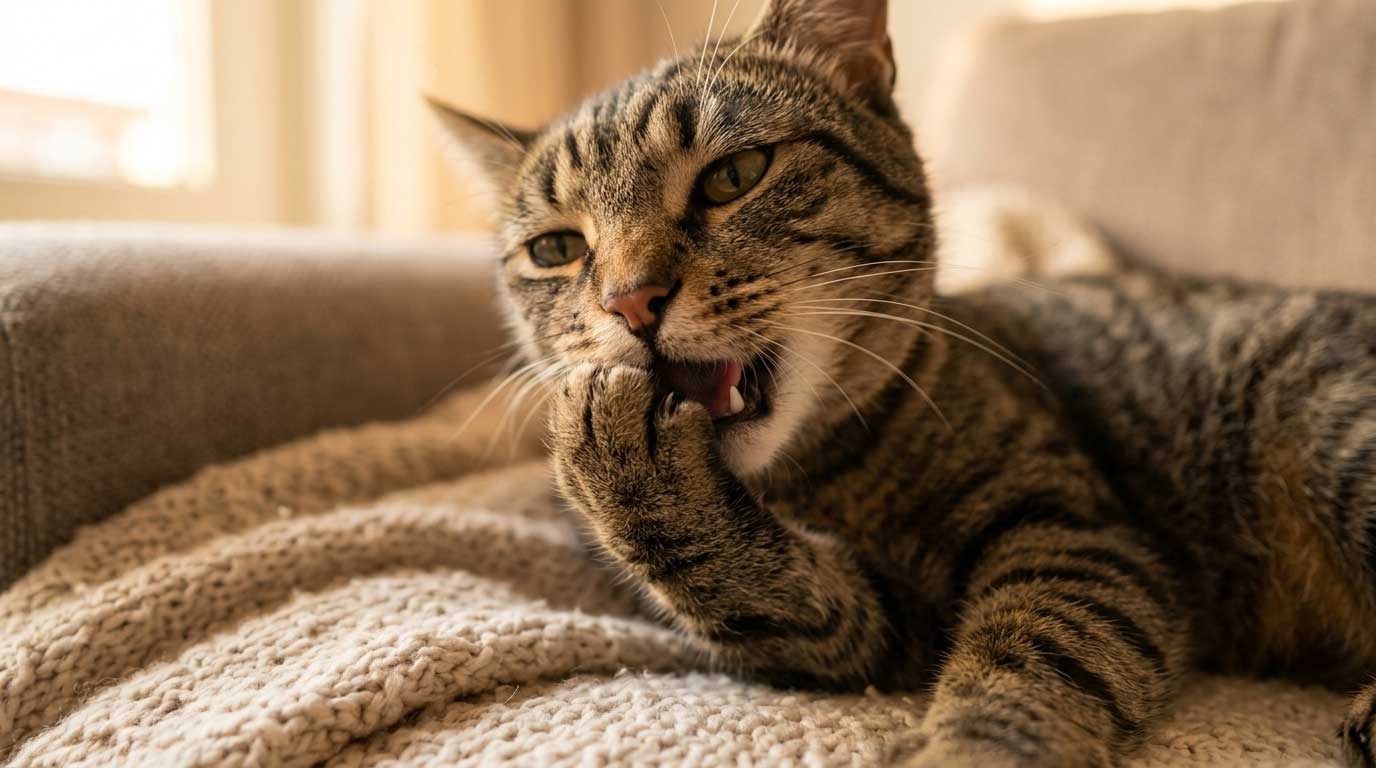
- ✓Intense scratching, especially of the back and behind the ears
- ✓Biting or chewing at the back
- ✓Over-grooming of accessible areas
- ✓Visible or hidden hair loss in the affected areas
- ✓Sometimes restless or irritable behavior
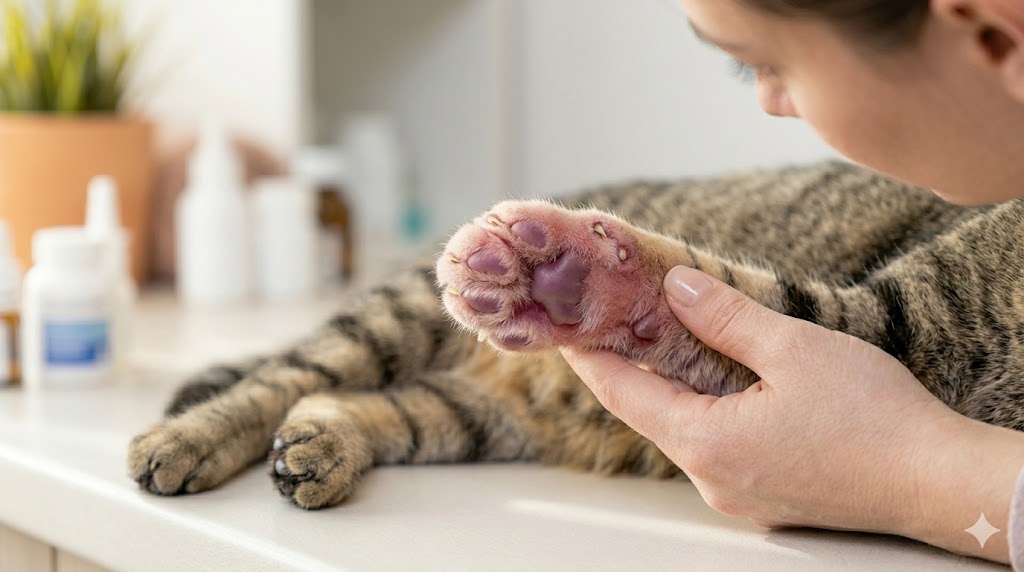
- ✓Skin may be reddened between the bumps
What Causes Miliary Dermatitis?
1. Flea Allergy Dermatitis (70-80% of cases)
By far the most common cause. Fleas inject saliva when they bite, and flea-allergic cats develop a massive hypersensitivity reaction even to a single bite. Key facts:
- ✓You may NEVER see a flea — flea-allergic cats groom so obsessively they remove fleas before you see them
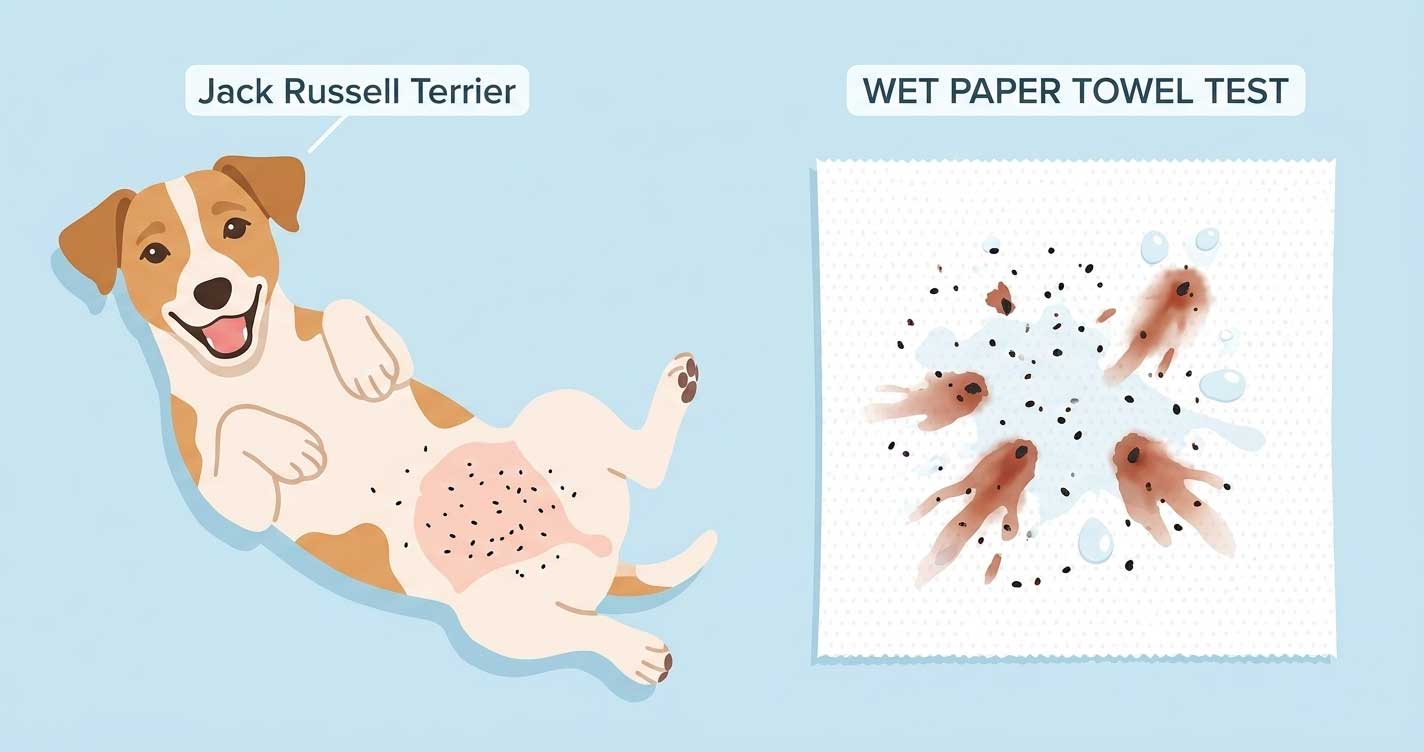
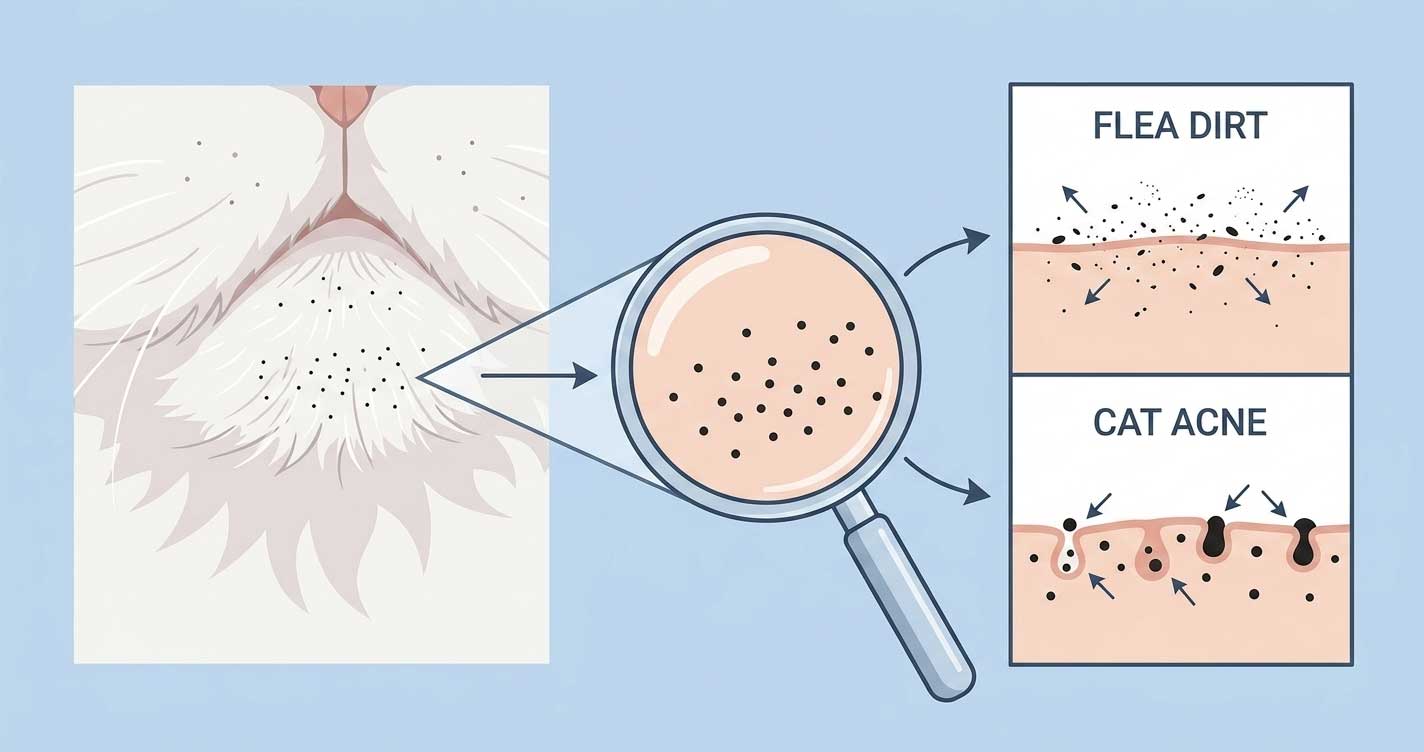
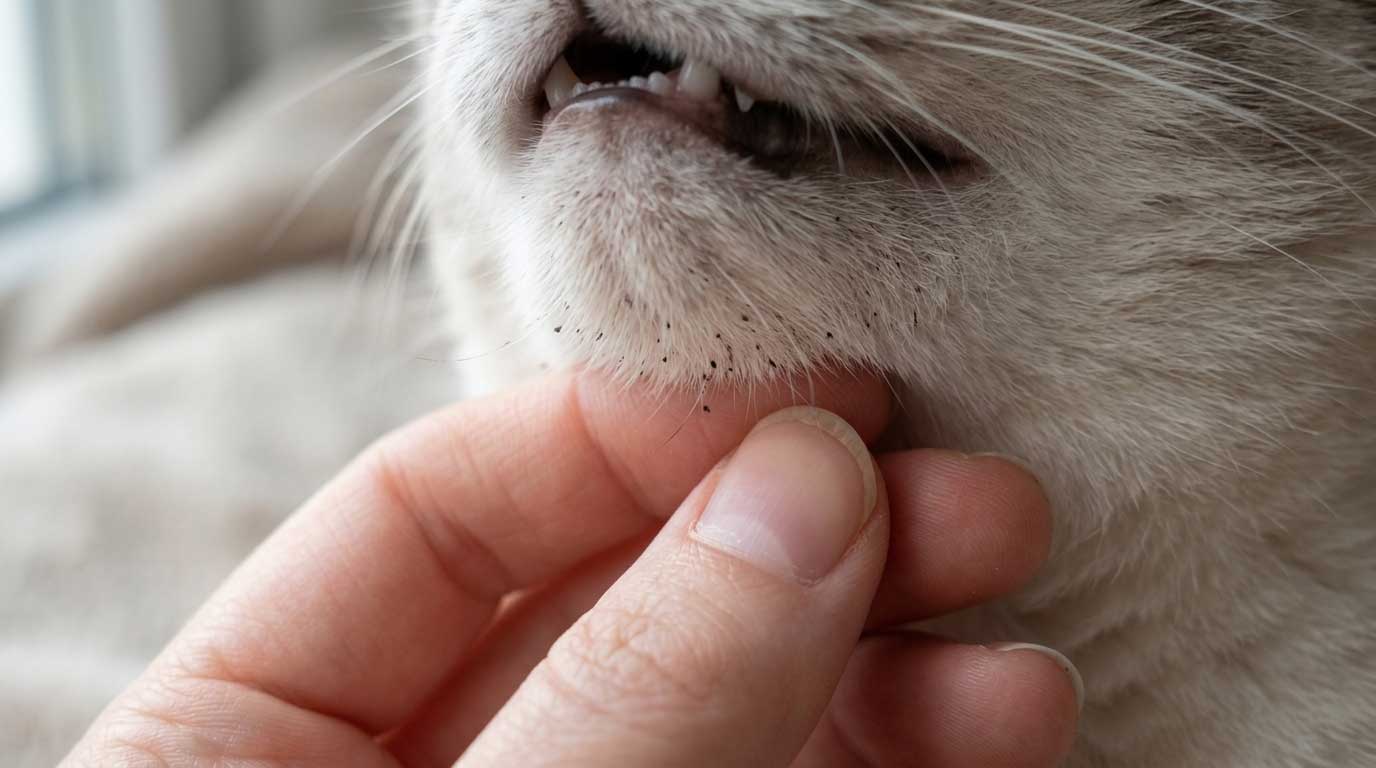
- ✓Check for flea dirt (tiny black specks) near the skin, especially at the base of the tail; test on wet paper towel — turns reddish-brown = digested blood
- ✓Indoor-only cats can still have fleas from humans bringing them in, other pets, or from hitchhiking on you
- ✓The reaction is far out of proportion to the number of fleas — one bite causes massive itching for weeks
2. Food Allergy (10-15% of cases)
Cats develop food allergies especially to common proteins (chicken, beef, fish, dairy). Diagnosis requires strict 8-12 week elimination diet with novel protein or hydrolyzed formula.
3. Environmental Allergies (Atopic Dermatitis)
Allergies to pollen, dust mites, mold, grass. Often seasonal worsening. Harder to diagnose in cats than in dogs; requires exclusion of other causes.
4. Mites
Cheyletiella ("walking dandruff") is the classic mite cause of miliary dermatitis — look for white flakes that seem to move on the skin. Less commonly: Demodex, ear mites spreading to the body.
5. Ringworm
Can sometimes present as miliary-pattern lesions. Usually with more hair loss in distinct patches.
6. Other (Rare)
- ✓Bacterial skin infection (secondary to scratching)
- ✓Drug hypersensitivity
- ✓Autoimmune skin diseases
- ✓Pemphigus foliaceus
How to Treat It (In Order)
Step 1: Aggressive Flea Treatment (Always Start Here)
- ✓Prescription flea prevention on ALL pets in household — NexGard Combo, Revolution Plus, Bravecto Plus, Credelio for cats
- ✓Over-the-counter products often don't work well enough — use prescription strength
- ✓Treat the environment: adult fleas are only 5% of the population; eggs and larvae are in bedding, carpets, furniture
- ✓Wash all bedding on hot weekly for a month
- ✓Vacuum carpets daily for 2 weeks; dispose of vacuum bag outside
- ✓Consider professional pest control for heavily infested homes
- ✓Continue flea prevention MONTHLY indefinitely — stopping causes recurrence
Step 2: Symptom Relief While Treating
- ✓Short-course steroid (prednisolone) — commonly prescribed to rapidly reduce itching; taper quickly
- ✓Alternatives: Atopica (cyclosporine) for longer-term relief
- ✓Omega-3 fatty acid supplementation (fish oil) — reduces skin inflammation over 6-8 weeks
- ✓Antibiotics if secondary bacterial infection (cytology confirms)
- ✓Medicated baths with chlorhexidine shampoo if cat tolerates
Step 3: Allergy Workup if Still Itchy After 4-6 Weeks
- ✓Strict 8-12 week hypoallergenic diet trial for food allergy
- ✓Environmental allergy workup — serum allergy testing if needed
- ✓Consider referral to veterinary dermatologist for refractory cases
Can Miliary Dermatitis Kill a Cat?
Miliary dermatitis itself is rarely fatal, but complications can be serious if ignored:
- ✓Severe itching can lead to self-trauma with deep infected wounds
- ✓Blood loss from fleas in heavily infested cats — especially dangerous for kittens (can cause fatal anemia)
- ✓Flea-transmitted diseases — bartonellosis ("cat scratch fever"), hemoplasmosis, tapeworms
- ✓Secondary bacterial infections spreading
- ✓Severe long-term stress and quality-of-life impact
Don't ignore miliary dermatitis. Treat promptly and thoroughly.
Is Miliary Dermatitis Contagious?
The rash itself is NOT directly contagious between cats. However, the underlying CAUSE may be:
- ✓Fleas — yes, contagious to other pets and can briefly affect humans
- ✓Ringworm — yes, highly contagious to pets and humans
- ✓Cheyletiella mites — yes, contagious to pets and briefly to humans
- ✓Food/environmental allergies — not contagious
- ✓Bacterial infections — rarely contagious
When in doubt, keep the affected cat separated until diagnosis is made.
Not sure if the bumps you're seeing are miliary dermatitis? Upload a photo — AI identifies the classic scattered small crust pattern and helps distinguish it from other cat skin conditions.
Scattered Scabs on Your Cat's Back?
Upload a photo — AI confirms miliary dermatitis pattern and ranks the likely trigger (flea allergy most common).
Disclaimer: This article is for informational purposes only and is not a substitute for professional veterinary advice. Always consult a licensed veterinarian for diagnosis and treatment of your pet's health conditions.