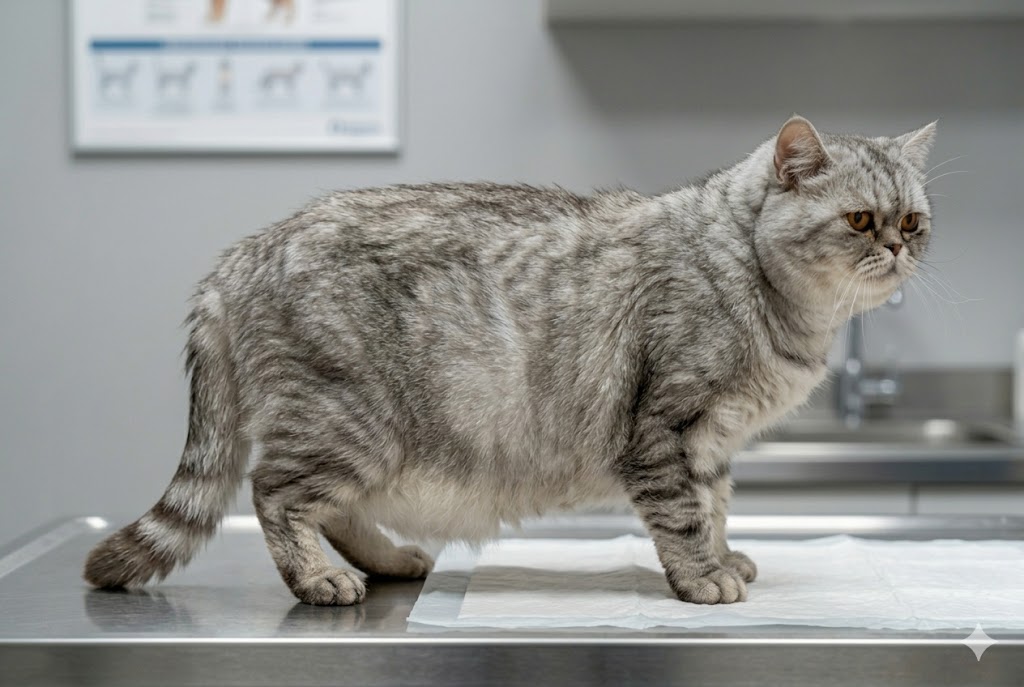
How to Tell If My Cat Is Fat (Vet-Approved 3-Step Check)
Three reliable at-home tests to find out if your cat is overweight — and why the scale alone is not enough. Includes the rib test, waist check, and belly profile explained with photos.
Published 2026-04-20
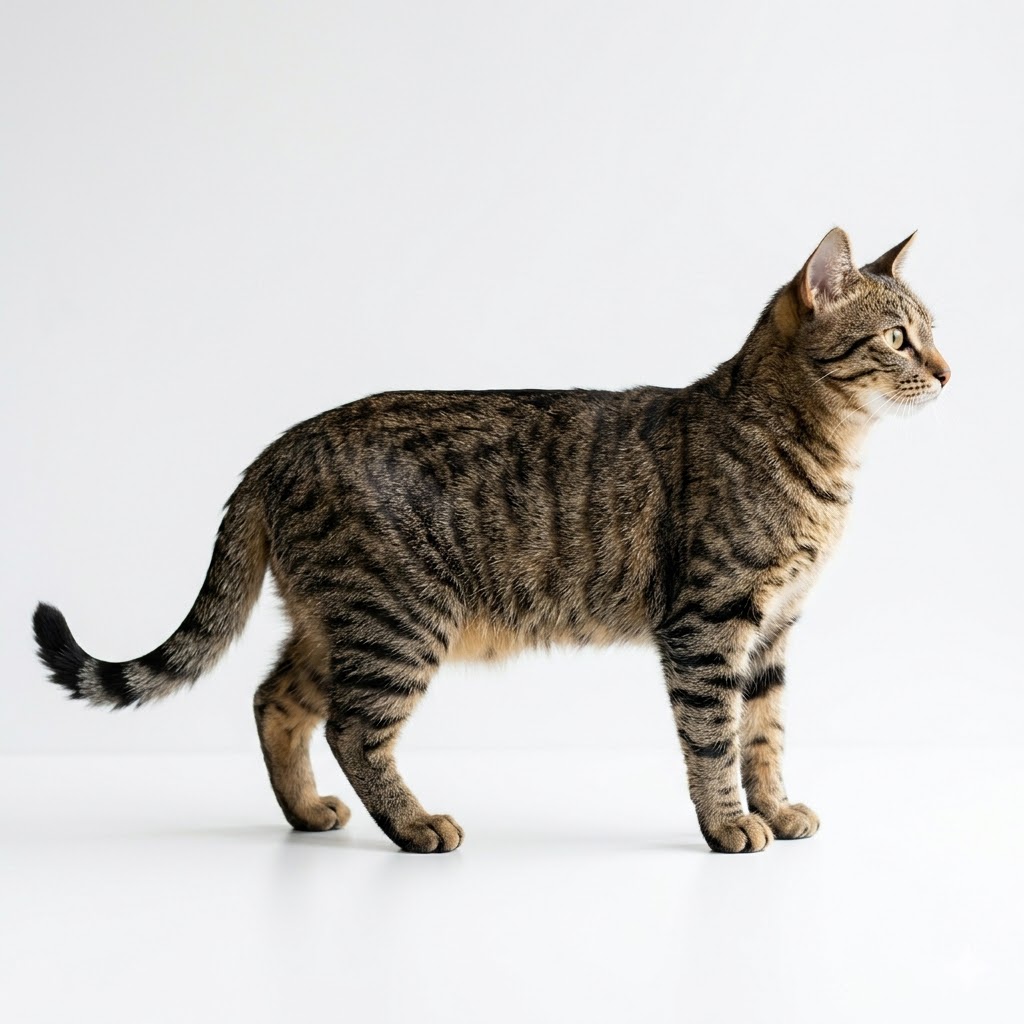
Your cat is plump, soft, and content-looking — but is that healthy weight, or is it a problem? The bathroom scale is unreliable for cats because weight varies enormously by breed (a 6 kg Maine Coon male is healthy; a 6 kg domestic shorthair female is obese). Veterinarians use body condition score (BCS) — a hands-on and visual assessment that measures fat coverage regardless of total weight. Here are three checks you can do at home in under two minutes.
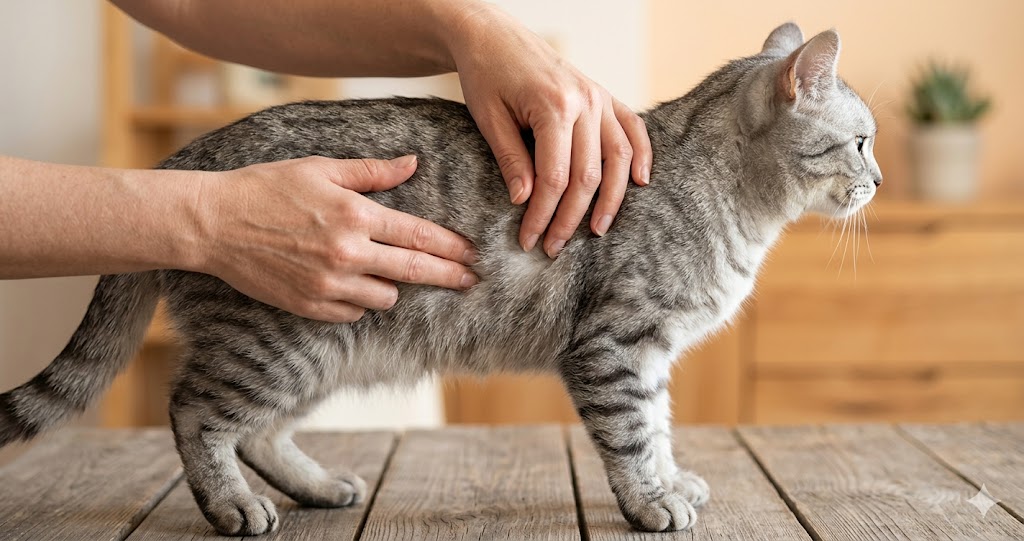
Check 1: The Rib Test
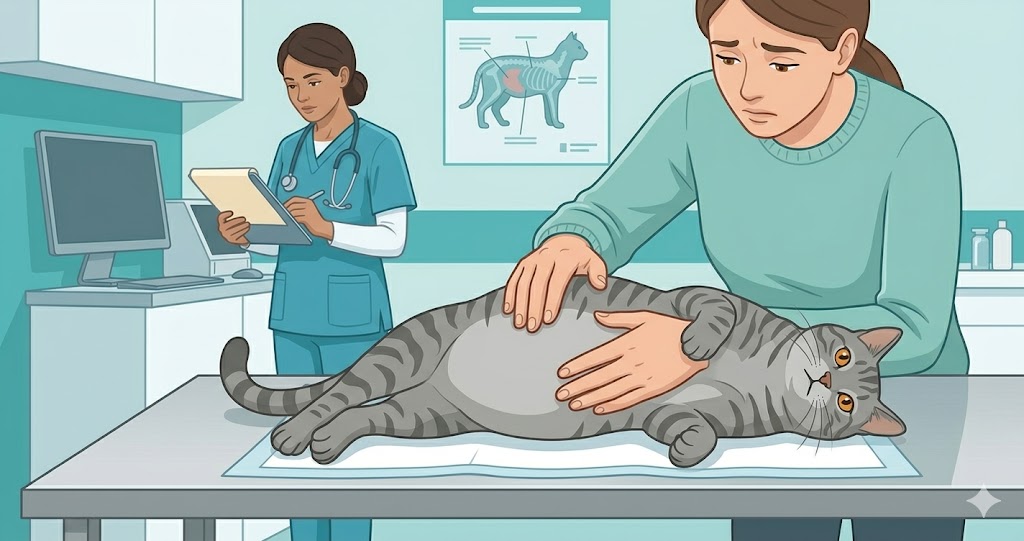
This is the most reliable single test for cat body condition. Place your hands on either side of your cat's ribcage and run your fingers gently along the ribs. In a healthy-weight cat (BCS 4–5), you should feel individual ribs easily with light pressure — similar to running your fingers over your knuckles with your hand open flat.
- ✓Ribs easy to feel with light pressure = ideal weight (BCS 4–5)
- ✓Ribs only feelable with firm pressure = slightly overweight (BCS 6)
- ✓Ribs not feelable even pressing hard = overweight to obese (BCS 7–9)
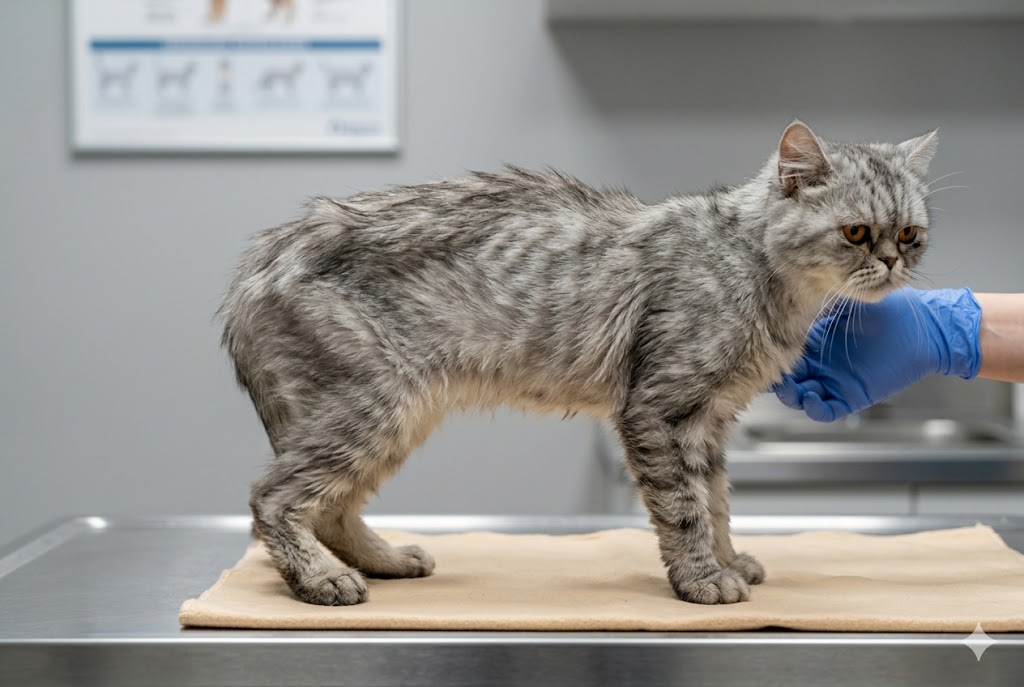
- ✓Ribs visible without touching = underweight (BCS 3 or less)
This test overrides visual appearance. A Persian cat may look round due to coat but be at ideal BCS. A Siamese may look thin but have perfectly normal ribs. Always use the rib test as your primary check.
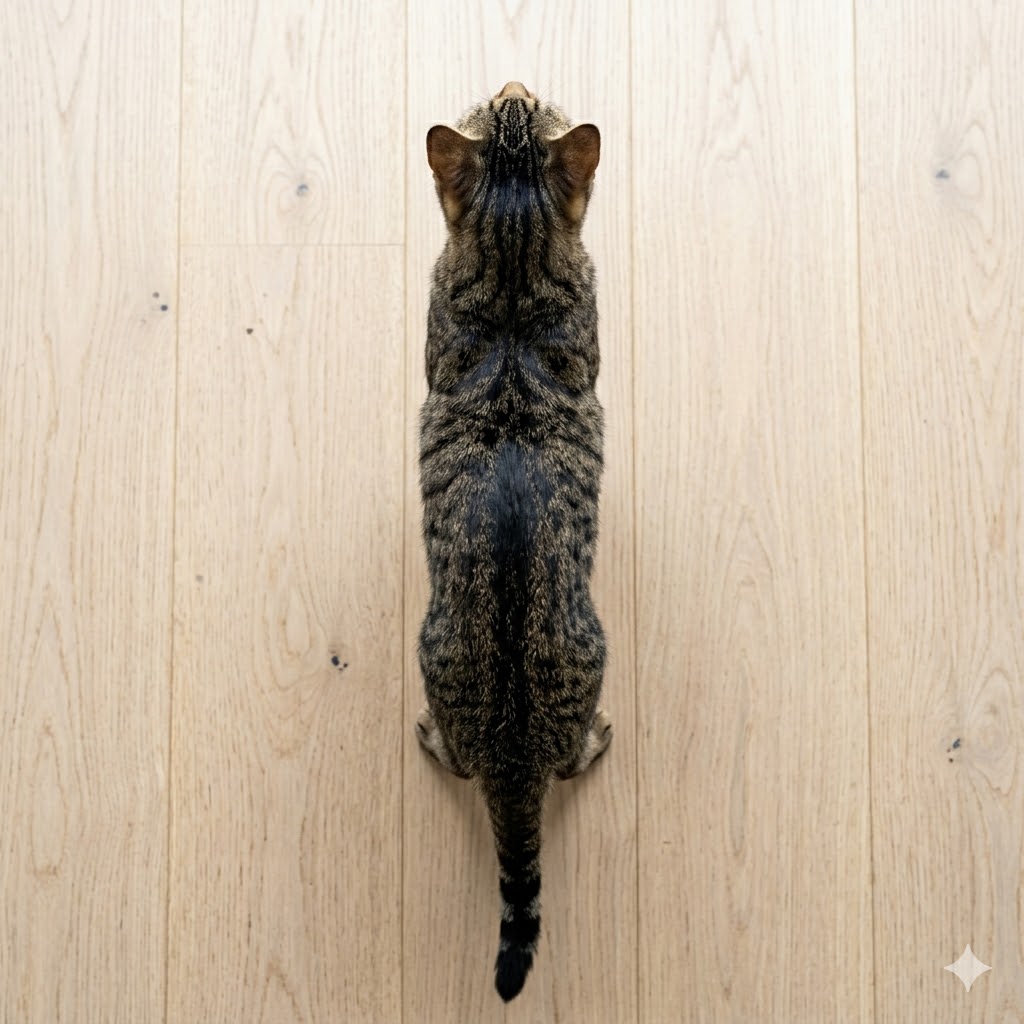
Check 2: The Waist Check from Above
Stand directly above your cat and look down. In a healthy-weight cat, you should see a clear inward curve (waist) behind the ribcage — a subtle but visible hourglass shape. This tells you the cat has a proper waist definition.
- ✓Clear inward curve behind ribs = ideal weight
- ✓Slight curve present but less defined = possibly BCS 6
- ✓No curve — body is a straight tube or rounded rectangle = overweight (BCS 7+)
- ✓Extreme hourglass with very narrow midsection = underweight
Note: long-haired cats (Persian, Ragdoll, Maine Coon, Norwegian Forest Cat) hide their waist under their coat. If your cat is long-haired, rely more heavily on the rib test and belly check. Part the coat over the flanks to see the actual body shape.
Check 3: The Belly Profile — and the Primordial Pouch Distinction
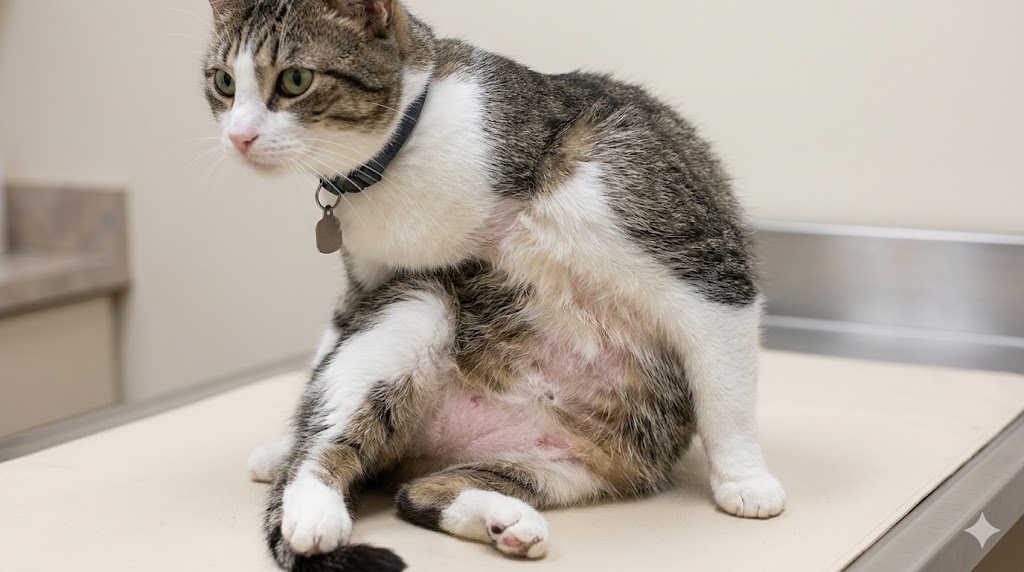
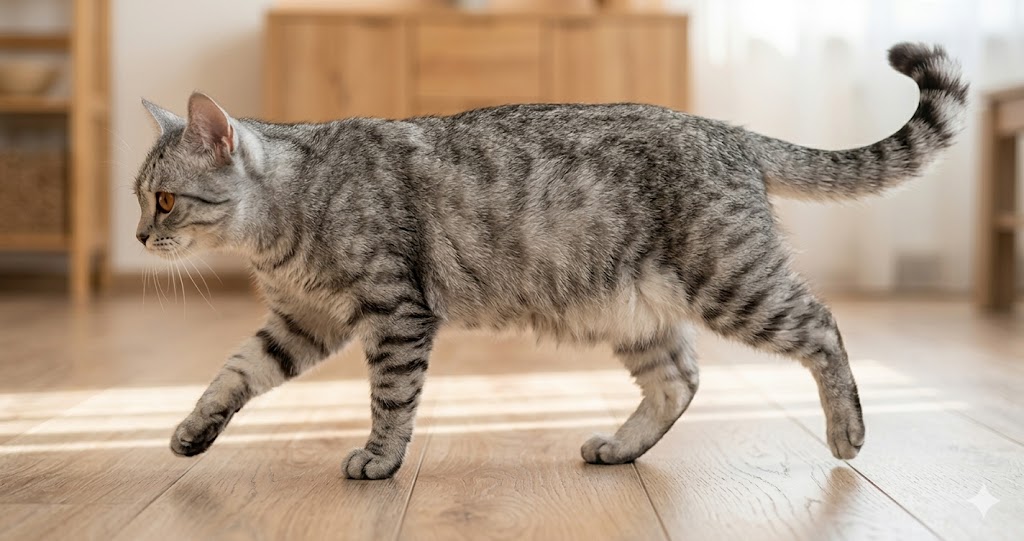
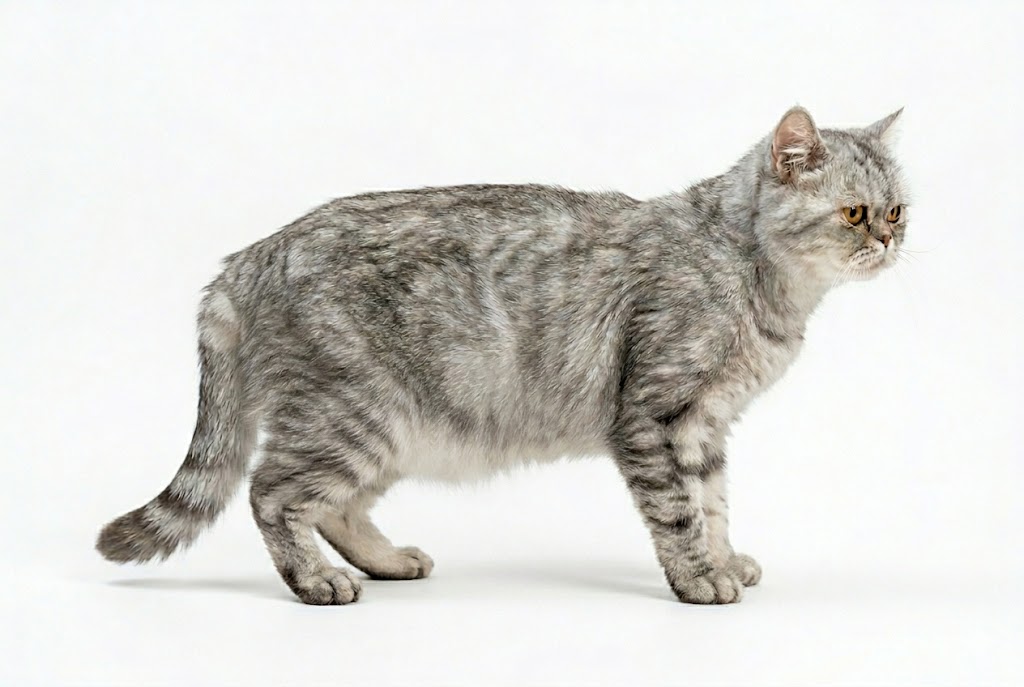
This is where cat owners often get confused. Look at your cat from the side while they are standing. In a healthy cat, the belly should not hang down below the sternum (breastbone). BUT — all cats have a PRIMORDIAL POUCH: a loose flap of skin, fat, and connective tissue along the lower belly that swings from side to side when the cat walks or runs.
The primordial pouch is completely normal anatomy. Even lean cats with BCS 3–4 have it. Egyptian Maus, Bengals, Savannahs, and domestic shorthairs often have very visible primordial pouches. This is NOT a sign of obesity — do not count it against your cat.
- ✓The primordial pouch swings when the cat walks — it is loose skin and fat, not a fat belly
- ✓True overweight belly: the entire underside is rounded and does not tuck upward at all
- ✓In obese cats (BCS 8–9), the belly hangs down significantly beyond the sternum level even when the primordial pouch is accounted for
- ✓If the belly is round even above the primordial pouch, and the rib test is failing — that is true obesity
What the BCS Numbers Mean in Practice
The standard veterinary BCS for cats runs from 1 (severely underweight) to 9 (severely obese). Here is what each major category looks like:
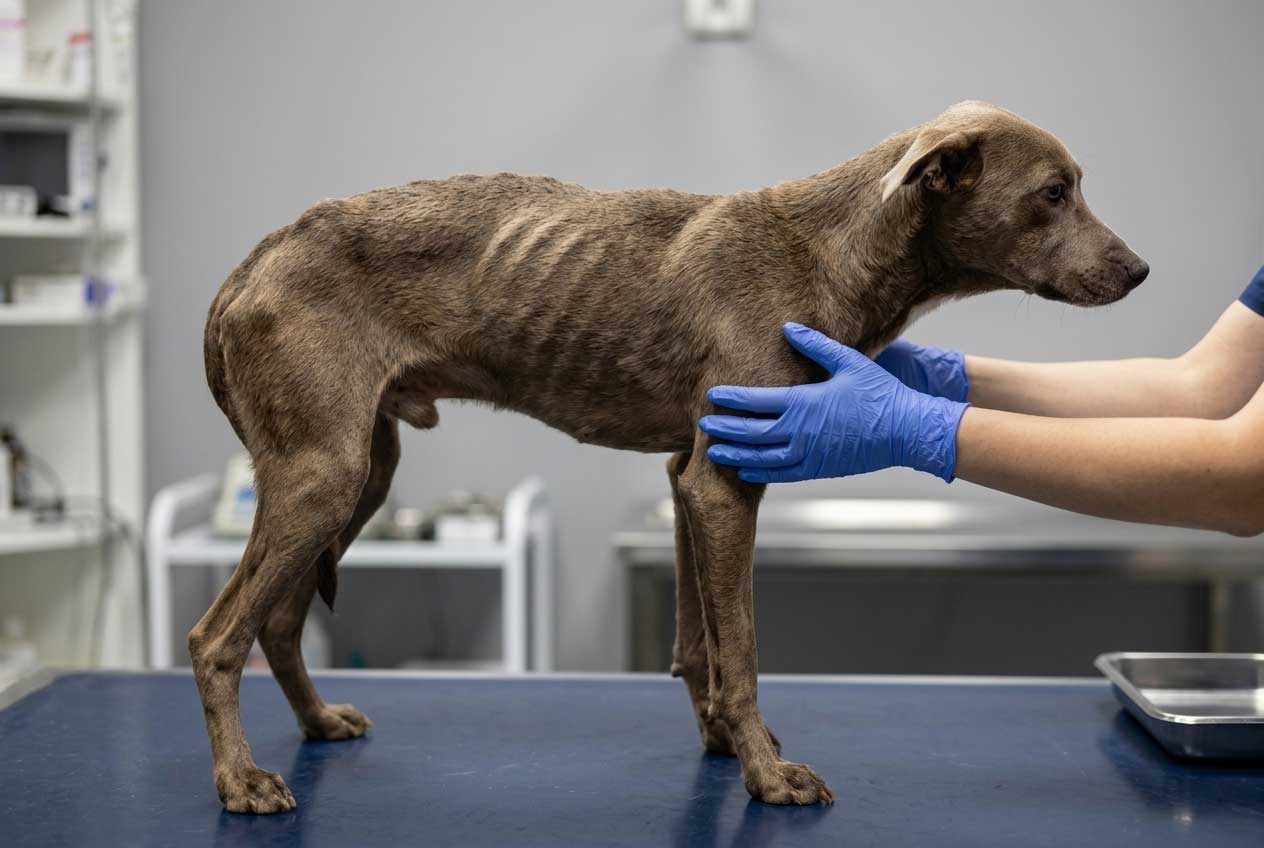
- ✓BCS 1–2: Skeletal — ribs, spine, pelvis visible from across the room with no touching. Medical emergency.
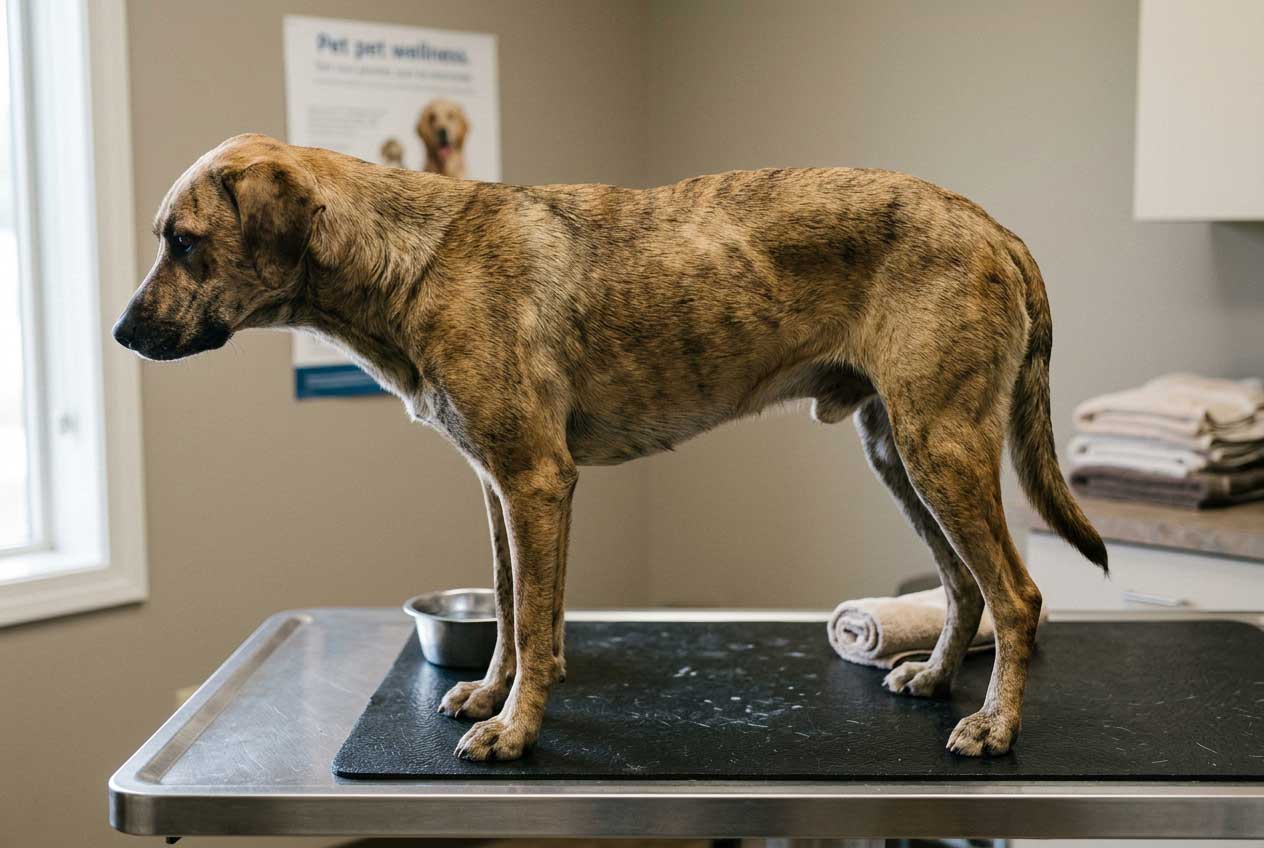
- ✓BCS 3: Thin — ribs clearly visible without touching, pronounced bony hip points, extreme hourglass from above.
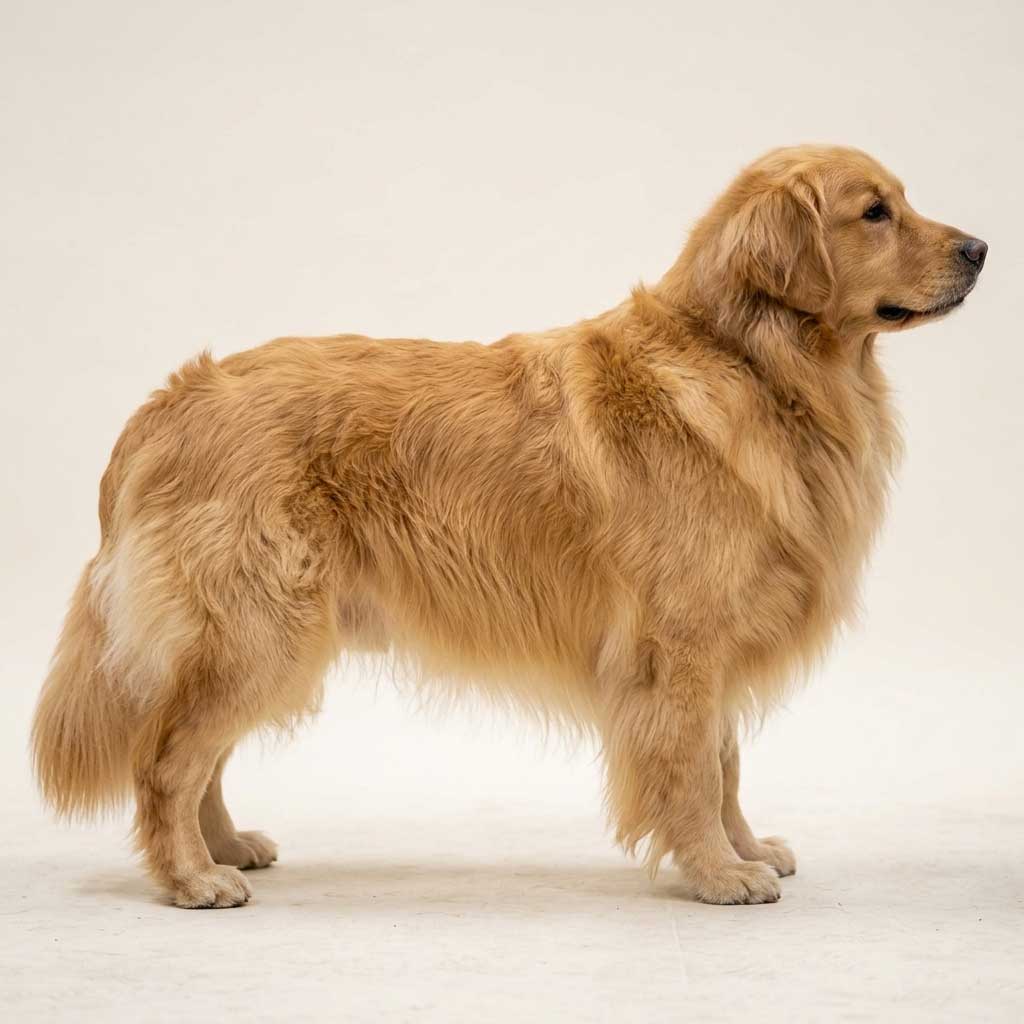
- ✓BCS 4–5: Ideal — ribs easily felt with gentle pressure, clear waist from above, slight abdominal tuck. Goal.
- ✓BCS 6: Slightly over — ribs require more than light pressure, waist less defined but present.
- ✓BCS 7: Overweight — ribs difficult to feel, waist absent from above, belly rounds.
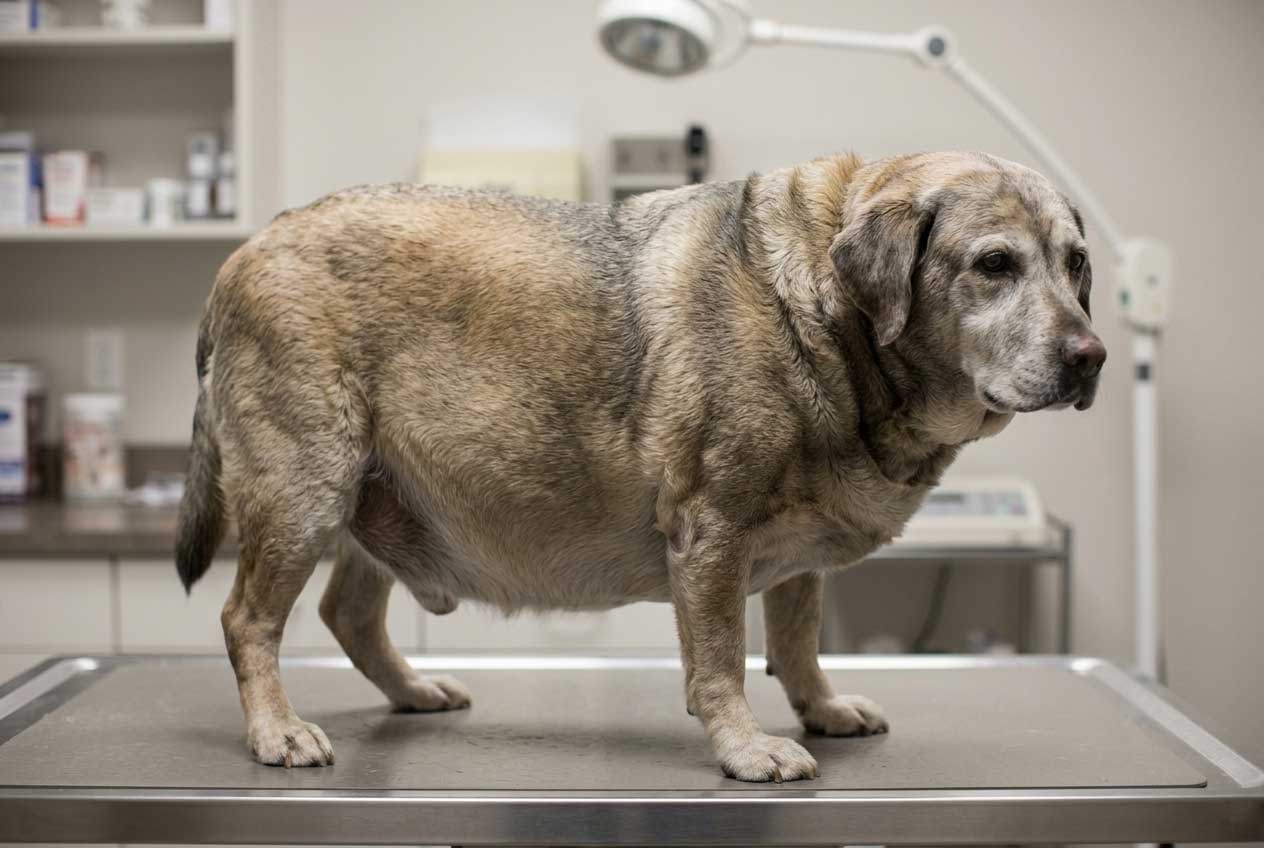
- ✓BCS 8–9: Obese — ribs buried under fat, no waist, pendulous belly, fat rolls at neck and tail base.
Why Scale Weight Is Not Enough
Scale weight matters but doesn't tell the whole story. A senior cat losing muscle mass (sarcopenia) may stay at the same weight for years while fat accumulates and muscle disappears — the scale is stable, but BCS is worsening. Conversely, a young active cat may weigh more than average because of dense muscle — that is healthy, not obese. Always pair scale weight with BCS assessment.
For cats who are currently at ideal weight, run the rib test monthly and weigh them every 3 months. Cats can gain 100–200 g per month silently — this is barely noticeable week to week but amounts to 1–2 kg per year if unchecked.
When to See a Vet
- ✓Any cat at BCS 3 or lower — not just diet-related, could be hyperthyroidism, kidney disease, IBD, or cancer
- ✓Any cat at BCS 7+ who has not responded to 6 weeks of careful diet management
- ✓Senior cat (10+) with new weight loss even if still eating — hyperthyroidism is very common in senior cats
- ✓Any cat who stops eating for more than 24 hours at any weight — hepatic lipidosis risk
- ✓Obese cat (BCS 8–9) — aggressive DIY diet restriction in obese cats causes hepatic lipidosis. Needs vet-guided weight loss.
Not sure where your cat falls on the BCS scale?
Upload a side view and top-down photo — AI assesses your cat's body condition score (BCS 1–9) and tells you if your cat is at ideal weight, overweight, or underweight. Correctly handles the primordial pouch.
Disclaimer: This article is for informational purposes only and is not a substitute for professional veterinary advice. Always consult a licensed veterinarian for diagnosis and treatment of your pet's health conditions.