Is My Cat Fat or Is It a Primordial Pouch? (How to Tell the Difference)
The primordial pouch is normal cat anatomy — not fat. Learn what it is, why all cats have it, and how to actually tell if your cat is overweight beyond the swinging belly flap.
Published 2026-04-20
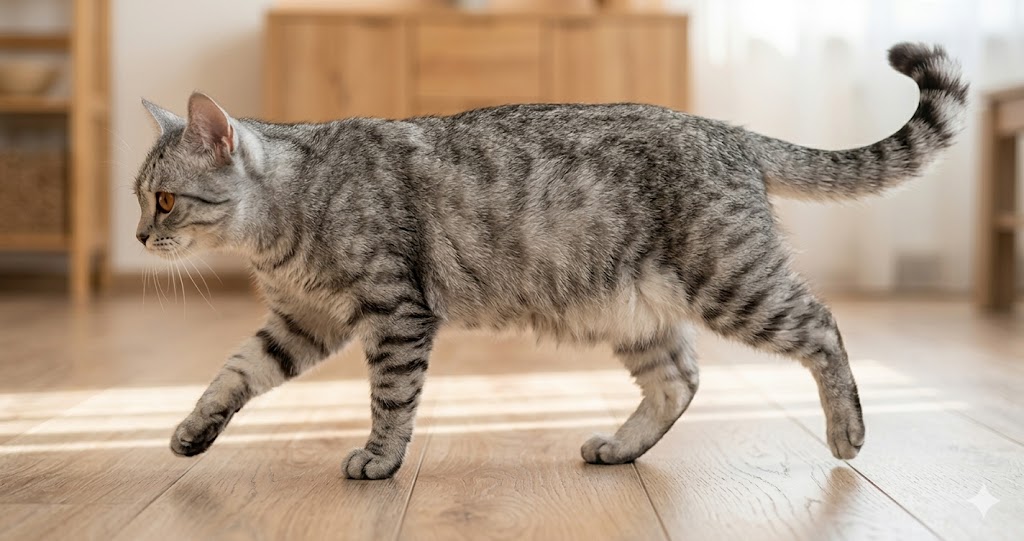
You've noticed your cat has a swinging belly flap that wobbles side to side when they walk or run. You're worried they're fat. But here's the thing: that swinging belly is almost certainly a primordial pouch — a completely normal feature of cat anatomy that has nothing to do with obesity. This article explains exactly what the primordial pouch is, how to tell it apart from true fat, and what overweight actually looks like in cats.
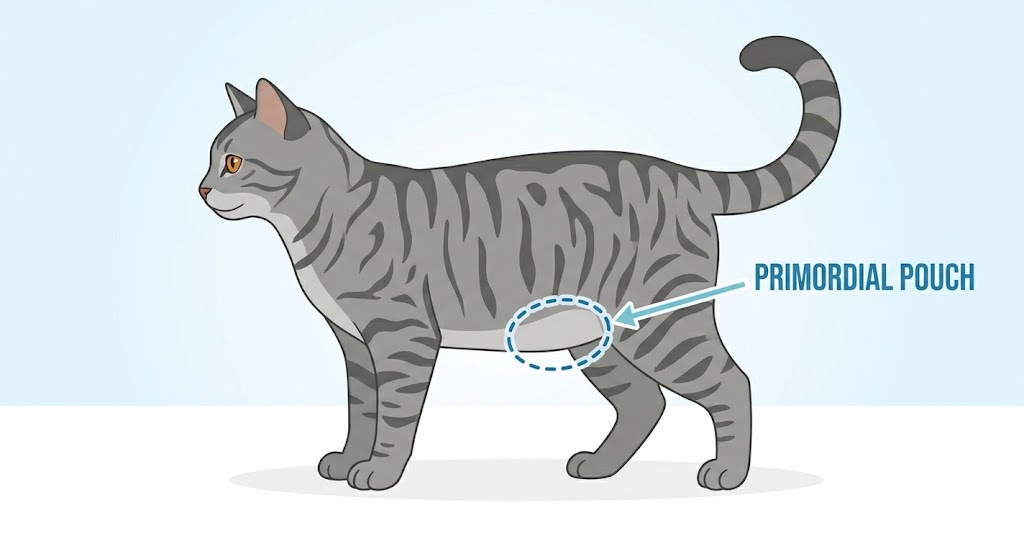
What Is the Primordial Pouch?
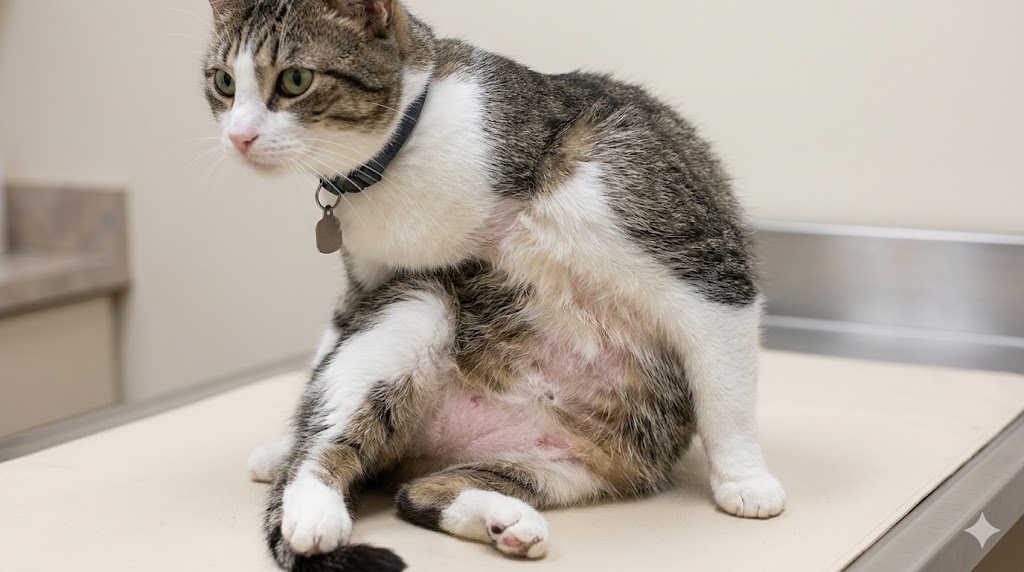
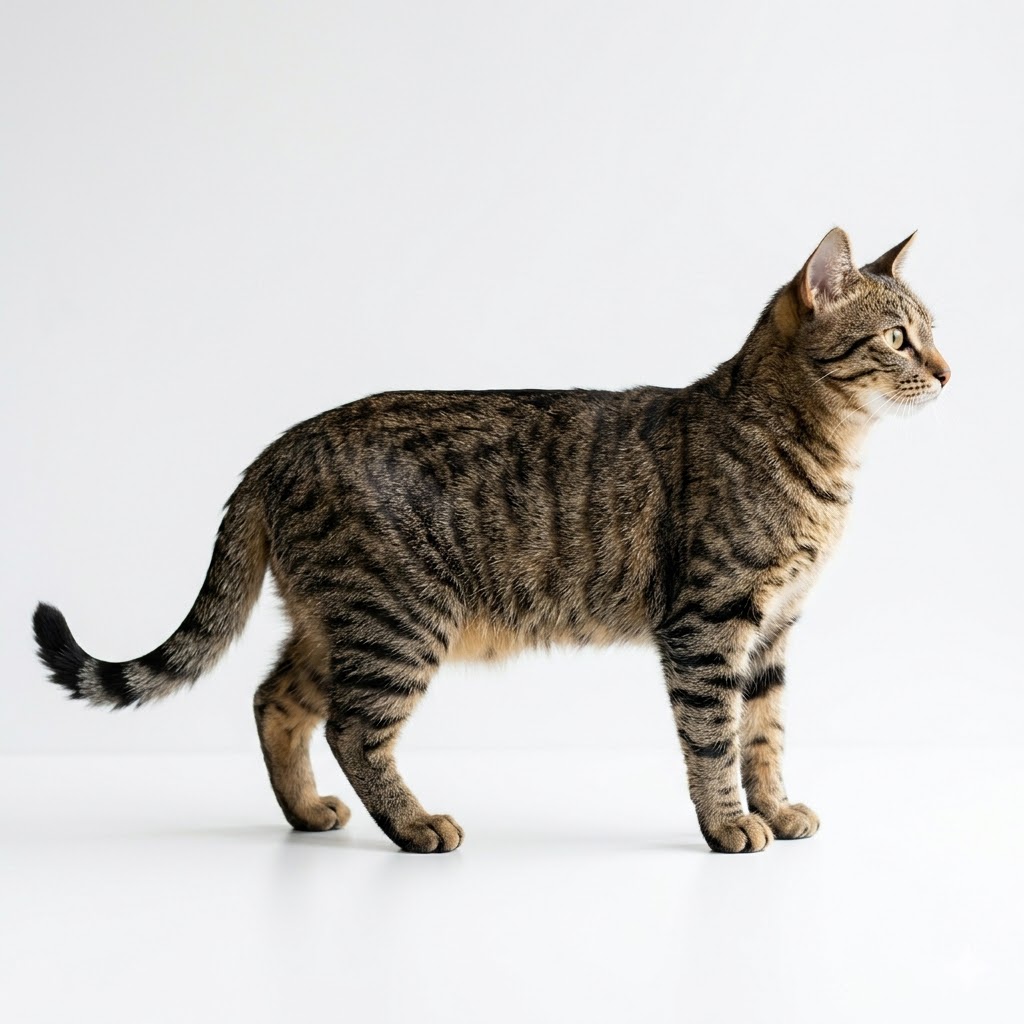
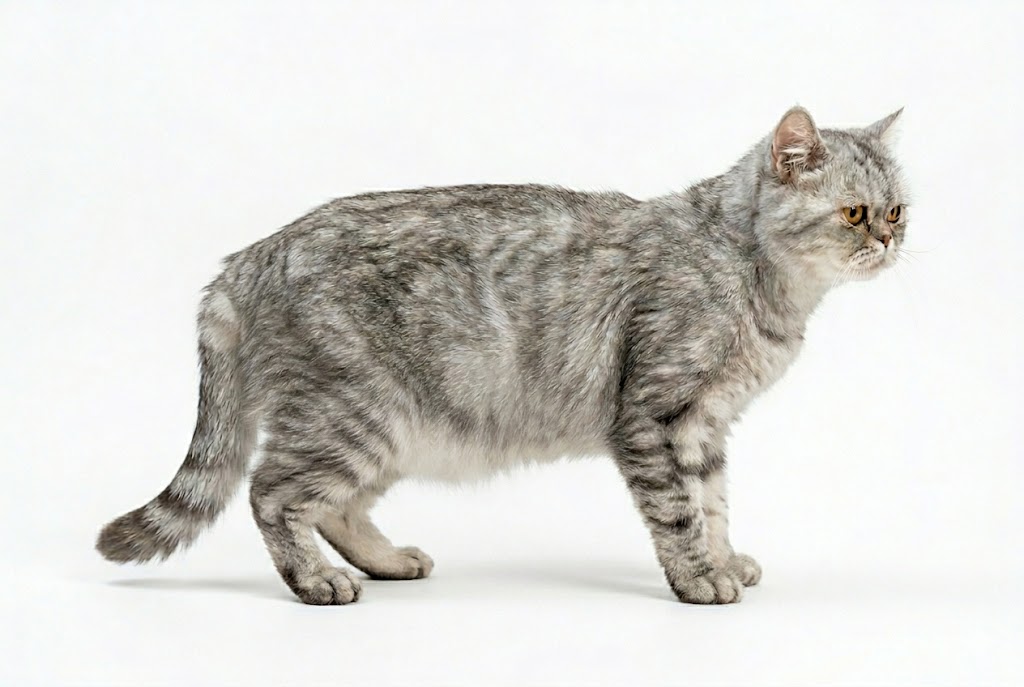
The primordial pouch (also called the "belly flap," "apron," or "tummy flap") is a loose fold of skin, subcutaneous fat, and connective tissue that runs along the lower belly of all domestic cats — regardless of sex, sterilization status, age, weight, or breed. It typically becomes more visible as cats reach adulthood and often increases in visibility as cats age.
The primordial pouch serves three possible biological functions (though exact evolutionary purpose is debated): (1) PROTECTION — it acts as a flexible shield for vulnerable abdominal organs during fights, when cats often target the belly. (2) FLEXIBILITY — it allows the abdomen to expand during a large meal (wild cats gorge after successful hunts). (3) MOVEMENT — it gives the hindlegs extra range of motion at full sprint, like extra skin that stretches when the legs fully extend.
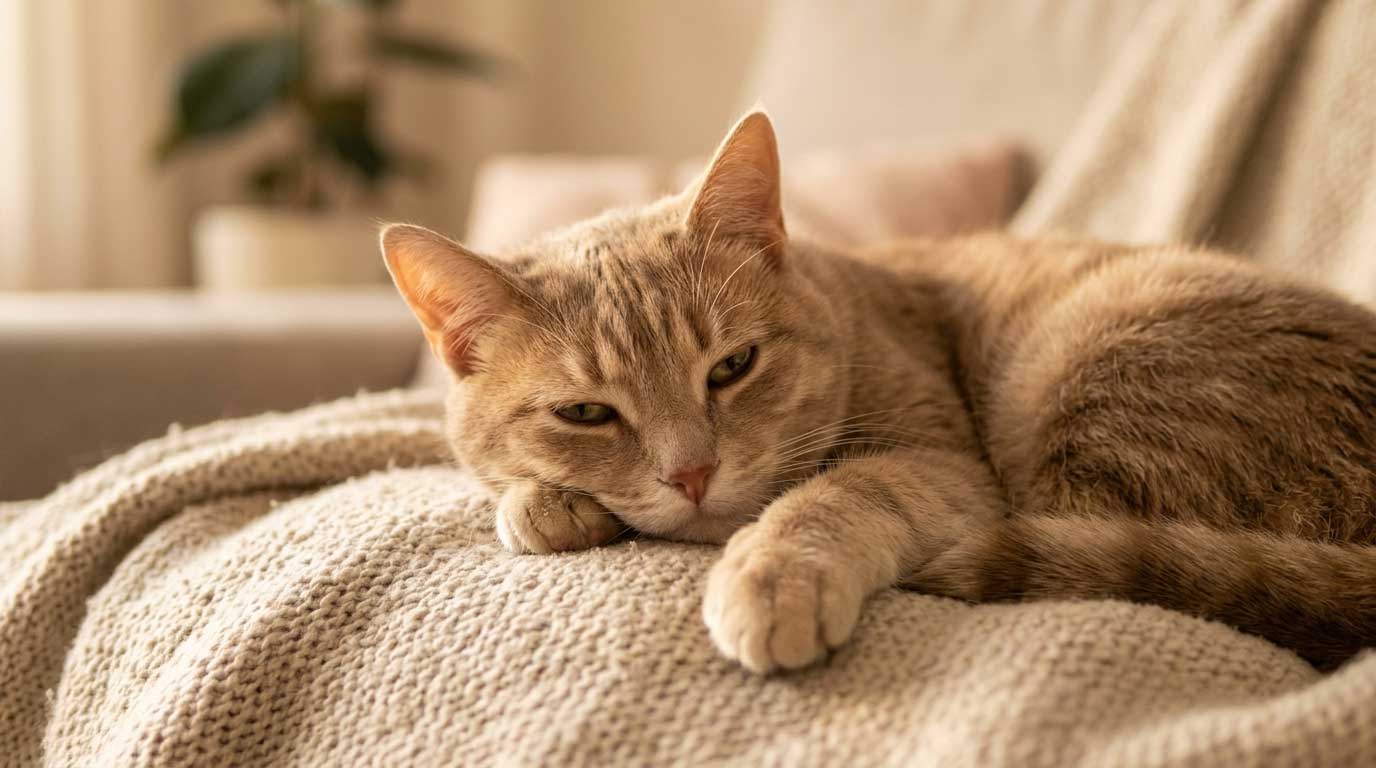
Every cat has one. Wild cats have them. Lean show cats have them. Your indoor couch potato who could stand to lose weight has one too. The primordial pouch is NOT evidence of obesity.
Which Cats Have the Most Visible Primordial Pouch?
- ✓Egyptian Mau — the most pronounced pouch of any domestic breed; it swings dramatically at full run (this is actually a breed standard feature)
- ✓Bengal — large, well-developed pouch common
- ✓Savannah — visible pouch even in very lean individuals
- ✓Domestic shorthair/tabby — typically visible, swings when cat trots
- ✓After pregnancy/spay — the pouch often becomes more prominent after a cat has been pregnant or spayed
- ✓Senior cats — as cats age and lose some muscle tone, the pouch becomes more visible
- ✓Previously overweight cats who have lost weight — the stretched skin often remains as a visible pouch long after the fat is gone
Primordial Pouch vs True Fat: 5 Ways to Tell Them Apart
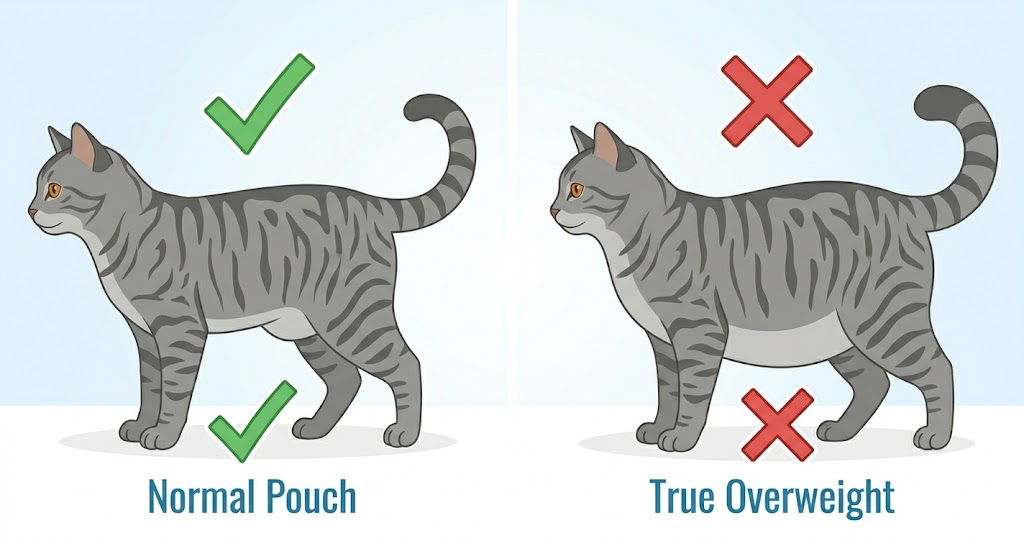
- ✓1. LOCATION: The primordial pouch hangs from the LOWER belly between the hind legs. True fat accumulates EVERYWHERE — over the ribs, back, shoulders, hips, and base of tail — not just the belly.
- ✓2. TEXTURE: The primordial pouch feels soft and jiggly and swings freely. Fat deposits over the ribs feel firm and do not swing.
- ✓3. MOVEMENT: The pouch SWINGS from side to side when the cat walks or trots. It wobbles freely. Belly fat does not swing the same way — it bulges downward uniformly.
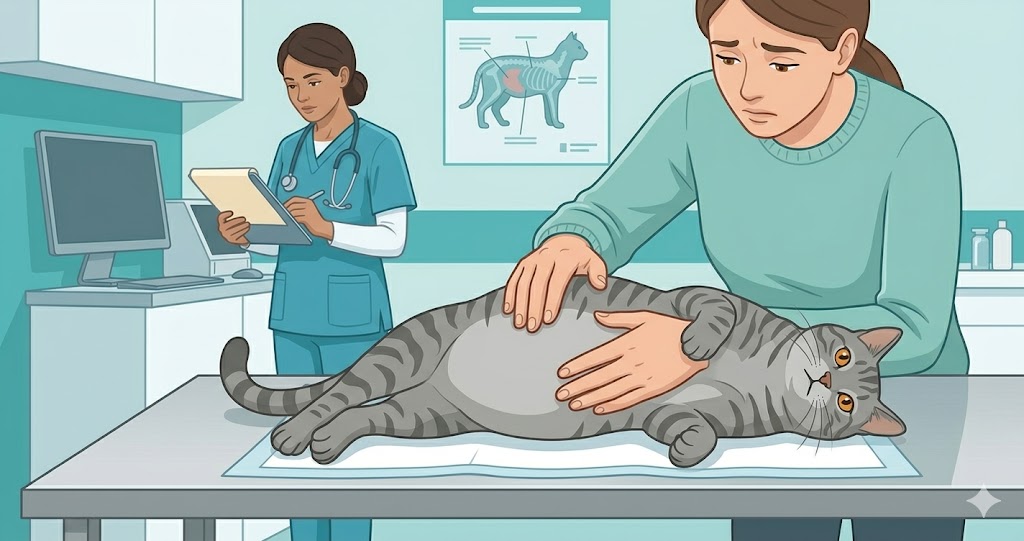
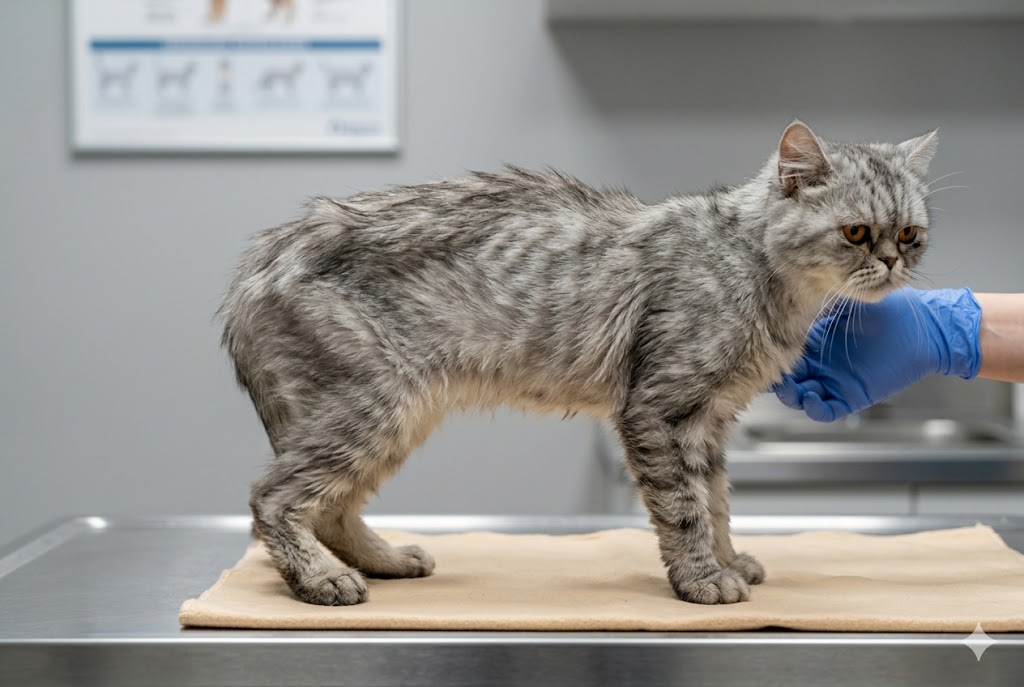
- ✓4. THE RIB TEST: This is the definitive test. Run your fingers along your cat's ribcage. If you feel individual ribs easily with light pressure — your cat is at a healthy weight regardless of the pouch. If you cannot feel the ribs even pressing firmly — your cat is overweight.
- ✓5. WAIST FROM ABOVE: Look down at your cat. If there is a clear inward curve (waist) behind the ribs — ideal weight, even with a visible pouch. If the body is a straight-sided tube — overweight.
Can a Cat Have Both a Primordial Pouch AND Be Overweight?
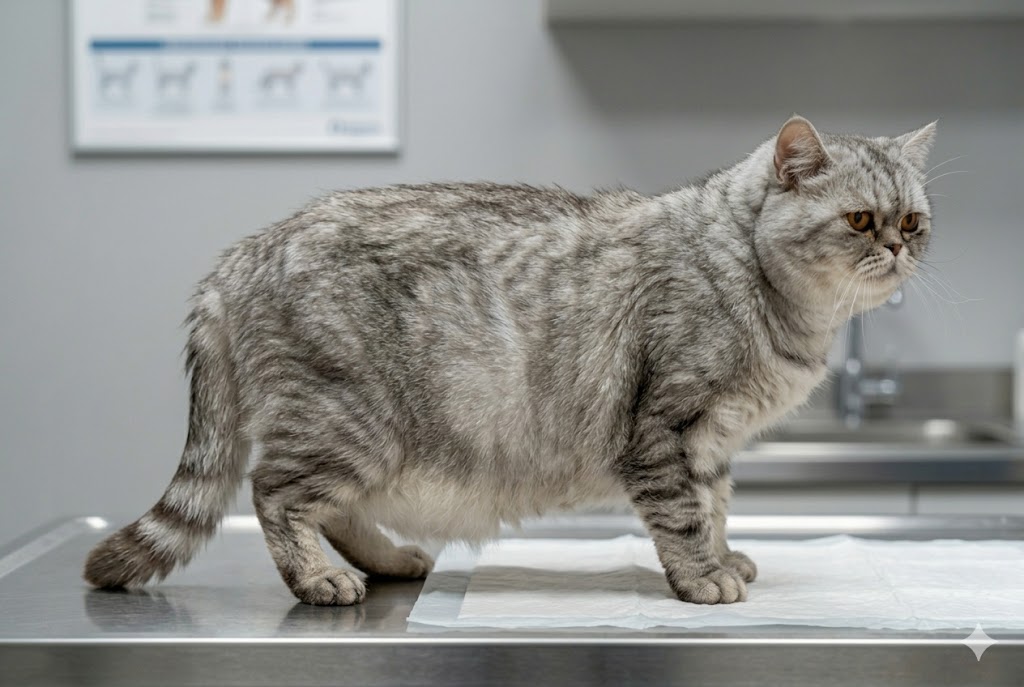
Yes — and this is common. An overweight cat still has a primordial pouch (everyone does), but they also have extra fat everywhere else. In a cat who is both overweight AND has a primordial pouch, you will see: (1) A swinging belly flap (the pouch) PLUS a rounded, firm, wide belly above the pouch level. (2) Ribs that are hard or impossible to feel. (3) No visible waist from above. (4) Fat deposits over the back, hips, and base of tail.
The distinction matters for how you interpret your cat's shape. If only the belly flap is present and ribs are easily felt and waist is visible from above — your cat is fine. If ribs are buried and the waist is absent — diet management is needed, regardless of whether the pouch is visible.
What Overweight Cats Actually Look Like
Beyond the pouch, here is what true feline overweight (BCS 6–7) looks like: the rib cage area is padded with a thick fat layer so ribs require more than gentle pressure to feel; from above the body is a rounded tube with no visible waist; the back is flat or rounded (not showing a backbone ridge as in lean cats); fat deposits can be felt or seen over the hips and at the tail base; the entire belly profile is round, not just the swinging flap region; the cat may have reduced agility — hesitates before jumping to surfaces they used to bound onto easily.
At BCS 8–9 (obese): ribs cannot be felt at all; the belly hangs down well below the sternum level (not just the pouch flapping); fat rolls are visible at the neck and behind the shoulders; the cat waddling and tiring during minimal activity.
The Bottom Line
If your cat has a swinging belly flap — that's the primordial pouch, and it's completely normal. To know if your cat is actually overweight, skip the belly entirely and use the rib test plus the waist check from above. Those two assessments bypass the pouch confusion entirely and give you an accurate body condition picture.
Still not sure if your cat is at a healthy weight?
Upload a side view and top-down photo — AI assesses your cat's body condition score, correctly identifies the primordial pouch, and tells you if your cat is overweight or ideal weight.
Disclaimer: This article is for informational purposes only and is not a substitute for professional veterinary advice. Always consult a licensed veterinarian for diagnosis and treatment of your pet's health conditions.