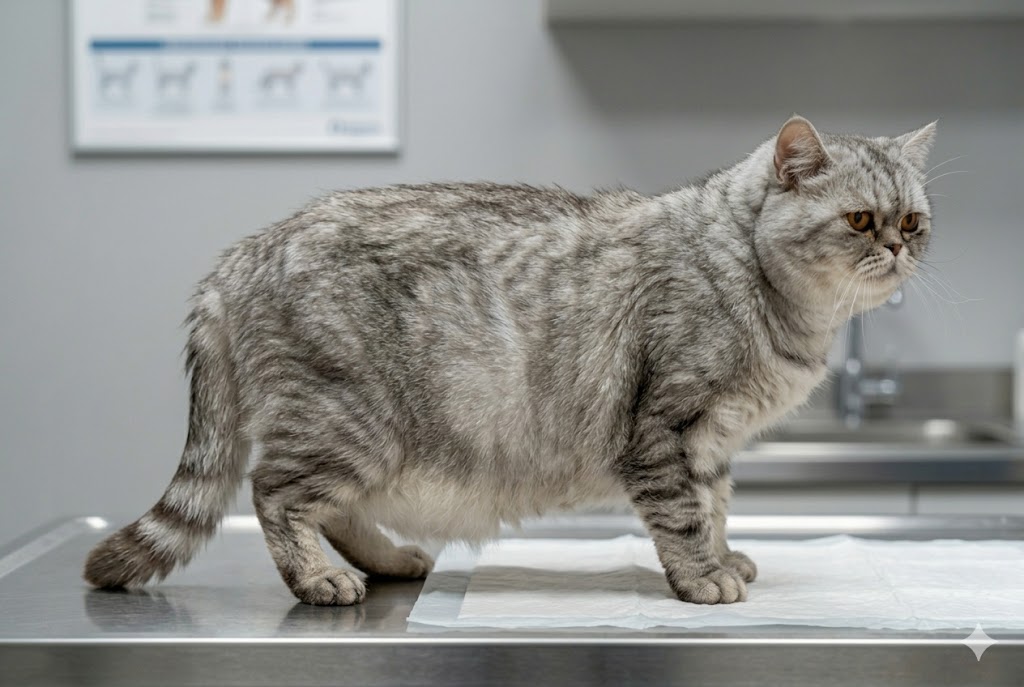
Is My Cat Fat or Bloated? How to Tell the Difference (And When It's Serious)
A swollen cat belly can mean simple weight gain or a serious medical emergency. Learn to tell the difference between feline obesity, ascites, FIP, and other dangerous causes of cat belly distension.
Published 2026-04-20
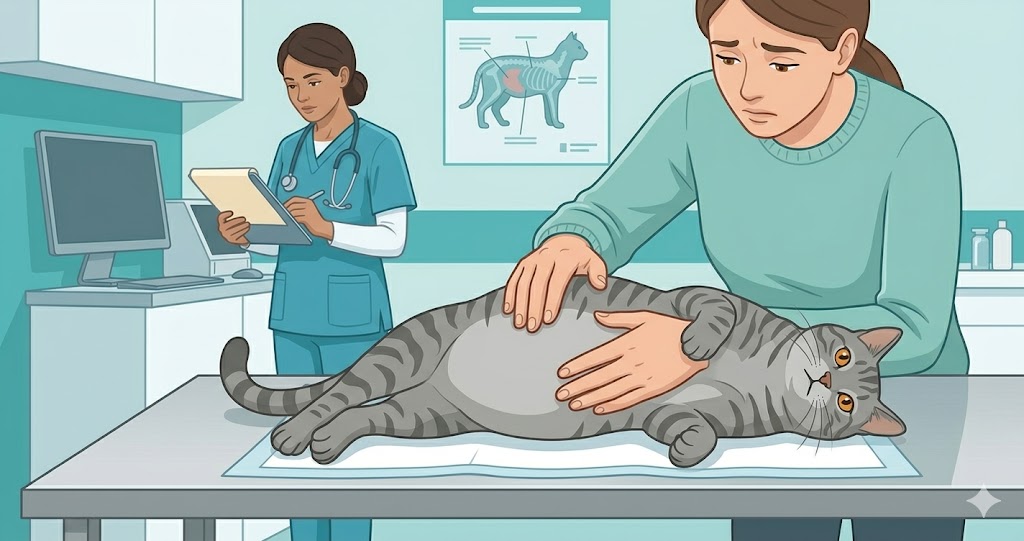
A swollen or distended cat belly can look similar whether it's caused by ordinary weight gain or a serious medical condition. But the distinction matters enormously — some causes of cat belly swelling are life-threatening emergencies. This guide walks you through the key differences and tells you when to go straight to the vet.
First: Rule Out the Primordial Pouch
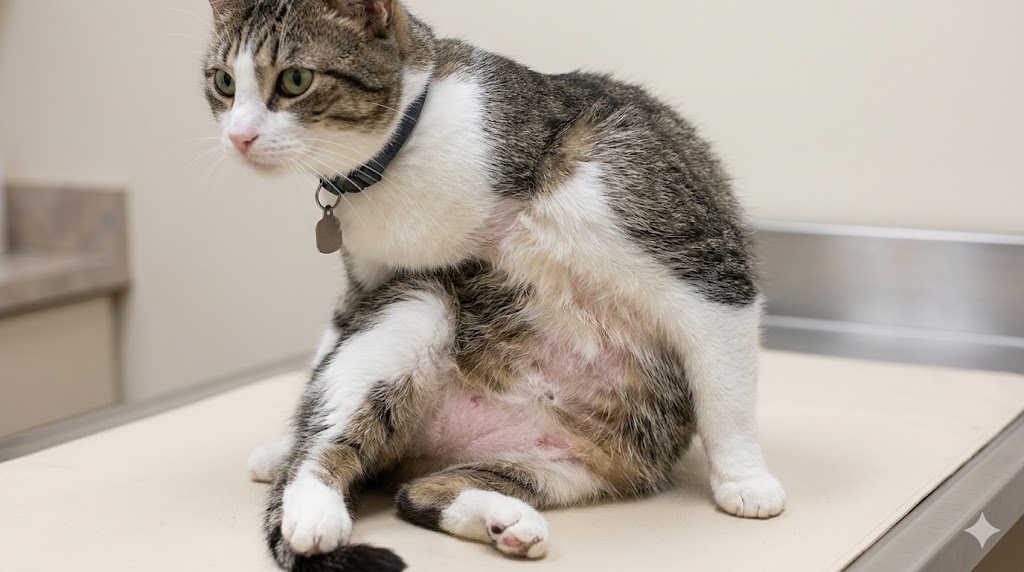
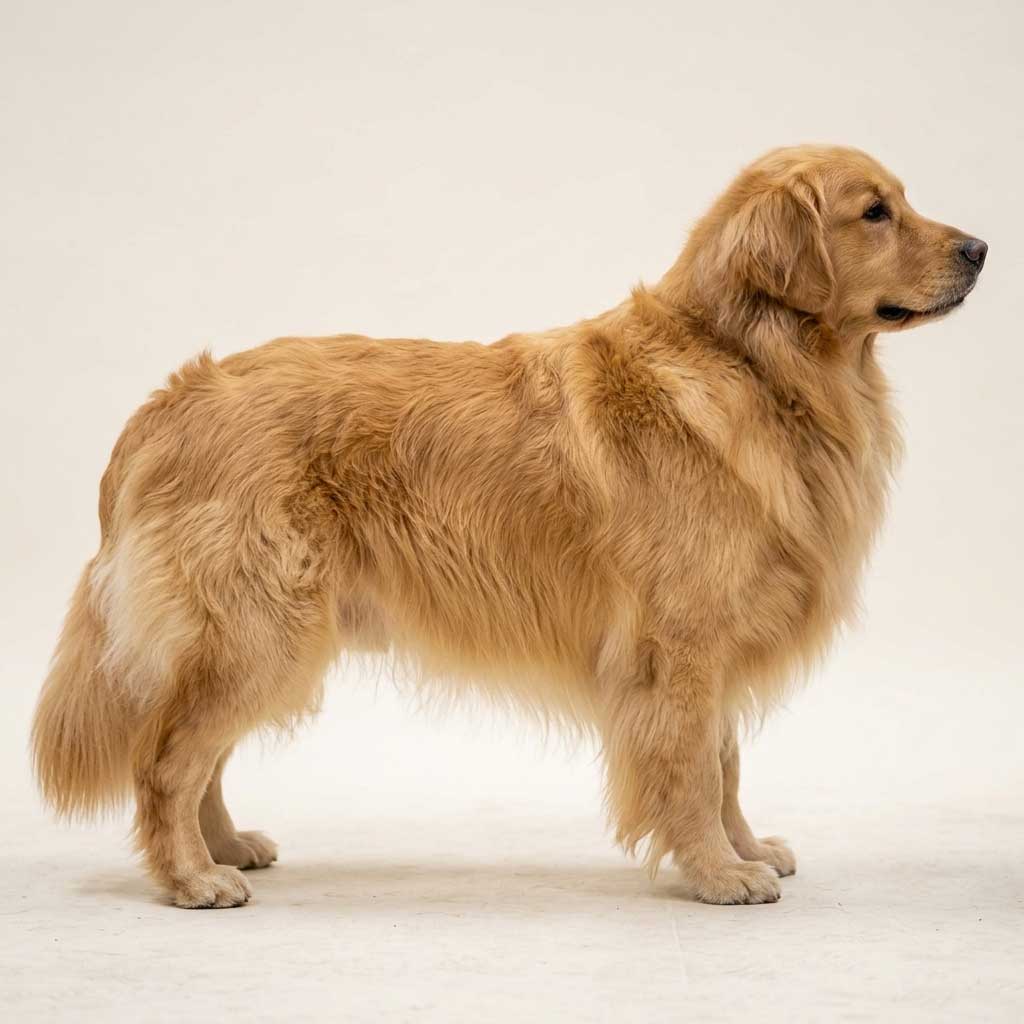
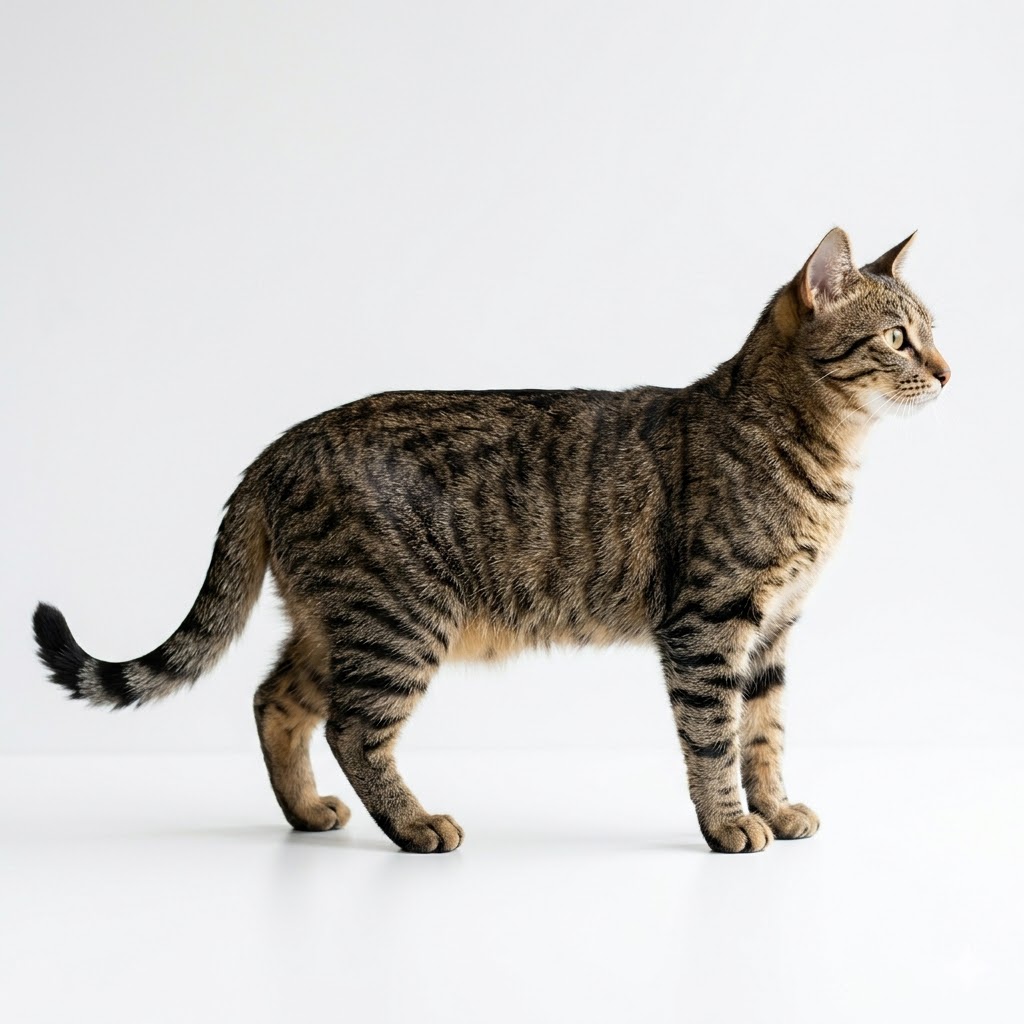
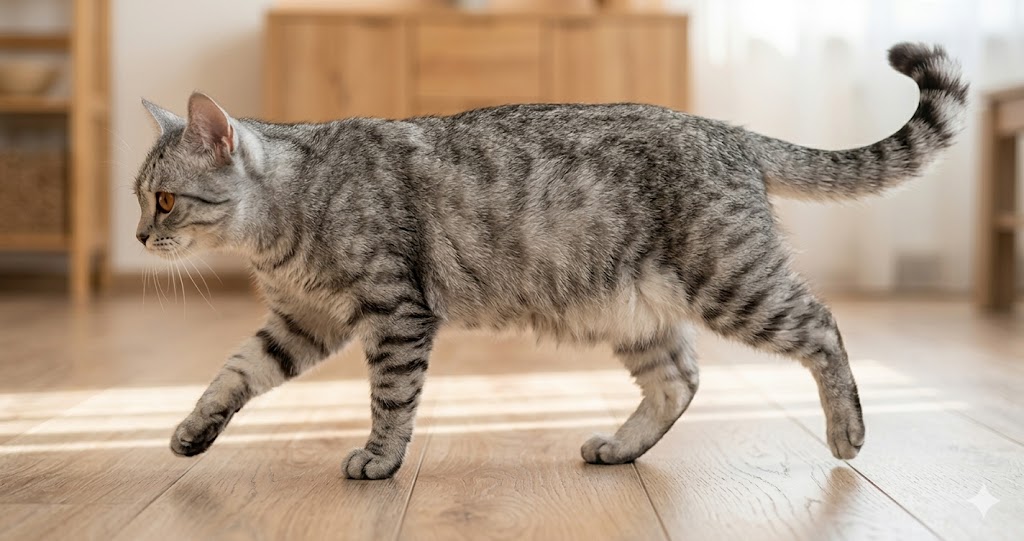
Before worrying about fat OR illness, confirm this is not simply the primordial pouch. All cats have a loose flap of skin along the lower belly that swings when they walk. This is normal anatomy. The primordial pouch jiggles freely and swings from side to side — it does not feel firm or tight. If the belly swelling is a soft, swinging flap between the hind legs, that is almost certainly the primordial pouch. Continue reading if the belly is uniformly round, firm, or rapidly changing.
Signs It's Simple Obesity (Not Bloat)
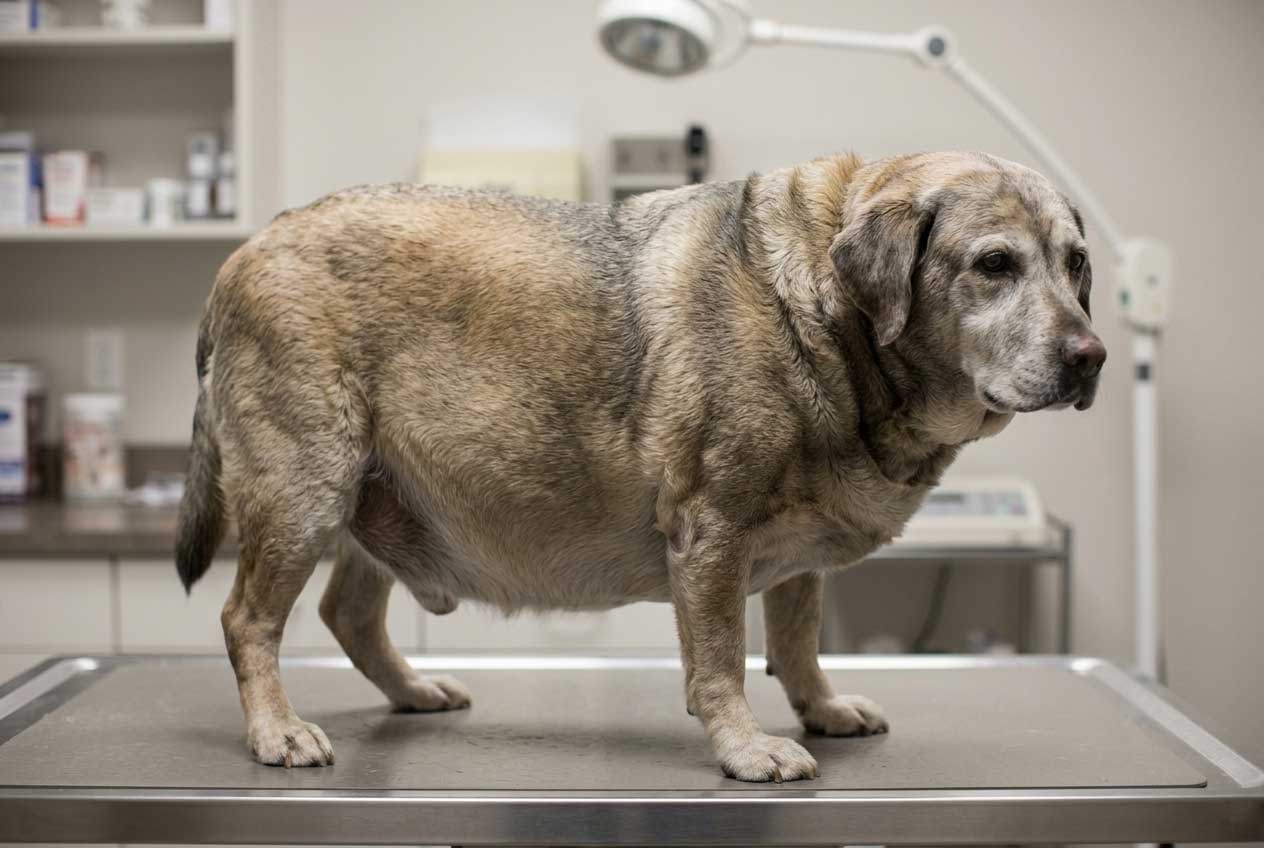
- ✓Belly has been gradually rounding over months or years — not sudden change
- ✓Cat is eating normally, drinking normally, using litter box normally
- ✓Cat is alert and active (though may tire more easily than before)
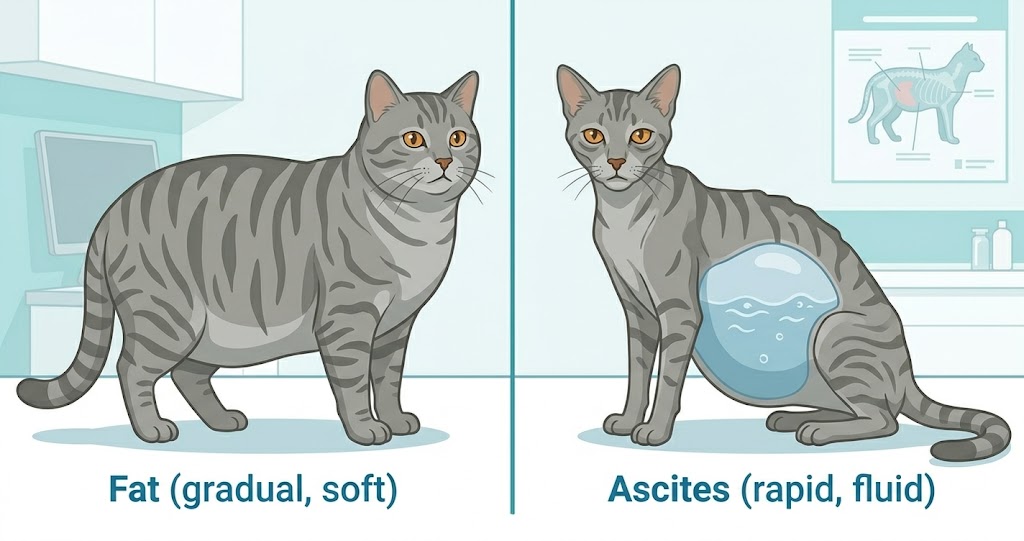
- ✓Belly feels soft throughout — like a water balloon slowly filled
- ✓Ribs are difficult to feel due to fat padding all over the body (not just belly)
- ✓No waist from above — body is a rounded tube
- ✓Weight gain correlates with indoor lifestyle, recent spay/neuter, or diet change
Warning Signs That the Belly Is NOT Just Fat
Seek veterinary attention promptly if you notice ANY of these alongside a swollen belly:
- ✓⚠️ RAPID swelling — the belly grew noticeably over days or a few weeks, not months
- ✓⚠️ Lethargy — cat is less active, sleeping more than usual, reluctant to move
- ✓⚠️ Loss of appetite — refusing food or eating much less
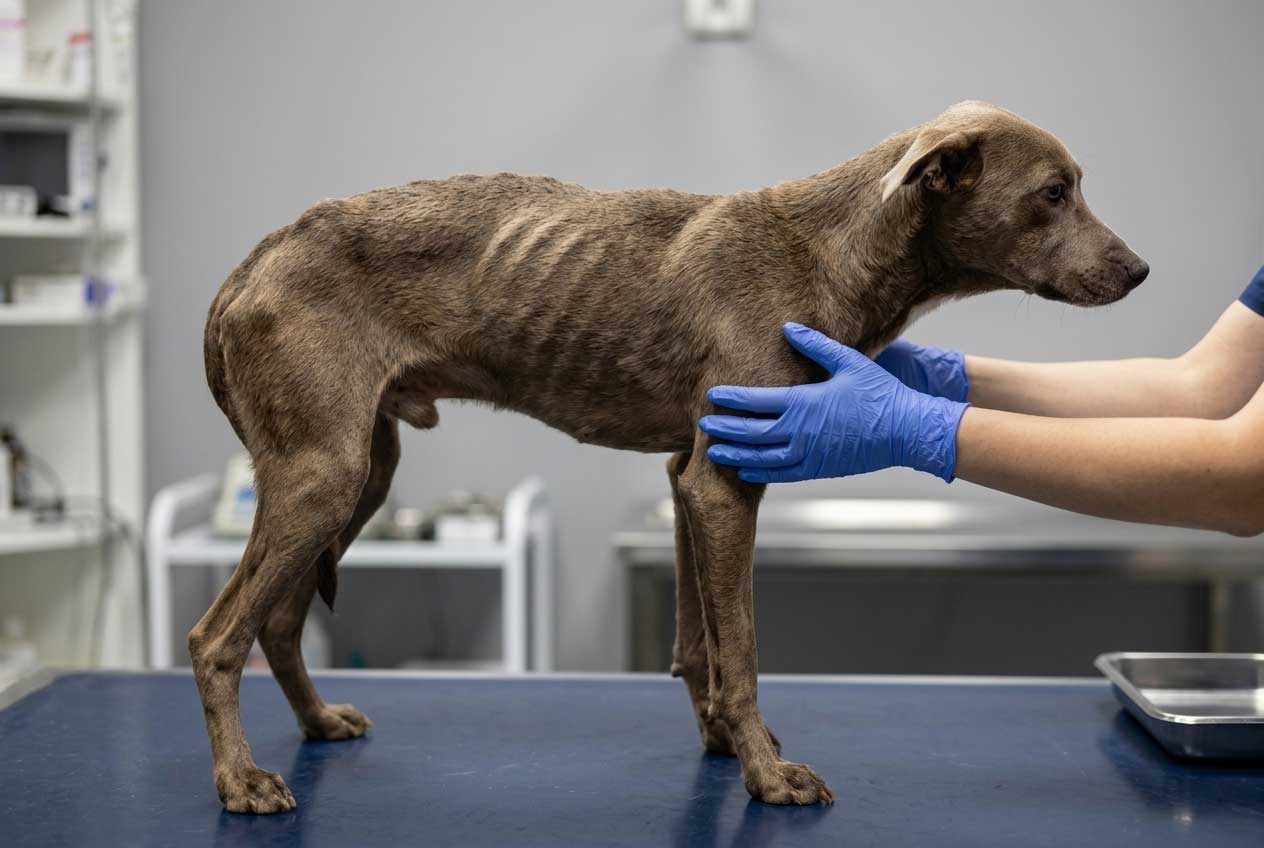
- ✓⚠️ Weight LOSS on the scale while the belly grows — this combination is a major red flag
- ✓⚠️ Difficulty breathing — rapid breathing, open-mouth breathing, or labored breathing
- ✓⚠️ Vomiting or diarrhea alongside the swollen belly
- ✓⚠️ Yellow tinge to the skin, gums, or whites of the eyes (jaundice)
- ✓⚠️ The belly feels tight like a drum or like a fluid-filled balloon (distinct from soft fat)
- ✓⚠️ Kitten or young adult cat (under 3 years) — FIP is more common in young cats
Medical Causes of Cat Belly Swelling (Not Fat)
Ascites (Fluid in the Abdomen)
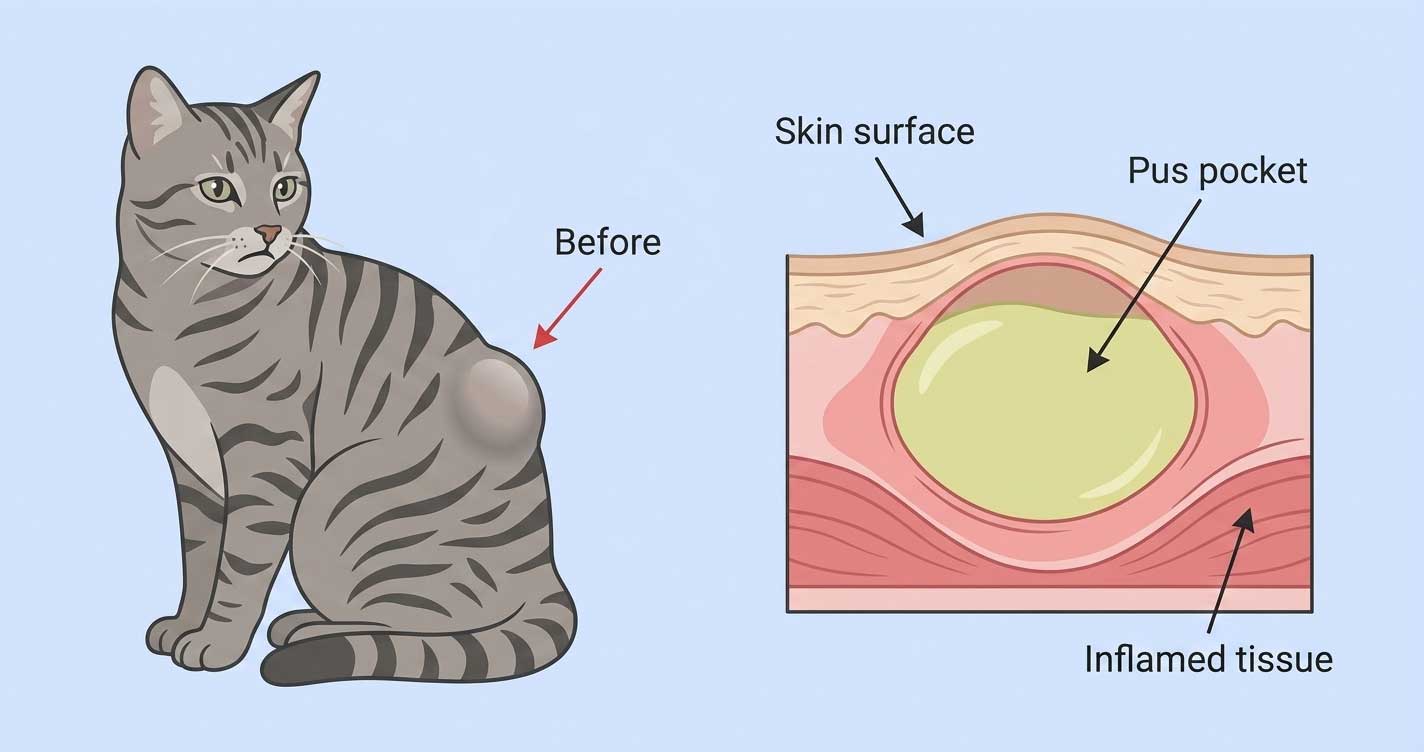
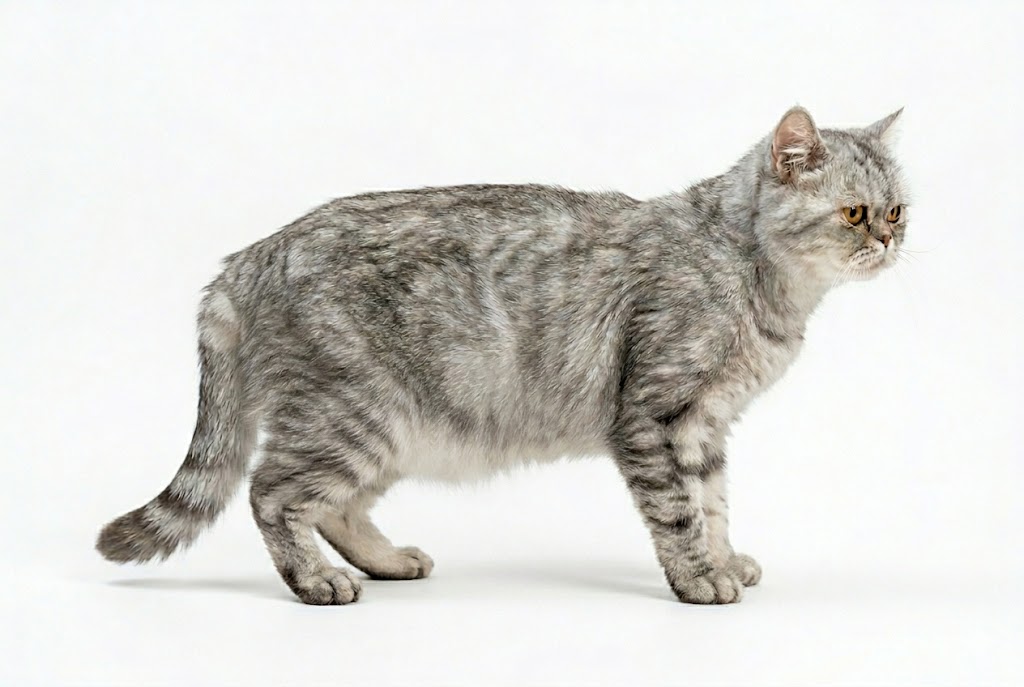
Ascites is the accumulation of fluid in the abdominal cavity. Unlike fat, fluid-filled abdomens have a characteristic "fluid wave" — when the cat is tapped gently on one side of the belly, a ripple can be felt on the other side. Ascites causes a pear-shaped, pendulous belly that may shift when the cat moves positions. Causes: heart disease, liver failure, low blood protein (from kidney or GI disease), FIP, or certain cancers. Ascites with lethargy and appetite loss = urgent vet visit.
Feline Infectious Peritonitis (FIP)
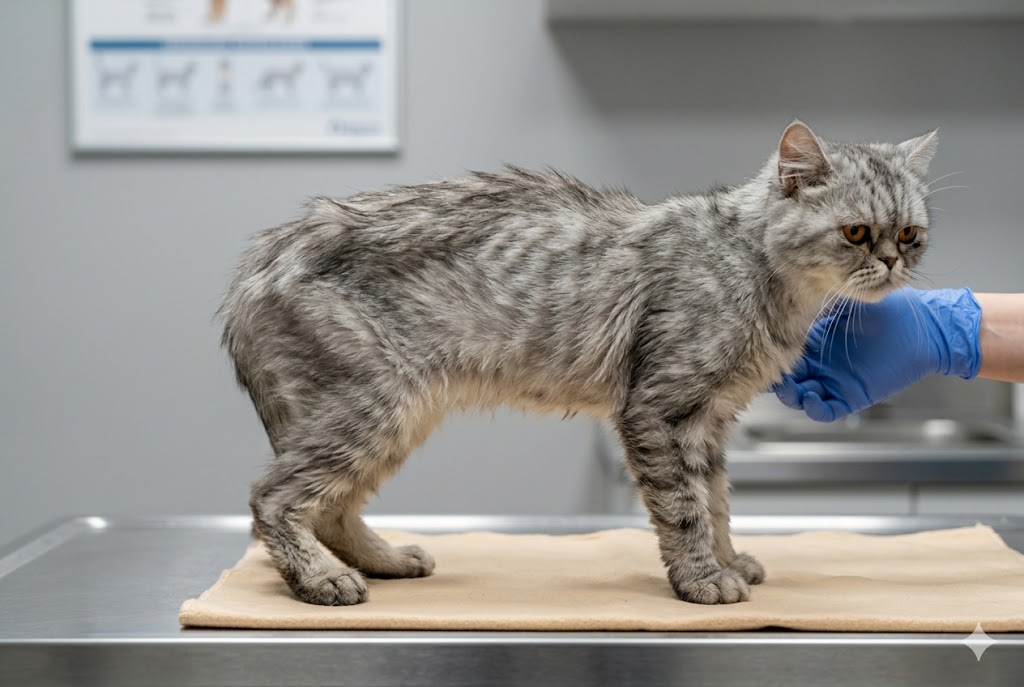
FIP is a serious coronavirus mutation that causes fluid accumulation in the abdomen (wet FIP) or inflammatory lesions (dry FIP). Wet FIP classically presents as a rapidly growing, fluid-filled, pear-shaped belly in a cat that is also losing weight, lethargic, running a low-grade fever, and not eating well. Most commonly seen in cats under 3 years old. FIP was previously fatal but now has effective antiviral treatment (GS-441524) — early diagnosis dramatically improves outcomes. Any young cat with rapid belly swelling + weight loss + lethargy needs to be seen urgently.
Pregnancy or Pyometra
An unspayed female cat with a swollen belly may be pregnant (visible around 4–5 weeks) or may have pyometra — a serious uterine infection that causes the uterus to fill with pus. Pyometra can look like weight gain but the cat will be progressively unwell: lethargic, drinking more, not eating, and may have vaginal discharge (open pyometra) or no discharge (closed pyometra, which is more dangerous). Pyometra is a medical emergency — the uterus can rupture. Any intact female cat whose belly is swelling = vet visit immediately.
Intestinal Obstruction or Distension
Gas-filled intestines or an obstruction (swallowed foreign body, tumor) can cause visible belly distension. Unlike fat, this tends to develop rapidly, the cat will be uncomfortable or in pain, and there may be vomiting, no defecation, or straining in the litter box. Any cat with rapid belly swelling + vomiting + pain signs = emergency vet visit.
Organomegaly (Enlarged Organs)
Significant enlargement of the spleen or liver (from lymphoma, other cancers, or hepatitis) can cause the belly to appear distended. This is often gradual but the cat may also lose weight on the scale while the belly grows — a combination that strongly suggests a medical cause rather than fat.
The Quick Home Triage
- ✓Has the belly swelling happened over months with the cat eating normally and acting fine? → Likely obesity. Start body condition scoring.
- ✓Has the belly grown in days or a couple of weeks? → Needs vet evaluation.
- ✓Is the cat also losing weight while the belly grows? → Needs vet evaluation urgently.
- ✓Does the cat seem uncomfortable, lethargic, or not eating? → Vet today.
- ✓Is the cat an intact female of breeding age? → Vet today to rule out pyometra or confirm pregnancy.
- ✓Is the cat a kitten or young adult under 3? → FIP must be ruled out urgently.
Concerned about your cat's belly?
If your cat is acting normally and the belly has grown gradually, upload a photo for AI body condition scoring. If the cat is unwell or the belly grew rapidly — go to your vet directly.
Disclaimer: This article is for informational purposes only and is not a substitute for professional veterinary advice. Always consult a licensed veterinarian for diagnosis and treatment of your pet's health conditions.